Ahimsa vs Mulberry Silk for Asian Bridal Wear in 2026
The 2026 Evolution of Asian Bridal Textiles
In 2026, the Asian bridal fashion landscape is undergoing a profound transformation. Modern brides are no longer solely focused on the visual grandeur of their wedding ensembles; they are equally invested in the ethical origins, environmental footprint, and structural integrity of their garments. When selecting the foundation for heavily embroidered bridal lehengas, sarees, and anarkalis, the debate frequently narrows down to two primary textiles: traditional Mulberry silk and the increasingly popular Ahimsa (peace) silk. Understanding the distinct properties of these fibers is essential for making an informed investment in a garment meant to last generations.
According to recent industry analyses highlighted by the Textile Exchange, the demand for traceable, cruelty-free, and sustainably processed natural fibers has surged by over 40% in the South Asian bridal market over the last three years. This shift has elevated Ahimsa silk from a niche alternative to a mainstream luxury contender, challenging the centuries-old dominance of Mulberry silk. This comprehensive guide breaks down the technical, aesthetic, and practical differences between these two exquisite fabrics to help you choose the perfect base for your 2026 bridal trousseau.
Understanding Mulberry Silk: The Heritage Standard
Mulberry silk is the most widely produced and highly prized silk in the world, accounting for the vast majority of traditional Asian bridal wear. It is produced by the Bombyx mori silkworm, which feeds exclusively on the leaves of the Mulberry tree. The hallmark of Mulberry silk is its continuous filament structure. Because the cocoons are traditionally boiled with the pupae inside to prevent the moth from breaking the silk thread, the resulting fiber is incredibly long, smooth, and uniform.
This continuous filament gives Mulberry silk its legendary high sheen, liquid-like drape, and immense tensile strength. For decades, it has been the undisputed canvas for master artisans executing intricate Zardozi, Dabka, and Aari embroidery. The fabric's tight weave and natural luminosity allow metallic threads and gemstones to catch the light brilliantly, making it the default choice for opulent, heavily structured bridal lehengas and Kanjivaram sarees.
Understanding Ahimsa Silk: The Cruelty-Free Revolution
Ahimsa silk, often referred to as peace silk, is harvested using a non-violent method that allows the silkworm to complete its metamorphosis and hatch from the cocoon naturally. Pioneered in the early 2000s and refined through 2026, this process means the silk filament is broken when the moth emerges. Consequently, Ahimsa silk must be spun like wool or cotton rather than reeled as a continuous thread.
Most Ahimsa silk is derived from Eri or Tussar silkworms, which are wild or semi-wild varieties that feed on castor, sal, or arjun leaves rather than cultivated Mulberry. The resulting staple fiber has a slightly nubby, textured feel with a more subdued, matte-to-satin sheen compared to Mulberry silk. While it lacks the glass-like shine of its traditional counterpart, Ahimsa silk offers superior breathability, a softer hand-feel against the skin, and a deeply compelling ethical narrative that resonates with the eco-conscious 2026 bride.
2026 Fabric Comparison Chart: Mulberry vs. Ahimsa
To visualize the technical and economic differences between these two textiles, refer to the comparative data table below, reflecting market standards and textile engineering metrics for 2026.
| Feature | Mulberry Silk (Traditional) | Ahimsa Silk (Eri/Tussar) |
|---|---|---|
| Fiber Structure | Continuous filament (reeled) | Staple fiber (hand-spun) |
| Surface Sheen | High, reflective, glass-like | Subdued, matte-satin, textured |
| Tensile Strength | Extremely high (supports heavy weight) | Moderate (requires backing for heavy weight) |
| Breathability | Moderate (can trap heat in tight weaves) | High (porous spun structure regulates temp) |
| Avg. Cost per Meter (2026) | $45 - $110 USD (₹3,800 - ₹9,200 INR) | $65 - $150 USD (₹5,500 - ₹12,500 INR) |
| Embellishment Capacity | Up to 4.5 kg per square meter | Up to 1.5 kg per square meter (without buckram) |
| Ethical Certification | Rare (standard sericulture) | GOTS, Silk Mark Ahimsa Certification |
Drape, Silhouette, and Embroidery Compatibility
The choice between Mulberry and Ahimsa silk fundamentally dictates the silhouette and embellishment strategy of your bridal garment. Master tailors and designers in 2026 approach these fabrics with entirely different pattern-making techniques.
Supporting Heavy Zardozi and Aari Work
If your vision involves a heavily structured bridal lehenga skirt adorned with dense metallic Zardozi work, bullion wire, and Swarovski crystals, Mulberry silk remains the superior base. Its high tensile strength prevents the fabric from sagging or tearing under the immense weight of the embroidery. According to data from the Central Silk Board, the continuous filament structure of Mulberry silk provides a structural grid that anchors heavy metallic threads securely. Ahimsa silk, being a spun staple fiber, lacks this inherent rigid strength. If Ahimsa is used for heavy embroidery, artisans must fuse the fabric with a cotton organdy or silk organza underlining to distribute the weight, which can inadvertently add bulk and reduce the fabric's natural drape.
Contemporary Draping and Flowing Anarkalis
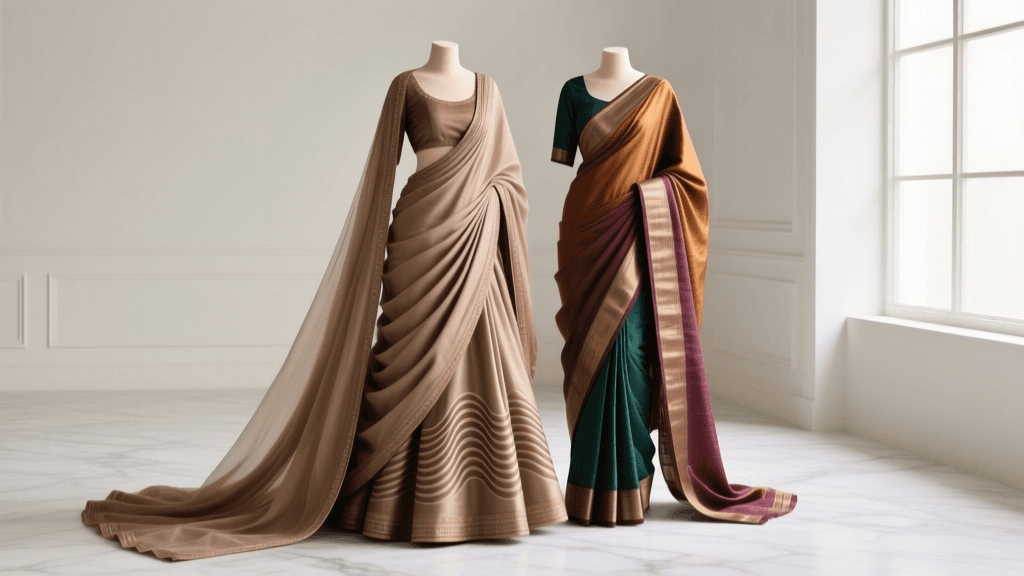
Conversely, if your 2026 bridal aesthetic leans towards contemporary, fluid silhouettes—such as pre-draped sarees, flowing anarkalis, or lightweight sharara sets—Ahimsa silk is a revelation. The spun nature of the fiber gives it a beautiful, organic drape that moves gracefully with the body. It is also significantly more breathable than tightly woven Mulberry silk, making it an ideal choice for daytime ceremonies, outdoor weddings, or summer destinations where temperature regulation is crucial for the bride's comfort.
Sourcing, Pricing, and Authentication in 2026
Sourcing authentic textiles is a critical concern, as the market is unfortunately saturated with synthetic blends and powerloom replicas masquerading as handwoven heritage silks. In 2026, the price gap between Mulberry and Ahimsa silk has narrowed, with premium Ahimsa silk often commanding a higher price due to the labor-intensive, small-batch hand-spinning and weaving processes required to produce it.
When purchasing your bridal fabric or commissioning a designer, always demand verifiable authentication. In India and across the South Asian diaspora, the Silk Mark India label remains the gold standard for verifying pure silk. However, for Ahimsa silk specifically, buyers should look for specialized peace-silk certifications or Global Organic Textile Standard (GOTS) tags that verify both the non-violent harvesting method and the absence of toxic azo dyes during the coloring process. Expect to pay a premium of 20% to 35% for certified, handloom-woven Ahimsa silk compared to standard powerloom Mulberry silk, reflecting the artisanal labor involved.
When investing in heritage textiles for your bridal trousseau, the provenance of the fiber is just as important as the artistry of the embroidery. Always trace your silk back to the loom.
Heirloom Care and Maintenance
Both Mulberry and Ahimsa silks are protein-based fibers that require meticulous care to ensure they survive as heirlooms for future generations. However, their differing structures necessitate slightly varied maintenance routines.
- Dry Cleaning: Both fabrics should be professionally dry-cleaned, but Ahimsa silk requires a gentler, eco-friendly solvent process to prevent the spun fibers from becoming brittle or losing their natural softness.
- Storage Environment: Store your bridal garments in a cool, dark, and humidity-controlled environment. Avoid plastic garment bags, which trap moisture and cause yellowing. Instead, wrap the garments in unbleached, acid-free muslin cloth.
- Pest Prevention: Never use naphthalene balls or chemical mothballs, as they will permanently taint the silk with a harsh odor and degrade the protein structure. Opt for natural cedar wood blocks, dried lavender sachets, or neem leaves, refreshing them every six months.
- Refolding: To prevent permanent crease marks and fiber breakage along the fold lines, unroll and refold your heavy Mulberry silk lehengas and Ahimsa silk sarees at least twice a year, altering the fold lines each time.
Final Verdict for the Modern Bride
Choosing between Mulberry and Ahimsa silk in 2026 is not a matter of one being objectively better than the other; rather, it is about aligning the textile's inherent properties with your specific bridal vision and personal values. If your priority is a heavily embellished, structured, and highly reflective garment that commands the room with traditional opulence, Mulberry silk remains the unmatched champion of Asian bridal couture. Its strength and luminosity provide the perfect canvas for the most demanding artisanal techniques.
However, if you prioritize ethical consumption, superior comfort, and a modern, understated elegance with a rich, textured matte finish, Ahimsa silk is the definitive choice for the contemporary bride. By understanding the unique characteristics of these magnificent fibers, you ensure that your bridal garment is not only a stunning work of art but also a meaningful reflection of your values and a durable heirloom for decades to come.