Top Digital Tools for Chinese Fashion History Research 2026
The Paradigm Shift in 2026 Academic Research
The landscape of Chinese fashion history education has undergone a radical transformation as we navigate through 2026. Gone are the days when academic research relied solely on two-dimensional sketches, static museum mannequins, and fragmented archaeological photographs. Today, leading universities and textile research institutes are leveraging advanced 3D digital reconstruction and artificial intelligence to breathe life into ancient garments. This technological renaissance is not merely a visual exercise; it is a rigorous academic methodology that allows historians, anthropologists, and fashion students to understand the biomechanics, drape, and cultural significance of historical Chinese dress with unprecedented accuracy.
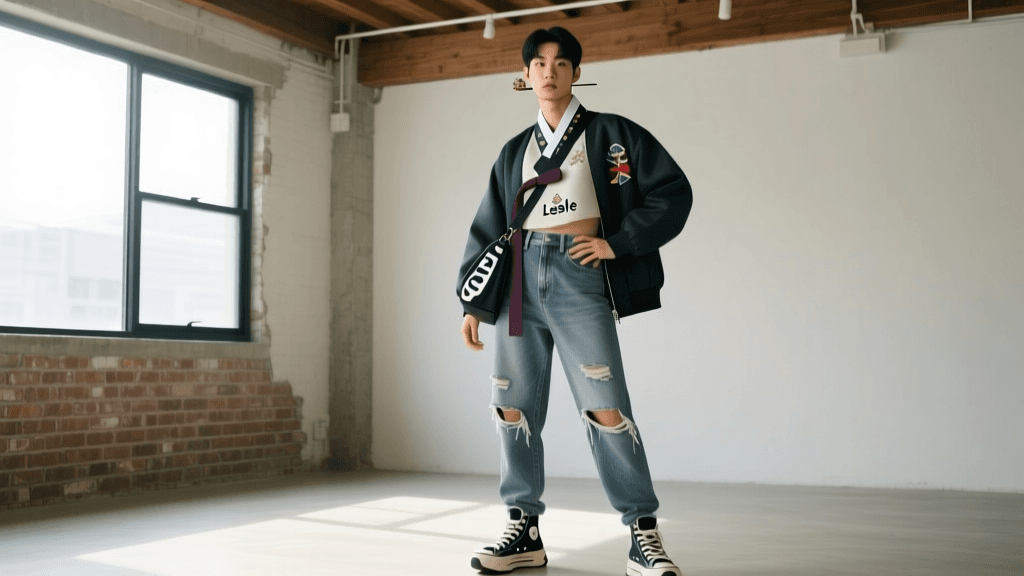
This surge in digital academic research is heavily intertwined with the booming Xin Zhongshi (新中式) movement. As modern consumers and designers demand historically authentic yet contemporary adaptations of traditional Chinese clothing, academic institutions have stepped in to provide the foundational research. By digitally reconstructing ancient textiles, universities are bridging the gap between archaeological preservation and modern commercial design, ensuring that the Xin Zhongshi trend is rooted in genuine historical literacy rather than superficial pastiche.
Core Digital Engines: CLO 3D vs. Style3D in Academia
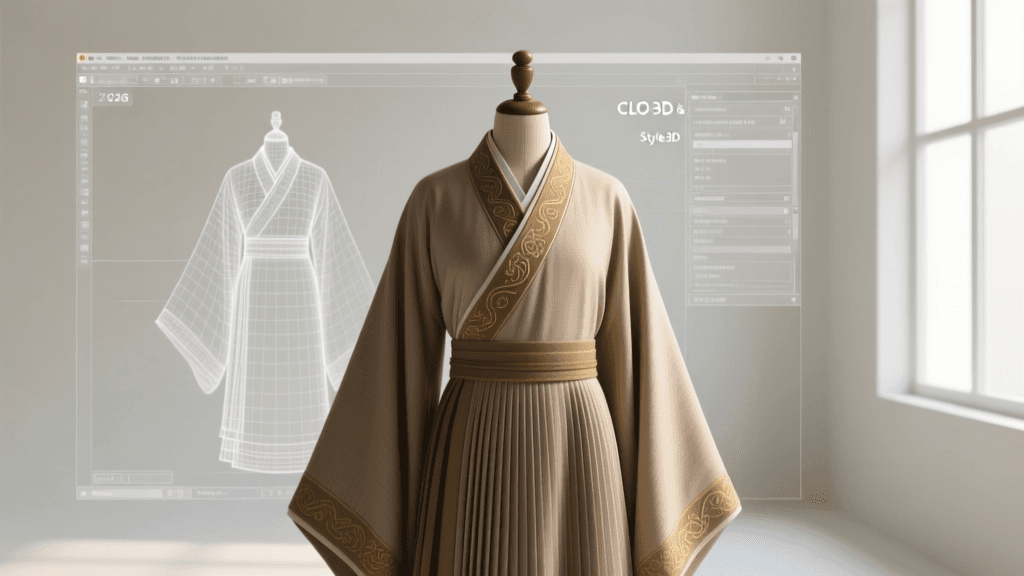
For students and researchers specializing in Asian traditions, mastering digital draping software is now as crucial as understanding historical weaving techniques. In 2026, two platforms dominate the academic sphere: CLO 3D and Style3D. Both have introduced specialized historical fabric libraries and physics engines tailored to the unique properties of ancient Asian textiles, such as raw silk, ramie, and hemp.
Below is a comparative analysis of how these two industry-leading platforms serve Chinese fashion history research in 2026:
| Feature | CLO 3D (2026 Academic Edition) | Style3D (2026 Research Build) |
|---|---|---|
| Historical Fabric Library | Extensive archive of simulated Song and Ming dynasty weaves, including specialized Zhangzhou velvet. | Deep integration with Han and Tang dynasty silks, featuring highly accurate plain gauze and brocade physics. |
| Physics Engine Accuracy | Superior shear and bend mapping for heavy, multi-layered ceremonial robes. | Exceptional micro-drape simulation for ultra-lightweight, single-layer gauze garments. |
| AI Pattern Restoration | Native AI tool that predicts missing embroidery motifs based on regional dynasty databases. | Cloud-based AI that cross-references fragmented archaeological photos to generate seamless 3D textures. |
| Academic Collaboration | Real-time multi-user avatar fitting for cross-university research teams. | Direct API integration with major museum digital archives for instant texture pulling. |
While CLO 3D remains the global standard for complex, multi-layered garment construction, Style3D has carved out a formidable niche in 2026 by offering hyper-realistic simulations of ancient Chinese lightweight silks, a feature heavily utilized by researchers studying the Silk Road textile exchanges documented by the UNESCO Silk Roads Programme.
Case Study: Reconstructing the Mawangdui Han Dynasty Shenyi
To understand the practical application of these tools in a 2026 university curriculum, we can look at the ongoing academic efforts to reconstruct the Shenyi (deep robe) excavated from the Mawangdui Han dynasty tombs. The most famous of these is the plain gauze gown weighing a mere 49 grams, an absolute marvel of ancient Chinese sericulture and weaving.
Recreating this garment digitally poses a massive challenge for fashion physics engines. Standard digital fabrics tend to behave like modern cotton or polyester, lacking the ethereal, fluid drape of 2,000-year-old ultra-fine silk. In 2026, graduate students tackle this by inputting highly specific material parameters into their software:
- Weight: Set to an ultra-light 12 grams per square meter (GSM) to mimic the 49-gram historical artifact.
- Warp and Weft Density: Manually adjusted to 60-70 ends per centimeter, replicating the sparse, breathable weave of Han dynasty plain gauze.
- Bend and Shear Modulus: Lowered significantly to allow the digital fabric to pool and cascade around the avatar exactly as it would in a low-gravity, high-humidity environment.
By applying these precise metrics, researchers can finally visualize how the Shenyi moved during daily life and ceremonial rituals. This digital draping analysis has revealed that the garment's iconic cross-collar (jiaoling youren) required a specific internal weighting system—likely achieved historically through subtle hem stitching—to maintain its structural elegance without restricting the wearer's gait. These findings, published in recent issues of journals affiliated with the Textile Society of America, have fundamentally updated the way historians understand Han dynasty tailoring.
AI-Assisted Motif Restoration and Decoding
Beyond the physical drape of the fabric, a major focus of 2026 academic research is the restoration of faded, damaged, or incomplete textile motifs. Many surviving garments from the Ming and Qing dynasties suffer from severe dye degradation, particularly with organic colors like indigo and safflower, which oxidize and turn brown or black over centuries.
Universities are now employing generative AI models trained specifically on the Metropolitan Museum of Art's Heilbrunn Timeline of Art History and other global digital archives. When a student scans a fragmented piece of Ming dynasty Kesi (silk tapestry), the AI analyzes the remaining thread structure, compares it against thousands of intact motifs from the same era, and generates a mathematically probable full-color reconstruction. This allows researchers to study the semiotics of ancient Chinese fashion—such as the strict sumptuary laws dictating which officials could wear specific ranks of mandarin squares (buzi)—with vibrant, visual clarity that was impossible just a few years ago.
The 2026 University Lab Setup for Textile Research
Conducting this high-level academic research requires specialized hardware. The modern Chinese fashion history lab in 2026 looks vastly different from the traditional sewing studios of the past. A standard university research station now includes:
- Haptic Feedback Gloves: Devices like the 2026 iteration of the TeslaSuit haptic gloves allow researchers to 'feel' the digital friction and weight of simulated historical fabrics, providing tactile data that informs their drape analysis.
- Micro-CT Scanners: Used to scan fragile, calcified textile fragments from archaeological sites without physically unrolling or damaging them, creating immediate 3D mesh files for digital reconstruction.
- Spectral Imaging Cameras: These capture the invisible chemical remnants of ancient dyes, feeding exact color data into the 3D software's material editor to ensure absolute historical accuracy in the digital render.
This hardware ecosystem ensures that the digital garments created by students are not just artistic interpretations, but scientifically validated data models.
Bridging Academia and the Modern Market
The ultimate goal of this rigorous 2026 academic research is to create an open-source, historically accurate database of Chinese garments that can be utilized by both historians and modern designers. As the Xin Zhongshi movement continues to dominate global fashion weeks, the demand for authenticity has never been higher. Brands are increasingly partnering with university research labs to license these digital patterns and drape algorithms, ensuring their modern collections respect the structural integrity and cultural heritage of the original garments.
By merging ancient weaving traditions with cutting-edge 2026 digital physics and AI, academic institutions are safeguarding the legacy of Asian traditions. They are ensuring that the profound history of Chinese fashion is not lost to time, but is instead preserved, understood, and celebrated in a dynamic, three-dimensional digital frontier.