Kimono Couture on 2026 Runways: Global Fashion Week Trends
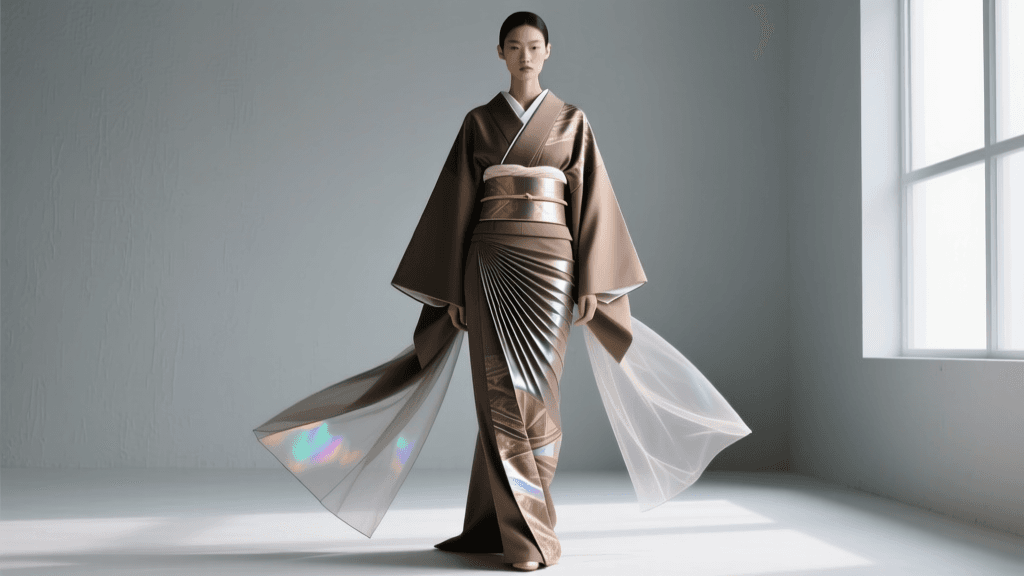
The Renaissance of the Kimono in 2026 Haute Couture
The global fashion landscape in 2026 is undergoing a profound structural and philosophical shift, moving away from the hyper-accelerated trend cycles of the early 2020s toward a deep reverence for heritage craftsmanship and sustainable architecture. Nowhere is this more evident than on the global runways of Paris, Milan, and Tokyo, where the traditional Japanese kimono has transcended mere stylistic referencing to become the foundational blueprint for modern haute couture. For the Spring/Summer and Fall/Winter 2026 collections, international fashion houses are no longer simply printing Orientalist motifs onto Western cuts; they are fundamentally adopting the garment's engineering, philosophy, and textile traditions.
This year's international fashion weeks have showcased a masterclass in cultural appreciation, highlighting how the T-shaped, straight-line construction of the kimono offers a viable, luxurious solution to the fashion industry's ongoing waste crisis. As the Victoria and Albert Museum's extensive kimono archives demonstrate, the garment has historically been a site of immense technological and artistic innovation, a legacy that today's leading designers are eagerly translating for the modern wardrobe.
The Zero-Waste Tanmono Revolution
One of the most significant runway trends of 2026 is the widespread adoption of the tanmono (traditional fabric bolt) cutting method. Driven by the strict compliance mandates of the EU Strategy for Sustainable and Circular Textiles, which reached a critical enforcement milestone this year, luxury houses are under immense pressure to eliminate offcut waste. The traditional kimono is cut from a single bolt of fabric measuring approximately 14 inches wide and 36 feet long, utilizing every inch of the textile without generating scrap.
Designers showcasing at Paris Fashion Week 2026 have adapted this zero-waste philosophy into high-end outerwear and evening gowns. By utilizing straight-line seams and geometric folding techniques rather than curved, body-hugging darts, these collections achieve a dramatic, fluid volume that honors the kimono's original intent. The resulting garments are not only environmentally responsible but also inherently modular, allowing for easy disassembly and upcycling at the end of their lifecycle.
The Obi-Corset Evolution
The obi, the traditional sash used to secure the kimono, has been radically reimagined on the 2026 runways as a structural centerpiece. Historically, a formal obi can be up to 12 inches wide and 13 feet long, requiring intricate tying techniques (musubi). This season, European and Japanese avant-garde designers have merged the obi with Western corsetry, creating the 'Obi-Corset Hybrid'.
Crafted from upcycled vintage Nishijin-ori brocades and reinforced with molded, biodegradable bio-resins, these wide, structured belts cinch the waist while maintaining the rigid, architectural dignity of traditional Japanese formalwear. Runway styling frequently pairs these obi-corsets with flowing, drop-shoulder silk slip dresses or oversized, deconstructed tailoring, creating a striking contrast between rigid structure and liquid drape.
Traditional Elements vs. 2026 Runway Adaptations
To understand the depth of this sartorial translation, it is essential to compare the historical specifications of the kimono with their contemporary haute couture interpretations seen on the 2026 runways.
| Garment Element | Traditional Specification | 2026 Runway Adaptation | Sustainability & Wearability Impact |
|---|---|---|---|
| Silhouette | T-shaped, straight-line seams, flat pattern cutting. | Oversized drop-shoulder coats, modular wrap dresses. | Zero-waste pattern cutting; gender-fluid sizing. |
| Obi (Sash) | Woven silk brocade, 12' long, tied in complex knots. | Structured bio-resin corset-obis with magnetic closures. | Eliminates need for restrictive internal boning; reusable. |
| Haori (Jacket) | Hip-length, open front, worn over kimono. | Cropped, collarless evening jackets with hidden silk linings. | Perfect for modern layering over minimalist base layers. |
| Textile Dyeing | Yuzen (resist dyeing), Shibori (tie-dye). | Digital laser-resist dyeing on lab-grown spider silk. | Reduces water toxicity by 90%; preserves artisanal motifs. |
Textile Innovation: Nishijin-ori Meets Bio-Silk
The textile mills of Kyoto's Nishijin district, famous for their intricate, multi-layered brocade weaving (Nishijin-ori), have partnered with international material science labs for the 2026 fashion season. The result is a new class of heritage textiles that integrate recycled precious metals and lab-grown bio-silk threads. These fabrics retain the heavy, luxurious drape and three-dimensional texture of historical brocades but offer enhanced durability, climate adaptability, and a vastly reduced carbon footprint. According to the Kyoto Costume Institute's digital archives, the preservation of these weaving techniques is paramount, and their integration into global luxury markets ensures the financial survival of multi-generational artisan workshops.
Navigating Cultural Appreciation vs. Appropriation
As the kimono silhouette becomes a staple of global high fashion, the discourse surrounding cultural appreciation versus appropriation remains highly relevant. The 2026 collections that have received the most critical acclaim are those developed in direct collaboration with Japanese artisans, historians, and cultural institutions. Rather than treating the kimono as a costume or a superficial exoticism, leading creative directors are engaging with the garment's profound semiotics—understanding how motifs like the seigaiha (ocean waves) or matsu (pine) convey specific seasonal and philosophical meanings. As noted by the Metropolitan Museum of Art's Heilbrunn Timeline of Art History, the kimono has always been a deeply communicative garment, reflecting the wearer's age, status, and the season; modern fashion houses are finally learning to respect and translate this visual language rather than merely copying it.
How to Style and Source Runway-Inspired Pieces
For collectors, fashion enthusiasts, and stylists looking to incorporate the 2026 kimono-couture aesthetic into their personal wardrobes, the focus should be on authentic vintage sourcing and mindful styling. Here is a practical guide to achieving the runway look:
1. Sourcing Authentic Vintage Haori
The haori is the most accessible entry point into kimono styling. When sourcing vintage pieces (circa 1920s-1980s) from specialized textile dealers or auction houses, look for the following measurements to ensure a modern, runway-proportioned fit:
- Shoulder Drop (Yuki): Opt for a minimum of 25 inches (63 cm) to achieve the exaggerated, slouchy drop-shoulder silhouette favored in 2026.
- Sleeve Length (Sodetake): Seek out deep sleeves (at least 19 inches / 48 cm) to allow for dramatic movement and layering over thick winter knits or sheer summer silks.
- Cost Expectation: A high-quality, vintage silk haori with intact Yuzen dyeing and gold-leaf accents will typically range from $250 to $800 USD in 2026, depending on the rarity of the motif and the condition of the silk crepe (chirimen).
2. Modern Styling Techniques
To avoid looking costumey, contrast the traditional garment with severe, contemporary minimalism. Pair a heavily patterned, vintage silk haori with wide-leg, structured wool trousers and a simple, high-neck ribbed tank. For evening wear, emulate the 2026 Milan runways by belting an open-front kimono-style wrap dress with a wide, structured leather obi-cincture, anchoring the ethereal silk with heavy, architectural footwear. This juxtaposition of historical softness and modern rigidity is the defining hallmark of the current global fashion moment.
Conclusion
The prominence of the kimono on the 2026 global runways is not a fleeting trend, but a necessary evolution in how the fashion industry approaches design, sustainability, and cultural heritage. By embracing the zero-waste architecture, profound textile artistry, and structural elegance of traditional Japanese garment-making, haute couture is finding a path forward that honors the past while radically redefining the future of luxury fashion.