Uzbek Suzani: Embroidery Buying Guide

Suzani: Central Asia's Most Coveted Textile
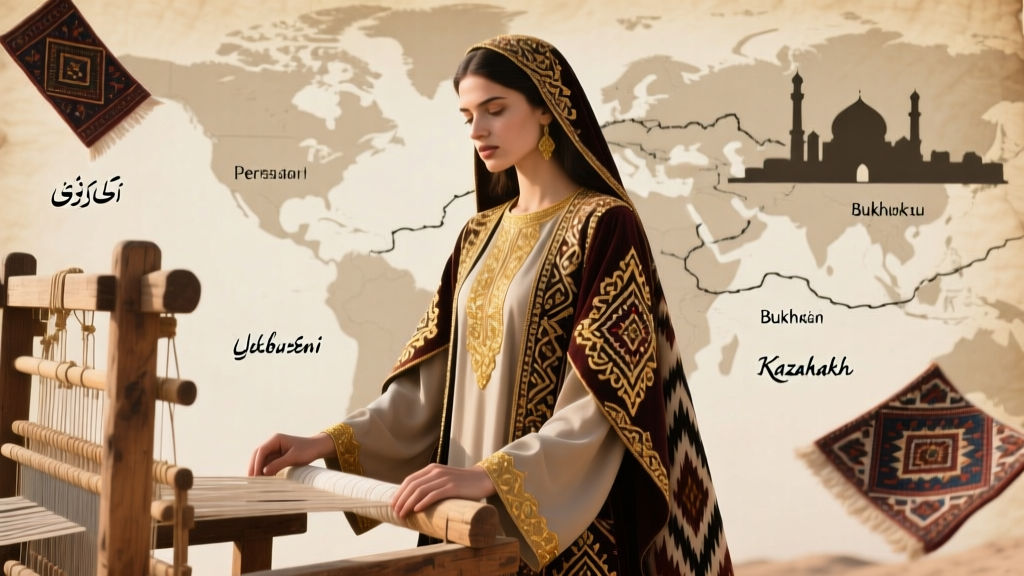
Suzani (from the Persian word suzan, meaning "needle") is the elaborate hand-embroidered textile tradition of Uzbekistan, Tajikistan, and Kazakhstan. These large-format embroideries — typically wall hangings, bed covers, and dowry pieces — feature bold floral and celestial motifs in vibrant silk threads on cotton or silk backgrounds.
Regional Schools
- Bukhara: The most refined style. Large-scale peony and poppy motifs in deep reds, pinks, and golds on white cotton. Characteristic "moon circle" (mohi) design at center.
- Samarkand: Bolder, more graphic. Large central medallion surrounded by radiating floral sprays. Heavy use of black outline stitching.
- Shakhrisabz: Distinctive "tree of life" motif with pomegranate branches. Uses more green and yellow than other regions.
- Nurata: Delicate, small-scale florals on a dark (black or navy) background. Considered the most technically demanding style.
Authenticity Indicators
Genuine hand-embroidered suzani show:
- Slight irregularities in stitch length (machines are too perfect)
- Silk thread that has a natural sheen (synthetic thread is dull or overly shiny)
- Cotton backing that is hand-woven (visible slubs in the fabric)
- Natural dye variations — colors may be slightly uneven within a single area
Price Guide
Vintage suzani (1960s–80s) with natural dyes: $200–800. Modern hand-embroidered: $80–300 depending on size and complexity. Machine-made imitations (sold as "suzani-style"): $15–40. At bazaars in Bukhara and Tashkent, expect to negotiate — start at 50% of the asking price.
Care Tips
Never machine wash suzani. Spot clean with damp cloth and mild soap. For full cleaning, use a textile conservator. Display away from direct sunlight to prevent fading. Store flat, layered with acid-free tissue. Vintage pieces should not be hung by the top edge alone — support the full weight with a hanging sleeve.