The Tibetan Chuba: Heritage of the Nomadic Sheepskin Robe
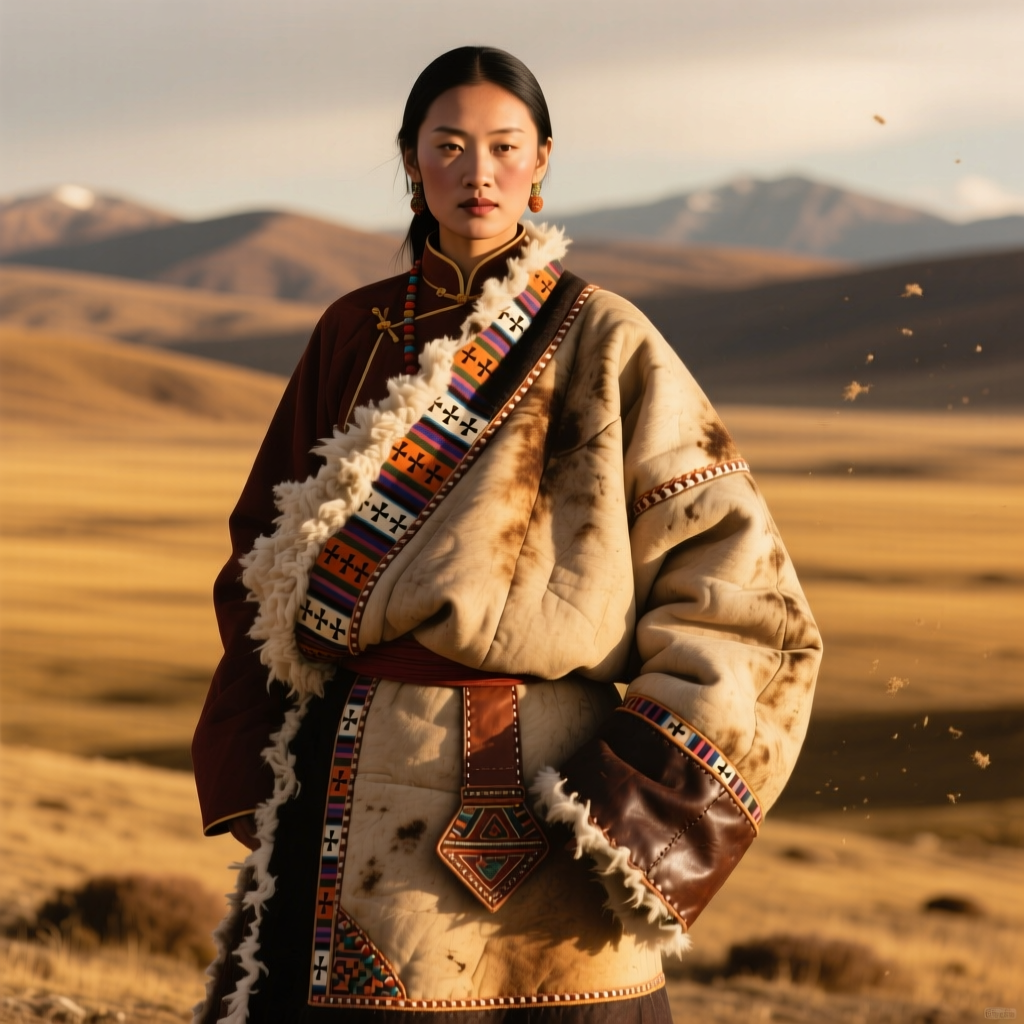
High upon the Tibetan Plateau, a vast and unforgiving expanse often referred to as the Roof of the World, survival has always demanded ingenuity. Amidst freezing winds, high-altitude solar radiation, and dramatic temperature fluctuations, the nomadic pastoralists of the region developed a garment that is as much a portable sanctuary as it is a profound cultural symbol: the Chuba. This traditional sheepskin robe is a masterpiece of functional design and heritage craftsmanship, born from the necessity to thrive in one of the most extreme climates on Earth. To understand the Chuba is to understand the very soul of Tibetan nomadic life, where every stitch, fold, and embellishment tells a story of resilience, identity, and deep respect for the natural world.
The Chuba is far more than mere clothing. For the drokpa (nomadic herders), it serves as a coat, a blanket, a carrying sack, and a marker of social and regional identity. In our broader exploration of global garment heritage, few items so perfectly encapsulate the symbiotic relationship between a culture and its environment. Much like the Mongolian Del of the steppes, the Tibetan Chuba is an architectural marvel of fabric and hide, designed to create a microclimate around the wearer’s body while allowing for the rigorous physical demands of pastoral life.
This comprehensive guide delves into the rich heritage of the Tibetan Chuba, examining its cultural significance, the masterful craftsmanship required to create it, the distinct regional variations across the plateau, and the ongoing efforts to preserve this magnificent nomadic dress in the contemporary era.
The Cultural Significance of the Chuba in Tibetan Society
In traditional Tibetan society, the Chuba is the ultimate expression of cultural identity and social standing. Among nomadic communities, wealth and status are not kept in banks but are worn on the body. A family’s prosperity is vividly displayed through the quality of their sheepskins, the richness of their silk brocades, and the heavy silver and turquoise jewelry that adorns the garment. The Chuba is a wearable treasury, often passed down through generations as a cherished heirloom that carries the blessings and history of the ancestors.
The functional design of the robe is deeply intertwined with the daily rhythms of nomadic life. The Chuba is typically worn with a wide sash or belt tied tightly around the waist. This belting creates a voluminous, pouch-like fold above the waist known as the ngang. This ingenious feature acts as a massive pocket, utilized by nomads to carry everything from roasted barley flour (tsampa) and wooden bowls to small lambs, calves, and even human infants. The garment effectively becomes a hands-free carrying system, allowing herders to work, ride horses, and tend to their flocks with unencumbered arms while keeping their essentials close to their body heat.
Spiritually and socially, the Chuba also dictates etiquette and respect. The manner in which the robe is worn can signal one’s mood, social context, or reverence. In formal settings or when visiting a monastery, the Chuba is worn fully covering both shoulders, presenting a dignified and respectful silhouette. However, during strenuous physical labor or in moments of relaxed informality, it is customary to slip the right arm out of the sleeve and let it hang at the waist or tie it around the back. This iconic one-shouldered look is not merely a stylistic quirk; it is a highly practical method of thermoregulation, allowing the herder to cool down rapidly without removing the heavy garment entirely. For those interested in the mechanics of traditional dress, our guide to layering techniques explores how historical garments managed body temperature long before modern technical fabrics.
Furthermore, the Chuba plays a central role in life’s major milestones. During festivals such as Losar (the Tibetan New Year) and regional horse racing festivals, communities gather in their finest Chubas, transforming the stark landscape into a vibrant tapestry of color and texture. The garment is a vital participant in weddings, religious ceremonies, and coming-of-age rituals, cementing its place as the foundational pillar of Tibetan material culture.
Masterful Craftsmanship: Tanning, Tailoring, and Embellishment
The creation of a traditional sheepskin Chuba is a labor-intensive process that requires immense skill, patience, and an intimate knowledge of animal hides. The foundation of the garment is the sheepskin, chosen for its dense, insulating wool and durable leather backing. The tanning process, historically performed by specialized artisans or within the family unit, relies on entirely natural methods. Hides are cleaned, stretched, and treated with a mixture of yak butter, barley flour, and sometimes animal brains. This organic tanning process softens the leather, making it supple enough to drape elegantly while retaining its windproof and moisture-resistant qualities. For a deeper dive into the material itself, explore our resource on sheepskin leather and its historical applications.
Once the hides are tanned and softened through rigorous manual stretching and scraping, the tailoring begins. Traditional Chuba makers cut the hides with minimal waste, utilizing the natural contours of the skin to form the sweeping, A-line silhouette of the robe. The pieces are stitched together using heavy cotton thread or, in older traditions, animal sinew, which provides incredible tensile strength. The seams must be robust enough to withstand the strain of riding horses, herding yaks, and the sheer weight of the heavy wool lining.
The exterior of the Chuba is where the artistry truly flourishes. While everyday pastoral Chubas might be left as plain, rugged sheepskin, formal and ceremonial robes are covered in luxurious fabrics. Silk brocades, often featuring intricate floral or dragon motifs woven with metallic threads, are carefully tailored over the leather base. The hems, cuffs, and collars are heavily embellished with contrasting bands of colorful fabric, velvet, or fur. Historically, the pelts of river otters or snow leopards were used for these trimmings, serving as ultimate markers of wealth and bravery. In the modern era, ethical considerations and conservation laws have led to the widespread use of faux furs, fox pelts, or elaborately woven textile bands that mimic the luxurious appearance of traditional trims.
The finishing touches of a high-status Chuba involve the integration of precious metals and stones. Heavy silver conchos, engraved with auspicious Buddhist symbols, are often sewn directly onto the leather or attached to the wide belts that secure the robe. Coral, turquoise, and amber beads are incorporated into the garment’s structure or worn as complementary accessories, creating a striking visual contrast against the rich silks and bright white wool of the sheepskin.
Regional Variations Across the Tibetan Plateau
The Tibetan Plateau is vast, encompassing diverse microclimates, altitudes, and cultural sub-groups. Consequently, the Chuba is not a monolith; it exhibits fascinating regional variations that reflect the unique environmental and social realities of different areas. The three primary traditional provinces of Tibet—Amdo, Kham, and U-Tsang—each boast distinct styles of the nomadic robe.
The Elegance of Amdo
In the northeastern region of Amdo, the Chuba is renowned for its length, elegance, and opulent decoration. Amdo Chubas often sweep the ground, requiring the wearer to hike them up and secure them tightly with a sash for walking. The brocades used in Amdo are exceptionally vibrant, featuring wide, elaborate borders of otter-style fur or rich velvets. The silhouette is regal and flowing, often paired with the iconic Amdo fox-fur hat, creating a striking, aristocratic profile that is highly celebrated in Tibetan performing arts and formal portraiture.
The Rugged Practicality of Kham
Moving to the eastern and southeastern regions of Kham, the environment becomes more mountainous and forested, and the lifestyle of the Khampa people is historically associated with a fierce, warrior-like independence. The Kham Chuba is generally shorter and more practical, designed for agility and horseback riding. Khampa men are famous for their elaborate silver jewelry, heavy turquoise amulet boxes (gau), and long swords that are integrated into their wide leather belts. The sheepskin used here is often thicker, and the right-arm-out style of wearing the robe is particularly prevalent among Khampa nomads, showcasing a rugged, fearless aesthetic.
The Refined Styles of U-Tsang
U-Tsang, the central region that includes the capital city of Lhasa, represents the urban and agricultural heartland of Tibet. While nomadic sheepskin Chubas are still worn in the rural highlands of this region, the urban styles are notably more refined and lightweight. Summer Chubas in Lhasa might be made entirely of silk, fine woolen broadcloth, or cotton, lacking the heavy sheepskin lining altogether. The tailoring is more fitted, and the embellishments are subtler, reflecting a cosmopolitan influence born from centuries of trade with neighboring regions along the Himalayan routes. For more on high-altitude textiles, visit our archive on Himalayan textiles.
The Chuba in Modern Times: Preservation and Evolution
As the modern world encroaches upon the most remote corners of the globe, the traditional nomadic lifestyle of the Tibetan Plateau faces unprecedented challenges. Urbanization, climate change, and the influx of mass-produced synthetic outerwear have threatened to relegate the heavy, handmade sheepskin Chuba to the realm of museum artifacts. Synthetic puffer jackets and fleece are undeniably lighter and easier to clean, making them attractive to younger generations engaged in modern labor.
However, the Chuba remains a powerful symbol of cultural pride and resilience. Among the Tibetan diaspora in India, Nepal, and Western nations, the Chuba has experienced a profound revival as a marker of identity and heritage. It is worn with immense pride during cultural festivals, political demonstrations, and community gatherings. In these contexts, the Chuba transcends its utilitarian origins, becoming a potent emblem of survival and cultural continuity.
Within the realm of global fashion and contemporary design, the silhouette and construction of the Chuba continue to inspire. Designers are increasingly looking to traditional winter outerwear for inspiration, adapting the voluminous folds, the dramatic one-shouldered drape, and the rich textural contrasts of the Chuba into modern luxury collections. Furthermore, grassroots cooperatives and artisan workshops within Tibet are working tirelessly to preserve the traditional tanning and tailoring techniques, ensuring that the knowledge of creating a genuine, hand-stitched sheepskin robe is passed down to future generations. Proper maintenance of these heritage pieces is crucial, which is why our guide on leather care is an essential resource for collectors and wearers alike.
Frequently Asked Questions
What is a Tibetan Chuba made of?
A traditional winter Chuba is primarily constructed from sheepskin, utilizing the hide with the wool still attached to provide supreme insulation against freezing temperatures. The leather side is tanned to be supple and windproof, while the wool side faces inward to trap body heat. For formal, ceremonial, or summer variations, the outer shell may be covered in silk brocade, velvet, or fine woolen cloth, and trimmed with faux fur, fox pelts, or colorful woven textiles. The garment is secured using wide belts made of leather, woven yak hair, or silk.
How do you wear and tie a traditional Chuba?
Wearing a Chuba is an art form that requires practice. The robe is intentionally tailored to be significantly longer than the wearer’s height. To wear it, one steps into the sleeves, gathers the excess length, and pulls it up to the desired height (usually around the knees for men, and the ankles for women). A long sash or belt is then wrapped tightly around the waist, securing the garment and creating the voluminous pouch (ngang) above the belt. The sleeves are exceptionally long, often covering the hands entirely to serve as built-in mittens during harsh weather.
What is the difference between a winter and summer Chuba?
The winter Chuba, known as the tsakha, is made of heavy, fleece-lined sheepskin designed to withstand sub-zero temperatures and biting winds. It is incredibly heavy and warm. In contrast, the summer Chuba, or phugu, is made from lighter materials such as unlined woolen broadcloth, cotton, or silk. The summer versions provide protection against the intense high-altitude sun and sudden rain showers without causing the wearer to overheat during the warmer months or during strenuous physical activity.
Are Chubas still worn by nomads today?
Yes, the Chuba is still actively worn by nomadic pastoralists (drokpa) on the Tibetan Plateau, particularly during the harsh winter months and during cultural festivals. While modern synthetic garments have been adopted for everyday, heavy-labor tasks due to their lightweight nature and ease of washing, the sheepskin Chuba remains unmatched in its ability to provide warmth during freezing nights on the open steppe. It also remains the mandatory attire for weddings, religious ceremonies, and formal community gatherings.
How should a vintage sheepskin Chuba be cared for?
Caring for a vintage or handmade sheepskin Chuba requires specialized attention to preserve both the leather and the wool. It should never be machine washed or dry-cleaned with harsh chemicals, as this will strip the natural oils from the leather, causing it to crack and shrink. Instead, the wool lining should be gently brushed and aired out in the shade, while the leather exterior can be conditioned with specialized, natural leather balms. When storing the garment, it should be kept in a cool, dry, and well-ventilated area, preferably draped over a wide, padded hanger to maintain its structural integrity and prevent the heavy hide from tearing at the shoulders.


