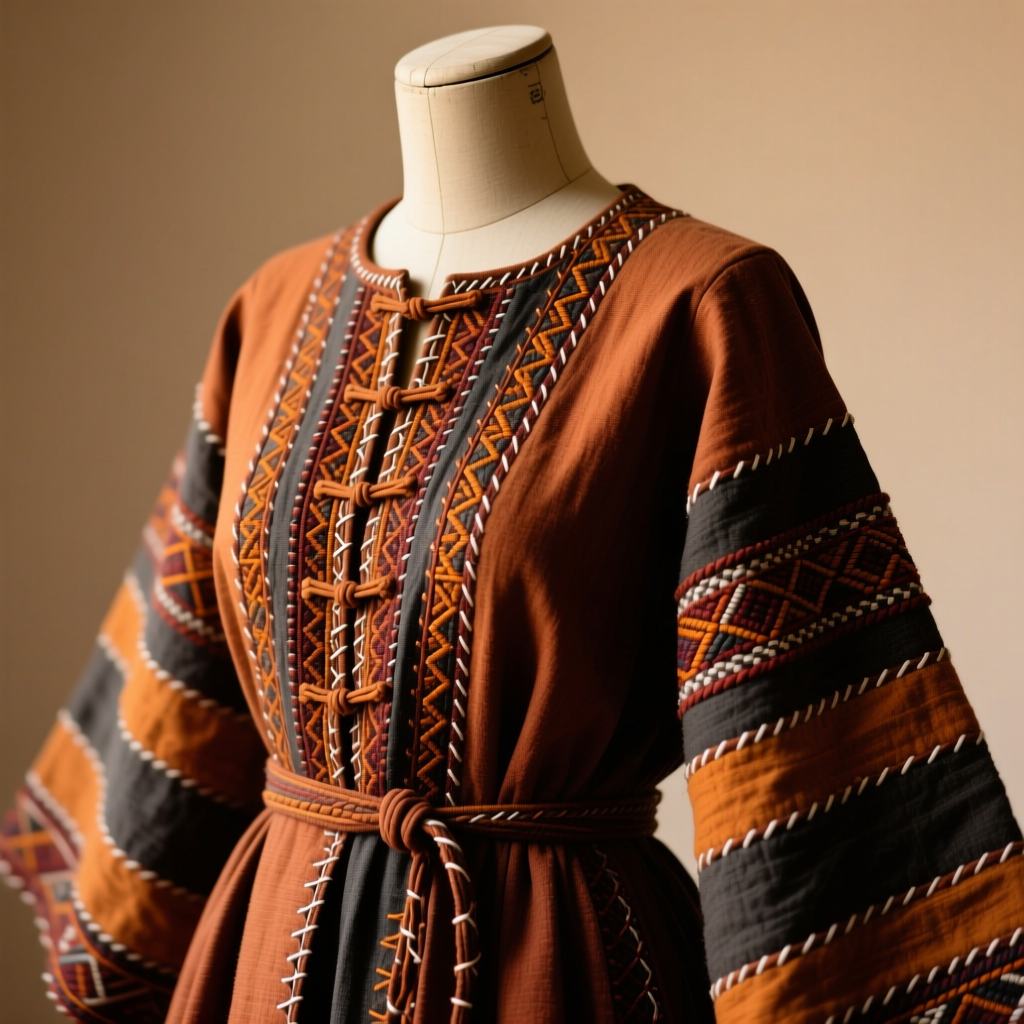
Zardozi Gold Embroidery: The Living Legacy of Mughal Heritage
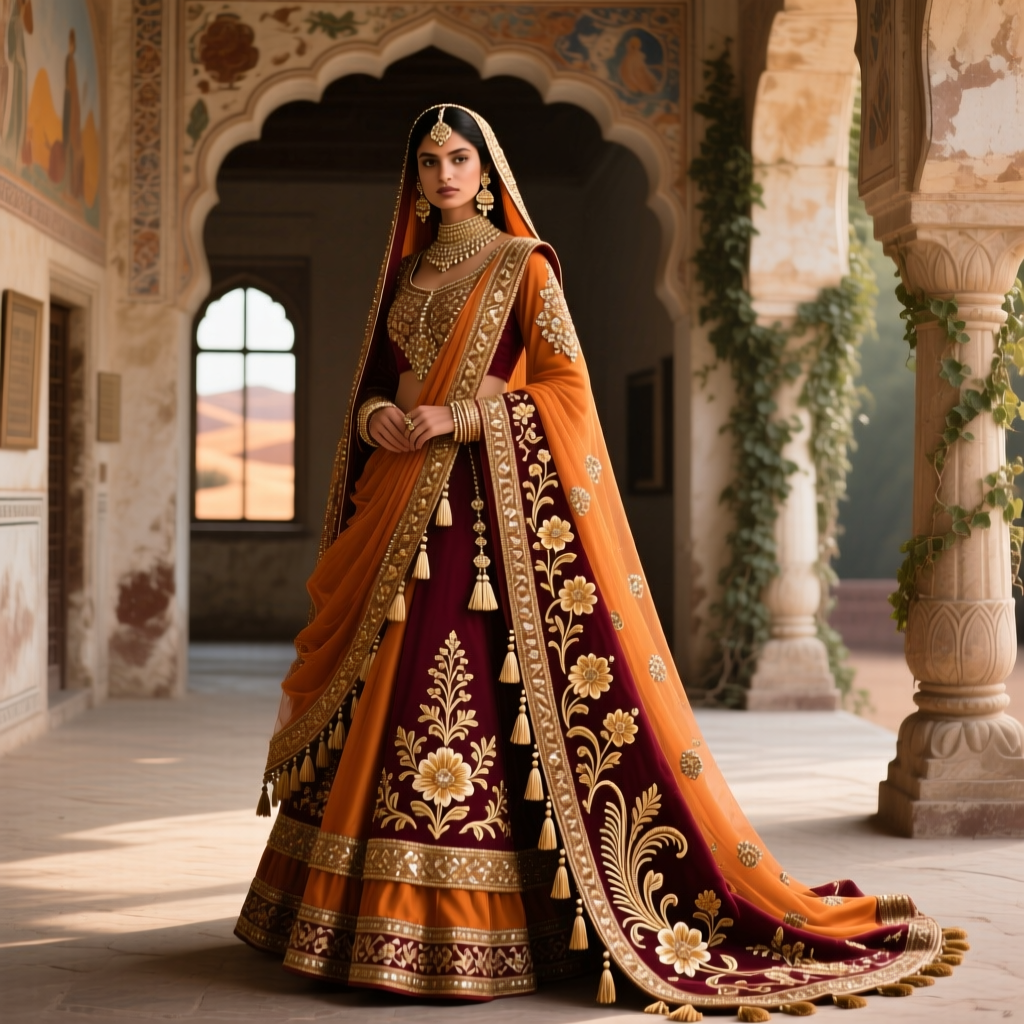
Zardozi Gold Embroidery: The Living Legacy of Mughal Heritage
In the flickering candlelight of imperial Mughal workshops, artisans bent over stretched fabric, threading needles with filaments of real gold and silver. Each stitch was an act of devotion — to beauty, to power, to an aesthetic vision that would define an entire civilization's approach to adornment. This was the world of Zardozi, a gold embroidery tradition whose origins stretch back through centuries of Persian influence, Central Asian nomadic artistry, and the magnificent courts of the Mughal Empire.
Zardozi — from the Persian words zar (gold) and dozi (embroidery) — represents far more than a decorative technique. It is a cultural artifact, a testament to the extraordinary convergence of artistic traditions that occurred when Persian craftspeople migrated to the Indian subcontinent and merged their heritage with indigenous textile mastery. The result was an embroidery form so exquisite that it became synonymous with royalty itself, adorning the garments of emperors, the trappings of war elephants, and the ceremonial textiles of courts that dazzled European visitors.
Today, Zardozi continues to thrive as one of the most sought-after embellishment techniques in South Asian couture and global fashion alike. Understanding its heritage is essential for anyone who appreciates the intersection of craftsmanship, culture, and clothing. For a deeper exploration of how historical embroidery techniques influence contemporary wardrobes, our comprehensive embroidery techniques guide offers further context.
The Historical Roots of Zardozi: From Persia to the Mughal Courts
The story of Zardozi begins long before the Mughal Empire rose to prominence on the Indian subcontinent. Gold thread embroidery has been practiced in various forms across ancient civilizations — references to gold-embroidered garments appear in Vedic texts, Greek historical accounts, and Persian court chronicles. However, the specific tradition we recognize today as Zardozi crystallized during the cultural flowering that accompanied Islamic empires expanding eastward from Persia and Central Asia.
When Babur established the Mughal Empire in the early sixteenth century, he brought with him not only military ambition but also a deep appreciation for Persian arts and aesthetics. His successors, particularly Akbar, transformed the imperial court into a magnet for artisans from across the Islamic world. Akbar's ain-i-akbari — the administrative document chronicling his reign — records the existence of extensive imperial workshops (karkhanas) where hundreds of embroiderers worked under royal patronage, producing textiles of staggering complexity.
Under Akbar's patronage, Zardozi underwent a remarkable transformation. Persian motifs — the paisley (boteh), the cypress tree, geometric arabesques — merged with indigenous Indian design elements such as the lotus, the mango (ambi or paisley as it later became known in the West), peacocks, and elaborate floral vines. This synthesis created a visual vocabulary that was distinctly Mughal: neither wholly Persian nor wholly Indian, but something altogether new and magnificent.
The imperial karkhanas were organized with extraordinary precision. Master designers (naqshbands) created patterns on paper, which were then transferred to fabric. Specialist embroiderers executed different elements — some focused solely on gold thread work, others on seed pearls, still others on the setting of precious stones within the embroidery. The hierarchical structure ensured consistent quality while allowing for innovation, and the finest pieces could take months or even years to complete.
Shah Jahan, the emperor who commissioned the Taj Mahal, elevated Zardozi to perhaps its highest expression. His court textiles featured gold embroidery so dense and refined that the base fabric was nearly invisible beneath the metallic surface. Ceremonial robes, tent hangings, palanquin covers, and even the shrouds of royal horses were embellished with Zardozi work that consumed vast quantities of gold and silver thread. The aesthetic philosophy was clear: the magnificence of the ruler was made visible through the magnificence of his garments and surroundings. Our guide to Mughal textile traditions explores how these imperial workshops shaped broader fashion history.
Craftsmanship and Technique: The Art Behind Every Stitch
To understand Zardozi is to appreciate the extraordinary technical skill required to produce it. Unlike many embroidery forms that can be executed with a single needle and thread, Zardozi employs a complex toolkit and a range of specialized stitches that demand years of apprenticeship to master.
Materials: The Substance of Splendor
Traditional Zardozi relies on several key materials. The most iconic is dabka — a tightly coiled spring of gold or silver wire that is cut to length and stitched onto the fabric surface, creating a raised, three-dimensional effect. Kora is a similar coiled wire but with a matte finish, while katori refers to small, cup-shaped metallic elements that catch light from multiple angles. Sitara — tiny metallic stars or sequins — add sparkle, while badla is flat metallic wire used for filling larger areas.
The thread itself was historically made from real gold or silver. A thin strip of metal was wound around a silk or cotton core thread, creating a flexible but genuinely precious embroidery medium. While modern Zardozi often uses copper wire coated with gold or silver-colored polish — making the craft more accessible — authentic heritage pieces and high-end couture still employ real metal threads. Seed pearls, semi-precious stones, and silk threads in vivid colors frequently complement the metallic elements.
The Embroidery Process
Zardozi is executed on a fabric stretched taut over a wooden frame called an adda. The artisan sits with the frame positioned so that one hand works above the fabric and one below — a technique that allows for precise tension control and rapid stitching. The needle, called an aari in some regional variations, is often a crochet-hook-like instrument that pulls thread up through the fabric from below.
Key stitches include the zardozi stitch itself — a couching technique where metallic threads are laid on the fabric surface and secured with tiny, nearly invisible silk stitches. The kamdani stitch creates flat, shimmering surfaces by pulling badla wire through the fabric. Mukaish work involves twisting thin metallic strips directly into the fabric weave. More elaborate techniques include tila work, where dabka coils are arranged in dense, sculptural patterns, and gotta patti, where thin ribbons of metallic fabric are applied in geometric or floral designs. Our hand embroidery basics guide provides foundational knowledge for understanding these techniques in broader context.
The design process begins with a khaka — a tracing made on thin paper with tiny pinprick holes along the design lines. The khaka is placed over the fabric and charcoal powder is rubbed through the holes, transferring the pattern. The embroiderer then works freehand within this outline, making countless micro-decisions about stitch density, direction, and the interplay of different metallic elements.
A single square inch of fine Zardozi can contain hundreds of individual stitches, and a heavily embroidered bridal garment may represent thousands of hours of labor. The finest historical pieces achieve a sculptural quality where the embroidery stands proud of the fabric surface, creating shadows and depth that shift with movement and light. For those interested in how such embellished garments are styled, our styling guide for embellished garments offers practical advice.
Cultural Significance: Zardozi as Identity, Power, and Ceremony
Zardozi has never been merely decorative. Throughout its history, it has functioned as a powerful cultural signifier — communicating social status, marking ceremonial occasions, and embodying the values and aspirations of the communities that produce and wear it.
In the Mughal period, sumptuary codes governed who could wear gold-embroidered garments. The emperor bestowed khilats — robes of honor — upon nobles and visiting dignitaries, with the richness of the Zardozi work directly reflecting the recipient's rank and the emperor's favor. A heavily gold-embroidered robe was not simply a gift; it was a political statement, a wearable declaration of alliance and hierarchy. This tradition of ceremonial gifting through textiles has deep roots across many cultures, as explored in our heritage article on ceremonial textile traditions.
Within South Asian wedding culture, Zardozi occupies a central and enduring role. Bridal garments — particularly the lehenga, gharara, and heavily embroidered dupattas — have traditionally featured extensive Zardozi work as a marker of the occasion's significance and the families' social standing. The gold in the embroidery carries symbolic weight: it represents prosperity, auspiciousness, and the permanence of the marital bond. Many families preserve Zardozi-embroidered wedding garments across generations, treating them as heirlooms that carry the emotional weight of family history.
Religious and spiritual contexts have also shaped Zardozi's significance. Shrine coverings (chadars) at Sufi tombs and Islamic religious sites frequently feature gold embroidery, connecting the craft to devotional practice. Temple hangings in certain Hindu traditions similarly employ metallic embroidery, demonstrating how the craft transcends religious boundaries to become a shared cultural vocabulary of reverence and celebration.
The cultural weight of Zardozi extends to its role in regional identity. Entire communities have built their social and economic structures around the craft, with knowledge passing from parent to child across generations. In cities like Lucknow, the identity of the artisan community — the karigars — is inseparable from their mastery of Zardozi. Their craft is not simply a profession but a cultural inheritance, a source of communal pride, and a living connection to a historical narrative that stretches back centuries.
Regional Variations: Lucknow, Hyderabad, Delhi, and Beyond
While Zardozi is practiced across South Asia and in diaspora communities worldwide, distinct regional traditions have emerged over centuries, each reflecting local aesthetic preferences, patronage histories, and technical innovations.
Lucknow: The Heart of Refined Zardozi
Lucknow, the capital of Uttar Pradesh, is widely regarded as the spiritual home of Zardozi in its most refined form. Under the patronage of the Nawabs of Awadh — who ruled from the early eighteenth century until the mid-nineteenth century — Lucknow developed an aesthetic sensibility characterized by elegance, subtlety, and extraordinary technical refinement. Lucknow Zardozi tends to favor floral motifs executed with a lighter touch than the dense, heavy work of Mughal imperial pieces. The integration of Zardozi with chikankari — Lucknow's famous white-on-white embroidery — creates garments of remarkable sophistication, where gold elements accent rather than overwhelm.
The city's artisan quarters, particularly in the old city areas around Chowk and Aminabad, still house thousands of Zardozi workers. Family workshops operate in narrow lanes, with master artisans training apprentices in techniques that have been preserved through unbroken chains of transmission. The Geographical Indication (GI) status granted to Lucknow Zardozi recognizes the unique relationship between place and craft that the city embodies.
Hyderabad: Deccan Splendor
Hyderabad's Zardozi tradition developed under the Qutb Shahi dynasty and later the Nizams, whose immense wealth and Persian-influenced court culture fostered a distinctive style. Hyderabadi Zardozi is characterized by bolder, more geometric designs and a greater use of kamdani and mukaish techniques alongside traditional couching. The Nizam's courts favored opulent textiles that combined Zardozi with rich brocades and heavy silks, creating a sumptuous aesthetic that reflected the region's status as one of the wealthiest princely states. Our Deccan textile heritage article provides more context on this rich regional tradition.
Delhi and Agra: Imperial Echoes
As the former Mughal capitals, Delhi and Agra maintain Zardozi traditions that most directly echo the imperial style — dense, heavily worked designs with strong Persian influence. The artisan communities in these cities trace their lineage to the original Mughal karkhana workers, and their work often features the classic Mughal repertoire: intricate jaali (lattice) patterns, formal floral compositions, and the elegant interplay of gold and silver threads. Delhi's Zardozi bazaar near Jama Masjid remains a vibrant center for both production and trade.
Other Centers
Beyond these primary centers, Zardozi is practiced in cities including Varanasi (where it combines with the city's legendary silk weaving traditions), Kolkata, Chennai, and in parts of Pakistan, particularly in Lahore and Multan. Each center brings local aesthetic sensibilities to the craft, ensuring that Zardozi remains a living, evolving tradition rather than a static museum artifact.
Modern Preservation and Contemporary Revival
The survival of Zardozi through the colonial period and into the modern era is a story of resilience, adaptation, and renewed appreciation. British colonial rule disrupted traditional patronage networks as Indian courts lost political power and economic resources. Machine-made imitations flooded markets, and the artisan communities faced severe economic pressure. Many karigars abandoned the craft for more stable livelihoods, and the transmission of knowledge from generation to generation was threatened.
The post-independence period brought both challenges and opportunities. Government initiatives, including the establishment of craft emporia and the granting of Geographical Indication status, provided institutional support. However, the most significant revival has come from the fashion industry. Leading South Asian couturiers have consistently championed Zardozi, incorporating it into bridal collections, haute couture presentations, and ready-to-wear lines that reach global audiences. This commercial demand has provided economic incentives for artisans to continue practicing and teaching their craft.
Contemporary designers have also pushed Zardozi in innovative directions. Rather than simply reproducing historical patterns, many are experimenting with abstract designs, unconventional color combinations, and the integration of Zardozi with Western garment silhouettes. Gold-embroidered elements appear on structured blazers, evening gowns, and accessories that reach audiences far beyond traditional South Asian markets. This cross-cultural adaptation ensures the craft's relevance while raising important questions about authenticity, appropriation, and the ethics of luxury production. Our guide to East-meets-West fashion explores how traditional crafts find new expression in global style.
Non-governmental organizations and craft advocacy groups have played a crucial role in preservation efforts. Initiatives that provide healthcare, education, and fair-trade pricing to artisan communities address the structural challenges that threaten craft survival. Training programs aimed at young artisans — including efforts to recruit women into what was historically a male-dominated craft — are expanding the community of practitioners and bringing fresh perspectives to the tradition.
Digital documentation projects are also contributing to preservation. High-resolution photography, video recordings of master artisans at work, and digital archives of historical patterns create records that can inform future generations even as living practitioners age. Museums worldwide — from the Victoria and Albert Museum in London to the Calico Museum in Ahmedabad — maintain important collections of historical Zardozi textiles that serve as references and inspiration for contemporary artisans.
The challenge of preservation extends beyond technique to encompass the entire ecosystem that supports the craft: the metalworkers who produce dabka and badla, the dyers who color silk threads, the woodworkers who build adda frames, and the merchants who connect artisans with markets. Protecting Zardozi means protecting this entire network of interdependent skills and relationships. Our sustainable luxury fashion guide examines how conscious consumption supports traditional craft ecosystems.
Frequently Asked Questions
What is the difference between Zardozi and other forms of gold embroidery?
Zardozi is distinguished by its specific techniques and materials, particularly the use of dabka (coiled metallic springs), badla (flat metallic wire), and the couching method where metallic elements are secured to the fabric surface with nearly invisible stitches. While other cultures have developed gold embroidery traditions — including Chinese goldwork, Japanese nuitori, and European ecclesiastical goldwork — Zardozi's particular combination of three-dimensional raised elements, Mughal-Persian design vocabulary, and the integration of supplementary embellishments like seed pearls and sitara sequins creates a distinctive aesthetic. The use of the adda frame and the two-handed stitching technique are also characteristic of the Zardozi tradition.
Is real gold still used in Zardozi embroidery today?
Authentic Zardozi using real gold and silver thread is still produced, primarily for high-end couture, museum commissions, and heritage collectors. However, the majority of contemporary Zardozi uses copper or alloy wire coated with gold or silver-colored finishes, significantly reducing cost while maintaining visual impact. The term "tested zari" refers to threads with a genuine silver base coated in gold, while "plastic zari" uses synthetic cores with metallic coatings. The choice of material depends on the intended use, budget, and the values of the wearer — some brides and collectors specifically commission pieces using real metal threads for their intrinsic and symbolic value.
How can I identify authentic handcrafted Zardozi versus machine-made imitations?
Authentic handcrafted Zardozi has several distinguishing characteristics. On the reverse side of the fabric, hand-stitched Zardozi shows slight irregularities in stitch spacing and tension — these are signs of human craftsmanship rather than defects. The metallic elements, particularly dabka coils, will have subtle variations in their placement and orientation. Machine-made imitations tend to have perfectly uniform stitching on the reverse side and may use glued rather than stitched metallic elements. Authentic Zardozi also has a distinctive weight and flexibility — the embroidery moves with the fabric rather than sitting stiffly on its surface. Purchasing from reputable sources, including established artisan cooperatives and certified dealers, provides additional assurance of authenticity.
How should Zardozi-embroidered garments be cared for and stored?
Zardozi garments require careful handling to preserve their beauty and structural integrity. They should be dry cleaned by specialists experienced with metallic embroidery, as water and standard cleaning chemicals can tarnish or corrode metallic threads. Storage should be in a cool, dry environment, with garments wrapped in acid-free muslin cloth rather than plastic, which can trap moisture and accelerate tarnishing. Heavy Zardozi garments should be stored flat rather than hung, as the weight of the embroidery can distort and damage the base fabric over time. Periodic airing in shade (never direct sunlight) helps prevent mustiness. For heirloom pieces, consultation with a textile conservation specialist is recommended. Our luxury textile care guide offers comprehensive advice on preserving embellished garments.
Where can one learn Zardozi or support artisan communities directly?
Several pathways exist for those interested in learning Zardozi or supporting its practitioners. In India, institutions such as the National Institute of Fashion Technology (NIFT) and various state-level craft training centers offer courses in traditional embroidery techniques. Artisan cooperatives and fair-trade organizations, including groups like the Self-Employed Women's Association (SEWA) and specialized craft NGOs, connect buyers directly with Zardozi workers, ensuring fair compensation. Internationally, textile arts schools and cultural organizations occasionally offer workshops taught by master Zardozi artisans. Supporting certified fair-trade retailers, commissioning directly from artisan workshops, and choosing heritage brands that transparently credit and compensate their embroiderers are all meaningful ways to contribute to the craft's sustainability.
Zardozi gold embroidery remains one of humanity's most extraordinary textile traditions — a craft that carries within its stitches the history of empires, the ingenuity of generations of artisans, and the enduring human desire to transform fabric into art. Whether encountered on a Mughal-era robe in a museum vitrine or on a contemporary couture gown on a modern runway, Zardozi speaks to something fundamental about the relationship between craftsmanship, culture, and the garments we choose to adorn ourselves with. Its preservation is not merely a matter of protecting a technique but of honoring the communities, histories, and creative visions that have sustained this magnificent art form across centuries.