Scottish Tartan: Weave and Clan History

The Thread That Binds a Clan
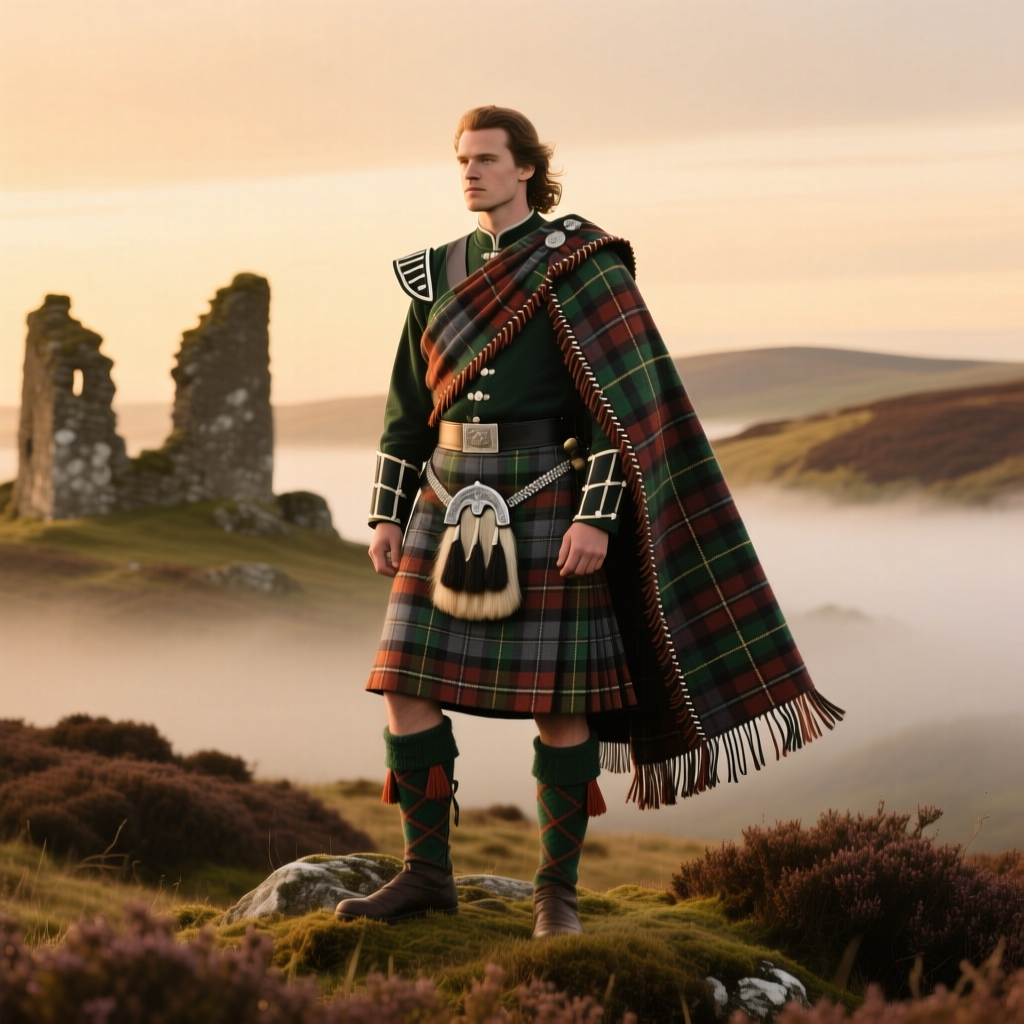
Tartan is patterned cloth of criss-crossed colored bands forming a distinctive sett. Its deepest significance lies in the Scottish Highlands, where specific patterns became associated with clans and regions. This association was formalized after the Jacobite rebellions when Highland dress was banned and then romanticized during the Victorian era.
How a Sett Is Defined
A tartan sett is defined by a thread count formula specifying threads of each color in warp and weft. The Royal Stewart sett uses specific counts in red, green, blue, yellow, black, and white. Weaving creates diagonal color blending at intersections. Most traditional tartans are symmetrical.
- Sett: repeating pattern defined by thread counts
- Thread count: formula for each color
- Symmetrical: pattern mirrors itself
- Asymmetrical: non-repeating (modern designs)
Tartan Variations
Most clan tartans come in color variations: ancient (lighter vegetable-dye colors), modern (deeper chemical-dye colors), weathered (faded appearance), hunting (muted earth tones), and dress (white prominent for formal occasions). Same sett, different palettes for different occasions.
Registration and Modern Use
The Scottish Register of Tartans maintains official records for all new designs. Anyone can design and register a tartan. Today tartan appears in fashion, sport uniforms, corporate branding, and national celebrations, keeping the tradition visible and relevant worldwide.