Samoan Siapo: Bark Cloth and Ceremonial Art
The rhythmic, echoing clap of wooden beaters against bark is the ancestral heartbeat of traditional Samoan villages. Long before the introduction of woven cotton or synthetic fabrics to the Pacific Islands, the people of Samoa clothed themselves, honored their deities, and bound their communities together with siapo. Known more broadly across the globe as tapa, Samoan siapo is a magnificent bark cloth that serves as far more than a mere textile. It is a canvas of cultural identity, a physical manifestation of spiritual power, and a vital currency of respect within the complex social fabric of the fa'a Samoa (the Samoan way).
To understand siapo is to understand the soul of Samoa. The creation of this remarkable material requires an intimate knowledge of ethnobotany, a mastery of natural dyes, and a deep reverence for ancestral motifs. Unlike woven textiles that rely on looms and interlaced threads, siapo is born from the earth, beaten into existence, and painted with the sap of native trees. In our exploration of global textile history, the bark cloth traditions of Oceania stand out as a testament to human ingenuity. For a broader look at how different cultures approach fabric creation, you can explore our global textile weaving techniques archives, but today, we turn our focus entirely to the profound heritage of Samoan siapo.
The Cultural & Ceremonial Significance of Siapo
In Samoa, siapo is never just a piece of cloth; it is a living participant in the social and spiritual life of the community. The cultural significance of siapo is deeply intertwined with fa'alavelave, the traditional system of ceremonial obligations and familial exchanges that dictates the flow of respect, wealth, and social standing. During major life events such as weddings, funerals, and the bestowing of matai (chiefly) titles, siapo is presented as a gift of immense value. The quality, size, and intricacy of the bark cloth presented directly reflect the honor and respect the giver holds for the recipient.
Historically, siapo was used to clothe chiefs and priests, its intricate patterns signaling rank and spiritual authority. The cloth was believed to hold mana (spiritual power), especially when crafted by high-ranking women or used in sacred rituals. In funerary traditions, siapo plays a crucial role in wrapping the deceased, serving as a protective and honorable shroud that guides the spirit into the afterlife. The exchange of siapo at weddings cements alliances between families, with the bride’s family often presenting finely crafted bark cloths to the groom’s family as a symbol of their wealth, skill, and commitment to the new union.
Furthermore, siapo acts as a historical record. The motifs painted onto the cloth are not merely decorative; they are a visual language that tells stories of the natural environment, ancestral myths, and clan lineages. When a family unfurls a vintage siapo during a ceremony, they are not just displaying a textile; they are reading the history of their ancestors. This deep sociocultural embedding ensures that siapo remains highly relevant today, maintaining its status as a cornerstone of traditional Pacific garments and ceremonial life, even in the face of modern globalization.
The Craftsmanship of Bark Cloth: From Tree to Textile
The journey of siapo begins in the soil, with the cultivation of the u'a tree, known scientifically as the paper mulberry (Broussonetia papyrifera). The cultivation of the u'a is an agricultural art in itself. The trees are carefully tended in specialized groves, protected from strong winds and pests, and harvested when they reach the perfect maturity—typically between one and two years of age, when the trunk is straight and the bark is thick but pliable.
Once harvested, the outer bark of the u'a is meticulously scraped away using a traditional shell or metal tool called an 'ie. This reveals the pristine, white inner bast fibers, which are the true source of the cloth. These inner strips are then soaked in water to soften them, preparing them for the most physically demanding phase of the process: the beating.
The beating of the bark is a communal and rhythmic activity, traditionally performed by women. Using a wooden anvil called a tutua and a four-sided wooden beater known as an i'e, the artisan rhythmically strikes the soaked bark. The i'e features grooves of varying depths on each of its four sides. The artisan begins with the coarser grooves to break down and spread the fibers, gradually turning the beater to use the finer, smoother sides. This process does not merely flatten the bark; it felts the natural cellulose fibers together, widening and lengthening the material until it becomes a supple, cohesive sheet of cloth.
Because a single strip of u'a bark is relatively narrow, multiple strips must be joined together to create the large ceremonial cloths required for fa'alavelave. This is achieved using a natural adhesive made from masoa (arrowroot starch). The edges of the beaten bark are overlapped and rubbed with the sticky masoa paste, creating seamless bonds that are incredibly strong once dried. The resulting canvas is smooth, durable, and ready to receive the intricate designs that define Samoan siapo.
Tapa Painting & Natural Dyes: The Art of Siapo Motifs
The visual brilliance of Samoan siapo lies in its earth-toned palette and striking geometric patterns, achieved entirely through natural, locally sourced dyes. The traditional color palette consists of rich reddish-browns, deep blacks, and the natural off-white of the beaten bark. For those fascinated by the intersection of botany and art, our natural dyes and textiles guide offers further insights into how indigenous cultures harness their environments for color.
The primary brown dye is derived from the sap of the o'a tree (Bischofia javanica). When the bark of the o'a is scraped, it exudes a pale yellow sap. As this sap is exposed to air and applied to the porous bark cloth, it undergoes a natural oxidation process, deepening into a vibrant, rust-red or rich chocolate brown. The black dye, used for outlining and adding stark contrast, is created from lama—the soot collected from burning candlenuts (Aleurites moluccanus), which is then mixed with a binder like o'a sap or water.
The application of these dyes is where the artistry of siapo truly shines. Samoan artisans utilize two primary methods for creating patterns: the upeti (rubbing board) and freehand painting. The upeti is a masterful tool, traditionally crafted from the midribs of coconut leaves or carved wooden boards featuring raised geometric designs. A strip of siapo is placed over the upeti, and the artisan rubs a swab of o'a sap over the cloth. The raised patterns of the board transfer through the cloth, creating a repeating, textured motif. This rubbing technique is highly distinctive to Samoan siapo and allows for the rapid creation of complex, uniform backgrounds.
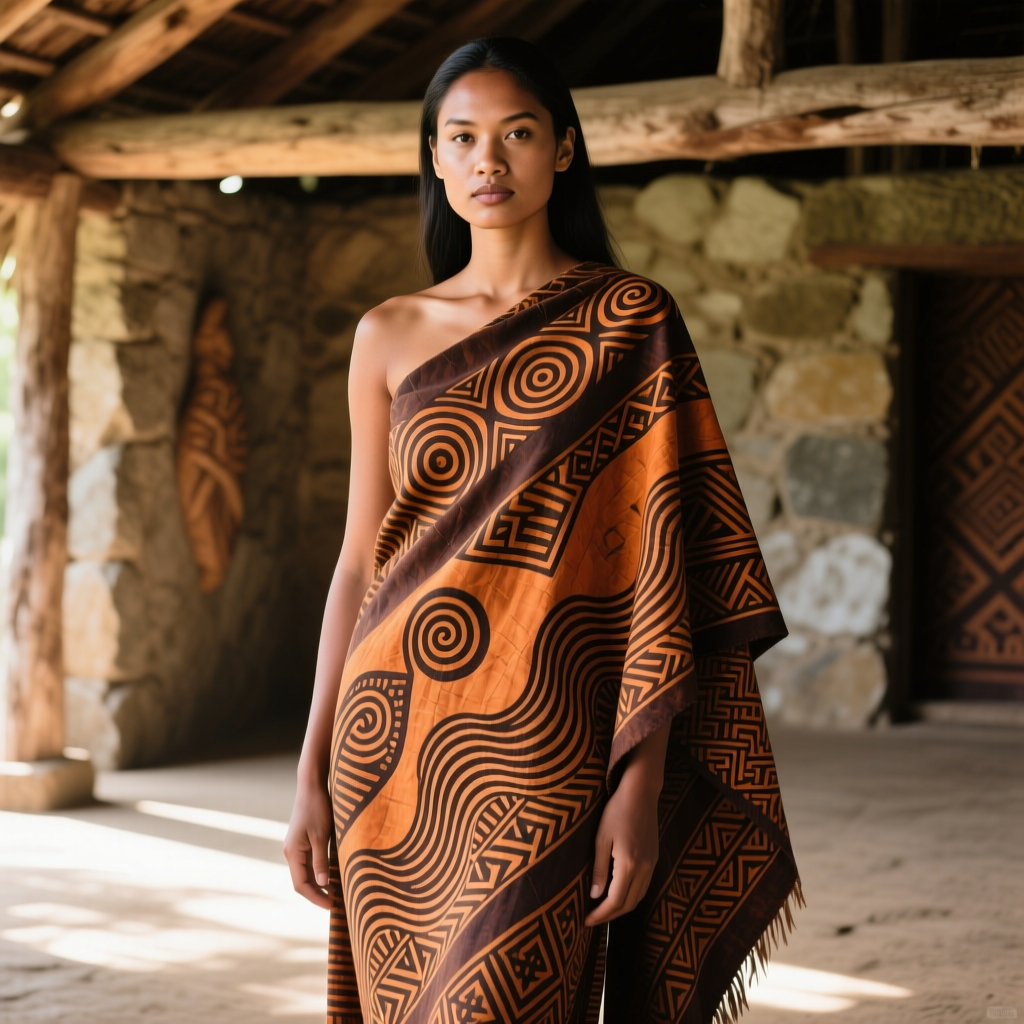
Once the background is established via the upeti, master artisans use fine brushes made from pandanus leaves or natural fibers to paint intricate freehand details. Traditional motifs are heavily inspired by the Samoan environment. Common designs include the fetu (stars), fa'a'ali'o (snail shells), gogo (the frigate bird), and stylized representations of pandanus leaves and ocean waves. The symmetry and precision required to execute these freehand motifs demand years of apprenticeship and a steady, practiced hand.
Regional Variations & Comparative Pacific Tapa
While the term “tapa” is used globally to describe bark cloth, the traditions vary wildly across the Pacific Islands, with each nation and archipelago boasting its own distinct techniques, motifs, and ceremonial uses. Comparing Samoan siapo to its regional cousins highlights the unique cultural fingerprint of Samoa.
In neighboring Tonga, the bark cloth is known as ngatu. Tongan ngatu is often created in massive, continuous sheets that can stretch for dozens of meters, requiring the coordinated labor of dozens of women. Unlike the Samoan reliance on the carved wooden upeti for rubbing patterns, Tongan artisans frequently use a technique involving stencils made from banana leaves or pandanus, and they often incorporate a unique scenting process, perfuming the cloth with fragrant oils and smoked woods. The visual layout of Tongan ngatu tends to feature large, grid-like compartments filled with repetitive motifs, contrasting with the fluid, interconnected geometric flows often seen in Samoan siapo.
In Fiji, the bark cloth is called masi. Fijian masi is renowned for its stark, high-contrast designs, often utilizing intricate stenciling and a heavier application of black soot dye. While Samoan siapo heavily features the warm, oxidized reds and browns of the o'a tree, Fijian masi often leans into striking black-and-white contrasts or incorporates earthy ochres. Furthermore, the ceremonial exchange of masi in Fiji, while important, operates under different sociopolitical structures than the deeply codified fa'alavelave system of Samoa.
These regional variations are a beautiful reminder that while the foundational material—the paper mulberry tree—is shared across Oceania, the artistic expression is fiercely local. Samoan siapo remains distinct for its masterful use of the upeti rubbing board, its specific botanical dyes, and its profound integration into the chiefly and familial hierarchies of the fa'a Samoa.
Modern Preservation & The Future of Siapo
The influx of cheap, mass-produced imported textiles in the modern era posed a significant threat to the daily use of bark cloth across the Pacific. However, the ceremonial and spiritual importance of siapo has acted as a powerful bulwark against its extinction. In Samoa, siapo is not a relic of the past confined to museum glass; it is a living, breathing art form that continues to be produced, exchanged, and revered.
Preservation efforts are largely driven by the women of Samoan villages, particularly through komiti o tina (women’s committees), which organize communal beating sessions and ensure the transmission of ethnobotanical knowledge to younger generations. Master artisans are increasingly recognized not just as local craftspeople, but as vital custodians of national heritage. Cultural centers and educational programs in both Samoa and the Samoan diaspora have placed a renewed emphasis on teaching the complete siapo process, from planting the u'a saplings to carving the upeti boards.
Furthermore, contemporary Pacific artists are finding innovative ways to integrate siapo into modern contexts. Bark cloth motifs are being adapted into digital art, contemporary fashion, and global interior design, introducing the beauty of Samoan craftsmanship to a worldwide audience. This fusion of ancient technique and modern expression ensures that siapo remains economically viable and culturally relevant. Supporting these artisans through ethical trade and cultural appreciation is a key component of sustainable artisan crafts, allowing traditional communities to thrive on their own terms.
As long as the fa'a Samoa endures, the sound of the wooden beaters will continue to echo through the valleys of Samoa. The heritage of siapo is a testament to the resilience of Pacific Islander culture, proving that true artistry is not just about creating something beautiful, but about weaving the very fabric of a community’s identity.
Frequently Asked Questions
What is the difference between siapo and tapa?
The term “tapa” is a generalized word, originally from Tahiti, that was adopted by Western explorers and anthropologists to describe all bark cloth made across the Pacific Islands. “Siapo” is the specific Samoan word for this bark cloth. While all siapo is tapa, not all tapa is siapo. Using the term siapo respects the specific linguistic and cultural heritage of Samoa, distinguishing it from the Tongan ngatu, Fijian masi, or Hawaiian kapa.
How long does it take to make a traditional Samoan siapo?
The creation of a large, ceremonial-grade siapo is a labor-intensive process that can take several weeks or even months from start to finish. This timeline includes the harvesting and soaking of the bark, the days spent rhythmically beating and joining the fibers, the harvesting and preparation of the natural dyes, and the meticulous, time-consuming process of rubbing and freehand painting the intricate motifs. It is a communal effort that requires immense patience and skill.
Can siapo be washed or worn as everyday clothing?
Traditional siapo is highly sensitive to water. Because it is made from felted bark fibers rather than spun and woven threads, submerging it in water or washing it with modern detergents will cause the natural starches to dissolve and the fibers to break down. Historically, while simpler, undecorated bark cloths were used for everyday garments, the highly decorated, painted siapo of today is reserved for ceremonial display, gifting, and wall hangings. It is treated as a precious heirloom rather than everyday apparel.
What do the geometric patterns on siapo represent?
The geometric patterns on Samoan siapo are deeply symbolic, drawing heavy inspiration from the natural environment and Samoan cosmology. Motifs like the fetu represent stars and celestial navigation, while designs mimicking the gogo (frigate bird) or the fa'a'ali'o (snail shell) reflect the local fauna and the spiral nature of life and genealogy. These patterns are not random; they are a visual language that conveys the artisan’ connection to their land, their ancestors, and the spiritual realm.
Where can I ethically purchase authentic Samoan siapo?
To ethically purchase authentic siapo, it is best to buy directly from recognized Samoan artisans, village women’s cooperatives, or reputable cultural centers and galleries in Samoa and American Samoa. When purchasing from international galleries or online platforms, look for transparent supply chains that guarantee fair compensation to the original makers and provide documentation of the cloth’s provenance. Avoid mass-produced, machine-printed fabrics that mimic tapa patterns, as these do not support the traditional heritage artisans.