The Romanian Ie Blouse: Decoding the Heritage of Altiță Embroidery
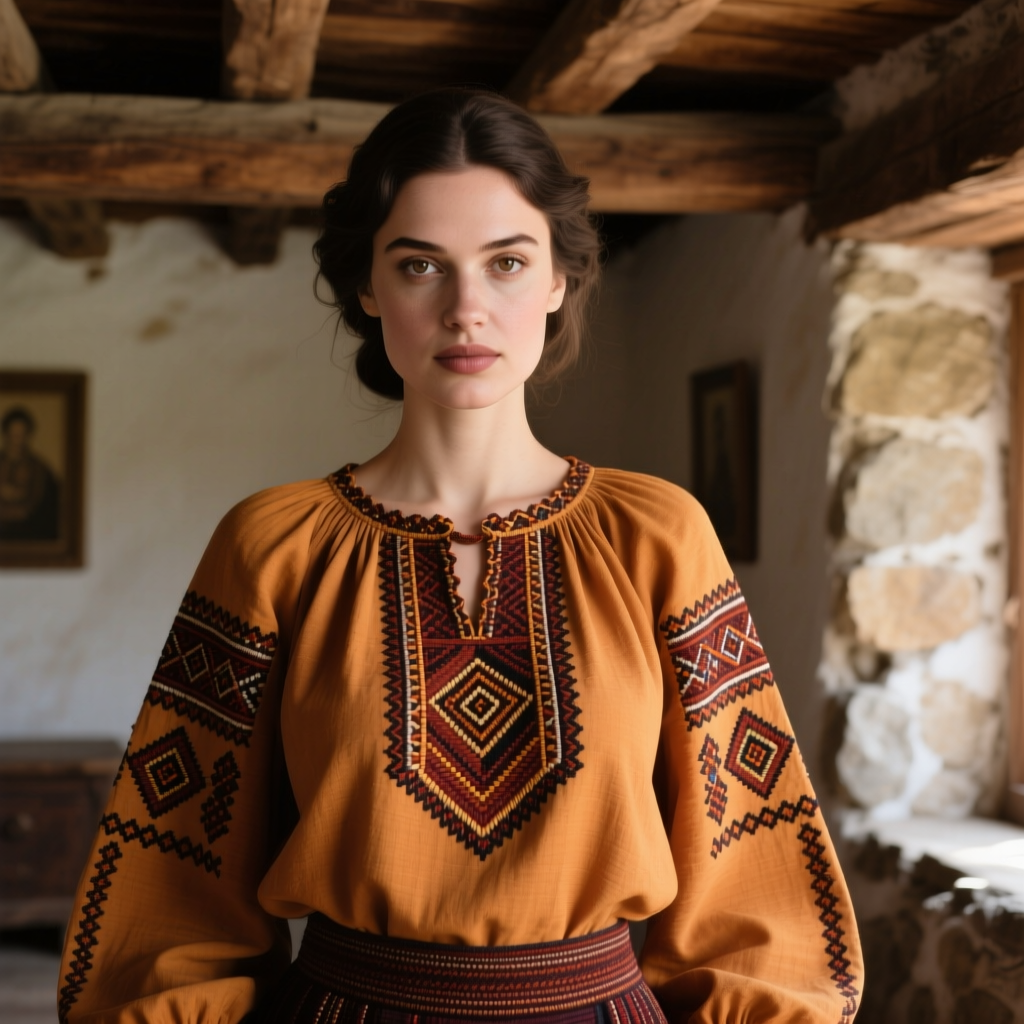
The traditional Romanian ie (pronounced ee-eh) is far more than a simple piece of rural clothing; it is a wearable manuscript, a talisman of protection, and a profound expression of cultural identity. Woven from the fibers of the earth and stitched with the cosmological beliefs of generations, the ie stands as one of the most iconic garments in global textile history. At the very heart of this masterpiece lies the altiță, the heavily embroidered shoulder panel that serves as the crown jewel of the blouse. To understand the altiță is to understand the soul of Romanian village life, where every stitch carried meaning, and every color told a story of the natural world.
As we explore the rich tapestry of global garment heritage, the Romanian ie offers a masterclass in how clothing can transcend mere utility to become a sacred object. This article delves deep into the history, craftsmanship, regional variations, and modern preservation of the altiță embroidery, revealing why this traditional blouse continues to captivate designers, historians, and fashion enthusiasts today.
The Anatomy of the Ie: Understanding the Altiță
To truly appreciate the artistry of the Romanian blouse, one must first understand its unique architectural structure. Unlike modern garments that are cut and tailored to follow the contours of the body, the traditional ie is constructed from rectangular pieces of hand-woven fabric, gathered and tied to create volume and movement. This ancient method of zero-waste pattern making ensures that not a single thread of the precious hand-woven cloth is wasted.
The blouse is composed of four distinct structural and decorative elements:
- The Bentiță (Collar): A narrow, embroidered band that encircles the neck, serving as the foundational border of the garment.
- The Altiță (Shoulder Panel): The most prestigious and densely embroidered section of the blouse. Positioned squarely on the shoulder, the altiță acts as an epaulet of identity. It is typically a rectangular or square block of intricate geometric or floral motifs, designed to be highly visible when the wearer is viewed from the front, back, or side.
- The Încreț (Gathering): Located just below the altiță, this is a delicate, often monochromatic section where the fabric is gathered. It features subtle, net-like stitching that transitions the eye from the heavy shoulder panel down to the sleeve.
- The Râuri (Rivers): Translating literally to "rivers," these are the vertical stripes of embroidery that flow down the length of the sleeve, guiding the eye toward the wrist and mimicking the flow of water across the landscape.
The altiță is undeniably the focal point of the garment. Historically, because the shoulder is a primary point of physical strain, the dense embroidery of the altiță served a dual purpose: it reinforced the seam where the sleeve met the bodice, while simultaneously providing a highly visible canvas for the maker to display her skill, her village's specific motifs, and her family's social standing. For those interested in the structural nuances of historical garments, our guide to traditional embroidery techniques explores how functional reinforcement often evolved into high art.
Threads of Identity: Cultural Significance and Symbolism
In traditional Romanian society, the ie was never merely decorative. It was an integral part of the agrarian worldview, deeply intertwined with the cycles of nature, the changing of the seasons, and the spiritual realm. The motifs chosen for the altiță were not selected at random; they were ancient symbols passed down from mother to daughter, functioning as a visual language of protection, fertility, and cosmic order.
The Semiotics of the Stitch
The geometric patterns found on the altiță are among the oldest in European textile history. Some of the most prominent motifs include:
- Coarnele Berbecului (The Ram's Horns): A ubiquitous motif symbolizing strength, vitality, and the masculine principle. It was often stitched to protect the wearer from evil spirits and to ensure the fertility of the flocks and the land.
- Soarele (The Sun): Represented by rhombuses, rosettes, or radiating crosses, the sun motif was a plea for good weather, bountiful harvests, and the life-giving warmth necessary for survival.
- Pomul Vieții (The Tree of Life): A symbol of immortality, connection between the earthly and the divine, and the unbroken lineage of the family.
- Dinții Lupului (The Wolf's Tooth): A zig-zag pattern representing the fierce protection of the wild, often used to ward off the "evil eye" and malicious intentions.
The Language of Color
Before the advent of synthetic aniline dyes, the colors of the altiță were extracted directly from the local flora and fauna, imbuing the threads with the essence of the earth. The interplay of color was strictly governed by regional traditions and the symbolic weight of each hue.
Red, derived from the roots of the madder plant (roiba), was the color of life, blood, fire, and youthful vitality. It was the dominant color in the altiță of young, unmarried women. Black, extracted from walnut hulls or oak galls, represented the earth, wisdom, and maturity; it was often favored by older women or used to provide stark, elegant contrast. Gold and Yellow, sourced from saffron, onion skins, or weld, symbolized the sun, wealth, and spiritual enlightenment. Blue, though rarer and often imported via woad or indigo, represented the sky, water, and the heavens.
The combination of these colors created a visual harmony that mirrored the balance of the sun & moon, the earth & sky, and the masculine & feminine energies of the universe.
A Tapestry of Regions: Variations Across the Carpathians
Romania's diverse topography, divided by the sweeping arc of the Carpathian Mountains and the vast plains of the south, gave rise to a staggering variety of altiță styles. Because villages were often isolated by harsh winters and difficult terrain, distinct micro-cultures developed, each with its own sartorial dialect. Identifying the origin of a vintage ie requires a trained eye, as the altiță holds the geographical coordinates of its creation.
Moldova and Bucovina: The Polychrome Masterpieces
In the northeastern regions of Moldova and Bucovina, the altiță is renowned for its dense, heavy embroidery and vibrant polychrome palettes. The shoulder panels here are often wide and thick, utilizing heavy wool or silk threads alongside cotton. The motifs are bold, featuring large, interlocking geometric shapes and stylized floral elements. The extensive use of deep reds, vibrant greens, and metallic gold threads reflects a culture that sought to visually combat the long, dark, and freezing winters with an explosion of color and warmth.
Muntenia and Wallachia: Elegance in Restraint
South of the Carpathians, in the plains of Muntenia and Wallachia, the aesthetic shifts dramatically toward refinement and subtlety. The altiță here is often narrower and more delicate. The color palette is frequently monochromatic or duotone, favoring the sophisticated combination of black & gold, or deep navy blue on pristine white linen. The geometric patterns are incredibly intricate, resembling fine lace or spiderwebs, showcasing the maker's mastery over microscopic counting and thread manipulation. This elegant restraint mirrors the refined, courtly influences that historically permeated the southern principalities.
Oltenia: Bold Contrasts and Abstract Forms
In the southwestern region of Oltenia, the altiță takes on a highly graphic, almost modernist quality. The embroidery is characterized by stark contrasts, often utilizing deep black and vivid red, or striking combinations of orange and blue. The motifs here lean heavily into abstract geometry, with sharp angles, prominent zig-zags, and stylized representations of local flora. The Oltenian blouse is celebrated for its dynamic energy and the striking visual impact of its shoulder panels.
Transylvania: Woven Textures and Cultural Crossroads
Transylvania, nestled within the Carpathian basin, was historically a crossroads of Romanian, Saxon, and Hungarian cultures. The altiță in this region often reflects this cultural exchange. While the fundamental structure of the ie remains Romanian, the embroidery techniques sometimes incorporate woven patterns directly into the fabric on the loom, rather than being stitched on afterward. The collars are often higher and more structured, and the shoulder motifs may feature denser, tighter geometric grids that reflect Central European textile influences.
The Art of the Stitch: Craftsmanship and Materials
The creation of a traditional ie with an authentic altiță was a monumental undertaking that required immense patience, physical endurance, and spiritual dedication. The process began long before the needle ever pierced the cloth.
From Field to Fabric
The foundation of the blouse was the cloth itself, typically woven from hand-spun hemp, flax, or, in later centuries, cotton. The preparation of flax and hemp was a labor-intensive communal effort involving retting, breaking, scutching, and hackling to extract the fine fibers. These fibers were then spun into thread using a drop spindle or spinning wheel. The finest, softest threads were reserved for the warp & weft of the garment's fabric, while slightly thicker threads were spun specifically for the embroidery.
The Meditative Process of Embroidery
The embroidery of the altiță was executed using a meticulous thread-counting technique, most commonly a form of cross-stitch or double-running stitch. The artisan did not use a drawn pattern; instead, she counted the threads of the woven fabric, ensuring perfect symmetry and mathematical precision. A single miscounted thread could throw off the entire geometric alignment of the shoulder panel.
This work was rarely done in broad daylight, as the sun was needed for agricultural labor. Instead, the altiță was stitched during the long winter evenings, by the flickering light of oil lamps or the hearth fire. It was considered a meditative, almost sacred act. Women would often stitch during periods of religious fasting or specific lunar phases, believing that the spiritual purity of the maker would be woven into the protective qualities of the garment. The reverse side of an authentic altiță is nearly as neat as the front, a testament to the maker's skill and the belief that the garment must be pure inside and out.
For a deeper dive into how historical garments were constructed by hand, explore our comprehensive guide to vintage textile craftsmanship and care.
Preserving the Legacy: The Ie in Modern Wardrobes
For much of the mid-twentieth century, the traditional ie was relegated to museum displays and folk dance ensembles, viewed as a relic of a bygone agrarian era. However, the garment has experienced a profound renaissance, transitioning from a rural artifact to a globally recognized symbol of heritage and slow fashion.
UNESCO Recognition and Cultural Pride
A pivotal moment in the preservation of this craft was the inscription of the "Arts and skills associated with the traditional blouse with embroidery on the shoulder (altiță)" on the UNESCO Representative List of the Intangible Cultural Heritage of Humanity. This global recognition highlighted the blouse not just as a piece of clothing, but as a living tradition encompassing the cultivation of raw materials, natural dyeing, weaving, and the transmission of ancestral motifs. It sparked a renewed interest among younger generations of Romanians to learn the craft from village elders, ensuring the survival of the altiță.
The Bohemian Revival and Ethical Fashion
In the contemporary fashion landscape, the Romanian ie has become a cornerstone of bohemian and folk-inspired fashion. Its relaxed silhouette, breathable natural fabrics, and stunning handcrafted details align perfectly with the modern desire for sustainable, artisanal clothing. Designers and vintage collectors alike prize the ie for its ability to elevate a modern wardrobe, pairing effortlessly with tailored trousers, denim, or flowing skirts.
However, this popularity has also led to the mass production of cheap, machine-made imitations that strip the garment of its cultural context and exploit traditional motifs without compensating the communities that created them. True preservation lies in ethical appreciation: seeking out authentic vintage pieces, supporting contemporary Romanian artisans who stitch by hand, and understanding the profound history woven into every altiță. When styled with respect and knowledge, the ie serves as a powerful bridge between the ancient world and the modern wardrobe, as detailed in our ultimate guide to styling the peasant blouse.
Frequently Asked Questions
What exactly is the altiță on a Romanian ie?
The altiță is the distinct, heavily embroidered rectangular or square panel located on the shoulder of the traditional Romanian ie blouse. It is the most complex and prestigious part of the garment, serving both as a structural reinforcement for the shoulder seam and as the primary canvas for displaying regional identity, social status, and protective symbols through intricate geometric and floral motifs.
How long does it take to embroider a traditional ie blouse?
Creating a fully hand-embroidered ie with a complex altiță is an extraordinary investment of time. Depending on the density of the embroidery, the fineness of the thread, and the hours the artisan can dedicate to the work each day, it can take anywhere from three to six months of continuous stitching to complete a single blouse. This equates to hundreds of hours of meticulous, hand-counted needlework.
Can the Romanian ie be worn in modern, everyday fashion?
Absolutely. The ie is incredibly versatile and translates beautifully into contemporary wardrobes. Because it is traditionally made from breathable natural fibers like linen and cotton, it is comfortable for everyday wear. It can be styled to contrast with modern pieces—tucked into high-waisted denim, layered under a structured blazer, or paired with wide-leg linen trousers for a sophisticated, bohemian silhouette.
What is the difference between an authentic vintage ie and a modern reproduction?
An authentic vintage ie will feature hand-woven fabric (often with slight irregularities in the weave), hand-spun embroidery threads, and natural dyes that have softened beautifully over decades. The embroidery on the reverse side will be nearly as neat as the front. Modern mass-produced reproductions typically use machine-woven fabric, synthetic threads with a high sheen, and machine embroidery that leaves a messy, tangled web of threads on the inside of the garment.
How should I care for a vintage or hand-embroidered ie blouse?
Vintage and hand-embroidered blouses require gentle, specialized care to preserve the integrity of the fibers and the vibrancy of the dyes. They should always be hand-washed in cool water using a mild, pH-neutral detergent. Never wring or twist the fabric; instead, gently press the water out and roll the garment in a clean towel to absorb excess moisture. Lay the blouse flat to dry away from direct sunlight, and iron it on the reverse side while it is still slightly damp to protect the raised embroidery of the altiță.