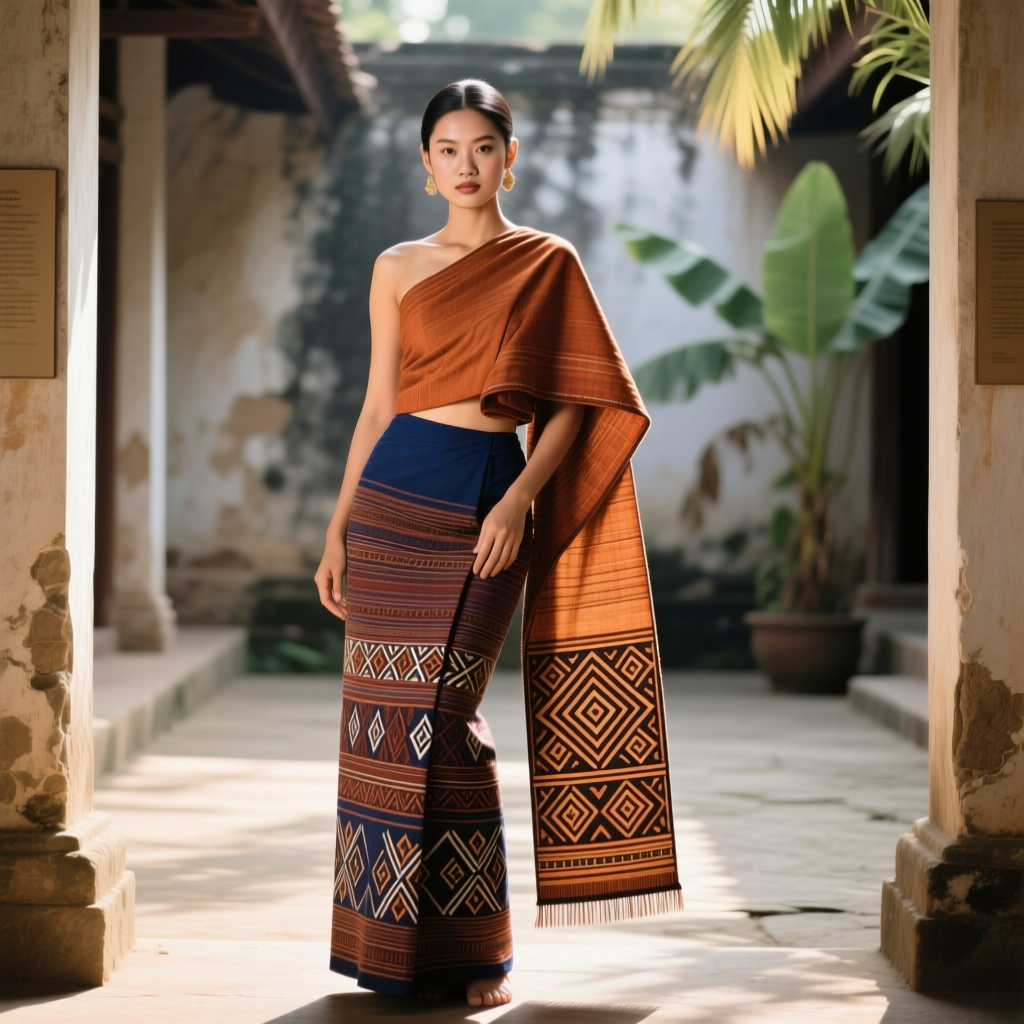
Piña Fabric & the Barong Tagalog: A Living Heritage of Philippine Weaving
The Philippines is home to one of the most remarkable textile traditions in the world: the art of weaving piña fabric. Derived from the fibers of the Red Spanish pineapple plant, this gossamer-thin textile has been the foundation of the Barong Tagalog, the national garment of the Philippines, for centuries. Together, piña fabric and the Barong Tagalog represent a convergence of indigenous craftsmanship, colonial history, and enduring cultural identity that continues to captivate textile historians, fashion scholars, and garment enthusiasts around the globe.
To understand the Barong Tagalog is to understand the soul of Filipino artisanship. Unlike most national garments that rely on imported textiles or industrial production, the finest Barong Tagalog is woven entirely by hand from fibers extracted, processed, and loomed within the Philippine archipelago. The resulting fabric is so fine and translucent that it has been compared to spider silk, woven moonlight, and the breath of the tropics. It is a textile that defies the industrial age, demanding patience, precision, and a deep reverence for tradition at every stage of its creation.
This article explores the intertwined heritage of piña fabric and the Barong Tagalog — from the botanical origins of the pineapple fiber to the intricate hand-loomed cloth, from the colonial-era evolution of the garment to the passionate efforts underway to preserve this living tradition for future generations. Whether you are a student of cultural heritage, a collector of artisanal textiles, or simply someone who appreciates the profound beauty of handcraft, the story of piña and the Barong Tagalog offers a masterclass in what it means to weave identity into cloth.
The Botanical and Historical Origins of Piña Fiber
The story of piña fabric begins not in a loom but in a field. The Red Spanish pineapple (Ananas comosus var. Red Spanish) is a cultivar that thrives in the volcanic soils and tropical climate of the central Philippines, particularly in the provinces of Aklan, Iloilo, and Quezon. Unlike the sweet pineapples grown for fruit consumption, the Red Spanish variety is prized primarily for its long, sturdy leaves, each of which contains bundles of fine, silky fibers running along their length.
The extraction of these fibers — a process known locally as pagkibkib — is an arduous task that has changed little over the centuries. Workers strip the outer layer of each pineapple leaf using a porcelain shard or a dull knife, then scrape away the pulp to reveal the raw fiber beneath. A single leaf yields only a small amount of usable fiber, and it takes the leaves of approximately 60 pineapple plants to produce enough thread for just one meter of handwoven piña cloth. This extraordinary ratio of raw material to finished textile is the first clue as to why piña fabric has always been considered a luxury material.
Historical records suggest that pineapple cultivation and fiber extraction were well established in the Philippines by the time Spanish colonizers arrived in the sixteenth century. Indigenous communities had already developed sophisticated techniques for processing plant fibers — including abacá (Musa textilis) and cotton — into woven textiles. The introduction of the pineapple plant, likely brought from the Americas via the Manila-Acapulco Galleon Trade, expanded the repertoire of available fibers and set the stage for one of the most distinctive textile traditions in Southeast Asia.
By the eighteenth and nineteenth centuries, piña weaving had become a major cottage industry in Aklan province on the island of Panay. Entire villages organized their economies around the production of piña cloth, with families specializing in different stages of the process: some focused on fiber extraction, others on knotting and spinning, and still others on the actual weaving. This division of labor created tightly knit communities of artisans whose collective knowledge was passed down through generations, often from mother to daughter.
The Spanish colonial administration recognized the commercial value of piña fabric and encouraged its production, particularly for ecclesiastical vestments, women's pañuelos (shawls), and the formal shirts worn by the colonial elite. It was during this period that piña cloth became firmly associated with the Barong Tagalog, transforming a practical garment into a symbol of status, refinement, and emerging national consciousness. For those interested in the broader evolution of formal menswear across cultures, the garment guides section offers comparative studies of national dress traditions worldwide.
The Art of Weaving: Craftsmanship and Technique
Creating piña fabric is a multi-stage process that can take weeks or even months to complete, depending on the fineness of the cloth and the complexity of the intended design. Each stage requires specialized skills that have been honed over generations, and the entire process remains almost entirely manual — a deliberate rejection of mechanization that preserves the integrity and character of the textile.
Fiber Preparation and Knotting
After extraction, the raw piña fibers are washed, dried, and sorted by quality. The finest fibers — those that are longest, whitest, and most uniform — are reserved for the highest-grade cloth, known as piña seda when combined with silk warp threads. Before the fibers can be used as thread, they must be joined end-to-end through a painstaking hand-knotting technique called pagsug-ot. Artisans tie microscopic knots to connect individual fibers, creating continuous threads that can be wound onto spools. A skilled knotter can produce only a few meters of thread per day, and the knots must be so small and smooth that they are virtually invisible in the finished fabric.
This knotting stage is perhaps the most critical in determining the quality of the final cloth. Irregular knots or uneven fiber thickness will create visible flaws in the woven textile, so only the most experienced artisans are entrusted with this work. In the weaving communities of Aklan, master knotters are deeply respected, and their expertise is often the result of decades of practice beginning in childhood.
Hand-Loom Weaving
Piña cloth is traditionally woven on a backstrap loom, a simple but ingenious device in which one end of the warp is attached to a fixed beam and the other is connected to a strap that passes around the weaver's lower back. By leaning forward or backward, the weaver controls the tension of the warp threads — a technique that requires remarkable core strength and bodily awareness. The weaver passes the piña weft thread through the warp using a bamboo shuttle, beating each row into place with a wooden sword.
The finest piña cloth, known as sinamay or tinigbas, can achieve thread counts that rival the best Swiss cottons, with a translucent, almost ethereal quality that allows light to pass through the fabric. Weavers typically work during the early morning hours when humidity is highest, as the piña thread is more pliable and less prone to breaking in moist air. A single weaver may produce only a few centimeters of the finest cloth in a day's work, making a complete length of fabric a monumental achievement of human patience and skill.
Some piña textiles incorporate supplementary weft patterns — decorative motifs woven directly into the cloth using colored silk or cotton threads. These patterns range from simple geometric borders to elaborate floral designs that cover the entire surface of the fabric. The most intricate examples, known as piña jusi when blended with other fibers, can take several months to complete and are considered heirloom pieces worthy of being passed down through generations. Explore more about artisanal weaving traditions and their role in preserving cultural identity across the globe.
The Barong Tagalog: Evolution of a National Garment
The Barong Tagalog — literally "the dress of the Tagalog people" — is a formal shirt that has become the quintessential expression of Filipino identity and elegance. Its history is inseparable from the history of piña fabric, as the finest Barong Tagalog has always been crafted from handwoven piña cloth. Together, the garment and the textile form a cultural unit that embodies centuries of artistic achievement, social transformation, and national pride.
Pre-Colonial and Colonial Origins
The earliest antecedents of the Barong Tagalog were the simple, collarless shirts worn by indigenous Filipino men before European contact. These garments, typically made from woven abacá or cotton, were practical adaptations to the tropical climate — loose-fitting, lightweight, and designed to be worn untucked over trousers. When Spanish colonizers arrived, they imposed European dress codes on the local population, requiring Filipino men to wear their shirts tucked in as a mark of social subordination.
According to a widely cited (though debated) historical narrative, the Spanish forbade native Filipinos from tucking in their shirts so that they could be easily distinguished from the colonial elite. Whether or not this account is entirely accurate, the untucked silhouette became a defining feature of the Barong Tagalog and was eventually embraced as a symbol of Filipino resistance and self-determination. The use of translucent piña fabric further reinforced this distinction: because the shirt was see-through, it was impossible to conceal weapons or contraband, but it also showcased the extraordinary craftsmanship of Filipino weavers in a way that commanded respect even from colonial authorities.
The Nineteenth-Century Golden Age
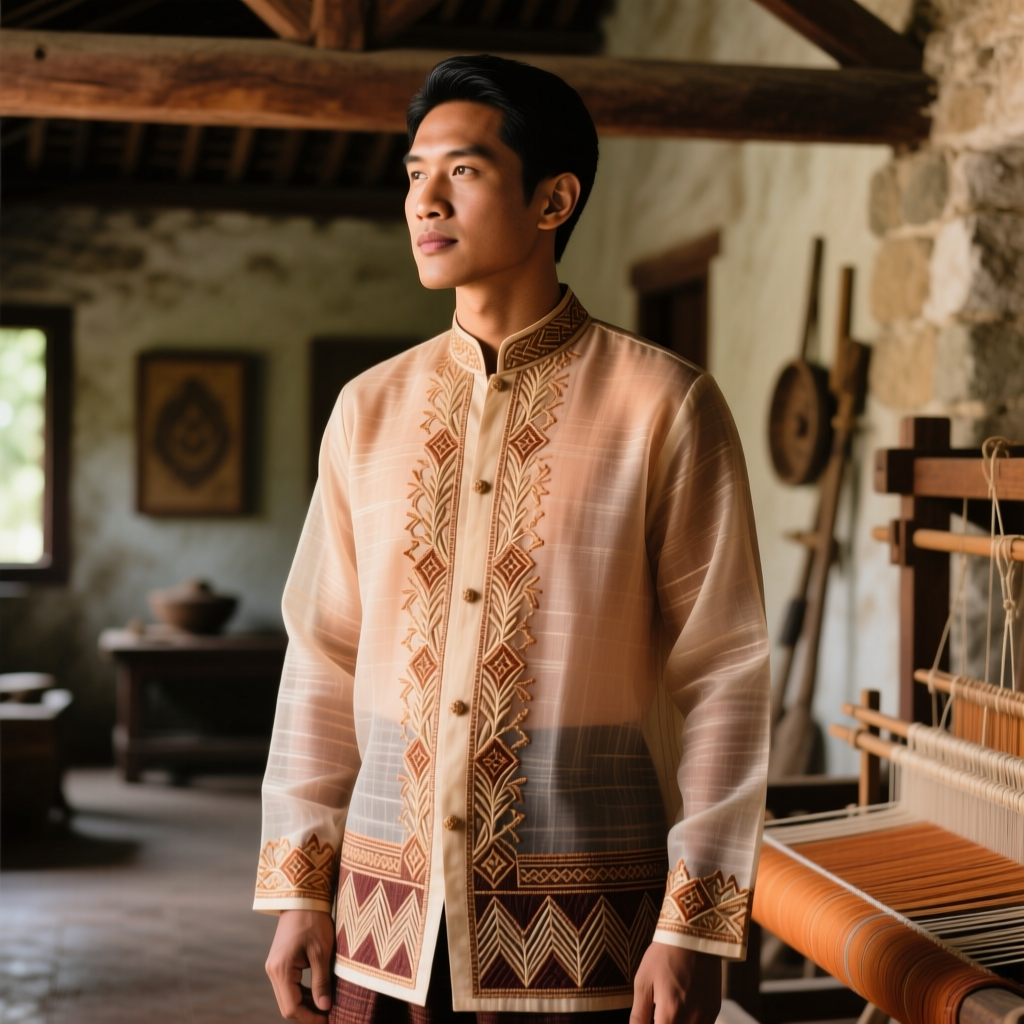
The nineteenth century marked the golden age of the piña Barong Tagalog. As the Philippine economy became increasingly integrated into global trade networks, a wealthy class of Filipino landowners and merchants — the ilustrados — emerged as patrons of fine textiles. These men commissioned elaborate Barong Tagalog made from the finest piña cloth, often adorned with intricate hand-embroidery known as calado (openwork) and handog (shadow embroidery). The embroidery, typically concentrated on the chest panel or pechera, featured floral motifs, geometric patterns, and occasionally scenes from Philippine rural life.
The piña Barong Tagalog of this era was worn with a distinctive ensemble: loose trousers, a silk sash or belt, and formal leather shoes. The translucent quality of the fabric meant that an undershirt — the camisa de chino — was worn beneath, creating a layered visual effect that became an integral part of the garment's aesthetic. This combination of European tailoring principles with indigenous materials and techniques produced a garment that was unmistakably Filipino, neither wholly Eastern nor wholly Western but something entirely unique.
The Modern Barong Tagalog
In the twentieth and twenty-first centuries, the Barong Tagalog has continued to evolve while retaining its essential character. Philippine presidents have worn piña Barong Tagalog at state functions and international summits, establishing it as the equivalent of a Western tuxedo or morning coat in formal diplomatic contexts. Contemporary designers have experimented with new silhouettes, colors, and embellishment techniques, but the classic piña Barong Tagalog — white or ivory, hand-embroidered, worn untucked — remains the gold standard.
For those interested in understanding how the Barong Tagalog fits into the broader landscape of formal menswear, the formal wear guide provides context on how national garments compare to international formal dress codes. The Barong Tagalog is a rare example of a non-Western garment that is universally accepted as formal attire, a testament to the power of cultural confidence and artistic excellence.
Regional Variations and Related Textile Traditions
While Aklan province is the most famous center of piña weaving, the tradition extends across several regions of the Philippines, each contributing its own distinctive techniques, patterns, and cultural associations. Understanding these regional variations reveals the depth and diversity of Philippine textile heritage and the ways in which local communities have adapted the piña tradition to their own creative visions.
Aklan and Panay Island
Aklan remains the heartland of piña production, and the town of Kalibo is home to the most concentrated community of piña weavers in the country. Aklanon weavers are renowned for producing the finest, most translucent grades of piña cloth, and their embroidery traditions — particularly the delicate calado openwork — are considered the most refined in the Philippines. The provincial government has established cooperatives and training programs to support weavers, and piña cloth from Aklan has received geographical indication protections to safeguard its authenticity.
Iloilo and the Visayas
Neighboring Iloilo province has its own rich weaving tradition, and while it is better known for hablon (a handwoven cotton and silk textile), some communities in Iloilo also produce piña cloth. Ilonggo weavers are particularly noted for their use of color, incorporating dyed silk threads into piña weavings to create vibrant, patterned fabrics that differ markedly from the predominantly white textiles of Aklan. The city of Iloilo has become a center for fashion design that draws on these local textile traditions, creating contemporary garments that honor heritage while appealing to modern tastes.
Laguna and Southern Luzon
In the province of Laguna on the island of Luzon, the town of Lumban is famous for its calado embroidery, which is applied to both piña and jusi (a silk or synthetic fabric) to create elaborate Barong Tagalog. While Lumban does not produce piña cloth itself, its embroiderers are among the most skilled in the country, and the town has become synonymous with high-end Barong Tagalog production. Many of the Barong Tagalog worn by Philippine presidents and senators are embroidered in Lumban using techniques that have been passed down through generations of artisan families.
The relationship between piña weaving and other Philippine textile traditions — including abacá weaving, inabel (Ilocano cotton weaving), and the t'nalak cloth of the T'boli people — is a subject of ongoing research and cultural documentation. Each of these traditions reflects the unique botanical resources, aesthetic values, and social structures of its region, and together they form a tapestry of textile heritage that is among the richest in Asia. Readers interested in exploring other heritage textiles can find more in the heritage collection of articles on traditional garment-making worldwide.
Modern Preservation: Challenges, Innovations, and the Future
Despite its cultural significance and international renown, the tradition of piña weaving faces serious challenges in the modern era. The labor-intensive nature of the craft, the declining availability of skilled artisans, and competition from cheaper, machine-made alternatives have all contributed to a gradual contraction of the industry. Yet a growing movement of weavers, designers, scholars, and government agencies is working to ensure that piña fabric and the Barong Tagalog endure as living traditions rather than museum relics.
The Challenge of Sustainability
One of the most pressing challenges facing piña weaving is the economics of production. Because handwoven piña cloth requires so much labor — from fiber extraction through knotting to weaving — it is inherently expensive. A single meter of the finest piña cloth can cost several hundred dollars, and a fully embroidered Barong Tagalog made from genuine piña can command prices in the thousands. While this reflects the true value of the artisan's labor, it also limits the market for piña textiles to a relatively small segment of affluent buyers, both within the Philippines and abroad.
At the same time, younger generations in weaving communities are often drawn to more lucrative and less physically demanding work in urban areas, leading to a gradual loss of intergenerational knowledge transfer. The master weavers and knotters who possess the deepest understanding of the craft are aging, and in some communities, there are not enough young people learning the skills to sustain production at current levels.
Government and Institutional Support
The Philippine government, through agencies such as the Department of Trade and Industry and the National Commission for Culture and the Arts, has implemented a range of programs to support piña weavers. These include skills training workshops, microfinance initiatives, design development programs, and marketing support through trade fairs and exhibitions. The Philippine Textile Research Institute has conducted scientific studies on piña fiber quality and has worked to develop improved processing techniques that reduce waste and increase efficiency without compromising the handcrafted character of the cloth.
Several non-governmental organizations and social enterprises have also played a vital role in sustaining the piña industry. Groups such as the Philippine Fiber Industry Development Authority and various weaving cooperatives have helped connect rural artisans with international markets, ensuring that weavers receive fair compensation for their work. Fashion designers both in the Philippines and internationally have championed piña fabric, incorporating it into contemporary collections that introduce the textile to new audiences.
Innovation Within Tradition
Perhaps the most encouraging development in piña preservation is the emergence of designers and entrepreneurs who are finding innovative ways to use the fabric while respecting its heritage. Contemporary applications of piña cloth now extend beyond the Barong Tagalog to include women's formal wear, accessories, home textiles, and even avant-garde fashion pieces that push the boundaries of what piña can be. These innovations expand the market for piña textiles and create new economic opportunities for weaving communities.
Some designers are experimenting with blending piña fiber with other natural fibers — such as silk, cotton, and bamboo — to create hybrid textiles that retain the beauty of piña while offering greater durability and versatility. Others are developing natural dyeing techniques using indigenous plants, adding new dimensions of color and meaning to the cloth. These innovations demonstrate that heritage crafts need not be frozen in time to remain authentic; they can evolve and adapt while preserving the core values of craftsmanship, cultural identity, and respect for materials.
The growing global interest in sustainable and artisanal fabrics has also created new opportunities for piña cloth. As consumers around the world become more conscious of the environmental and social impacts of their clothing choices, handwoven piña — a natural, biodegradable, and ethically produced textile — is increasingly recognized as a premium sustainable material. This shift in consumer values may prove to be the most powerful force for preservation, creating a market that rewards the patience and skill of Filipino weavers rather than competing against them.
Frequently Asked Questions
What makes piña fabric different from other natural textiles?
Piña fabric is unique in several respects. First, it is one of the few textiles in the world made from pineapple leaf fibers, a byproduct of agriculture that would otherwise go to waste. Second, the entire production process — from fiber extraction to weaving — is done by hand, making each piece of piña cloth a one-of-a-kind artifact of human skill. Third, the resulting fabric has a distinctive combination of qualities: it is extremely lightweight, translucent, naturally stiff (requiring no starch), and has a subtle luster that sets it apart from cotton, linen, or silk. These properties make piña ideally suited to the Barong Tagalog, which requires a fabric that is both elegant and comfortable in tropical heat.
How can I tell if a Barong Tagalog is made from genuine piña fabric?
Genuine piña fabric has several distinguishing characteristics. It is naturally translucent, allowing light to pass through when held up. It has a slight stiffness and crispness that holds its shape without the need for starching or heavy interfacing. The texture is smooth but not slippery, with a subtle natural sheen. When examined closely, handwoven piña cloth will show slight irregularities in the weave — tiny variations in thread thickness and spacing — that are signs of authentic handcraft rather than machine production. Be cautious of garments labeled as "piña" that are unusually inexpensive, as these may be made from synthetic imitations or blended fabrics that contain little or no actual pineapple fiber. For more guidance on identifying quality garments, visit the garment guides section.
How should piña fabric Barong Tagalog garments be cared for?
Piña fabric is surprisingly durable for its delicacy, but it does require careful handling. The recommended method of cleaning is gentle hand-washing in cool water with a mild detergent, followed by air-drying away from direct sunlight. Machine washing and tumble drying should be avoided, as the agitation and heat can damage the fibers and embroidery. When ironing, use a low heat setting and press on the reverse side of the fabric, or place a thin cloth between the iron and the garment. Piña Barong Tagalog should be stored on padded hangers in a cool, dry place, preferably covered with a breathable garment bag to protect against dust and moisture. With proper care, a piña Barong Tagalog can last for decades and even become a treasured family heirloom.
Is piña weaving still practiced today, and where can I see it?
Yes, piña weaving is still actively practiced in several regions of the Philippines, most notably in Aklan province on Panay Island. The town of Kalibo is home to weaving cooperatives where visitors can observe the entire process, from fiber extraction to finished cloth. Several cultural centers and museums in the Philippines — including the National Museum of the Philippines in Manila and the Aklan Museum — feature exhibits on piña weaving heritage. Some luxury hotels and cultural tourism operators offer guided visits to weaving communities, providing an opportunity to meet artisans, purchase authentic textiles, and support the continuation of this remarkable craft.
What is the cultural significance of wearing a Barong Tagalog today?
Wearing a Barong Tagalog today carries deep cultural meaning for Filipinos and is recognized internationally as a statement of cultural pride and identity. In the Philippines, it is the standard formal attire for weddings, state functions, corporate events, and national celebrations. For Filipino diaspora communities around the world, the Barong Tagalog serves as a tangible connection to homeland and heritage, often worn at milestone events as an expression of cultural continuity. The choice to wear a piña Barong Tagalog specifically — rather than one made from less expensive fabrics — is also a statement of support for traditional artisanship and the preservation of Philippine textile heritage. It is a garment that says: this craft matters, this history matters, and this identity endures. Discover more about the cultural significance of national garments in our heritage archives.