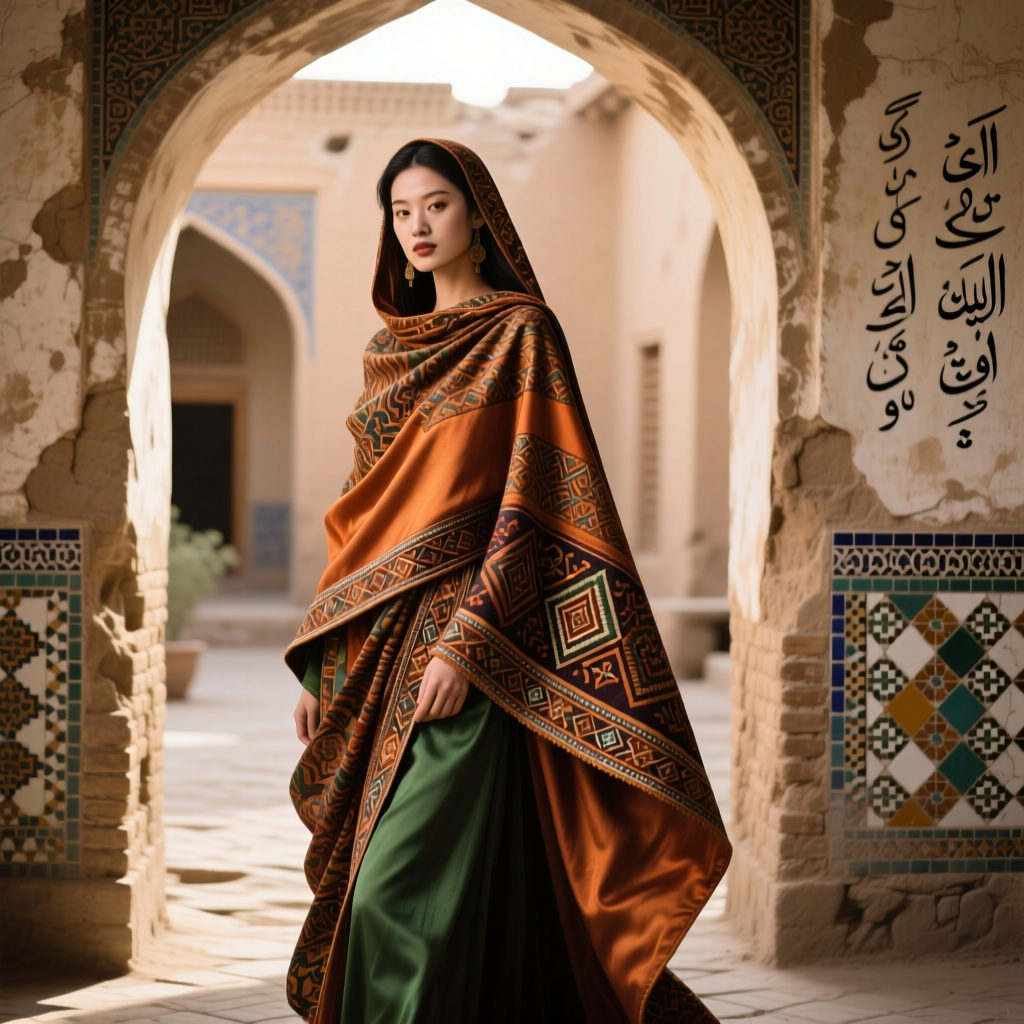
Persian Termeh: The Ancient Art of Luxury Textile Weaving
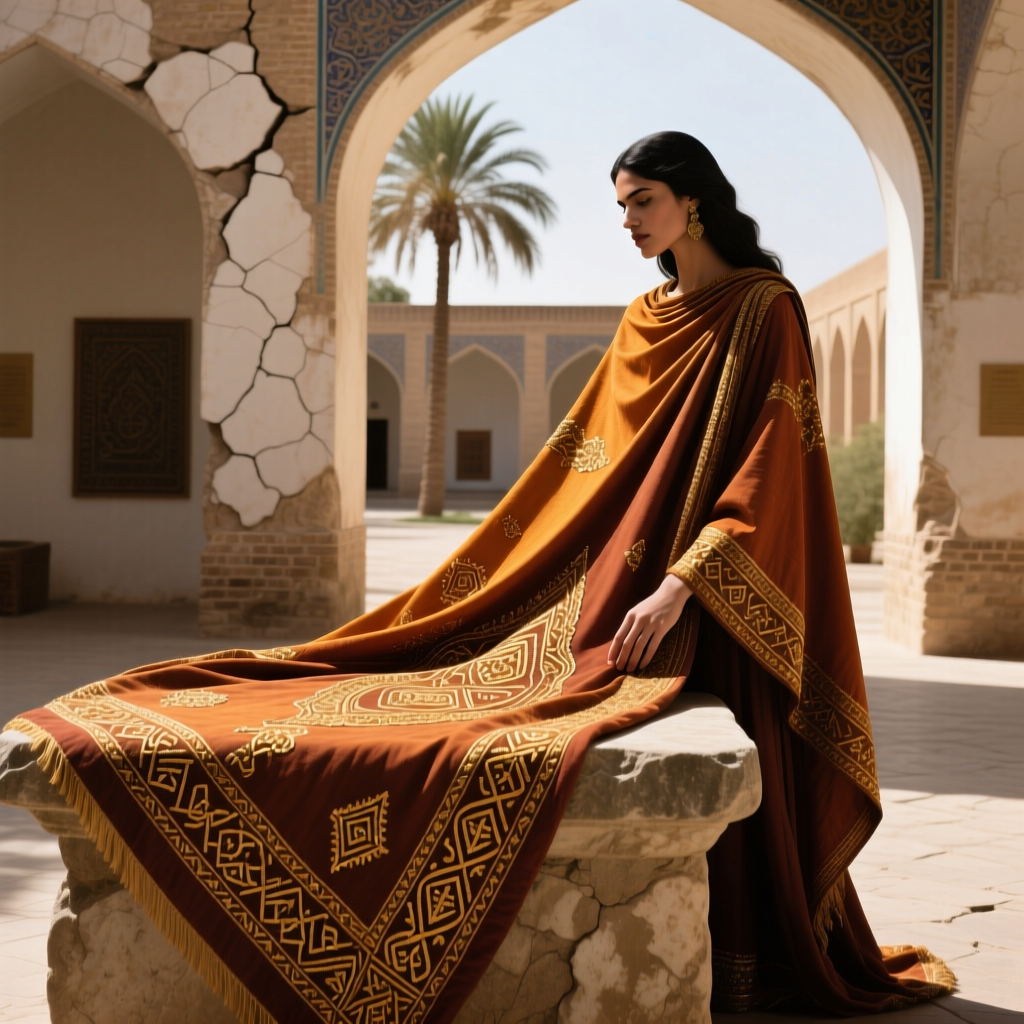
Long before the rise of fast fashion and mechanized textile production, the master weavers of Persia were creating fabrics so exquisite that they became symbols of royalty, spiritual devotion, and cultural identity. Among these legendary textiles, Termeh stands as one of the most refined and revered handwoven fabrics in human history. Born in the ancient cities of the Iranian plateau and perfected over centuries, Termeh represents the pinnacle of luxury textile weaving — a craft where every thread carries the weight of tradition, artistry, and an unwavering commitment to beauty.
Termeh is not merely a fabric; it is a cultural artifact woven from silk, wool, and precious metallic threads, distinguished by its intricate patterns and luminous sheen. From the courts of the Safavid dynasty to the trousseaus of modern Iranian brides, this textile has maintained its status as one of the most prestigious materials in the world of heritage textiles. To understand Termeh is to understand a civilization's relationship with art, commerce, and the sacred geometry of design.
The Historical Roots of Persian Termeh Weaving
The origins of Termeh weaving trace back to the early centuries of Persian civilization, with many historians and textile scholars placing its formal development during the Safavid era, when the arts of Persia experienced an unprecedented golden age. The cities of Yazd, Kerman, and Isfahan emerged as the primary centers of Termeh production, each contributing unique techniques and aesthetic sensibilities to the craft. The Safavid shahs, recognizing the economic and cultural value of luxury textiles, established royal workshops — known as karkhaneh — where master weavers produced Termeh for the court, for diplomatic gifts, and for export along the Silk Road.
The name "Termeh" itself is believed to derive from the Persian word for a type of fine, soft fabric, though some etymologists connect it to the broader Turkic and Central Asian textile vocabulary that flourished along the ancient trade routes. What is certain is that by the height of the Safavid period, Termeh had become synonymous with the finest quality handwoven cloth in the Persian Empire, rivaling the celebrated brocades of Byzantium and the damasks of Damascus.
Trade played a pivotal role in spreading the fame of Termeh far beyond Iran's borders. Merchants traveling the Silk Road carried bolts of this luxurious fabric to the markets of Istanbul, Venice, and even the distant courts of Mughal India. European travelers and diplomats who visited Persia often returned home with Termeh garments and textiles, marveling at their extraordinary craftsmanship in their written accounts. The fabric became a diplomatic currency — gifted between rulers as a gesture of alliance and mutual respect, embedding Termeh deeply within the political and cultural fabric of the early modern world.
During the Qajar period, Termeh weaving continued to thrive, though the introduction of European manufactured textiles began to challenge traditional production methods. Despite these pressures, the weavers of Yazd and Kerman maintained their craft, adapting their designs while preserving the fundamental techniques that had been passed down through generations. This resilience would prove essential as the craft navigated the dramatic transformations of the modern era, a story explored further in our guide to traditional weaving techniques from around the world.
The Craftsmanship Behind Termeh: Materials, Looms, and Mastery
The creation of authentic Termeh is an act of extraordinary patience and skill, requiring months — sometimes over a year — to complete a single piece. The process begins long before the loom is threaded, with the careful selection and preparation of raw materials. Traditionally, the finest Termeh was woven using hand-spun silk and high-grade wool, often supplemented with threads of gold and silver for pieces destined for royalty or ceremonial use. The silk, sourced from the mulberry-fed silkworms of northern Iran's Caspian provinces, was prized for its exceptional tensile strength and luminous quality.
The dyeing process is itself an art form, drawing on centuries of botanical and mineral knowledge. Master dyers — known as sabbagh — utilized natural pigments extracted from pomegranate rinds, walnut husks, indigo, madder root, saffron, and a variety of other organic sources to produce a palette of remarkable depth and permanence. The deep crimson of madder, the rich gold of saffron, and the profound blue of indigo became the signature colors of Termeh, each hue carrying symbolic meaning within Persian culture. Red signified courage and vitality; blue represented spirituality and the divine; gold embodied light and prosperity. These colors were fixed using natural mordants such as alum and iron, ensuring that the fabric's brilliance would endure for generations.
The loom used for Termeh weaving is a complex apparatus, often a drawloom that requires the coordinated effort of two artisans: the master weaver (ostad) who operates the shuttle and manages the tension of the warp threads, and an assistant — traditionally a young apprentice — who sits atop the loom and manually raises and lowers the heddles according to the pattern's requirements. This assistant, known as the keshideh-kesh, must memorize extraordinarily intricate pattern sequences, making the apprenticeship period long and demanding. A single misstep can disrupt the symmetry of the design, requiring the weaver to unravel hours of painstaking work.
The weaving technique itself is a form of supplementary weft weaving, where additional decorative threads are introduced into the base fabric to create the elaborate surface patterns. The density of a Termeh weave is remarkable — some pieces contain upwards of one hundred threads per centimeter, resulting in a fabric that is both supple and remarkably durable. The interplay of matte and lustrous threads creates a subtle, shifting play of light across the fabric's surface, giving Termeh its characteristic visual depth. This level of craftsmanship places Termeh firmly among the world's most labor-intensive and technically sophisticated textiles, a fact that is immediately apparent when comparing it to other luxury fabrics in terms of complexity and refinement.
The patterns woven into Termeh are far from arbitrary — they constitute a sophisticated visual language rooted in Persian art, mysticism, and the natural world. The most iconic motif is the boteh, the ancient paisley form that represents the cypress tree — a symbol of eternity and resilience in Persian culture. Other recurring motifs include the shah Abbasi floral palmette, geometric medallions (toranj), stylized birds and animals, and intricate vine scrollwork that evokes the walled gardens of Persian paradise imagery. Each pattern is carefully composed to create a sense of infinite extension, reflecting the Islamic artistic principle that beauty should suggest the boundless nature of creation.
Regional Variations: Yazd, Kerman, and the Diversity of Termeh
While Termeh is produced across several regions of Iran, the cities of Yazd and Kerman are universally recognized as the twin capitals of this craft, each with a distinct approach to design, color, and technique. Understanding these regional differences is essential for anyone seeking to appreciate the full breadth of Termeh weaving, much as one must understand regional distinctions when studying global textile heritage.
Yazd, the desert city in central Iran, is widely regarded as the birthplace of the finest Termeh. The weavers of Yazd developed a reputation for producing Termeh of exceptional density and precision, with patterns that are tightly composed and richly layered. Yazdi Termeh tends to favor deep, saturated colors — burgundy, navy, forest green, and gold — reflecting the city's position at the crossroads of trade routes that brought diverse dye materials to its markets. The patterns of Yazdi Termeh often feature elaborate boteh arrangements and complex medallion structures, with borders that are as detailed as the central field. The weavers of Yazd were also pioneers in incorporating metallic threads into their work, creating Termeh pieces that shimmered with an almost otherworldly radiance. Today, Yazd remains the most important center of Termeh production, with workshops that continue to employ traditional methods alongside more contemporary adaptations.
Kerman, located in southeastern Iran, developed its own distinctive Termeh tradition characterized by a lighter, more fluid aesthetic. Kermani Termeh often features softer color palettes — pastel pinks, sky blues, pale golds, and creams — that reflect the region's different botanical dye resources and aesthetic preferences. The patterns tend to be more open and expansive, with larger individual motifs set against generous fields of plain weave. Kermani weavers were particularly celebrated for their mastery of the gol-e-morgh (flower and bird) motif, a design tradition shared with the famous Kerman carpet weaving industry. The cross-pollination between carpet and textile weaving in Kerman created a unique synergy, with motifs and color combinations migrating between the two crafts.
Beyond these two primary centers, smaller Termeh weaving communities existed in Isfahan, Kashan, and Tabriz, each contributing subtle variations to the broader tradition. Isfahan, as the Safavid capital, was home to the royal workshops where the most elaborate and technically ambitious Termeh pieces were produced for the court. Kashan, already famous for its silk weaving, produced Termeh that incorporated exceptionally fine silk threads, resulting in fabrics with a distinctive drape and sheen. Tabriz, with its proximity to the Caucasus and Anatolia, developed Termeh styles that showed the influence of Turkish and Central Asian textile traditions, featuring bolder geometric patterns and a wider color range.
These regional distinctions are not merely academic — they represent fundamentally different approaches to the relationship between material, pattern, and meaning. A collector or connoisseur can often identify the origin of a Termeh piece by examining its color palette, motif vocabulary, and weaving density, much as one might distinguish between regional styles of traditional garments from different cultures.
Termeh in Persian Culture: Ceremonies, Status, and Symbolism
In Persian society, Termeh has never been simply a luxury commodity — it is a deeply symbolic material woven into the fabric of cultural life. Its presence at life's most significant moments underscores its role as a marker of identity, status, and spiritual intention. Understanding these cultural dimensions reveals why Termeh has endured as a revered textile despite centuries of change and competition from industrial fabrics.
The most prominent cultural role of Termeh is in the context of marriage and family ceremonies. In traditional Persian weddings, a piece of Termeh is an essential element of the sofreh-ye aghd — the ceremonial wedding spread upon which the bride and groom sit during the marriage ceremony. The Termeh cloth, often an heirloom passed down through generations, serves as a tangible link between the couple and their ancestors, symbolizing the continuity of family and the blessings of those who came before. The quality and age of the Termeh used in this ceremony is a source of family pride, with some families possessing pieces that are several centuries old.
Termeh also plays a significant role in Persian hospitality and domestic life. In traditional homes, Termeh tablecloths, cushion covers, and wall hangings signal a household's refinement and cultural sophistication. The fabric is used to cover the Quran and other sacred texts, reflecting the belief that beautiful craftsmanship is an appropriate vessel for holy words. During the celebration of Nowruz — the Persian New Year — Termeh is prominently displayed as part of the haft-sin table arrangement, connecting the renewal of the natural world with the enduring beauty of human artistry.
In the realm of fashion, Termeh historically served as the material of choice for the most prestigious garments worn by Persian nobility and the urban elite. Coats, vests, sashes, and ceremonial robes fashioned from Termeh were worn at court, during religious festivals, and on diplomatic occasions. The distinctive patterns and rich colors of Termeh made it instantly recognizable, functioning as a visual code that communicated the wearer's social standing and cultural literacy. This tradition of using luxury textiles as markers of identity is a phenomenon found across many cultures, as explored in our examination of Silk Road textile exchanges and their lasting influence on global fashion.
Termeh has also found a place in Persian literature and poetry, where it appears as a metaphor for beauty, refinement, and the transience of worldly splendor. The great Persian poets — Hafez, Saadi, and Rumi among them — wove references to fine textiles into their verses, using the imagery of silk and gold thread to evoke the splendor of both earthly and divine love. This literary dimension adds another layer of meaning to the fabric, connecting the physical craft of weaving to the metaphorical act of creating art through language.
Modern Preservation and the Future of Termeh Weaving
The survival of Termeh weaving into the modern era is a story of both remarkable resilience and ongoing vulnerability. The industrialization of textile production, the availability of inexpensive synthetic alternatives, and the migration of younger generations away from traditional crafts have all placed enormous pressure on the artisans who continue to practice this ancient art. Yet a combination of cultural pride, institutional support, and growing international appreciation for handmade luxury goods has ensured that Termeh weaving endures — even as it adapts to new realities.
In Iran, several organizations and cultural institutions have taken active roles in preserving and promoting Termeh weaving. The Iranian Cultural Heritage, Handicrafts and Tourism Organization has designated Termeh as a protected traditional craft, providing training programs, subsidies for raw materials, and exhibition opportunities for master weavers. Private foundations and individual patrons have also played crucial roles, commissioning new works and supporting workshops that employ traditional methods. In Yazd, a number of family-run ateliers have maintained unbroken weaving traditions spanning multiple generations, serving as living repositories of technical knowledge and artistic vision.
The global market for artisanal and heritage textiles has created new opportunities for Termeh weavers. International designers and luxury brands, increasingly drawn to authentic, handcrafted materials with compelling cultural narratives, have begun incorporating Termeh into contemporary fashion, interior design, and accessory collections. This cross-cultural engagement has introduced Termeh to audiences who might never have encountered it otherwise, generating both economic support for the weavers and broader awareness of the craft's significance. The growing interest in sustainable luxury fashion has further amplified this trend, as consumers seek out textiles that embody ethical production, natural materials, and cultural authenticity.
However, preservation efforts face significant challenges. The lengthy apprenticeship required to master Termeh weaving — often a decade or more — discourages many young people from entering the profession, particularly when more lucrative opportunities exist in other sectors. The cost of natural silk and high-quality wool has risen substantially, making authentic Termeh an expensive product that is accessible primarily to affluent buyers. Some workshops have responded by introducing simplified designs and blended fibers to reduce costs and production time, a pragmatic adaptation that purists argue dilutes the craft's integrity.
Education and documentation have emerged as critical tools in the preservation effort. Universities and research institutions in Iran have undertaken systematic studies of historical Termeh pieces, analyzing their materials, dyes, and weaving structures to create comprehensive archives. Museums in Tehran, Isfahan, and Yazd maintain significant collections of antique Termeh, allowing both scholars and the public to study and appreciate the full range of the craft's historical expression. Digital documentation projects have begun to record the techniques and oral histories of aging master weavers, ensuring that their knowledge is not lost when they pass from this world.
The future of Termeh weaving will likely involve a balance between preservation and innovation. While the most traditional workshops will continue to produce Termeh using centuries-old methods and materials, other artisans are experimenting with contemporary color palettes, modern design applications, and new formats that make Termeh relevant to younger consumers. Jewelry designers have begun setting small pieces of Termeh in silver and gold pendants; interior designers use Termeh panels as statement wall art; fashion designers incorporate Termeh accents into otherwise modern silhouettes. These innovations, when executed with respect for the craft's core principles, represent not a departure from tradition but a continuation of its living evolution — a recognition that the most enduring crafts are those that find ways to speak to each new generation. For those interested in exploring how traditional textiles influence contemporary design, our style guides offer further insights into integrating heritage pieces into modern wardrobes and living spaces.
Frequently Asked Questions
What is Termeh and what makes it different from other Persian textiles?
Termeh is a luxurious handwoven Persian textile traditionally made from silk, fine wool, and sometimes metallic threads of gold or silver. What distinguishes Termeh from other Persian textiles — such as kilims, gabbeh, or conventional silk brocades — is its unique supplementary weft weaving technique, which creates dense, intricately patterned fabric with a distinctive play of light across its surface. Termeh is characterized by its extraordinary thread density, its use of the iconic boteh (paisley) motif, and the fact that it is woven on specialized drawlooms requiring the coordinated effort of two artisans. Unlike pile carpets, Termeh is a flat textile with a smooth, lustrous surface that drapes beautifully, making it suitable for garments, ceremonial cloths, and decorative applications. Its combination of technical complexity, material luxury, and symbolic depth places it among the most refined textile traditions in the world.
How long does it take to weave a piece of Termeh by hand?
The time required to produce a piece of handmade Termeh varies enormously depending on its size, complexity, and the density of the weave. A small piece — such as a cushion cover or a narrow sash — might require several weeks of continuous work by a skilled team. A larger piece, such as a full-size tablecloth or a bolt of fabric intended for garment-making, can take anywhere from several months to over a year to complete. The most elaborate Termeh pieces, featuring complex multi-colored patterns with metallic threadwork, represent the upper end of this range. This extraordinary investment of time is one of the primary reasons authentic handmade Termeh commands premium prices and is considered a true luxury textile. The slow pace of production also means that each piece carries the unmistakable imprint of its makers, with subtle variations that distinguish handwoven Termeh from any machine-made imitation.
How can you tell if a piece of Termeh is authentic and handmade?
Identifying authentic handmade Termeh requires attention to several key indicators. First, examine the reverse side of the fabric: genuine handwoven Termeh will show a slightly irregular back with visible thread ends and minor variations in tension, whereas machine-made imitations will appear perfectly uniform. Second, assess the thread count and density — authentic Termeh is remarkably dense and has a substantial weight relative to its size. Third, look closely at the patterns: handwoven pieces will have minute irregularities in motif alignment and color transitions that are signs of human craftsmanship, not flaws. Fourth, check the materials: real Termeh uses natural silk and wool, which have a distinctive warmth and luster that synthetic fibers cannot replicate. A burn test on a small thread sample can help confirm material composition — silk will smell like burning hair and leave a crushable ash, while synthetics will melt and produce a chemical odor. Finally, provenance matters: purchasing from reputable dealers, established workshops in Yazd or Kerman, or certified cultural heritage outlets significantly increases the likelihood of acquiring a genuine piece.
What are the traditional uses of Termeh in Persian culture?
Termeh holds a central place in many aspects of Persian cultural life. Its most iconic use is as a ceremonial cloth on the sofreh-ye aghd, the traditional wedding spread that forms the focal point of Persian marriage ceremonies. Termeh is also used to cover the Quran and other sacred texts, reflecting the belief that exquisite craftsmanship honors the divine word. In domestic settings, Termeh serves as tablecloths, cushion covers, wall hangings, and decorative accents that signal a family's cultural refinement and social standing. Historically, Termeh was fashioned into prestigious garments — coats, vests, sashes, and robes — worn by nobility and the urban elite for court appearances, religious celebrations, and diplomatic events. It is also an integral element of the Nowruz (Persian New Year) celebration, displayed on the haft-sin table as a symbol of beauty and continuity. In contemporary times, Termeh has expanded into new applications including fashion accessories, framed textile art, and luxury interior design elements, while maintaining its deep ceremonial significance.
Where can you buy authentic Persian Termeh today?
Authentic Persian Termeh can be purchased through several channels, each offering different levels of assurance regarding quality and provenance. The most direct option is to visit the traditional bazaars and workshops in Yazd and Kerman, where family-run ateliers sell their products directly to customers. In Yazd, the historic bazaar district contains numerous Termeh shops where buyers can observe the weaving process and speak directly with artisans. In major Iranian cities, specialized galleries and cultural heritage stores curated by the handicrafts organization offer certified handmade pieces. For international buyers, reputable dealers in Persian textiles, auction houses specializing in Islamic and Middle Eastern art, and select luxury boutiques may carry authentic Termeh. Online platforms connected to verified Iranian artisan cooperatives have also emerged as viable purchasing channels, though buyers should exercise caution and seek detailed information about materials, weaving methods, and the workshop of origin. When purchasing antique or vintage Termeh, consulting with a textile specialist or appraiser is advisable to ensure authenticity and fair valuation. Regardless of the purchasing channel, investing in genuine Termeh means acquiring not just a beautiful textile but a piece of living cultural heritage that connects the buyer to centuries of Persian artistic tradition.