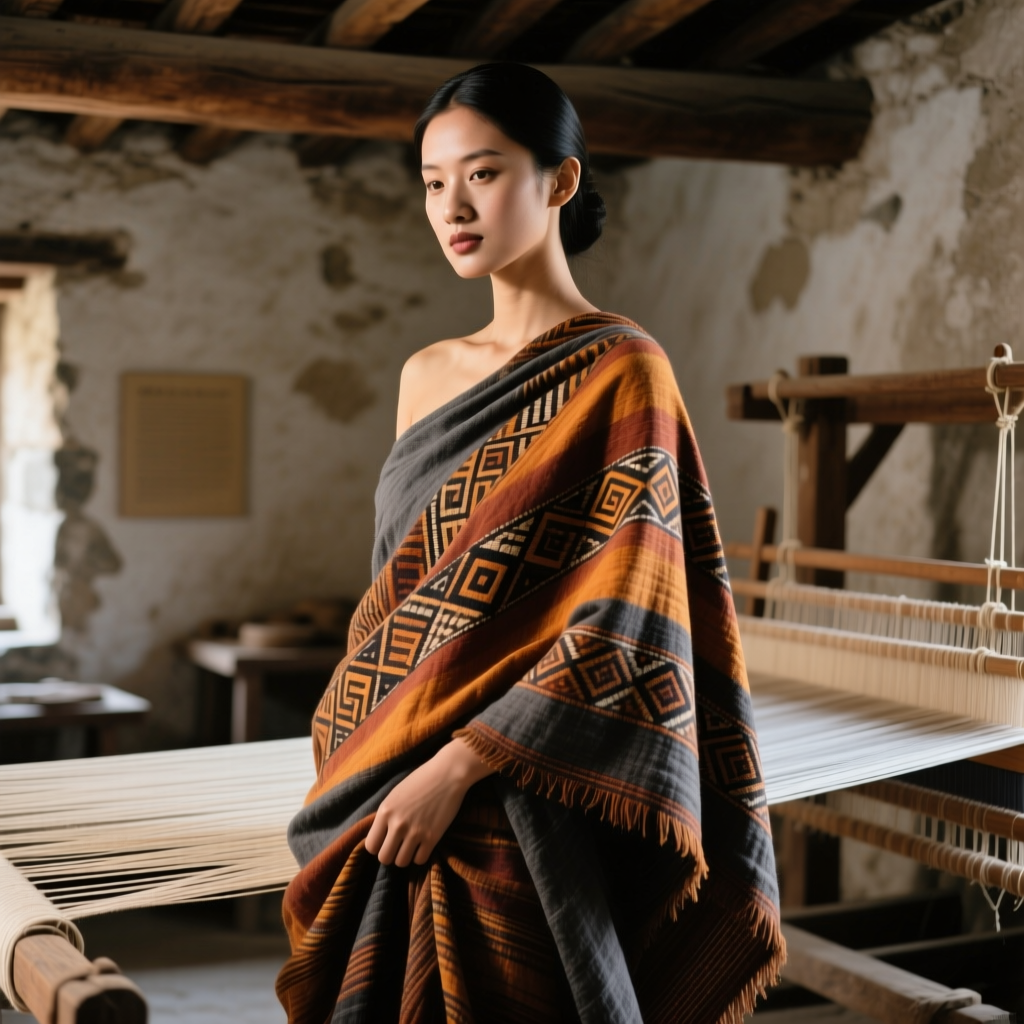
Oaxacan Huipil: Zapotec Lace Heritage

The Isthmus of Tehuantepec stretches across southern Mexico like a bridge between two oceans, and for centuries, it has served as a bridge between worlds — indigenous and colonial, ancient and modern, functional and ceremonial. Nowhere is this cultural convergence more vividly expressed than in the Huipil Grande, the magnificent ceremonial blouse worn by Zapotec and Tehuana women of Oaxaca. With its elaborate lace panels, hand-embroidered motifs, and commanding silhouette, the Huipil Grande is far more than a garment. It is a living document of identity, resistance, and artistic mastery that has captivated the world for generations.
To understand the Huipil Grande is to understand the Zapotec people — their cosmology, their social structures, and their unyielding commitment to preserving traditions that predate the Spanish conquest by millennia. This article explores the deep roots of Oaxaca's most iconic garment, tracing its evolution from pre-Columbian origins through colonial transformation and into its role as a global symbol of Mexican cultural heritage.
Origins & Historical Foundations of the Huipil Grande
The word huipil derives from the Nahuatl huīpīlli, the lingua franca of Mesoamerican trade and diplomacy in the centuries before European contact. Yet the garment itself predates the Aztec Empire by thousands of years. Archaeological evidence from the Valley of Oaxaca — including ceramic figurines dating to the Monte Albán period (circa 500 BCE to 800 CE) — depicts women wearing loose, untucked tunics that bear a clear structural resemblance to the huipiles worn throughout the region today.
The Zapotec civilization, centered in the valleys and highlands of Oaxaca, developed one of the most sophisticated textile traditions in the ancient Americas. Using backstrap looms — a technology shared across Mesoamerica but refined to extraordinary levels of complexity by Zapotec weavers — artisans produced cotton and agave-fiber cloth that served as currency, tribute, and sacred offering. Textiles were not merely utilitarian; they encoded social rank, community affiliation, and spiritual belief into every warp and weft.
The Huipil Grande — literally the "great huipil" — emerged as a distinct garment category in the Isthmus of Tehuantepec, the narrow corridor connecting the Pacific Ocean and the Gulf of Mexico. This region, home to both Zapotec and Chontal peoples, became a crossroads of trade, and the textiles produced here absorbed influences from across Mesoamerica while maintaining a fiercely local character. The Huipil Grande distinguished itself from everyday huipiles through its larger dimensions, richer materials, and the addition of ornamental lace — a colonial-era innovation that transformed an already magnificent garment into something truly extraordinary.
When Spanish colonizers arrived in the sixteenth century, they brought not only new fibers — silk, wool, and metallic threads — but also new decorative techniques, including bobbin lace and needle lace from Flanders and Spain. Zapotec and Tehuana artisans did not simply adopt these techniques; they adapted them, fusing European lace-making methods with indigenous aesthetic sensibilities to create a hybrid art form found nowhere else on Earth. The result was the Huipil Grande as we recognize it today: a garment that speaks simultaneously of pre-Columbian continuity and colonial-era reinvention.
The matriarchal society of the Isthmus played a crucial role in this evolution. In Tehuana culture, women have historically controlled commerce, managed household economies, and served as the primary custodians of cultural knowledge. The Huipil Grande became a vehicle for female authority — a garment that announced the wearer's wealth, taste, and social standing with unmistakable clarity. To learn more about how traditional garments serve as markers of cultural identity, explore our guide to heritage garments from around the world.
Craftsmanship & the Art of Zapotec Lace-Making
The creation of a Huipil Grande is a labor of devotion that can span weeks or even months, depending on the complexity of the design and the fineness of the materials. Every stage of the process demands specialized knowledge passed down through generations of artisans, most of them women who learned their craft at the knees of mothers, grandmothers, and great-grandmothers.
The Foundation: Weaving the Base Fabric
The body of the Huipil Grande is traditionally woven on a backstrap loom, a deceptively simple apparatus that allows the weaver to control tension with her own body. The weaver sits on the ground, one end of the loom anchored to a fixed point — a tree, a post, a heavy piece of furniture — and the other end held taut by a strap around her lower back. By leaning forward and backward, she adjusts the tension of the warp threads with an intuitiveness that no mechanical loom can replicate.
Cotton remains the preferred fiber for Huipil Grande base fabrics, though historically, agave fiber (ixtle) and, later, imported silk were also used. The finest examples feature fabric so tightly and evenly woven that the surface approaches the smoothness of commercial textiles, yet retains the subtle irregularities that signal human craftsmanship. Many weavers in communities such as San Bartolo Yautepec and Santo Domingo Tehuantepec continue to spin their own thread, a practice that adds another layer of intimacy between maker and material.
The Crown: Lace Panels & Randa Technique
What elevates the Huipil Grande above other regional huipiles is its lavish use of lace. The most distinctive element is the randa — a decorative joinery technique in which narrow strips of fabric are connected by intricate needle lace. Rather than sewing panels together with hidden seams, the artisan creates visible, ornamental bridges of lace that become integral to the garment's aesthetic.
Randa work requires extraordinary precision. The artisan uses a fine needle to create a mesh of interlocking stitches — typically buttonhole stitch, blanket stitch, or variations of needle lace — that span the gap between two fabric edges. The patterns range from simple geometric grids to elaborate floral and zoomorphic motifs that echo the iconography of Zapotec stone carvings and codices.
The lace collar of the Huipil Grande — often called the holán or encaje — is perhaps its most visually arresting feature. This wide, cascading ruffle of lace frames the face and drapes over the shoulders, creating a halo-like effect that commands attention. In the finest examples, the collar lace is worked in multiple tiers, with each layer featuring a different pattern: geometric borders giving way to scrolling vines, which in turn yield to stylized representations of local flora such as roses, lilies, and the ubiquitous bougainvillea of the Isthmus.
Bobbin lace, introduced by Spanish and Flemish nuns during the colonial period, also appears in some Huipil Grande traditions, particularly in communities with strong convent-school histories. However, needle lace — which requires only a needle, thread, and the artisan's hands — remains the dominant technique, prized for its flexibility and the creative freedom it affords. For a deeper understanding of lace traditions in global garment-making, visit our garment guides collection.
Embroidery & Surface Ornamentation
Beyond the lace panels, the Huipil Grande is frequently adorned with hand embroidery that covers the yoke, sleeves, and lower hem. Traditional embroidery styles include chain stitch, satin stitch, and the distinctive hazme si puedes ("make me if you can") — a complex smocking technique that creates three-dimensional textural effects on the fabric surface.
Color symbolism in Huipil Grande embroidery is deeply rooted in Zapotec cosmology. Red represents the life force and the sun; purple evokes mourning and the spirit world; white signifies purity and the celestial realm; and gold, introduced through colonial metallic threads, denotes prosperity and divine light. The interplay of these colors creates a visual language that communicates meaning far beyond mere decoration.
Regional Variations Across the Isthmus of Tehuantepec
While the Huipil Grande is often discussed as a single garment type, significant regional variations exist across the communities of the Isthmus. Each town and village has developed its own distinctive approach to cut, color, lace style, and decorative emphasis, creating a rich tapestry of local identities within the broader Zapotec and Tehuana tradition.
Tehuantepec City: The Gold Standard
The city of Santo Domingo Tehuantepec is widely regarded as the epicenter of Huipil Grande production. Here, the garments tend toward opulence: deep velvet or satin bases in black, purple, or deep red, lavishly embroidered with gold and silver metallic thread. The lace collars are typically wide and multi-layered, featuring intricate floral patterns worked in fine cotton or silk thread. Tehuantepec Huipiles Grandes are the garments most commonly seen at major festivals and weddings, and they command the highest prices in artisan markets.
Juchitán de Zaragoza: Bold Color & Creative Innovation
Juchitán, the largest city in the Isthmus, is known for its vibrant, experimental approach to the Huipil Grande. Artisans here frequently incorporate brighter color palettes — vivid magentas, electric blues, and sunflower yellows — alongside traditional darker tones. Juchitán is also home to some of the most innovative lace-makers in the region, who have developed proprietary stitch patterns that blend Zapotec geometric traditions with contemporary design sensibilities. The city's famous velas (candlelit festivals) provide a regular showcase for new Huipil Grande designs, ensuring that the tradition remains dynamic rather than static.
San Bartolo Yautepec: The Weaving Heartland
In the smaller communities of the Isthmus interior, particularly San Bartolo Yautepec, the emphasis shifts from ornamental excess to weaving mastery. Huipiles Grandes from this area often feature simpler embroidery but extraordinarily fine base fabrics, with thread counts that rival the best commercial textiles. The lace work tends toward geometric precision rather than floral exuberance, reflecting the community's deep connection to pre-Columbian design principles.
Ixtaltepec & the Northern Isthmus
The communities around San Blas Atempa and San Francisco Ixhuatán — sometimes grouped as the "Northern Isthmus" tradition — produce Huipiles Grandes with distinctive characteristics: narrower lace collars, heavier use of white-on-white embroidery, and a preference for cotton over synthetic or blended fabrics. These garments are often worn for everyday ceremonial occasions rather than grand festivals, and they reflect a more understated, contemplative aesthetic.
Understanding these regional distinctions is essential for collectors, scholars, and anyone interested in the ethical acquisition of authentic Huipiles Grandes. Each variation represents a specific community's contribution to a shared cultural heritage, and recognizing these differences helps ensure that credit and economic benefit flow to the correct artisan communities. Explore more about regional garment traditions and how geography shapes textile identity.
Cultural Significance & the Role of the Tehuana
The Huipil Grande cannot be separated from the women who wear it. In Zapotec and Tehuana society, the garment is not merely clothing — it is a declaration of identity, a marker of social position, and a medium of cultural expression. The Tehuana woman — confident, entrepreneurial, and visually commanding — has become one of the most potent cultural archetypes in Mexican history, and the Huipil Grande is her most recognizable attribute.
A Symbol of Matriarchal Power
The Isthmus of Tehuantepec is one of the most well-documented matriarchal societies in the Americas. Women control the markets, manage family finances, and play central roles in community governance. The Huipil Grande functions within this social structure as a form of wearable wealth — a garment that can be appraised, traded, and passed down as inheritance. A woman's collection of Huipiles Grandes represents her life's accumulation of status and resources, and the finest examples are treated as family treasures.
This economic dimension has profound implications. Unlike many traditional garments that have been devalued by industrialization, the Huipil Grande has retained — and in many cases increased — its economic value. A hand-made Huipil Grande of exceptional quality can command prices comparable to fine art, providing a sustainable livelihood for skilled artisans and reinforcing the economic independence of Tehuana women.
Ceremonial & Ritual Functions
The Huipil Grande plays a central role in the ceremonial life of the Isthmus. At weddings, the bride wears a Huipil Grande of particular splendor, often incorporating motifs that reference fertility, abundance, and ancestral blessing. During the region's famous velas — multi-day festivals that combine Catholic saints' days with pre-Columbian harvest celebrations — women parade through the streets in their finest Huipiles Grandes, transforming entire neighborhoods into rivers of color and texture.
The garment also appears in funerary traditions. In some communities, a woman is buried in her finest Huipil Grande, ensuring that she arrives in the spirit world properly attired and honored. This practice underscores the belief that the garment is not a disposable commodity but an extension of the wearer's personhood — a second skin that accompanies her through every major transition of life and beyond.
Frida Kahlo & Global Recognition
No discussion of the Huipil Grande's cultural significance is complete without acknowledging the role of Frida Kahlo in elevating the garment to global prominence. Kahlo, whose mother was from Oaxaca, adopted Tehuana dress as a central element of her public identity. Her self-portraits — in which she is almost invariably depicted wearing a Huipil Grande or a closely related Tehuana garment — transformed the blouse from a regional tradition into an international symbol of Mexican identity, female empowerment, and artistic authenticity.
Kahlo's embrace of the Huipil Grande was deeply political. In the post-revolutionary period, Mexican intellectuals and artists promoted indigenismo — a cultural movement that celebrated indigenous heritage as the foundation of national identity. By wearing Tehuana dress, Kahlo aligned herself with this movement while simultaneously asserting her own complex identity as a woman of mixed European and indigenous heritage. The Huipil Grande, in her hands, became a tool of self-invention and cultural diplomacy.
Today, the Huipil Grande continues to inspire designers, artists, and activists around the world. Its influence can be seen in contemporary fashion, in museum exhibitions, and in the growing movement to recognize traditional textile practices as forms of intangible cultural heritage worthy of legal protection. For more on how traditional garments influence modern style, see our style inspiration pages.
Modern Preservation & the Fight Against Cultural Appropriation
The Huipil Grande faces a paradox common to many heritage garments: its global fame has simultaneously elevated its prestige and threatened its integrity. As international demand for "Mexican-inspired" fashion has grown, so too has the proliferation of mass-produced imitations that copy Zapotec designs without crediting or compensating the communities that originated them. This phenomenon — widely recognized as cultural appropriation — has sparked a vigorous debate about intellectual property, artisan rights, and the ethics of global fashion.
The Threat of Industrial Imitation
Machine-embroidered blouses that mimic the visual language of the Huipil Grande are now produced in factories across Mexico and Asia, sold at a fraction of the cost of authentic hand-made garments. These imitations often combine elements from different regional traditions, strip designs of their cultural meaning, and use synthetic materials that bear no relation to traditional fiber practices. While they may appear superficially similar to the untrained eye, they represent a fundamental disconnect from the knowledge systems, labor practices, and cultural values that define authentic Huipil Grande production.
The economic impact on artisan communities is significant. When consumers purchase cheap imitations, they divert income away from the weavers, embroiderers, and lace-makers whose skills sustain entire local economies. In some communities, younger women have abandoned textile production because they cannot compete with factory prices, threatening the intergenerational transmission of knowledge that has kept the tradition alive for centuries.
Grassroots Preservation Efforts
In response to these challenges, a network of artisan cooperatives, cultural organizations, and advocacy groups has emerged to protect and promote authentic Huipil Grande production. Organizations such as the Colectivo 1050° — named for the firing temperature of traditional Oaxacan ceramics — work directly with artisan communities to establish fair-trade pricing, document traditional techniques, and educate consumers about the cultural value of hand-made textiles.
Community-based workshops play a crucial role in knowledge transmission. In Juchitán and Tehuantepec, master artisans offer classes in backstrap weaving, randa lace, and traditional embroidery, ensuring that young people have access to the skills their communities have developed over centuries. These workshops are not merely technical training programs; they are spaces where cultural values, stories, and worldviews are transmitted alongside practical knowledge.
Legal Frameworks & Cultural Rights
At the policy level, efforts are underway to extend intellectual property protections to traditional textile designs. Mexico's Federal Law for the Protection of the Cultural Heritage of Indigenous and Afro-Mexican Peoples represents a significant step in this direction, establishing a legal framework for communities to assert ownership over their cultural expressions. However, enforcement remains challenging, and many artisans lack the resources to pursue legal action against infringers.
International organizations, including UNESCO and the World Intellectual Property Organization, have also engaged with the issue, exploring mechanisms such as geographical indications and collective trademarks that could help communities protect their textile heritage. The goal is not to restrict the flow of cultural influence — all traditions evolve through exchange — but to ensure that the communities who created and sustained these traditions benefit from their global recognition.
The Role of Conscious Consumers
Ultimately, the preservation of the Huipil Grande depends on a shift in consumer consciousness. Buyers who understand the cultural depth, technical complexity, and human labor embedded in an authentic Huipil Grande are willing to pay prices that reflect its true value. They seek out direct relationships with artisan cooperatives, ask informed questions about provenance, and treat their purchases as investments in cultural continuity rather than disposable fashion.
For those interested in building a wardrobe that honors global textile heritage, the key principles are transparency, respect, and patience. An authentic Huipil Grande is not a fast-fashion purchase; it is a relationship with a living tradition. Learn more about building a thoughtful, heritage-informed wardrobe in our garment guides and style resources.
Frequently Asked Questions
What is the difference between a huipil and a Huipil Grande?
A huipil is a general term for the traditional Mesoamerican tunic worn by indigenous women across Mexico and Central America. Huipiles vary enormously in style, material, and decoration depending on the region and community. The Huipil Grande is a specific type of huipil from the Isthmus of Tehuantepec in Oaxaca, distinguished by its larger size, elaborate lace panels (particularly the wide lace collar or holán), rich embroidery, and ceremonial function. While an everyday huipil may be simple and utilitarian, the Huipil Grande is a prestige garment reserved for festivals, weddings, and other significant occasions.
How long does it take to make an authentic Huipil Grande?
The production time for an authentic, hand-made Huipil Grande varies depending on the complexity of the design, the fineness of the materials, and the artisan's working schedule. A relatively simple Huipil Grande with modest embroidery and basic lace work may take four to six weeks to complete. Highly elaborate examples — featuring extensive randa lace, multi-layered collars, and dense embroidery across the entire garment — can require three to six months of dedicated work. Some master artisans work on multiple garments simultaneously, which can extend individual completion times but allows them to sustain a steady output.
How can I tell if a Huipil Grande is authentic?
Several indicators can help distinguish an authentic, hand-made Huipil Grande from a mass-produced imitation. First, examine the stitching: genuine hand embroidery shows slight irregularities in stitch length and tension, while machine embroidery is perfectly uniform. Second, check the lace: authentic randa and needle lace are worked by hand and will show subtle variations in stitch size and pattern. Third, assess the fabric: traditional Huipiles Grandes use woven cotton or silk, not polyester or synthetic blends. Fourth, consider the provenance: reputable sellers can identify the specific community and, ideally, the individual artisan who created the garment. Finally, consider the price: an authentic Huipil Grande represents weeks or months of skilled labor and should be priced accordingly. For more guidance on identifying authentic heritage garments, visit our heritage collection.
Is it culturally appropriate for non-Zapotec people to wear a Huipil Grande?
This is a nuanced question that deserves thoughtful consideration. The Huipil Grande is a living cultural tradition, not a historical artifact, and the Zapotec and Tehuana communities of the Isthmus have a complex relationship with outsiders who wear their garments. Many artisans and community members welcome respectful engagement — they want their art to be appreciated and their livelihoods to be supported. However, wearing a Huipil Grande without understanding its cultural significance, using it as a costume, or purchasing from sources that exploit artisan labor is widely regarded as disrespectful. The most ethical approach is to educate yourself about the garment's history, purchase directly from artisan cooperatives or verified fair-trade sources, and wear the Huipil Grande with the reverence it deserves — as a work of art and a symbol of a living culture.
What is the best way to care for a Huipil Grande?
Proper care is essential to preserving the beauty and integrity of a Huipil Grande. Hand washing in cool water with a mild, pH-neutral detergent is recommended; avoid machine washing, which can damage delicate lace and embroidery. Do not wring or twist the garment — instead, gently press out excess water and lay it flat to dry in the shade, as direct sunlight can fade natural dyes and weaken fibers. Store the Huipil Grande flat or loosely folded, with acid-free tissue paper between the folds to prevent creasing and fiber stress. Avoid hanging the garment for long periods, as the weight of the lace collar can stretch the fabric over time. For heavily soiled or damaged garments, consult a textile conservation specialist rather than attempting aggressive cleaning at home.