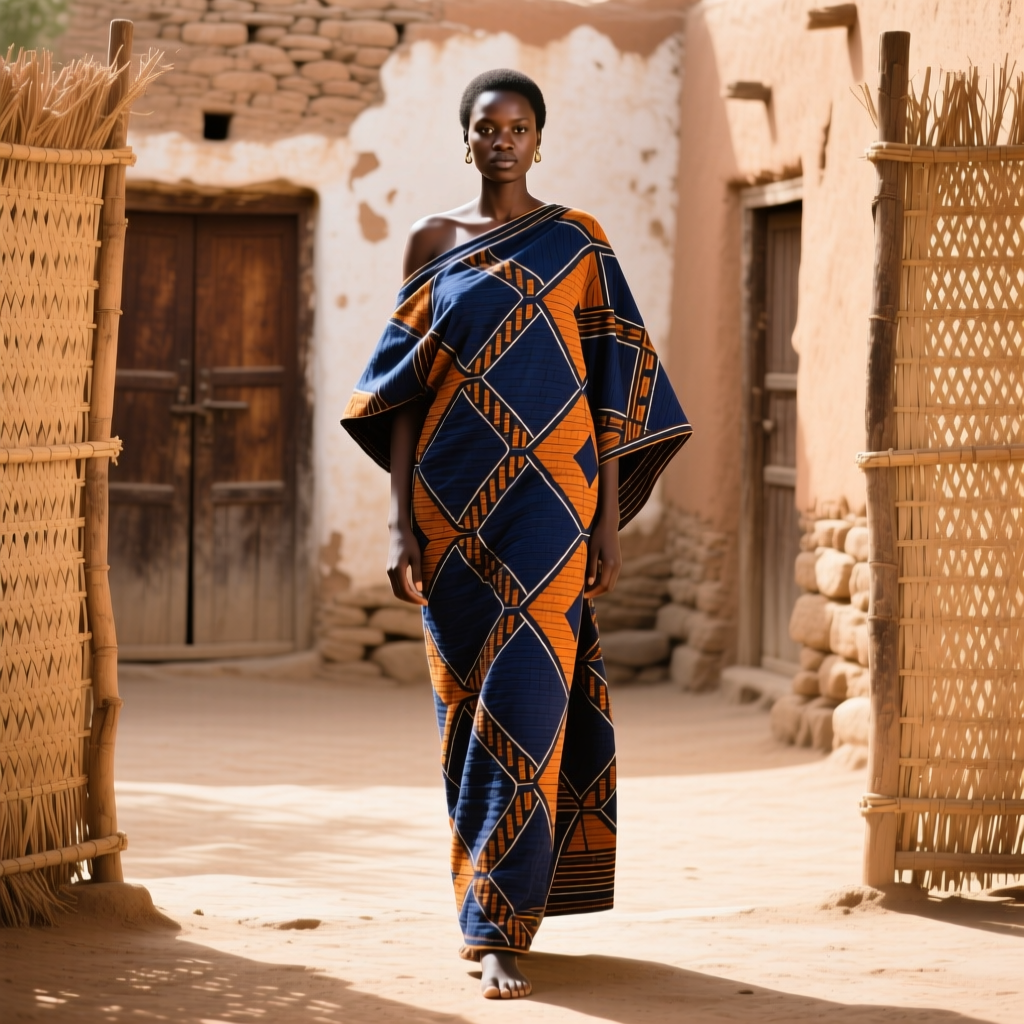
Kanjeevaram Sari: South Indian Silk Heritage

Kanjeevaram Temple Silk Sari: A Living Heritage of South Indian Weaving
In the sun-drenched town of Kanchipuram, nestled along the banks of the Vegavathi River in Tamil Nadu, the rhythmic clatter of handlooms has echoed through narrow lanes for centuries. Here, master weavers transform mulberry silk threads and pure zari into garments that transcend mere clothing — they create wearable sanctuaries. The Kanjeevaram temple silk sari is not simply a textile; it is a sacred artifact born from the intersection of devotion, artistry, and an unbroken lineage of craftsmanship that stretches back over four hundred years.
Often referred to as the "queen of silks," the Kanjeevaram sari occupies a position of unparalleled reverence in the world of handwoven textiles. Unlike other silk traditions that emerged from royal courts or commercial enterprise, the Kanjeevaram weave was born in the shadow of temple gopurams — the towering gateway towers of South Indian temples. Every motif, every border pattern, and every interplay of color carries within it the spiritual vocabulary of a civilization that wove its cosmology into the very fabric of daily life.
As we trace the threads of this extraordinary tradition, we uncover not just a story of technique and trade, but a living cultural dialogue between the weaver's hands, the devotee's heart, and the temple's eternal stones. For those exploring the broader landscape of textile heritage, the Kanjeevaram tradition offers a masterclass in how craft can become culture, and culture can become identity.
The Sacred Origins: Temples, Weavers, and the Birth of a Legend
The story of the Kanjeevaram silk sari begins not in a marketplace, but in mythology. According to Hindu tradition, the weavers of Kanchipuram are descendants of Sage Markandeya, the master weaver who is said to have woven tissue from lotus fiber. The Devanga and Saligar communities, who form the backbone of Kanjeevaram weaving, trace their lineage to this divine craftsman, lending their work an almost sacerdotal character from its very inception.
Kanchipuram itself, known as the "City of a Thousand Temples," served as the capital of the Pallava dynasty and later flourished under the Cholas, Vijayanagara Empire, and the Nayaks. Each successive ruler contributed to the town's architectural and artistic vocabulary, and the weavers absorbed these influences like silk absorbs dye. The temple walls of Kailasanathar, Ekambareswarar, and Varadaraja Perumal became open-air design libraries, their carved pillars and painted ceilings providing an inexhaustible repertoire of motifs that would find their way onto the loom.
The earliest Kanjeevaram saris were woven specifically for temple deities. These divine garments — draped on goddesses during festivals and ceremonies — established the sari's association with the sacred. Temple dancers, or devadasis, were among the first mortal wearers, their performances before the deity requiring garments of equal splendor and spiritual significance. This temple-to-body trajectory gave the Kanjeevaram sari its distinctive character: bold, structured, and imbued with an almost architectural sense of form.
During the Vijayanagara period, the craft received significant royal patronage. Emperor Krishna Deva Raya is credited with encouraging weavers from different regions to settle in Kanchipuram, enriching the local tradition with diverse techniques. The introduction of intricate zari work — gold and silver thread woven directly into the silk — elevated these saris to objects of extraordinary luxury and ceremonial importance. The weavers of this era established many of the technical principles that still govern Kanjeevaram production today, including the distinctive method of interlocking the body, border, and pallu that gives these saris their legendary durability.
For readers interested in how sacred garments shape broader fashion traditions, our guide to sari draping styles explores how temple-origin textiles influenced regional wearing customs across the Indian subcontinent.
The Art of the Loom: Craftsmanship and Technique
Creating a single Kanjeevaram silk sari is an exercise in patience, precision, and profound technical mastery. The process begins long before the loom is threaded and continues through stages that demand the coordinated skill of multiple artisans. A genuine Kanjeevaram sari, woven entirely by hand, can take anywhere from fifteen days to over a month to complete, depending on the complexity of the design.
The Raw Materials: Silk, Zari, and the Foundation of Excellence
The foundation of every Kanjeevaram sari is pure mulberry silk, sourced primarily from Karnataka and Tamil Nadu. The silk threads undergo a meticulous preparation process: they are first soaked in rice water and sun-dried to increase their stiffness and sheen. This treatment, known locally as kanjivaram preparation, gives the finished sari its characteristic weight, body, and lustrous finish. The threads are then dyed using both traditional vegetable dyes and modern acid dyes, depending on the desired color palette.
The zari — the metallic thread that defines the Kanjeevaram's opulent borders and pallus — deserves special attention. Traditional pure zari consists of a silk core thread wrapped with flattened silver wire, which is then electroplated with gold. This process creates a thread that is remarkably supple yet durable, capable of retaining its luster across generations. The Government of India's Silk Mark and Zari certification systems help distinguish genuine pure zari Kanjeevarams from those using tested zari (a synthetic alternative) or half-fine zari, ensuring that buyers can identify authentic pieces.
The Weaving Process: Korvai, Petni, and the Architecture of Interlocking
What truly distinguishes the Kanjeevaram sari from other silk weaving traditions is its unique construction technique. Unlike most saris where the body, border, and pallu are woven as a continuous piece, the Kanjeevaram employs a system of separate weaving and interlocking that gives the garment its structural integrity.
The korvai technique involves weaving the body and borders separately on the same loom and then interlocking them with extraordinary precision. Three shuttles are typically employed — one for each border and one for the body — and the weaver must synchronize their movements to create seamless joins. This interlocking is so robust that even if the sari tears, the border will not separate from the body. This engineering principle, born from centuries of empirical knowledge, gives the Kanjeevaram its legendary longevity.
The petni technique is used to attach the pallu (the decorative end piece) to the body of the sari. The warp threads of the body are carefully interlocked with the pallu warp, often creating a visible zigzag line at the junction. Far from being considered a flaw, this line — known as the petni — is regarded as a hallmark of authentic handloom Kanjeevaram weaving, a signature of human hands that machine-made imitations cannot replicate.
The loom itself is a pit loom, with the weaver seated at ground level and the pedals operating in a pit below. The jacquard mechanism, controlled by punched cards or, in more contemporary setups, by computer-assisted design systems, guides the creation of complex patterns. However, the finest Kanjeevaram saris still rely on the adai system — a traditional method of pattern creation using hand-tied threads that predates the jacquard by centuries.
The Language of Motifs
Every motif woven into a Kanjeevaram sari carries symbolic weight. The manga (mango or paisley) represents fertility and abundance. The mayil (peacock) symbolizes grace and royalty. The rudraksha pattern invokes spiritual protection, while the chakram (discus) references the divine weapons of Vishnu. Temple motifs — including the gopuram (temple tower), yaali (mythical beast), and various floral garlands — connect the wearer to the architectural splendor of Kanchipuram's sacred landscape.
Border designs often feature rekku (leaf patterns), kattams (checks), or elaborate temple borders with rows of miniature gopurams. The width of the border is itself a statement: traditional Kanjeevarams often feature borders that are eight to twelve inches wide, creating a dramatic visual frame for the sari's body. Understanding these design elements enriches the experience of wearing and collecting these garments, as explored further in our guide to understanding textile patterns.
Cultural Significance: The Sari as Ritual, Identity, and Heirloom
In South Indian culture, the Kanjeevaram sari is far more than an article of clothing. It is a vessel of meaning, a marker of life's most significant transitions, and a tangible link between generations. No South Indian bridal trousseau is considered complete without at least one Kanjeevaram, and in many families, these saris are passed down as heirlooms, their value appreciating with age rather than diminishing.
The sari's association with auspiciousness — mangalam in Tamil — makes it the prescribed garment for weddings, religious ceremonies, and festival celebrations. During the Tamil month of Aadi, when temple festivals fill the calendar, the sight of women draped in vibrant Kanjeevarams creates a living tapestry that mirrors the festival decorations of the temples themselves. The sari's weight and structure, often weighing between five hundred grams to over a kilogram, lend the wearer a dignified bearing that is considered appropriate for sacred occasions.
Among the Brahmin communities of Tamil Nadu, the Kanjeevaram holds particular significance in the mundanai ceremony, where a young girl receives her first sari. The choice of colors, motifs, and border width communicates family status, regional identity, and aesthetic preference in a visual language that community members read fluently. Red and green combinations, for instance, are traditionally favored for weddings, while mustard yellow and parrot green might be chosen for temple visits.
The Kanjeevaram also plays a vital role in the classical dance traditions of South India. Bharatanatyam dancers, whose art form originated in the temples of Tamil Nadu, have long favored Kanjeevaram silk for its ability to hold crisp pleats, its luminous sheen under stage lighting, and its cultural authenticity. The relationship between the weaver and the dancer represents one of the most beautiful symbioses in Indian performing arts — the dancer's body becomes a canvas for the weaver's vision.
Beyond individual identity, the Kanjeevaram sari serves as a marker of collective cultural memory. When the Indian government granted the Kanjeevaram sari Geographical Indication (GI) status, it recognized that these textiles are inseparable from the land, people, and traditions of Kanchipuram. This designation protects the name and ensures that only saris woven in the designated region using traditional methods can bear the Kanjeevaram label — a crucial safeguard in an era of mass-produced imitations. For a deeper exploration of how heritage garments shape cultural identity, visit our traditional Indian textiles heritage collection.
Regional Variations and the Evolving Design Vocabulary
While Kanchipuram remains the undisputed heartland of this weaving tradition, the broader Kanjeevaram ecosystem encompasses a fascinating range of regional variations, each shaped by local aesthetics, patronage histories, and the creative innovations of individual weaving families.
Traditional Kanchipuram saris are characterized by their heavy weight, bold color contrasts, and dense zari work. The classic combination features a solid-colored body with a contrasting border and pallu, often with the pettu (additional decorative band) separating the body from the border. Traditional weavers favor deep jewel tones — ruby red, emerald green, sapphire blue, and turmeric yellow — combined with gold zari that creates a warm, luminous effect.
Arani silk, woven in the nearby town of Arani in Tiruvannamalai district, shares many technical characteristics with Kanjeevaram but tends toward lighter weights and more contemporary color palettes. Arani weavers have been particularly innovative in experimenting with pastel shades, dual-tone effects, and modern geometric patterns while maintaining the fundamental korvai interlocking technique.
Kumbakonam and Thirubhuvanam saris, woven in the Thanjavur district, represent another important branch of the South Indian temple silk tradition. These saris often feature more intricate body patterns, including all-over butta (small repeating motifs) and elaborate jacquard designs. The Thirubhuvanam silk sari, which also holds GI status, is known for its distinctive one-side border design and its historical association with the Thirubhuvanam Silk Weavers' Cooperative, one of the oldest cooperative weaving societies in India.
Dharmavaram silk, from Andhra Pradesh, represents a related but distinct tradition that shares the korvai technique but employs different aesthetic principles. Dharmavaram saris typically feature broader borders with more elaborate zari patterns and tend toward warmer color combinations. The solid-colored body with heavy zari border and pallu creates a visual effect that is at once similar to and distinct from its Tamil Nadu counterpart.
Contemporary weavers across all these centers have responded to changing consumer preferences by introducing innovations such as lighter-weight saris for everyday wear, fusion designs that combine traditional motifs with modern color blocking, and the use of tested zari to create more affordable options. Some master weavers have begun experimenting with unconventional materials — combining silk with cotton, linen, or even metallic yarns — to create textiles that honor tradition while speaking to a new generation of wearers. Our silk sari styling guide explores how these contemporary variations can be integrated into modern wardrobes.
Preserving the Thread: Modern Challenges and Conservation Efforts
Despite its revered status, the Kanjeevaram weaving tradition faces existential challenges in the modern era. The rise of power loom imitations, the escalating cost of raw materials, the migration of younger generations to urban employment, and the shrinking pool of skilled master weavers all threaten to unravel a tradition that has survived for centuries.
The economics of handloom weaving present perhaps the most pressing challenge. A master weaver working on a complex Kanjeevaram sari may spend an entire month on a single piece, yet the compensation often fails to reflect the skill and labor invested. Power loom factories can produce visually similar saris in a fraction of the time and at a fraction of the cost, flooding the market with products that untrained consumers struggle to distinguish from genuine handloom pieces. This price pressure drives many weavers to abandon their craft or to compromise on quality by using inferior materials.
Several organizations and initiatives have emerged to address these challenges. The Government of India's Geographical Indication protection, granted to Kanjeevaram silk saris, provides a legal framework for distinguishing authentic products. The Silk Mark Organisation of India offers certification that assures buyers of silk purity, while the Handloom Mark certifies that a product was woven on a handloom. Together, these certifications create a multi-layered authentication system that, when properly understood by consumers, can protect both weavers and buyers.
Cooperative societies have played a crucial role in sustaining the weaving community. The Kanchipuram Cooperative Silk Weavers' Society, along with numerous smaller cooperatives, provides weavers with access to raw materials at subsidized rates, marketing support, and a measure of financial security. These organizations also serve as repositories of traditional knowledge, ensuring that complex weaving techniques are documented and transmitted to new practitioners.
Non-governmental organizations and social enterprises have introduced innovative approaches to preservation. Some focus on direct-to-consumer sales models that eliminate middlemen and ensure that a greater share of the retail price reaches the weaver. Others invest in design innovation, pairing master weavers with contemporary designers to create products that appeal to younger, urban consumers without compromising on traditional techniques. Digital documentation projects have begun recording the patterns, techniques, and oral histories of aging master weavers, creating archives that future generations can draw upon.
Education and awareness represent perhaps the most powerful tools for preservation. When consumers understand the difference between a hand-woven Kanjeevaram and a power loom copy — when they can recognize the petni line, feel the weight of pure zari, and appreciate the weeks of labor embodied in each sari — they become active participants in preservation. Every informed purchase is a vote for the survival of this extraordinary tradition. For those beginning their journey into heritage textiles, our guide to identifying authentic handloom textiles offers practical advice for distinguishing genuine craftsmanship from mass-produced alternatives.
The weavers of Kanchipuram continue to sit at their pit looms, their fingers dancing across threads of silk and gold with a fluency that no machine can replicate. Each sari they create is an act of cultural persistence — a declaration that beauty made by human hands, imbued with centuries of accumulated wisdom, retains its power to move, to signify, and to endure. The Kanjeevaram temple silk sari is not a relic of the past; it is a living tradition that asks us, its inheritors and admirers, to carry its story forward — one thread, one motif, one generation at a time.
Frequently Asked Questions
What makes a Kanjeevaram sari different from other silk saris?
The Kanjeevaram sari is distinguished by several unique features. First, it uses pure mulberry silk that is treated with rice water for added stiffness and sheen. Second, it employs the korvai interlocking technique, where the body, border, and pallu are woven separately and joined together, creating an exceptionally durable garment. Third, authentic Kanjeevarams use pure zari — silver thread electroplated with gold — rather than synthetic alternatives. Finally, the motifs are drawn from South Indian temple architecture and mythology, giving each sari a distinctive cultural vocabulary. The combination of these elements — superior materials, unique construction, and sacred iconography — sets the Kanjeevaram apart from Banarasi, Patola, Chanderi, and other Indian silk traditions.
How can I verify that a Kanjeevaram sari is authentic?
Authenticating a Kanjeevaram sari involves examining several indicators. Look for the Silk Mark and Handloom Mark labels, which certify silk purity and handloom production respectively. Check for the petni line — the visible zigzag junction between the body and pallu — which indicates handloom construction. Examine the zari: pure zari has a warm, soft gold tone and will not tarnish quickly, while tested zari appears brighter and more yellow. Feel the weight: genuine Kanjeevarams are notably heavier than power loom imitations. The GI (Geographical Indication) tag provides additional assurance. When in doubt, purchase from reputable weavers' cooperatives or established retailers who can provide provenance documentation.
How should I care for and store a Kanjeevaram silk sari?
Proper care ensures that a Kanjeevaram sari can last for generations. Always dry clean rather than hand wash, as water can damage the zari and alter the silk's finish. Store the sari folded in a muslin or cotton cloth — never in plastic, which traps moisture and promotes fungal growth. Refold the sari periodically along different lines to prevent permanent crease marks and fiber weakening. Keep mothballs or dried neem leaves in the storage area to deter insects. Avoid hanging the sari for extended periods, as the weight can stretch the silk. For saris worn infrequently, airing them in indirect sunlight once every few months helps maintain freshness and prevents mustiness.
Why are Kanjeevaram saris so expensive compared to other silk saris?
The cost of a Kanjeevaram sari reflects multiple factors. Pure mulberry silk is a premium raw material, and the rice water treatment adds to processing costs. Pure zari, containing real silver and gold, is significantly more expensive than synthetic alternatives. The labor-intensive korvai weaving technique requires a highly skilled weaver to spend fifteen to forty-five days on a single sari, depending on design complexity. Unlike power loom production, which can manufacture dozens of saris daily, handloom weaving is inherently slow and cannot be scaled through automation. Additionally, the GI certification and quality control processes add administrative costs. When these factors are considered, the price of a genuine Kanjeevaram sari represents fair compensation for extraordinary materials and craftsmanship.
Are there lightweight Kanjeevaram saris suitable for everyday wear?
Yes, contemporary weavers have responded to demand for lighter, more versatile Kanjeevaram saris. These "soft silk" or "lightweight" variants use fewer silk threads in the warp and weft, reducing the overall weight while maintaining the characteristic Kanjeevaram aesthetic. Some weavers use tested zari instead of pure zari to further reduce weight and cost. Cotton-silk blends, known as half-sarees or madisar variants, offer another lightweight option that retains traditional design elements. However, purists note that these lighter versions sacrifice some of the structural qualities — the drape, the body, the regal fall — that define the classic Kanjeevaram experience. For daily office wear or casual occasions, these lighter alternatives are practical; for weddings and major ceremonies, the traditional heavyweight Kanjeevaram remains the preferred choice.