Bògòlanfini: The Sacred Mud Cloth of the Bamana People
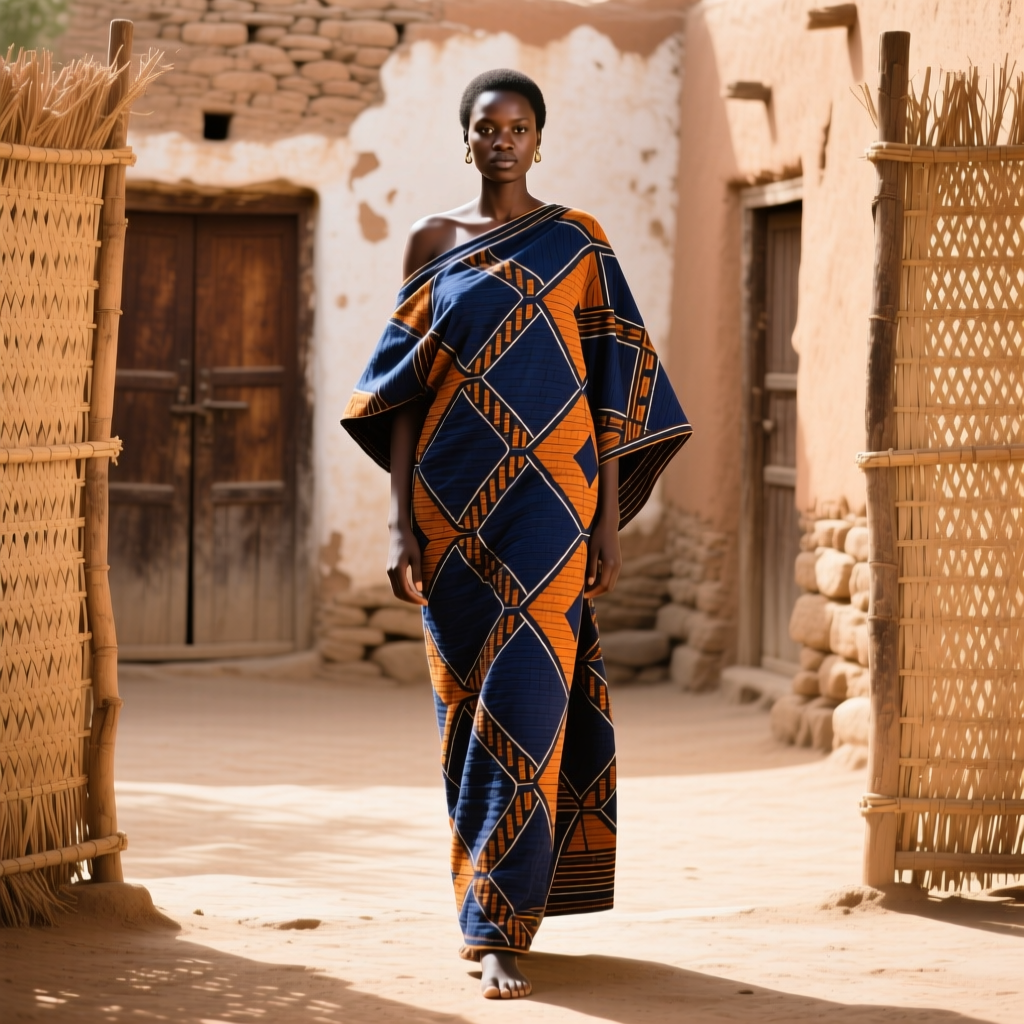
In the sun-baked villages along the Niger River, where the savanna stretches toward the horizon in waves of ochre and gold, Bamana women have for centuries transformed plain cotton into something extraordinary. Using nothing more than fermented mud, plant extracts, and an intimate knowledge passed from mother to daughter across countless generations, they create Bògòlanfini — a textile so deeply woven into the fabric of Bamana identity that its very name speaks of earth itself. In the Bamana language, bògò means "mud" or "earth," lan means "by means of," and fini means "cloth." It is, quite literally, cloth made by means of mud — yet to reduce it to its materials would be to reduce a cathedral to its stones.
Bògòlanfini, known in the West simply as "mud cloth," stands as one of Africa's most recognizable and culturally significant textiles. Its bold geometric patterns — stark black and white motifs set against rich brown backgrounds — have captivated collectors, designers, and scholars for generations. But behind its striking visual appeal lies a complex system of symbolic communication, spiritual practice, and social organization that reveals the depth of Bamana cosmology and the resilience of a textile tradition that has survived colonialism, globalization, and the relentless march of fast fashion.
This article explores the heritage of Bògòlanfini from its origins to its contemporary expressions, examining the craftsmanship that makes it unique, the cultural codes embedded in its patterns, the regional variations that distinguish one village's cloth from another, and the ongoing efforts to preserve this remarkable tradition for future generations. For those interested in exploring other culturally significant textiles, our heritage collection offers further journeys into the world's most meaningful garment traditions.
The Cultural Significance of Bògòlanfini in Bamana Society
To understand Bògòlanfini is to understand the Bamana people themselves. The Bamana (also known as Bambara) are one of the largest ethnic groups in Mali, with a population numbering in the millions spread across the western Sahel. Their society has historically been organized around agriculture, with deep spiritual traditions centered on a creator deity called Ngala and a complex system of initiation societies that guide individuals through the stages of life. Bògòlanfini is inseparable from this social and spiritual architecture.
Traditionally, Bògòlanfini was not merely decorative — it was functional in the most profound sense. The cloth served as a protective garment during critical life transitions. Young women wore specific Bògòlanfini patterns during their coming-of-age rituals, particularly during the period of seclusion that followed female excision, a practice historically embedded in Bamana culture. The cloth was believed to absorb dangerous spiritual energies, known as nyama, that were released during these transformative moments. Hunters, revered in Bamana society for their courage and their proximity to the spirit world, wore Bògòlanfini tunics as camouflage and as spiritual armor when they ventured into the bush.
The patterns themselves constitute a visual language — a system of signs and symbols that communicate specific meanings to those literate in their interpretation. A pattern of interlocking diamonds might represent the unity of a community. Concentric circles could signify the protective eye of an ancestor. Zigzag lines might evoke the path of a river or the unpredictable journey of life. Scholars have identified dozens of distinct motifs, each carrying layered meanings that can shift depending on context, combination, and the identity of the wearer.
Importantly, knowledge of these symbolic meanings was traditionally restricted. Not everyone in Bamana society could "read" a Bògòlanfini cloth with full comprehension. The deeper significances were revealed progressively through the initiation societies — particularly the Komo, Kono, and Ciwara societies — each of which guarded esoteric knowledge about the spiritual forces that shaped the world. A cloth worn by a high-ranking initiate might carry messages invisible to the untrained eye, making Bògòlanfini not just a textile but a medium of encoded communication.
The cloth also played — and continues to play — a role in marking social status and identity. Different patterns were associated with different families, clans, or villages, functioning almost as heraldic devices. A skilled reader of Bògòlanfini could often identify a wearer's origins, social standing, and even their aspirations simply by examining the motifs on their garment. This communicative function places Bògòlanfini in the same category as other great symbolic textile traditions around the world, from Scottish tartans to Ghanaian Kente cloth, which you can explore in our guide to Kente cloth heritage.
The Craftsmanship: From Cotton to Sacred Cloth
The creation of authentic Bògòlanfini is a labor-intensive, multi-stage process that can take weeks or even months to complete. Every step requires specialized knowledge, and the work is traditionally divided between men and women in ways that reflect Bamana understandings of gender, labor, and spiritual power.
The process begins with the cultivation and harvesting of cotton, a task historically managed by Bamana men. The raw cotton is cleaned, carded, and spun into thread — work traditionally performed by women or by men of specific artisan castes. The thread is then woven into narrow strips on a double-heddle loom, another task reserved for men, particularly those belonging to the weaver caste known as the maabube (singular: maabu). These strips, typically about fifteen centimeters wide, are then stitched together edge-to-edge to form a larger piece of fabric. The visible seams where the strips meet are a characteristic feature of authentic Bògòlanfini and serve as one marker of its handmade origin.
Once the plain cloth is assembled, the transformation begins — and this is where the work passes primarily to women, who are the true artists of Bògòlanfini. The first step is to soak the cloth in a yellowish dye bath made from the leaves of the n'gallama tree (Anogeissus leiocarpus) or the n'tjankara tree. These leaves are rich in tannins, and the cloth absorbs them thoroughly, emerging a vibrant yellow. This yellow base is the foundation upon which all subsequent decoration will be built.
Next comes the application of the mud. The mud used is not simply scooped from a riverbank — it is carefully collected from the beds of seasonal ponds and rivers, then fermented in sealed jars for up to a year. During this fermentation process, the iron-rich mud develops the chemical properties necessary to react with the tannins in the cloth. When applied, it creates a deep, permanent black color through a chemical reaction between iron and tannic acid — a process remarkably similar to the chemistry underlying medieval European iron gall ink.
The artist applies the fermented mud using a variety of tools: thin metal strips, wooden sticks, and sometimes finely fashioned brushes made from palm fibers. She works freehand, without stencils or templates, drawing the geometric patterns directly onto the cloth with extraordinary precision. The mud is applied to the areas that are intended to become dark, while the yellow-dyed areas that remain uncovered will form the lighter elements of the design.
After the mud has dried, the cloth is washed to remove excess material, and the process may be repeated several times to deepen the black tones. In some traditions, additional colors are introduced using other plant dyes — reds from the bark of certain trees, browns from various roots and leaves — though the classic Bògòlanfini palette remains black and yellow-brown. In the final stage, the yellow background may be bleached to a creamy white using a solution made from ground peanuts, caustic soda, or other traditional agents, creating the high-contrast black-and-white aesthetic that has become most widely recognized internationally.
The entire process is imbued with ritual significance. Traditional practitioners observe taboos and perform small ceremonies at various stages. Certain patterns are only applied during specific seasons or under particular astronomical conditions. The knowledge of which mud to collect, how long to ferment it, and how to prepare the dye baths is guarded carefully within families and communities. This depth of traditional knowledge is what distinguishes authentic Bògòlanfini from the mass-produced imitations that flood tourist markets. For a broader look at how natural dyeing practices shape textile heritage around the world, our natural dyeing textile guide provides further context.
Regional Variations and Artistic Distinctions
While Bògòlanfini is broadly associated with the Bamana heartland in south-central Mali — particularly the region around the towns of Bougouni, Dioïla, and Sikasso — it is not a monolithic tradition. Significant regional variations exist, reflecting differences in local materials, aesthetic preferences, and the specific cultural practices of different communities.
In the Bougouni region, widely considered the birthplace of the finest Bògòlanfini, the cloth tends to feature dense, intricate patterns with a strong emphasis on fine linework and complex geometric compositions. The artists of this region are known for their exceptional precision and for preserving some of the oldest and most symbolically charged motifs. Bougouni cloths often display a rich, warm brown background with sharply defined black patterns, and the strip-seam construction is particularly evident, giving the cloth a distinctive ribbed texture.
Moving north toward the Beledougou region, the style shifts noticeably. Here, the patterns tend to be bolder and more spacious, with larger individual motifs set against broader fields of color. The background is often lighter, and there is a greater use of negative space as an active design element. Some scholars have suggested that this stylistic difference reflects the influence of Islamic aesthetics, which became more prominent in the northern areas through centuries of trans-Saharan trade and cultural exchange.
In the Sikasso region to the south, closer to the borders of Côte d'Ivoire and Burkina Faso, Bògòlanfini takes on yet another character. The patterns here may incorporate more organic, curvilinear forms alongside the traditional geometric vocabulary, and there is sometimes a greater diversity of color, with reds and ochres appearing more frequently. This may reflect cross-cultural influences from neighboring Senufo and Lobi textile traditions, which have their own rich heritage of pattern-making and symbolic decoration.
Beyond Mali's borders, Bògòlanfini-influenced traditions have been documented among Bamana diaspora communities in Burkina Faso, Guinea, and Senegal. In each of these settings, the basic technique — fermented mud applied to tannin-rich cloth — remains recognizable, but the specific motifs, color palettes, and cultural associations have adapted to local contexts. These regional variations are not signs of dilution or decline; rather, they demonstrate the living, adaptive nature of the tradition, which has always evolved in response to new environments, new materials, and new cultural encounters. Those interested in how textile traditions travel and transform might also enjoy our exploration of indigo dyeing heritage across West Africa and beyond.
It is worth noting that the distinction between "traditional" and "contemporary" Bògòlanfini is not as clear-cut as it might appear. Even within a single village, one can find cloths made for ritual use alongside cloths made for sale to outsiders, cloths that adhere strictly to inherited patterns alongside cloths that incorporate the artist's personal innovations. The best Bògòlanfini artists have always been creative agents, not mere copyists of ancestral templates, and the tradition's longevity is due in no small part to this capacity for individual expression within a shared cultural framework.
Bògòlanfini in the Modern World: Preservation, Adaptation, and Global Influence
The story of Bògòlanfini in the modern era is one of both remarkable success and genuine concern. Beginning in the late twentieth century, Bògòlanfini burst onto the international stage, captivating the global fashion and design industries with its bold aesthetics and its aura of authenticity. Malian designer Chris Seydou was among the first to incorporate Bògòlanfini patterns into contemporary haute couture, bringing the textile to runways in Paris and beyond. His work opened the door for a wave of international interest that continues to this day, as designers worldwide draw inspiration from the cloth's graphic power and cultural depth.
This global visibility has been a double-edged sword. On one hand, international demand has provided economic opportunities for Bamana artisans, particularly women, who are the primary producers of the cloth. Cooperatives and fair-trade organizations have helped connect rural producers with global markets, ensuring that at least some of the revenue from Bògòlanfini sales flows back to the communities that originated the tradition. The cloth has become a source of national pride for Mali, featured prominently in cultural festivals, government-sponsored exhibitions, and diplomatic gift-giving.
On the other hand, the surge in demand has led to the proliferation of cheap, mass-produced imitations that bear little resemblance to authentic Bògòlanfini. Factory-printed "mud cloth" — produced using industrial screen-printing techniques and synthetic dyes — floods markets in Africa, Europe, and North America. These imitations undercut the prices of handmade cloth, making it difficult for traditional artisans to compete. They also strip the patterns of their cultural meaning, reducing a complex symbolic system to mere decoration. For consumers who wish to make informed choices, our guide to identifying authentic handwoven textiles offers practical advice.
Preservation efforts are underway on multiple fronts. In Mali, organizations such as the National Museum of Mali and various cultural NGOs have worked to document traditional patterns, record the knowledge of elder artisans, and support training programs for younger generations. Internationally, UNESCO has recognized the cultural significance of Bògòlanfini and related Malian textile traditions, though the specific protections afforded by such recognition remain limited. Academic researchers from institutions across Africa, Europe, and North America have contributed extensive documentation of Bògòlanfini's history, techniques, and symbolism, creating an invaluable scholarly record.
Perhaps the most promising preservation strategy, however, is the continued vitality of the tradition within Bamana communities themselves. Despite the pressures of urbanization, economic hardship, and cultural change, Bògòlanfini continues to be made and used in its traditional contexts. Women still gather the mud, prepare the dye baths, and paint the patterns. Hunters still wear the cloth. Families still commission specific designs for weddings, naming ceremonies, and funerals. As long as the cloth remains embedded in the living culture of the Bamana people — not merely a commodity for export but a vital part of social and spiritual life — it will endure.
The influence of Bògòlanfini on global design is undeniable and continues to grow. Interior designers use the cloth as upholstery, wall hangings, and accent pieces. Fashion designers reference its patterns in collections ranging from streetwear to luxury ready-to-wear. Graphic designers draw on its visual vocabulary for branding, packaging, and digital media. This widespread influence is, in many ways, a tribute to the aesthetic power of the tradition — but it also raises important questions about cultural appropriation, intellectual property, and the rights of originating communities to benefit from the use of their cultural heritage. Navigating these questions thoughtfully is essential for anyone who works with or collects traditional textiles. Our guide to incorporating heritage textiles into a modern wardrobe addresses some of these considerations from a personal style perspective.
Collecting and Caring for Authentic Bògòlanfini
For those drawn to the beauty and cultural richness of Bògòlanfini, collecting authentic pieces can be a deeply rewarding pursuit. An authentic handmade cloth is not just a beautiful object — it is a tangible connection to centuries of Bamana knowledge, creativity, and spiritual practice. However, navigating the market requires some knowledge and discernment.
Authentic Bògòlanfini can be identified by several key characteristics. First, examine the construction: genuine cloth is made from narrow strips sewn together, and the seams should be visible. Second, look at the reverse side: on authentic pieces, the mud dye penetrates the fabric, so the patterns should be visible (though slightly muted) on the back. Factory-printed imitations typically show no design on the reverse. Third, assess the texture: handmade Bògòlanfini has a distinctive, slightly rough hand-feel that comes from the hand-spun cotton and the mud dyeing process. It should not feel smooth or slick like machine-woven, industrially dyed fabric.
The smell can also be a clue: authentic Bògòlanfini often retains a faint earthy scent from the fermented mud, particularly when new. This scent fades over time but may be noticeable when the cloth is dampened. Finally, consider the imperfections: handmade cloth will have slight irregularities in the weaving, the dyeing, and the pattern application. These are not flaws but evidence of human craftsmanship, and they are among the qualities that give authentic Bògòlanfini its warmth and character.
Caring for Bògòlanfini requires attention to its specific material properties. The mud dye is quite stable once properly set, but harsh detergents, bleach, and prolonged exposure to direct sunlight can cause fading over time. Gentle hand-washing in cool water with a mild, pH-neutral soap is recommended. The cloth should be air-dried in the shade rather than machine-dried. With proper care, an authentic Bògòlanfini piece can last for decades, developing a beautiful patina that only enhances its visual and tactile appeal.
When purchasing Bògòlanfini, seek out reputable dealers who can verify the cloth's origin and who maintain direct relationships with artisan communities. Fair-trade organizations, specialized textile galleries, and direct purchases from Malian cooperatives are generally the most reliable sources. Be wary of prices that seem too low — authentic handmade Bògòlanfini reflects weeks or months of skilled labor, and its price should reflect that value.
Frequently Asked Questions
What is the difference between Bògòlanfini and regular mud cloth?
The term "mud cloth" is a rough English translation of Bògòlanfini, but the two terms are not always interchangeable. Authentic Bògòlanfini refers specifically to the handwoven, hand-dyed textile produced by Bamana artisans in Mali using traditional methods — fermented mud, natural plant dyes, and strip-woven cotton. When people refer to "mud cloth" in commercial contexts, they may be describing factory-printed imitations that mimic the appearance of Bògòlanfini without using any of its traditional techniques or materials. The distinction matters not only for quality and authenticity but also for the cultural respect owed to the Bamana communities who originated and sustained this tradition.
Can Bògòlanfini patterns be used freely in design and fashion?
This is a complex question that sits at the intersection of intellectual property law, cultural ethics, and creative practice. Legally, most traditional Bògòlanfini patterns are not protected by copyright, as they are considered part of the cultural commons. However, many cultural advocates argue that using these patterns without understanding their meanings, without crediting their origins, or without ensuring that Bamana communities benefit from their commercialization constitutes a form of cultural appropriation. Ethical designers and brands increasingly seek partnerships with originating communities, provide attribution, and share revenue. Consumers can support this shift by choosing products from brands that demonstrate transparent and respectful sourcing practices.
How long does it take to make an authentic piece of Bògòlanfini?
The production of a single piece of authentic Bògòlanfini can take anywhere from several weeks to several months, depending on the size of the cloth, the complexity of the design, and the specific techniques employed. The fermentation of the mud alone can take up to a year. The weaving of the cotton strips, the preparation of the dye baths, the application of the patterns, and the multiple washing and drying cycles all contribute to the overall timeline. This extended production process is one reason why authentic Bògòlanfini commands higher prices than mass-produced alternatives — and why it is valued not just as a textile but as a work of art.
Are the symbols in Bògòlanfini still meaningful today?
Yes, though the nature of that meaning has evolved. Within Bamana communities, many of the traditional symbols retain their cultural and spiritual significance, particularly in rural areas where initiation societies and traditional practices remain active. However, the spread of Islam and Christianity, along with the pressures of modernization, means that some of the deeper esoteric meanings are known to fewer people with each passing generation. At the same time, new meanings are being created: contemporary Bamana artists develop new motifs that speak to modern experiences, and the cloth has taken on additional significance as a symbol of Malian national identity and African cultural pride. Bògòlanfini is not a frozen relic of the past but a living tradition that continues to generate meaning.
Where can I learn more about Bamana textile traditions?
For those seeking deeper knowledge, several avenues are available. The National Museum of Mali in Bamako houses an important collection of historical Bògòlanfini and offers exhibitions on Bamana material culture. Academic works by scholars such as Pascal James Imperato, Marli Shamir, and others provide detailed documentation of techniques, patterns, and cultural contexts. Cultural organizations and fair-trade cooperatives in Mali often offer workshops and demonstrations for visitors. Additionally, our heritage archive at The Garment Atlas features ongoing coverage of textile traditions from around the world, providing context and connections that help illuminate the global significance of traditions like Bògòlanfini. Engaging with these resources is a meaningful way to deepen your appreciation and to support the communities who keep these traditions alive.