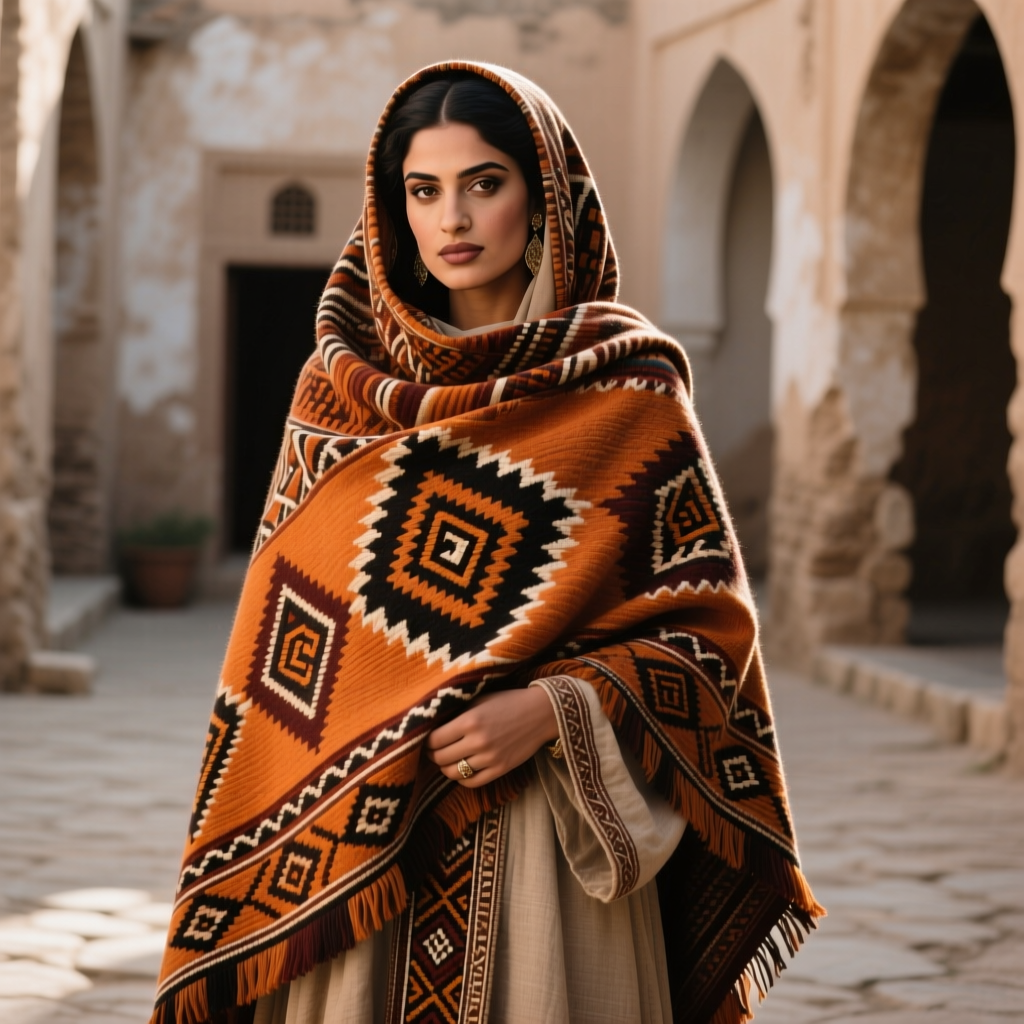
Yoruba Aso Oke: Strip-Woven Prestige Cloth

Nigerian Yoruba Aso Oke: The Heritage of Strip-Woven Prestige Cloth
Among the most visually arresting textiles to emerge from the African continent, Aso Oke stands as a monumental achievement of Yoruba weaving tradition. Translated literally from the Yoruba language as "top cloth" or "high-status cloth," Aso Oke has served for centuries as the definitive marker of prestige, ceremony, and cultural identity among the Yoruba people of southwestern Nigeria. This remarkable fabric, constructed through the meticulous technique of narrow-strip weaving, represents far more than a decorative textile — it is a living document of social hierarchy, spiritual belief, artistic innovation, and communal memory.
The origins of Aso Oke stretch deep into the pre-colonial history of Yorubaland, where the art of strip weaving was already well established centuries before European contact. Archaeological evidence and oral traditions suggest that the Yoruba weaving tradition dates back to at least the early medieval period, with the craft being passed down through generations of specialist weaving families. The narrow-strip loom, known as ofi or àṣọ, produces long bands of fabric typically between four and twelve inches wide, which are then carefully cut and sewn together edge-to-edge to create the finished cloth. This technique, shared with other West African weaving traditions such as the Ghanaian Kente cloth of the Akan people, speaks to a broader regional mastery of textile production that has defined West African material culture for generations.
What distinguishes Aso Oke from its neighboring textile traditions is its distinctive aesthetic vocabulary, its deep integration into Yoruba ceremonial life, and the extraordinary range of patterns, colors, and textures that Yoruba weavers have developed over centuries. From the subdued elegance of undyed cotton to the luminous shimmer of silk and metallic threads, Aso Oke encompasses a spectrum of visual expression that mirrors the complexity of Yoruba society itself. To understand Aso Oke is to understand the Yoruba worldview — a perspective that values beauty, hierarchy, spiritual protection, and the power of skilled craftsmanship to transform raw materials into objects of profound cultural meaning.
Cultural Significance and Ceremonial Role of Aso Oke
In Yoruba culture, cloth is never merely functional. It is a medium of communication, a vessel of identity, and a bridge between the physical and spiritual realms. Aso Oke occupies the highest tier within this textile hierarchy, reserved for the most significant moments in an individual's life and the most important occasions in communal life. The very name — "top cloth" — signals its elevated status, distinguishing it from everyday fabrics and imported textiles that serve more mundane purposes.
The most prominent ceremonial context for Aso Oke is the Yoruba wedding, where both bride and groom are traditionally adorned in matching or complementary Aso Oke ensembles. The bride typically wears a wrapper skirt (iro), a blouse (buba), a shawl or shoulder sash (gele and ipele), while the groom wears a flowing agbada gown, trousers (sokoto), and a cap (fila), all fashioned from Aso Oke cloth. The selection of pattern and color for wedding Aso Oke is a matter of intense family deliberation, as the cloth communicates not only the couple's aesthetic preferences but also their social standing, family lineage, and aspirations for the marriage. To learn more about how traditional garments function within wedding ceremonies, explore our guide to traditional wedding garments across cultures.
Beyond weddings, Aso Oke plays an essential role in chieftaincy ceremonies, where new titles are bestowed upon individuals of distinction within the community. A chief-elect is wrapped in specific Aso Oke patterns that signify the rank and responsibilities of the office being assumed. The cloth in this context functions as a form of investiture — the physical embodiment of authority conferred upon the wearer. Similarly, at funerals of prominent community members, Aso Oke serves as both burial shroud and commemorative garment, with family members wearing specific patterns to honor the deceased and signal their relationship to the departed.
Religious and spiritual dimensions further enrich the significance of Aso Oke. Among Yoruba practitioners of traditional religion, certain Aso Oke patterns and colors are associated with specific orisha (deities). White Aso Oke, for example, is closely linked to Obatala, the orisha of creation and purity, while darker indigo varieties may be associated with other spiritual forces. Even within Christian and Muslim Yoruba communities, Aso Oke retains its ceremonial importance, worn to church services, mosque prayers, and religious festivals as an expression of cultural pride alongside faith.
The concept of aso ebi — literally "family cloth" — represents another crucial dimension of Aso Oke's social function. For major celebrations such as milestone birthdays, anniversaries, and community festivals, a host family selects a specific Aso Oke pattern and color scheme, which guests and relatives then purchase and wear as a sign of solidarity and belonging. This practice transforms Aso Oke into a visual marker of social networks, creating a sea of matching garments that photograph as a powerful statement of unity and collective identity. The aso ebi tradition has become one of the most visible and commercially significant aspects of contemporary Yoruba culture, sustaining demand for Aso Oke and ensuring its continued relevance in modern social life.
The Craftsmanship of Strip Weaving: Materials, Looms, and Technique
The creation of Aso Oke is an act of extraordinary technical skill and artistic vision, requiring years of apprenticeship and a deep understanding of materials, patterns, and the mechanics of the loom. The Yoruba strip-weaving tradition employs a narrow horizontal treadle loom, operated almost exclusively by male weavers in traditional contexts, though this gender division has evolved considerably in contemporary practice. The loom itself is a sophisticated apparatus, constructed from locally sourced wood and featuring a system of heddles, treadles, and a reed that together control the interlacement of warp and weft threads.
The warp — the long vertical threads that form the structural foundation of the cloth — is traditionally prepared from hand-spun or commercially spun cotton yarn. The weaver stretches the warp threads across the loom, often creating a warp that extends many meters in length, sufficient to produce multiple strips of the same pattern. The weft — the horizontal threads that are passed back and forth through the warp using a shuttle — provides the primary field for decorative expression. It is in the selection and manipulation of weft materials that the Aso Oke weaver demonstrates the greatest creativity and technical mastery.
Traditional Aso Oke materials include locally grown and hand-spun cotton, which produces a cloth of substantial weight and a pleasing matte texture. Wild silk, harvested from the cocoons of the Anaphe moth and known in Yoruba as sanyan, has historically been one of the most prized materials for prestige Aso Oke. Sanyan silk produces a lustrous, beige-toned thread that catches the light beautifully and signals the highest social status. Another prestigious material is alaari, a deep red silk traditionally obtained through trans-Saharan trade routes, which was unraveled from imported fabrics and re-woven into Aso Oke by Yoruba artisans. This practice of recycling imported silk into locally woven prestige cloth illustrates the resourcefulness and adaptability of Yoruba weavers throughout history.
The weaving process itself demands intense concentration and physical coordination. The weaver sits at the loom, operating treadles with his feet to create sheds — openings between alternate warp threads — through which the shuttle carrying the weft thread is passed. After each pass of the shuttle, the weaver beats the newly inserted weft thread firmly into place using a sword-shaped beater or a reed, ensuring a tight, even weave. The rhythmic clatter of the loom, the swift movement of hands and feet, and the gradual emergence of patterned cloth from a tangle of threads constitute a performance of skill that has captivated observers for centuries. For those interested in understanding the broader context of handwoven textiles, our complete guide to handwoven textiles offers a comprehensive overview of weaving traditions worldwide.
Pattern creation in Aso Oke weaving involves several techniques. The most fundamental is the alternation of colored weft threads, which produces horizontal stripes of varying width and hue. More complex patterns are achieved through supplementary weft techniques, in which additional decorative threads are floated across the surface of the cloth to create geometric motifs, zigzags, and other ornamental designs. Openwork or lace-like effects, known as etú patterns, are created by selectively omitting weft threads, producing a delicate, semi-transparent fabric that is highly prized for its beauty and the exceptional skill required to produce it. The finest Aso Oke weavers are capable of executing dozens of named patterns from memory, each with its own Yoruba designation and cultural associations.
Regional Variations and Distinctive Aso Oke Traditions
Yorubaland encompasses a vast and culturally diverse territory spanning much of southwestern Nigeria, as well as parts of neighboring Benin and Togo. Within this expansive region, several towns and communities have emerged as renowned centers of Aso Oke production, each developing distinctive styles, specializations, and reputations that reflect local history, available materials, and the creative legacy of founding weaver families.
Iseyin, located in present-day Oyo State, is widely regarded as one of the most important and historically significant centers of Aso Oke weaving. The weavers of Iseyin have long been celebrated for their mastery of the etu (indigo-dyed) style, which features deep blue-black cotton cloth with subtle pinstripes of lighter blue or white. Etu cloth, named after the guinea fowl whose dark speckled plumage it resembles, is considered one of the most dignified and traditionally authoritative Aso Oke types, frequently worn by chiefs, elders, and individuals of high social rank. The indigo dyeing tradition that supports etu production is itself a venerable Yoruba craft, with dye pits that have been in continuous operation for generations.
Okene, in the Ebira-speaking region that borders Yorubaland to the east, has become famous for Aso Oke woven with silk and metallic threads, producing cloths of remarkable sheen and opulence. Okene weavers have been particularly innovative in incorporating imported lurex and rayon threads into their work, creating Aso Oke that glitters and shimmers in a manner that appeals strongly to contemporary tastes. The town's weavers have also been notable for their willingness to experiment with new color combinations and pattern structures, making Okene Aso Oke a byword for luxury and modernity within the broader tradition.
Ilorin, the capital of Kwara State, represents a fascinating intersection of Yoruba and Nupe weaving traditions, reflecting the town's complex history as a frontier city where multiple cultural influences have converged. Ilorin Aso Oke often features distinctive patterns and color palettes that differ from those of the Yoruba heartland, incorporating elements of northern Nigerian textile aesthetics. The weavers of Ilorin have historically maintained close connections with trans-Saharan trade networks, giving them access to silk and other luxury materials that have shaped the character of their cloth.
Osogbo and other towns in Osun State are known for Aso Oke that incorporates motifs and symbols drawn from the rich spiritual traditions of the Osun River region. These cloths may feature patterns associated with the Osun deity, and they are frequently commissioned for use in the annual Osun-Osogbo festival, a UNESCO-recognized cultural event that draws participants and spectators from across the Yoruba diaspora. The relationship between Aso Oke production and religious festival life is particularly strong in Osogbo, where weavers and dyers work in close collaboration to create textiles that serve both aesthetic and ritual purposes.
Abeokuta, the capital of Ogun State, is perhaps most famous for its adire (resist-dyed indigo cloth) tradition, but the city has also been a significant center for Aso Oke weaving, particularly in the production of lighter-weight, everyday Aso Oke that is more accessible to a broader range of consumers. Abeokuta weavers have been instrumental in adapting Aso Oke for the modern fashion market, creating narrower strips, lighter fabrics, and contemporary color palettes that appeal to younger generations and international audiences. To explore how regional textile traditions like these influence global fashion, visit our African textiles in modern fashion style guide.
The variation between these regional centers extends beyond pattern and color to encompass differences in strip width, cloth weight, finishing techniques, and the social organization of weaving itself. In some communities, weaving is organized around family compounds, with fathers teaching sons and entire households participating in different stages of production. In others, weaving guilds or cooperatives have emerged, pooling resources and coordinating production to meet large orders, particularly for aso ebi commissions that may require hundreds of matching garments.
Modern Preservation, Innovation, and Global Recognition
The contemporary era has brought both challenges and opportunities for the Aso Oke tradition. On one hand, the influx of inexpensive factory-printed textiles from Asia and Europe has created intense competition for handwoven cloth, threatening the economic viability of traditional weaving in some communities. The labor-intensive nature of strip weaving, which limits production speed and increases cost, makes Aso Oke inherently more expensive than mass-produced alternatives, potentially restricting its use to elite or ceremonial contexts. Additionally, the aging of master weavers and the migration of younger generations to urban employment have raised concerns about the transmission of weaving knowledge to future practitioners.
On the other hand, a powerful cultural revival movement has energized the Aso Oke tradition in recent decades, driven by a combination of Yoruba cultural pride, Nigerian nationalism, and growing international appreciation for African textile arts. The aso ebi phenomenon has proven remarkably resilient and has, in fact, expanded in scale and visibility, with elaborate Aso Oke ensembles becoming a defining feature of Nigerian celebrations both at home and in the diaspora. Social media platforms have amplified the visibility of Aso Oke fashion, with influencers, celebrities, and style commentators showcasing innovative Aso Oke designs to global audiences numbering in the millions.
Nigerian fashion designers have played a pivotal role in reimagining Aso Oke for contemporary contexts. Designers have experimented with cutting Aso Oke cloth into modern silhouettes — tailored blazers, structured dresses, jumpsuits, and accessories — that preserve the cloth's visual richness while making it wearable in everyday professional and social settings. These innovations have expanded the market for Aso Oke beyond its traditional ceremonial niche, creating new sources of income for weavers and encouraging younger people to engage with the tradition as both consumers and creators. The fusion of Aso Oke with contemporary fashion design represents a model for how heritage textiles can remain vital and relevant without sacrificing their cultural integrity. Discover more about how heritage fabrics are being reinterpreted in our heritage textiles in modern fashion feature.
Preservation efforts have also taken institutional forms. Cultural organizations, museums, and academic researchers have undertaken projects to document Aso Oke patterns, record the knowledge of master weavers, and archive examples of historic cloths before they are lost. Weaving cooperatives and social enterprises have been established to support weavers economically, provide training for new artisans, and connect producers directly with markets. Some initiatives focus specifically on preserving endangered techniques, such as the use of hand-spun cotton and natural dyes, which are at risk of being displaced by synthetic alternatives.
The global diaspora of Yoruba people has been instrumental in sustaining and promoting Aso Oke traditions beyond Nigeria's borders. Yoruba communities in the United Kingdom, the United States, Canada, and elsewhere maintain strong connections to their cultural heritage, commissioning Aso Oke for weddings, naming ceremonies, and cultural festivals held in their adopted countries. This transnational demand has created export opportunities for Nigerian weavers and has introduced Aso Oke to new audiences who may have no prior familiarity with Yoruba culture but are drawn to the cloth's beauty and craftsmanship.
Educational institutions within Nigeria have increasingly incorporated textile arts into their curricula, recognizing that formal education can complement the traditional apprenticeship model and help ensure the survival of weaving knowledge. Universities and polytechnics in Yoruba-speaking regions offer programs in textile design and technology that include study of indigenous weaving traditions, encouraging students to draw on their cultural heritage as a source of creative inspiration. These educational initiatives are critical for building a new generation of weavers, designers, and scholars who can carry the Aso Oke tradition forward while adapting it to the demands of a changing world.
The recognition of Aso Oke as a form of intangible cultural heritage has grown steadily, with advocates calling for greater institutional support, intellectual property protection for traditional patterns, and inclusion in national and international heritage frameworks. As conversations about cultural appropriation and the ethical use of traditional designs gain prominence in global fashion discourse, the Aso Oke tradition offers a compelling case study in how communities can assert ownership of their cultural patrimony while sharing its beauty with the world. For readers interested in the broader conversation about protecting traditional textile knowledge, our guide to protecting textile heritage examines the legal and ethical frameworks shaping this important field.
Frequently Asked Questions
What is the difference between Aso Oke and Kente cloth?
While both Aso Oke and Kente are West African strip-woven prestige textiles, they originate from different cultural traditions and exhibit distinct aesthetic characteristics. Aso Oke is a Yoruba textile from southwestern Nigeria, typically woven in narrower strips and featuring patterns that emphasize horizontal stripes, openwork, and supplementary weft designs. Kente cloth originates from the Akan people of Ghana and is characterized by its bold, multicolored geometric patterns arranged in block-like compositions. The two traditions share the fundamental technique of narrow-strip weaving and edge-to-edge sewing, but they differ in their loom designs, pattern vocabularies, color palettes, and the specific cultural contexts in which they are worn. Both, however, serve as markers of prestige and cultural identity within their respective societies.
How long does it take to weave a complete Aso Oke outfit?
The time required to weave a complete Aso Oke outfit varies significantly depending on the complexity of the pattern, the materials used, and the skill level of the weaver. A relatively simple Aso Oke cloth with basic stripe patterns may take a skilled weaver several days to complete, while highly complex designs featuring intricate supplementary weft work, openwork sections, or the use of fine silk threads can require several weeks or even months of dedicated labor. A complete outfit — which typically includes multiple garments such as a wrapper, blouse, shawl, and head tie for a woman, or an agbada, trousers, and cap for a man — requires multiple strips of cloth and represents a substantial investment of time and craftsmanship. This investment of labor is one of the factors that gives Aso Oke its prestige value and relatively high cost compared to factory-produced textiles.
Can Aso Oke be worn by people who are not Yoruba?
Aso Oke is increasingly worn and appreciated by people from diverse cultural backgrounds, both within Nigeria and internationally. Within Nigeria, it is common for non-Yoruba individuals to wear Aso Oke, particularly in multicultural settings such as interethnic weddings, national celebrations, and professional contexts where traditional attire is expected. Internationally, Aso Oke has found admirers and consumers among people of all backgrounds who value its beauty, quality, and cultural significance. As with any cultural textile, respectful engagement is important — understanding the cloth's significance, purchasing from authentic sources, and wearing it in appropriate contexts demonstrates appreciation rather than appropriation. Many Yoruba people welcome the broader appreciation of their textile heritage as a form of cultural exchange and recognition.
How should Aso Oke garments be cared for and maintained?
Proper care of Aso Oke garments is essential to preserve their beauty and structural integrity over time. Because Aso Oke is typically made from cotton, silk, or blends that may include metallic threads, gentle handling is recommended. Dry cleaning is generally the safest method for cleaning Aso Oke, particularly for garments made with silk or metallic yarns, as machine washing can damage the delicate weave and cause colors to bleed. When storing Aso Oke, garments should be kept in a cool, dry place away from direct sunlight, which can fade natural dyes. Folding should be done carefully to avoid permanent creases in the woven fabric, and some collectors prefer to roll rather than fold their finest pieces. With proper care, an Aso Oke garment can last for generations and may even become a valued family heirloom passed down through the generations.
Where can authentic Aso Oke cloth be purchased?
Authentic Aso Oke can be purchased through several channels, depending on the buyer's location and requirements. In Nigeria, the most direct source is the weaving communities themselves — towns such as Iseyin, Okene, and Ilorin have markets and weaving workshops where cloth can be commissioned directly from artisans. Major Nigerian cities including Lagos, Ibadan, and Abuja have textile markets with dedicated Aso Oke vendors offering a wide range of patterns and quality levels. For buyers outside Nigeria, specialized African textile shops, cultural festivals, and online marketplaces offer access to Aso Oke, though it is important to verify the authenticity and origin of the cloth before purchasing. Commissioning directly from weavers or reputable dealers ensures that the cloth is genuinely handwoven and that the artisans receive fair compensation for their work. Buyers should be cautious of machine-made imitations that mimic the appearance of Aso Oke but lack the craftsmanship and cultural authenticity of the genuine textile.