The Enduring Legacy of the Moroccan Amazigh Handira Wedding Blanket
High in the rugged, snow-capped peaks of the Middle Atlas Mountains of Morocco, a rhythmic clacking echoes through the valleys. It is the sound of the traditional wooden loom, an instrument that has shaped the cultural and social fabric of the Amazigh people for centuries. Among the myriad of textiles born from this mountainous region, none is as revered, recognizable, or deeply symbolic as the Handira. Universally celebrated in the global design and fashion spheres as the Moroccan wedding blanket, the Handira is far more than a simple textile. It is a profound expression of matriarchal heritage, a vessel for spiritual blessings, and a masterpiece of indigenous engineering.
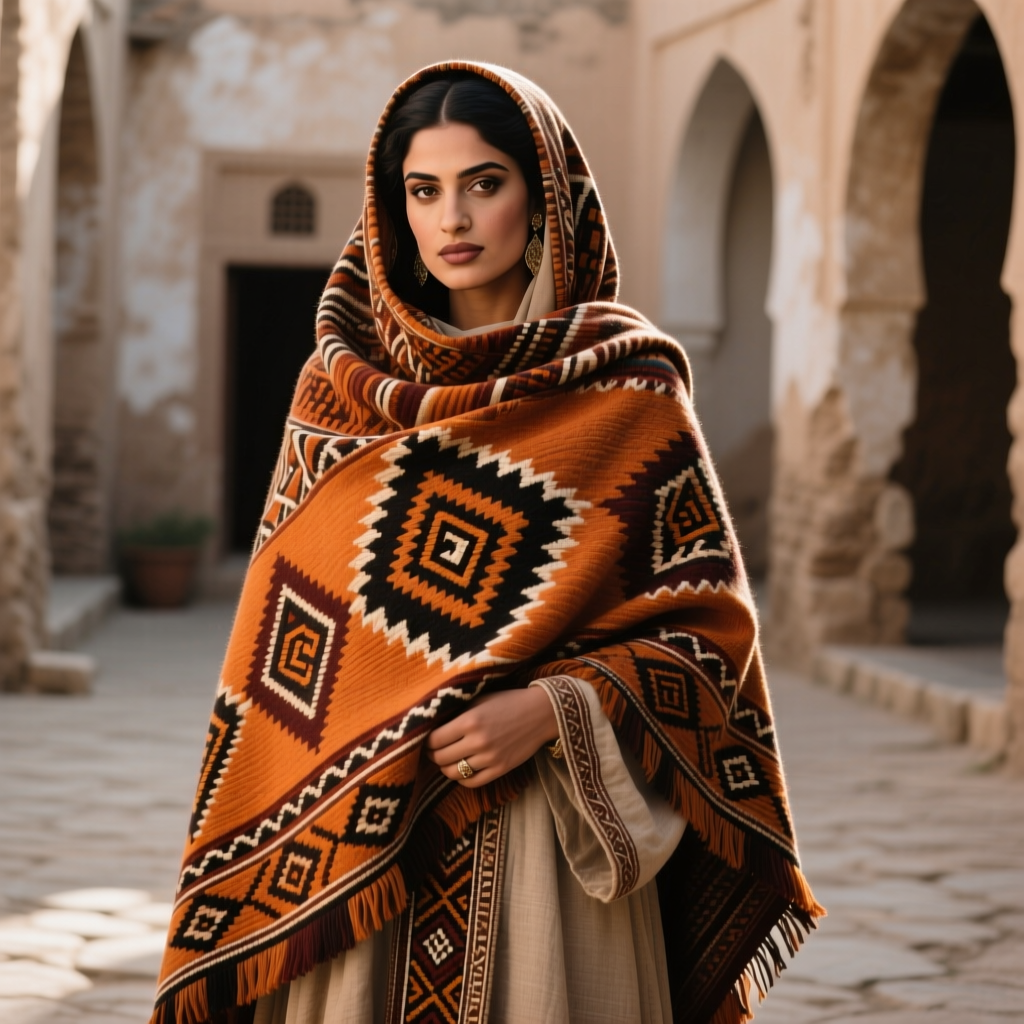
To understand the Handira is to understand the soul of the Amazigh (often referred to as Berber) culture. Woven exclusively by women, these heavy, plush blankets are traditionally created to drape over the shoulders of a bride during her wedding procession. The textile serves as a protective cloak, shielding the bride from malevolent spirits while bestowing upon her the collective hopes, fertility wishes, and ancestral blessings of her female lineage. Today, as we explore the rich tapestry of global textile history, the Handira stands out as a testament to the enduring power of indigenous craftsmanship. For a broader look at similar ancestral crafts, our textile heritage archives offer a deep dive into the weaving traditions that have shaped human history.
Yet, the journey of the Handira from a secluded mountain village to a highly sought-after artifact in contemporary global interiors and avant-garde fashion is fraught with complexities. It raises vital questions about cultural preservation, ethical sourcing, and the survival of traditional artisanship in a mass-produced world. This comprehensive guide delves into the historical roots, meticulous craftsmanship, regional variations, and modern preservation efforts surrounding the Moroccan Amazigh Handira wedding blanket.
The Cultural Significance of the Handira in Amazigh Society
In traditional Amazigh society, the creation of a Handira is not merely a domestic chore; it is a profound communal ritual and a rite of passage. The weaving of a wedding blanket is typically undertaken by the female relatives of the bride—her mother, grandmothers, aunts, and sisters. This collaborative effort transforms the loom into a space of intergenerational storytelling, where elder women pass down not only complex weaving techniques but also the oral histories, songs, and spiritual beliefs of their tribe.
The Handira is deeply intertwined with the concept of baraka, a spiritual energy or divine blessing that permeates Amazigh cosmology. The blanket is believed to be a conduit for this protective force. When draped over the bride, the Handira is thought to ward off the evil eye, protect against the harsh mountain elements, and ensure a fertile, prosperous marriage. The very act of weaving is considered a meditation, with the weaver infusing the warp and weft with her personal intentions and prayers for the bride’s future.
Furthermore, the Handira serves as a vital historical record. Because the Amazigh people historically relied on oral traditions rather than written language, textiles became the primary medium for recording tribal identity, social status, and cosmological beliefs. The specific patterns, colors, and embellishments on a Handira can often identify the wearer’s specific tribe, village, and even her family’s social standing within the community. In this way, the wedding blanket is a wearable archive, a deeply personal artifact that carries the weight of ancestral memory.
The Meticulous Craftsmanship and Weaving Process
The creation of an authentic Handira is an astonishingly labor-intensive process that can take several months to complete. It begins long before the yarn ever touches the loom, with the shearing of sheep. The wool used in the Middle Atlas region is renowned for its exceptional quality, warmth, and durability, a necessity born from the harsh, snowy winters of the mountains. After shearing, the wool is meticulously washed, often using natural saponins derived from local plants, and then carded by hand to align the fibers.
Spinning the yarn is done using a traditional drop spindle, a technique that requires immense skill to maintain a consistent thickness and tension. While the base of the Handira is typically woven from this thick, un-dyed sheep’s wool, artisans frequently incorporate cotton and linen into the weft to create distinct textural contrasts and geometric patterns. For a deeper understanding of these foundational methods, our guide on artisan weaving techniques explores how different cultures manipulate natural fibers.
The weaving itself takes place on a horizontal ground loom, which is perfectly suited to the nomadic and semi-nomadic lifestyles historically prevalent in the Atlas Mountains. The weaver sits on the ground, using a heavy wooden beater to pack the weft threads tightly together, resulting in the incredibly dense, plush texture that defines a high-quality Handira. The tension of the warp threads must be constantly monitored and adjusted, a physical endeavor that requires both strength and profound tactile sensitivity.
Once the primary weaving is complete, the blanket undergoes its most iconic transformation: the addition of embellishments. Artisans hand-sew hundreds, sometimes thousands, of metallic sequins (often referred to as flitters) and intricate fringes onto the surface and edges of the textile. These additions are not merely decorative; they are highly functional within the spiritual framework of the garment. The reflective nature of the sequins is intended to catch the light and deflect negative energy, while the fringes symbolize the shedding of tears and the flowing waters of fertility.
The Language of Symbols, Sequins, and Fringes
To the untrained eye, the geometric motifs adorning a Handira may appear purely abstract or decorative. However, within the Amazigh visual lexicon, every shape, line, and color holds specific, potent meaning. The textile acts as a complex semiotic system, a silent language spoken through thread. Understanding these symbols is key to appreciating the true depth of the Handira’s heritage.
The most prevalent motif found in Handira weaving is the lozenge, or diamond shape. In Amazigh symbolism, the lozenge represents the female form, the womb, and the concept of fertility. It is often nested within larger geometric frameworks, symbolizing the protective embrace of the community around the bride. Chevrons and zigzag lines are also common, representing water, the lifeblood of the arid mountain landscapes, and the continuous, cyclical nature of life and generations.
The color palette of a traditional Handira is largely dictated by the natural hues of the materials and the availability of local dyes. The rich, creamy whites and deep, earthy browns of the sheep’s wool dominate the textile, symbolizing purity, peace, and the earth itself. When colors are introduced, they are derived from natural sources: indigo for the deep blues of the sky and protection, henna for the warm reds of life and joy, and saffron or pomegranate rind for vibrant yellows and ochres. The strategic placement of these dyed cotton or linen threads creates striking, minimalist bands of color that contrast beautifully with the plush wool.
The application of the sequins and fringes, known locally as handira embellishments, is a specialized skill often passed down within specific families. The sequins are typically applied in overlapping, scale-like patterns or concentrated in dense clusters along the borders and central bands. The friction of these metallic discs against one another creates a subtle, rhythmic chiming sound when the bride moves, an auditory element designed to announce her presence and further scatter lingering evil spirits. Exploring how these symbolic elements influence modern aesthetics can be seen across our global heritage styles collection.
Regional Variations and Tribal Motifs Across the Atlas
While the Handira is universally associated with the Middle Atlas Mountains, the vastness of the region and the diversity of the Amazigh tribes have given rise to distinct regional variations. The blankets woven by the Beni Mguild tribe, for instance, are renowned for their exceptional density, heavy weight, and intricate, tightly packed geometric patterns. These blankets are designed to withstand the most severe alpine winters, and their robust nature is reflected in their bold, assertive motifs.
Conversely, the Zayane tribe, located further south and at slightly lower elevations, often produces Handiras that are somewhat lighter and feature more expansive, minimalist designs. The Zayane weavers are celebrated for their masterful use of negative space, allowing the natural beauty and texture of the un-dyed wool to take center stage, punctuated by precise, deliberate bands of colored cotton and carefully placed sequins.
In the High Atlas regions, where the climate and cultural influences shift, the traditional wedding blanket takes on slightly different characteristics. Here, one might find a greater incorporation of vibrant, synthetic yarns introduced through historical trade routes, resulting in Handiras that feature flashes of bright magenta, emerald green, and electric blue. These variations highlight the dynamic nature of Amazigh weaving; it is not a static, frozen art form, but a living tradition that adapts to its environment, available resources, and shifting cultural exchanges while maintaining its core spiritual and functional purpose.
Identifying the specific tribal origin of a vintage Handira requires a trained eye. Experts look at the specific finishing techniques of the fringes, the exact ratio of wool to cotton, the style of the sequin application, and the subtle variations in the loom setup. These minute details form a geographic fingerprint, allowing historians and collectors to trace the blanket back to its specific valley and village of origin.
Modern Preservation, Ethical Sourcing, and Global Influence
In contemporary society, the Handira has transcended its traditional role as a bridal cloak to become a highly coveted item in global interior design and bohemian fashion. Its plush texture, neutral color palette, and striking artisanal details make it a perfect fit for modern minimalist and eclectic aesthetics alike. However, this surge in global popularity has brought significant challenges to the traditional weaving communities of the Atlas Mountains.
The mass market’s insatiable demand for ‘Moroccan wedding blankets’ has led to the proliferation of counterfeit, machine-made imitations produced in industrial factories far from the Atlas valleys. These mass-produced textiles lack the spiritual intention, the natural materials, and the structural integrity of an authentic, hand-woven Handira. More importantly, they undercut the local economy, threatening the livelihoods of the rural women who rely on their weaving skills to support their families and communities.
In response to these challenges, a robust movement toward ethical sourcing and modern preservation has emerged. Women’s weaving cooperatives have been established across the Middle Atlas, providing artisans with fair wages, safe working conditions, and direct access to the international market. These cooperatives play a crucial role in preserving ancient techniques, ensuring that younger generations see the economic and cultural value in learning the craft from their elders. When sourcing a Handira, it is imperative for collectors and designers to seek out these ethical partnerships, ensuring that the financial benefits of the global trade return directly to the hands that wove the textile. For those interested in integrating these pieces responsibly, our insights on bohemian heritage fashion offer guidance on ethical styling.
Furthermore, contemporary fashion designers and textile artists are increasingly collaborating with Amazigh weavers, not to appropriate the craft, but to elevate it. By integrating traditional Handira weaving techniques into modern garment silhouettes and avant-garde textile art, these collaborations keep the craft relevant and financially viable. This synergy between ancient heritage and modern design ensures that the rhythmic clacking of the wooden loom will continue to echo through the Atlas Mountains for generations to come.
Frequently Asked Questions About the Handira
What is the traditional purpose of a Handira blanket?
Traditionally, the Handira is woven specifically for a bride by the women of her family. It is worn as a cloak or shawl over her shoulders during the wedding procession and the days following the ceremony. Its primary purposes are to provide physical warmth in the cold mountain climate, to serve as a symbol of her new marital status, and, most importantly, to act as a spiritual shield. The blanket is imbued with baraka (blessings) to protect the bride from the evil eye, promote fertility, and ensure a harmonious, prosperous marriage. While today they are frequently used as luxury home decor or statement outerwear, their roots remain deeply tied to this sacred matrimonial ritual.
How can I authenticate a vintage Amazigh Handira?
Authenticating a vintage Handira requires examining several key elements. First, inspect the materials: an authentic piece will be made primarily of natural sheep’s wool, often mixed with hand-spun cotton or linen. The wool should feel slightly lanolin-rich and possess a natural, uneven texture. Second, examine the reverse side of the textile. A hand-woven piece will show the intricate, slightly irregular knots and the manual tension variations of the weaver, whereas a machine-made copy will have a uniform, perfectly flat backing. Finally, look at the sequins and fringes. On a genuine vintage Handira, the sequins are individually hand-sewn, often showing slight variations in placement and stitching, and the fringes are hand-knotted. For more tips on identifying genuine artifacts, consult our comprehensive vintage textile care guide.
What is the best way to clean and maintain a Handira?
Due to the delicate nature of the natural wool, the hand-sewn sequins, and the fragile fringes, a Handira should never be machine washed or dry-cleaned using harsh chemicals. Water can cause the wool to felt and shrink, while agitation will easily snap the delicate threads holding the metallic embellishments. For routine maintenance, gently shake the blanket outdoors to remove dust and debris, and air it out in a shaded, well-ventilated area to refresh the fibers. If a spill occurs, blot it immediately with a clean, dry cloth. For deep cleaning or stain removal, it is highly recommended to consult a professional textile conservator who specializes in vintage, natural-fiber artifacts to ensure the structural and historical integrity of the piece is preserved.
How are artisans adapting the Handira for contemporary fashion?
While the traditional blanket format remains the cornerstone of the craft, many Amazigh cooperatives and contemporary designers are adapting Handira techniques for modern wardrobes. Artisans are now weaving the plush, sequin-embellished textiles into smaller, more manageable yardages that can be tailored into winter coats, structured vests, and statement handbags. Some weavers are experimenting with lighter weight yarns and altering the traditional loom setups to create fluid, drapey fabrics suitable for evening wear and haute couture. These adaptations allow the weavers to tap into the lucrative global fashion market, providing a vital secondary income stream that supports the preservation of their ancestral weaving heritage while introducing the beauty of Amazigh craftsmanship to a wider, style-conscious audience.