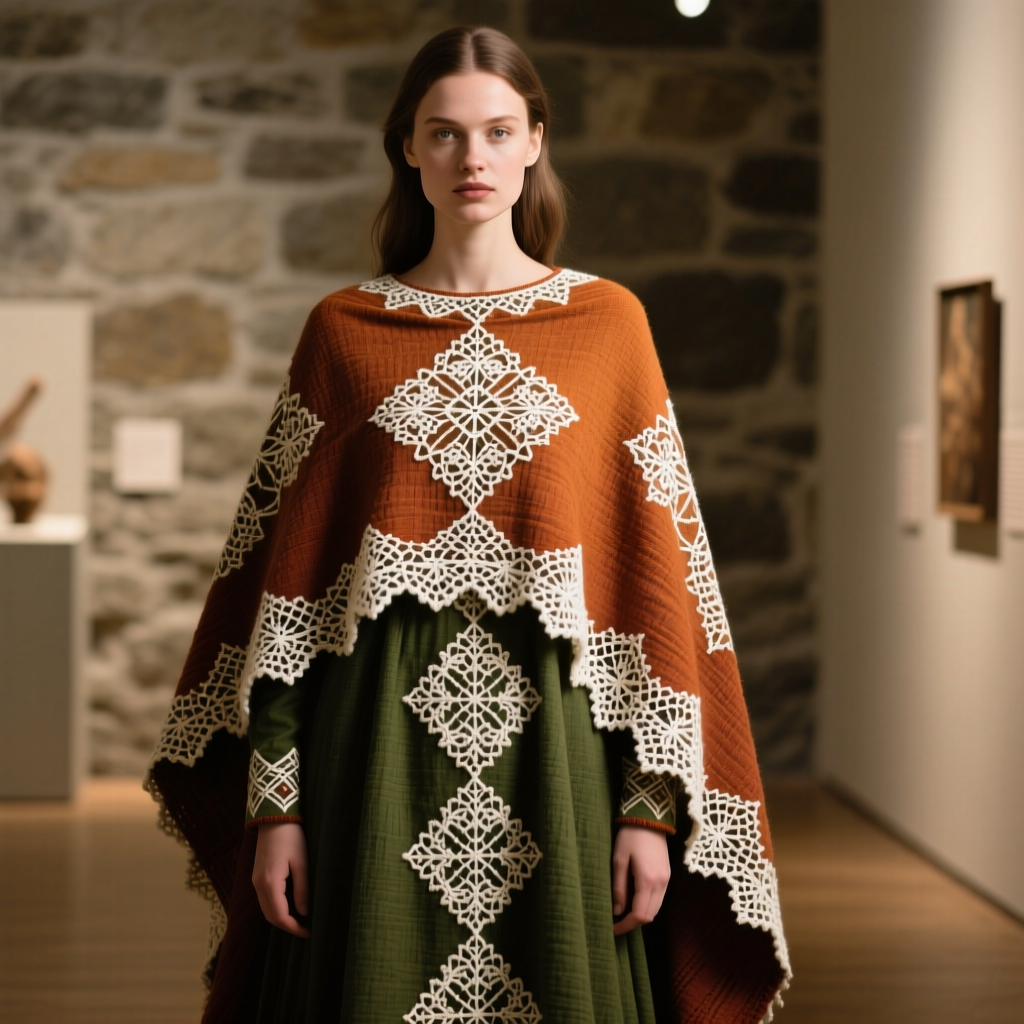
Native American Ribbon Work Appliqué: A Living Heritage of Color & Craft
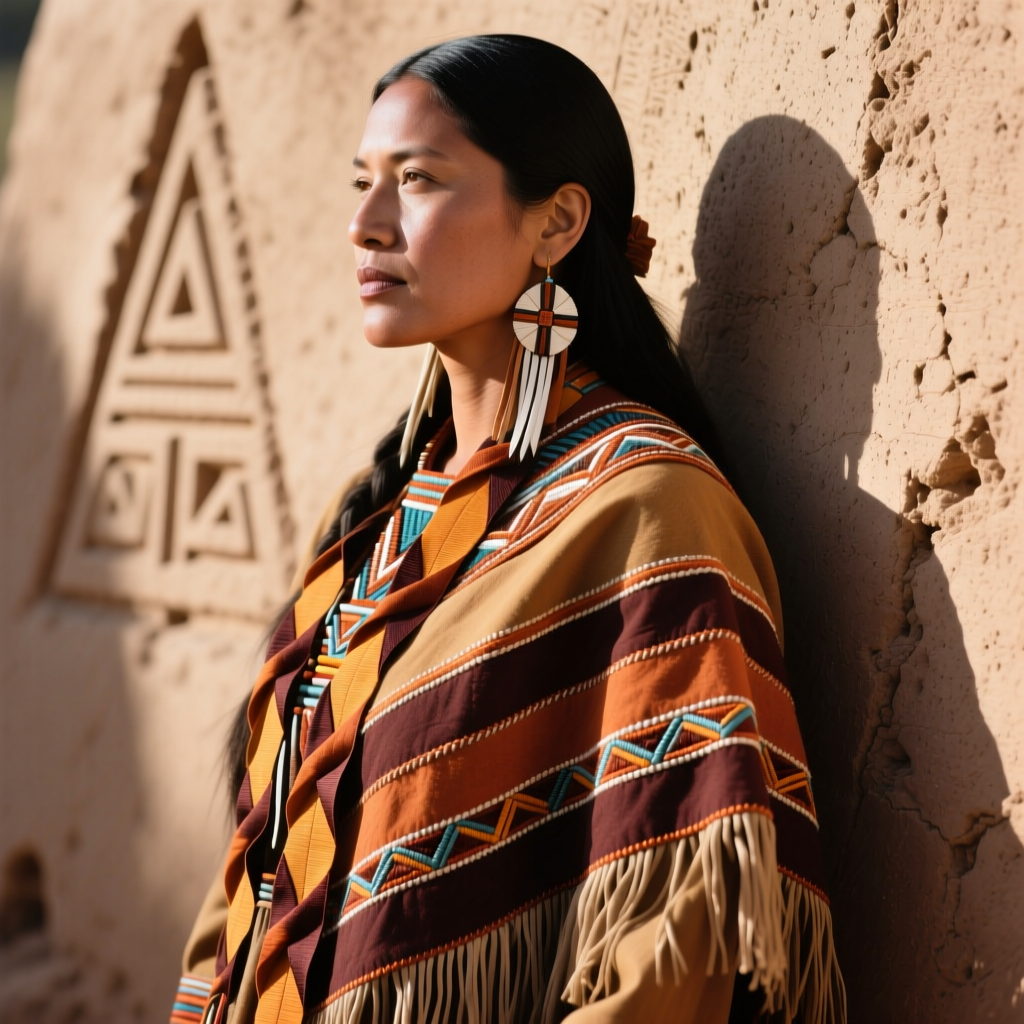
Native American Ribbon Work Appliqué: A Living Heritage of Color & Craft
Long before European contact reshaped the material culture of North America, Indigenous peoples adorned their garments with intricate patterns drawn from the natural world, spiritual visions, and tribal identity. When silk ribbons arrived through colonial trade networks in the seventeenth and eighteenth centuries, Native artisans — particularly women — transformed these imported materials into something entirely new. Ribbon work appliqué emerged as one of the most visually striking and culturally significant textile arts in North America, a tradition that continues to evolve and thrive among Native communities today.
Ribbon work appliqué is the technique of layering, cutting, folding, and stitching ribbons onto fabric to create elaborate geometric and floral designs. What began as a practical adaptation of European trade goods became a profound medium of artistic expression, carrying meanings tied to identity, ceremony, and community belonging. From the Great Lakes to the Prairies and beyond, ribbon work has served as both decoration and declaration — a way of saying who we are through the language of color and pattern.
At The Garment Atlas, we believe that understanding the heritage behind the garments we study deepens our appreciation for the hands that made them and the cultures that sustained them. This article explores the origins, techniques, regional expressions, and modern preservation of Native American ribbon work appliqué — a textile tradition as vibrant today as it was centuries ago.
Origins & Historical Evolution of Ribbon Work
The story of Native American ribbon work begins at the intersection of Indigenous creativity and global trade. Silk ribbons, manufactured primarily in France and England, entered North American trade networks as early as the 1600s. French fur traders, in particular, carried ribbons as trade items, and these colorful strips of silk quickly found their way into the hands of Native artisans across the Great Lakes region and the northeastern woodlands.
Before the arrival of European ribbons, Indigenous peoples had already developed sophisticated methods of decorating clothing and accessories. Quillwork — the art of dyeing, flattening, and sewing porcupine quills onto hides — was the dominant decorative technique across much of North America. Quillwork required immense patience and skill, and its patterns carried deep spiritual and cultural significance. When silk ribbons became available, many artisans recognized their potential as a complementary or even替代 material. Ribbons offered a broader palette of vivid colors, greater flexibility in application, and a luminous sheen that quillwork alone could not achieve.
The transition from quillwork to ribbon work was not a simple replacement but rather an evolution. Early ribbon work often mimicked quillwork patterns, translating familiar geometric motifs into the new medium. Over time, however, artisans developed techniques unique to ribbon — particularly the layered appliqué method, in which ribbons of contrasting colors were sewn onto a base fabric, with portions cut away to reveal the colors beneath. This technique created bold, multi-layered designs that became the hallmark of the tradition.
By the late eighteenth and early nineteenth centuries, ribbon work had become a major artistic tradition among numerous tribes, including the Potawatomi, Ojibwe (Chippewa), Ottawa (Odawa), Menominee, Ho-Chunk (Winnebago), Miami, Shawnee, Delaware (Lenape), Osage, and many others. Each community developed its own stylistic preferences, and ribbon work became an important marker of tribal and regional identity. The trade of ribbons expanded throughout the nineteenth century, and by the mid-1800s, ribbon work adorned everything from leggings and skirts to moccasins, cradleboards, and ceremonial regalia.
The historical record of ribbon work is preserved not only in surviving garments held by museums and tribal collections but also in the paintings and photographs of the era. Artists such as George Catlin and Karl Bodmer documented ribbon-decorated clothing among Plains and Woodlands tribes in the 1830s, providing invaluable visual evidence of the art form's early development. These images reveal that ribbon work was already highly sophisticated by that time, suggesting a longer period of development than the written record alone might indicate.
Techniques & Craftsmanship: The Art Beneath the Surface
To the untrained eye, ribbon work appliqué may appear to be a simple matter of sewing colored strips onto fabric. In reality, the techniques involved demand extraordinary precision, spatial reasoning, and an intuitive understanding of color relationships. Master ribbon workers spend years refining their skills, and the finest examples of the craft represent hundreds of hours of meticulous handwork.
Materials & Preparation
Traditional ribbon work relies on a few essential materials: silk or satin ribbons in a range of colors, a base fabric (historically wool broadcloth, trade cloth, or strouding), sharp scissors, needles, and thread. The choice of ribbon width varies depending on the design and the artisan's preference, but ribbons ranging from one-eighth of an inch to several inches wide are common. The base fabric is typically a solid, dark color — navy blue, black, or deep red — which provides dramatic contrast against the layered ribbon designs.
Before any cutting begins, the artisan must plan the design. Some makers sketch their patterns on paper first, while others work directly from mental templates passed down through generations. The design is then transferred to the base fabric, either by marking with chalk or by pinning ribbon guides in place. This planning stage is critical, because once the ribbons are cut, mistakes are difficult to correct.
Appliqué Methods
There are several distinct techniques within ribbon work appliqué, each producing different visual effects:
Direct Appliqué: Ribbons are sewn directly onto the base fabric in their full width, creating solid bands of color. This is the simplest technique and is often used for borders, frames, and geometric banding. The ribbons may be arranged in parallel lines, chevrons, or stepped patterns.
Cut-and-Turn Appliqué: This is the technique most closely associated with Native American ribbon work. A ribbon of one color is laid over a ribbon of a contrasting color, and portions of the top ribbon are carefully cut away and folded under to reveal the color below. The cut edges are turned under and stitched down with nearly invisible stitches, creating clean, sharp edges. This method allows for complex, interlocking designs with multiple colors visible in a single layered section.
Reverse Appliqué: In this variation, the artisan works from the back of the fabric, cutting away portions of the top layer to reveal colors beneath. This technique requires exceptional spatial awareness, as the design must be visualized in reverse.
Folded Ribbon Work: Ribbons are folded into pleats, triangles, or other shapes and then sewn onto the base fabric to create three-dimensional textural effects. This technique is often used for floral motifs and decorative borders.
The finest ribbon work is characterized by stitches so small and precise that they are nearly invisible on the surface of the garment. Artisans use a variety of hand-sewing stitches, including blind stitch, slip stitch, and fine running stitch, depending on the application. The quality of the stitching is as important as the design itself — a poorly executed stitch can disrupt the visual flow of a pattern and compromise the durability of the garment.
For those interested in the broader world of textile embellishment and how techniques like appliqué compare across cultures, our guide to fabric embellishment techniques offers a comprehensive overview of decorative methods used around the world.
Cultural Significance: More Than Decoration
Ribbon work in Native American communities has never been merely ornamental. Every design, color choice, and garment application carries layers of meaning that connect the wearer to their family, their community, their ancestors, and the spiritual world. To understand ribbon work fully, one must understand the cultural frameworks in which it exists.
Identity & Belonging
Among many tribes, specific ribbon work patterns and color combinations serve as markers of tribal identity, clan affiliation, and family lineage. A Potawatomi skirt, for example, may feature design elements that distinguish it from an Osage or Shawnee garment, even to observers unfamiliar with the tradition. Within a single tribe, individual families may have signature patterns or color preferences that are recognized across the community. In this way, ribbon work functions as a visual language — a way of communicating identity without words.
This role as an identity marker has taken on renewed importance in the modern era, as Native communities have worked to reclaim and revitalize cultural practices that were suppressed during periods of forced assimilation. Wearing ribbon work at powwows, ceremonies, and community gatherings is a powerful assertion of cultural continuity and pride.
Spiritual Dimensions
Many ribbon work designs draw from the spiritual and cosmological traditions of their makers. Floral motifs — particularly prominent among Great Lakes tribes — often reference medicinal plants, sacred flowers, and the interconnected web of life. Geometric patterns may represent directional forces, celestial bodies, or the balance between the physical and spiritual worlds. Some artisans report receiving design inspiration through dreams or visions, a practice that connects ribbon work to broader Indigenous traditions of creative revelation.
The act of making ribbon work is itself often imbued with spiritual significance. Many artisans approach their work with prayer, intention, and a sense of responsibility to the ancestors who developed and transmitted the techniques. The time and care invested in each garment is understood as a form of devotion — not only to the art but to the community for whom the garment is made.
Ceremony & Celebration
Ribbon work plays a central role in many ceremonial contexts. Ribbon shirts and ribbon skirts are standard regalia at powwows across North America, worn by dancers, singers, and community members alike. Jingle dresses — a distinct but related tradition — incorporate metal cones alongside ribbon decoration to create garments that are both visually and sonically dynamic. At naming ceremonies, weddings, graduations, and funerals, ribbon work garments are often gifted or worn to mark the significance of the occasion.
The gifting of ribbon work is particularly meaningful. When an artisan creates a garment for another person, the gift carries the weight of the maker's time, skill, and intention. Such gifts strengthen social bonds and reinforce the reciprocal relationships that sustain Native communities. To learn more about how ceremonial garments function across cultures, explore our collection of cultural heritage articles at The Garment Atlas.
Regional Variations: A Continent of Color
While ribbon work is practiced by Native communities across North America, distinct regional styles have developed over centuries of artistic evolution. These variations reflect differences in available materials, cultural aesthetics, historical trade relationships, and the creative innovations of individual artisans and communities.
Great Lakes & Woodlands Traditions
The Great Lakes region is widely considered the heartland of Native American ribbon work. Tribes including the Ojibwe, Potawatomi, Ottawa, Menominee, Ho-Chunk, and Sac and Fox (Sauk and Meskwaki) have produced some of the most elaborate and technically sophisticated ribbon work on the continent. Great Lakes ribbon work is characterized by bold, symmetrical designs featuring large-scale geometric patterns — diamonds, hourglasses, stepped triangles, and interlocking scrolls. Floral motifs are also common, particularly among Ojibwe and Potawatomi artisans, reflecting the rich botanical traditions of the region.
The color palettes of Great Lakes ribbon work tend toward high contrast: vivid reds, yellows, greens, and blues layered against dark navy or black wool. The interplay of complementary colors creates a visual vibration that makes these garments striking even from a distance. Many Great Lakes artisans are known for their mastery of the cut-and-turn technique, producing designs with four or more visible color layers in a single section.
Prairie & Plains Traditions
As ribbon work spread westward through trade and intermarriage, it was adopted and adapted by Prairie and Plains tribes, including the Osage, Ponca, Kaw, Pawnee, and Iowa. Prairie ribbon work often features broader, more flowing designs than the tightly structured patterns of the Great Lakes. Large-scale appliqué panels on skirts and leggings are common, and the use of wider ribbons creates bold, graphic effects.
Osage ribbon work is particularly renowned for its complexity and beauty. Osage artisans developed distinctive design vocabularies that incorporate both geometric and naturalistic elements, and Osage ribbon work skirts are among the most celebrated garments in Native American textile art. The Osage community has maintained an unbroken tradition of ribbon work that stretches back centuries, and Osage makers continue to be among the most sought-after practitioners of the craft.
Northeastern & Southeastern Adaptations
In the Northeast, tribes such as the Iroquois (Haudenosaunee) and Delaware (Lenape) incorporated ribbon work into their existing decorative traditions, sometimes combining it with beadwork and quillwork on the same garment. Southeastern tribes, including the Cherokee and Creek, also adopted ribbon work, though it tends to be less dominant in their decorative arts compared to beadwork and finger weaving. Where it does appear, Southeastern ribbon work often features simpler, more linear designs that complement the region's broader aesthetic traditions.
Intertribal Exchange & Innovation
It is important to note that these regional categories are not rigid boundaries. Intertribal trade, intermarriage, relocation, and the powwow circuit have all facilitated the exchange of techniques and designs across tribal lines. Many contemporary ribbon workers draw from multiple traditions, creating innovative hybrid styles that honor their heritage while pushing the art form forward. This dynamism is one of the great strengths of the ribbon work tradition — it has always been a living art, responsive to the changing circumstances of its makers.
If you are fascinated by how regional identity shapes garment traditions, you may also enjoy our exploration of global garment styles and how geography influences design across cultures.
Modern Preservation & the Future of Ribbon Work
Like many Indigenous art forms, ribbon work faced existential threats during the nineteenth and twentieth centuries. Forced assimilation policies, the suppression of Native languages and ceremonies, economic marginalization, and the disruption of intergenerational knowledge transfer all took their toll. Boarding school systems separated children from their families and communities, breaking the chains of apprenticeship through which ribbon work skills had been transmitted for generations. The availability of mass-produced clothing further reduced the everyday use of traditional garments, and with it, the demand for ribbon work.
Yet the tradition survived — sustained by the determination of knowledge keepers who refused to let the art disappear. In the latter half of the twentieth century, a cultural renaissance swept through many Native communities, driven by a renewed commitment to reclaiming and revitalizing traditional practices. Ribbon work was at the forefront of this movement.
Community-Based Revitalization
Today, ribbon work is taught through a combination of formal and informal channels. Tribal cultural centers, community workshops, and Native arts organizations offer classes and apprenticeships for aspiring ribbon workers. Elders and master artisans play a critical role in this transmission, sharing not only technical skills but also the stories, values, and cultural contexts that give the art its meaning. Many communities have established mentorship programs that pair experienced makers with younger learners, ensuring that the knowledge passes to the next generation.
The powwow circuit has also been instrumental in sustaining ribbon work. As powwows have grown in number and visibility across North America, the demand for high-quality regalia — including ribbon shirts and ribbon skirts — has increased. This demand provides economic incentive for artisans to continue practicing their craft and creates public platforms for showcasing the beauty and diversity of ribbon work traditions.
Museum Collections & Digital Access
Museums and cultural institutions hold extensive collections of historical ribbon work garments, many of which are now being digitized and made accessible online. These collections serve as invaluable resources for contemporary artisans seeking to study historical techniques and designs. However, the relationship between Native communities and museum collections is complex, and many tribes are advocating for greater control over how their cultural patrimony is displayed, interpreted, and accessed. Repatriation efforts under laws such as the Native American Graves Protection and Repatriation Act (NAGPRA) have returned some significant garments to their communities of origin, where they can be studied and appreciated within their proper cultural context.
Contemporary Innovation
Modern ribbon workers are not simply replicating the past — they are innovating. Contemporary artisans experiment with new materials, including synthetic ribbons that offer greater durability and colorfastness than traditional silk. Some incorporate ribbon work into modern fashion contexts, creating jackets, vests, handbags, and accessories that bridge traditional and contemporary aesthetics. Social media has given ribbon workers unprecedented visibility, allowing them to share their work with global audiences, connect with other makers, and educate the public about the cultural significance of their art.
The growing interest in ethical fashion and cultural appreciation — as opposed to appropriation — has also created new opportunities for Native artisans. Consumers who seek to understand the heritage behind the garments they wear are increasingly drawn to authentic, community-made ribbon work. For those looking to deepen their understanding of culturally significant garments, our garment guides provide thoughtful explorations of textile traditions from around the world.
The future of ribbon work is bright precisely because it has never been a static tradition. It has always been shaped by the hands, hearts, and visions of the people who practice it. As long as there are Native artisans who feel called to pick up needle and ribbon, this extraordinary art form will continue to evolve, adapt, and inspire.
Frequently Asked Questions
What is the difference between ribbon work appliqué and beadwork?
Ribbon work appliqué and beadwork are both prominent decorative arts in Native American material culture, but they involve different materials and techniques. Ribbon work uses strips of silk, satin, or synthetic ribbon that are layered, cut, folded, and stitched onto a fabric base to create designs. Beadwork uses small glass, seed, or cut beads that are sewn individually or in strands onto hides or fabric. While some garments combine both techniques, each art form has its own distinct traditions, tools, and skill sets. Many artisans are proficient in both, and the two traditions often complement each other within a single piece of regalia.
Is it appropriate for non-Native people to wear ribbon work garments?
This is a nuanced question that depends on context, intent, and respect. Ribbon work garments carry deep cultural and spiritual significance for Native communities. Purchasing authentic ribbon work directly from Native artisans and wearing it with understanding and respect is generally viewed more favorably than wearing mass-produced imitations that appropriate Native designs without credit or compensation. It is important to avoid wearing ribbon work in contexts that trivialize or misrepresent its cultural meaning, such as costume parties or fashion events that treat Indigenous regalia as a trend. When in doubt, the most respectful approach is to listen to Native voices on the subject and to support Native artisans and communities directly.
How long does it take to create a ribbon work garment?
The time required varies enormously depending on the complexity of the design, the size of the garment, and the skill level of the artisan. A simple ribbon-decorated accessory might take a few days to complete, while an elaborate ribbon skirt with intricate cut-and-turn appliqué can require several hundred hours of work spread over weeks or months. Master artisans who produce competition-level regalia may spend the better part of a year on a single outfit. The time investment is one reason why authentic, handmade ribbon work garments are highly valued and command prices that reflect the extraordinary labor involved.
What types of garments traditionally feature ribbon work?
Ribbon work has been applied to a wide range of garments and items throughout its history. Traditional applications include women's cloth skirts and shawls, men's ribbon shirts and leggings, moccasins, cradleboard covers, and dance regalia of many types. Ribbon work also appears on accessories such as bags, bandoliers, and hair ornaments. In contemporary practice, artisans have expanded the range to include jackets, vests, graduation stoles, honor sashes, and even framed textile art. The versatility of the technique means that it can be adapted to nearly any fabric surface, though wool broadcloth and cotton remain the most common base materials.
Where can I learn more about Native American textile arts?
There are many excellent resources for those who wish to deepen their understanding of Native American textile arts. Tribal cultural centers and museums — such as the National Museum of the American Indian, the Heard Museum, and the Gilcrease Museum — hold significant collections and offer educational programming. Books by Native scholars and artisans provide authoritative perspectives on technique and cultural context. Online platforms, including tribal websites and Native arts organizations, offer tutorials, artist profiles, and historical information. The Garment Atlas also maintains a growing library of heritage articles exploring textile traditions from cultures around the world, offering a global perspective on the art of adornment.