Norwegian Hardanger Embroidery: The Art of Whitework Craftsmanship
Norwegian Hardanger Embroidery: The Art of Whitework Craftsmanship
To understand the soul of Norwegian textile heritage, one must look closely at the interplay of light & shadow captured in Hardanger embroidery. Known locally as Hardangersøm, this meticulous form of whitework is far more than a mere decorative technique; it is a profound expression of cultural identity, mathematical precision, and generational patience. Originating from the rugged, majestic landscapes surrounding the Hardangerfjord in western Norway, this craft transforms simple, evenweave linen into breathtaking, lace-like masterpieces. The stark contrast of crisp white threads against a pristine white background creates a textured topography that mimics the snow-capped peaks and deep, geometric fissures of the Norwegian fjords themselves.
As a cornerstone of traditional textiles, Hardanger embroidery represents a unique intersection of imported European Renaissance techniques and isolated, indigenous folk art. Unlike surface embroidery that merely sits atop the fabric, Hardanger is an architectural manipulation of the cloth. It requires the artisan to build, bind, and ultimately destroy the foundational warp & weft of the material to create delicate, openwork windows. This article delves deep into the historical roots, the exacting craftsmanship, the cultural weight, and the modern preservation of Norwegian Hardanger whitework, offering a comprehensive guide to one of Scandinavia's most revered textile traditions.
The Historical Roots of Hardanger Embroidery
The origins of Hardanger embroidery are a fascinating study in cultural diffusion and local adaptation. While it is unequivocally recognized today as a quintessential Norwegian folk art, its earliest ancestors can be traced back to the Mediterranean. During the Renaissance, Italian needleworkers developed Reticella and Venetian needle lace, techniques that involved cutting away fabric and buttonholing the remaining threads to create intricate geometric lace. These luxurious textiles were highly prized by European aristocracy and eventually made their way northward through expansive trade networks.
Merchants of the Hanseatic League, who dominated trade in the bustling port city of Bergen, brought fine linens and embroidered goods to the Norwegian coast. However, the isolated farming communities nestled deep within the Hardangerfjord region could not rely on expensive imported lace for their garments and household textiles. Instead, the resourceful women of the region began to reverse-engineer and adapt these foreign techniques using locally available materials. They substituted the sheer, delicate silks and fine cambrics of the south with sturdy, homespun, evenweave linen and wool.
Over the centuries, this adaptation evolved into a distinct regional style. By the 18th and 19th centuries, Hardanger embroidery had shed its aristocratic Italian roots and become a deeply embedded domestic craft. It was practiced during the long, dark Nordic winters, a period known as the kveldsete (evening sitting), where families gathered by the hearth. While the men carved wood and repaired tools, the women spun, wove, and embroidered. The craft became a vital component of a young woman's dowry, serving as a public testament to her diligence, skill, and moral character. For a deeper dive into how these trade routes shaped northern crafts, explore our archive on Scandinavian textile history.
The Anatomy of Whitework: Craftsmanship and Techniques
Executing authentic Hardanger embroidery requires a formidable understanding of fabric structure. The craft is built upon a foundation of counted-thread work, meaning every stitch is calculated based on the exact number of fabric threads it crosses. The artisan must possess an intimate knowledge of tension, geometry, and the structural integrity of the cloth. The process is generally divided into several distinct, sequential phases, each demanding absolute focus and a steady hand.
The Foundation: Kloster Blocks
The structural pillars of Hardanger whitework are the kloster blocks. These are dense, satin-stitched rectangles, typically consisting of five stitches worked over four fabric threads. These blocks are placed in geometric formations—often stair-step patterns, diamonds, or squares—and they serve a dual purpose. Aesthetically, they provide a bold, raised outline that frames the openwork areas. Structurally, they act as anchors, binding the fabric threads securely so that the material will not unravel once the cutting phase begins.
The Crucible: Cutting the Fabric
Once the kloster blocks are complete, the artisan faces the most daunting step of the process: taking a pair of sharp, fine-pointed embroidery scissors to the fabric. The threads between the opposing kloster blocks are carefully snipped and withdrawn. This act of destruction is irreversible; a miscut can ruin weeks of painstaking labor. The removal of these threads leaves behind a grid of bare, unsupported fabric threads that span the open spaces between the solid blocks.
The Reconstruction: Needleweaving and Drawn Thread Work
With the fabric cut, the true lace-making begins. The remaining bare threads are manipulated using a needle & thread to create intricate fillings, known as nålbindings (needleweaving). Artisans weave the working thread over and under the bare fabric threads to create solid geometric shapes, or they wrap the threads to form delicate bars. Some of the most iconic Hardanger fillings include the edderkopp (spiderweb), the due (dove), and various diamond and star motifs. This phase requires an extraordinary degree of patience & precision, as the tension of the weaving thread must perfectly match the tension of the original fabric to prevent puckering.
The Finishing: Edgings and Picots
To complete the piece, the outer edges of the textile are secured. Traditional Hardanger utilizes complex buttonhole stitches, often embellished with picots (small decorative loops) or musetenner (mouse teeth), a distinctive zigzag edge that provides both durability and a beautiful scalloped finish. For those looking to master these foundational stitches, our comprehensive guide to embroidery techniques offers step-by-step visual breakdowns of counted-thread methods.
Cultural Significance and the Bunad Tradition
In Norway, textile crafts are inextricably linked to national identity, and Hardanger embroidery holds a place of supreme honor within this paradigm. Its most prominent cultural manifestation is its integration into the bunad, the traditional Norwegian folk costume. The Hardangerbunad, originating from the same fjord region as the embroidery, is one of the most recognizable and historically significant folk costumes in the country. It is a garment steeped in symbolism, often worn during major life events such as baptisms, confirmations, national holidays, and weddings.
The whitework is most visibly displayed on the woman's apron, the cuffs of the blouse, and the collar. In the context of the Hardangerbunad, the pristine white embroidery symbolizes purity, heritage, and the unbroken lineage of the family. Historically, a bride would spend years embroidering her own wedding linens and bunad components. The apron, heavily laden with intricate Hardanger cutwork, was not merely an accessory but a sacred heirloom, passed down from mother to daughter, carrying the physical touch and emotional history of generations past.
Beyond clothing, Hardanger whitework was essential for domestic textiles. Altar cloths in local stave churches, ceremonial towels, and bed linens were frequently adorned with these geometric patterns. The creation of these items was a communal activity, often accompanied by singing and storytelling, reinforcing social bonds within the isolated fjord communities. The cultural weight of these garments cannot be overstated; to wear a bunad featuring authentic, hand-stitched Hardanger embroidery is to wear the history of one's ancestors. To explore how these garments are styled and preserved in contemporary culture, visit our folk costumes style page.
Regional Variations and Motifs
While the term 'Hardanger' refers to a specific geographic region, the techniques and motifs of this whitework exhibit fascinating micro-regional variations. The deep valleys and towering mountains of western Norway historically isolated communities from one another, allowing distinct local dialects, culinary traditions, and embroidery styles to develop in parallel. An expert eye can often identify the specific valley or even the individual farm where a piece of antique Hardanger was stitched, based solely on the arrangement of its motifs.
The motifs themselves are heavily influenced by the natural environment, though they are abstracted into strict geometric forms. The harsh, angular beauty of the fjords, the crystalline structure of snowflakes, the eight-pointed stars of the winter sky, and the stylized forms of pine trees are all translated into the mathematical grid of the evenweave fabric. Unlike the flowing, organic floral motifs found in other European whitework traditions—such as Irish Mountmellick or Scottish Ayrshire embroidery—Hardanger remains resolutely geometric. It is an art form of right angles, diagonals, and perfect symmetry.
Furthermore, the scale of the work varies. Some regions favored incredibly fine, high-count linens that resulted in delicate, almost microscopic lace fillings, requiring immense visual acuity and hours of daylight. Other areas utilized coarser fabrics, resulting in bold, graphic textiles that were highly durable and suited for everyday household use. These regional idiosyncrasies highlight the deeply personal nature of the craft, where the artisan's individual interpretation of the landscape was woven directly into the cloth.
Modern Preservation and the Future of Hardanger
In the modern era, the survival of traditional crafts often hangs in the balance, threatened by mass production and the rapid pace of contemporary life. However, Hardanger embroidery has experienced a remarkable renaissance, buoyed by a global resurgence of interest in slow fashion, mindfulness, and tangible heritage. In Norway, organizations dedicated to husflid (home craft) have played a pivotal role in safeguarding the techniques, offering workshops, archiving historical patterns, and certifying master artisans who can pass on the nuanced skills required for authentic cutwork.
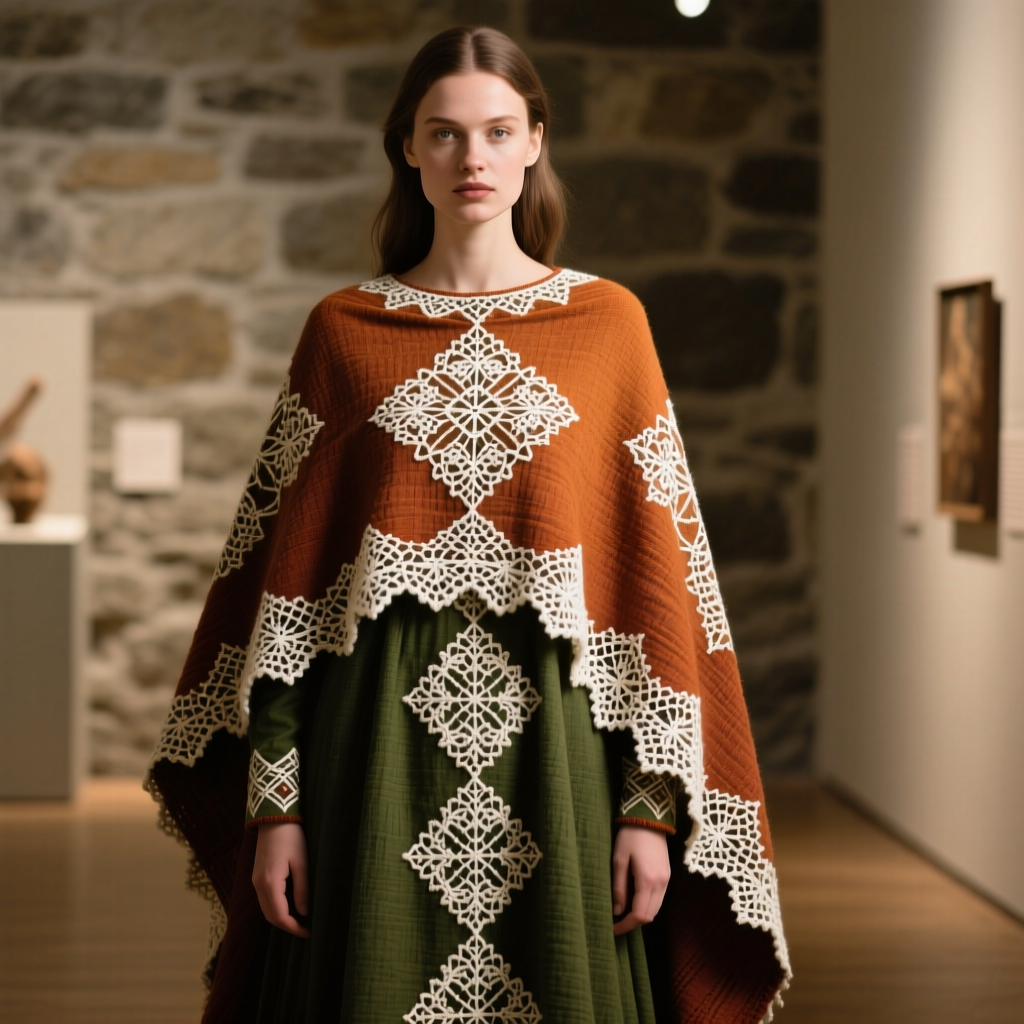
Globally, the digital age has paradoxically helped preserve this ancient, analog craft. Online communities, digital pattern archives, and video tutorials have demystified the intimidating cutting phase, allowing a new generation of textile artists to learn the craft regardless of their geographic location. Contemporary designers are also finding innovative ways to integrate Hardanger techniques into modern garment construction and haute couture, moving the craft beyond traditional table runners and bunad aprons into the realm of modern, wearable art.
The meditative rhythm of counting threads, the tactile satisfaction of needleweaving, and the profound sense of accomplishment that comes from completing a cutwork piece resonate deeply with modern practitioners seeking an antidote to the digital world. As long as there are those who value the intersection of patience & precision, the legacy of Norwegian Hardanger embroidery will continue to be stitched into the fabric of global textile heritage. For those looking to maintain their own textile heirlooms, our guide to fabric care provides essential tips on washing and storing delicate whitework.
Frequently Asked Questions
What distinguishes Hardanger from other cutwork traditions?
While many cultures practice cutwork, Hardanger is uniquely defined by its strict reliance on counted-thread geometry and its specific structural sequence. Unlike free-form cutwork where shapes are drawn and then stitched around, Hardanger requires the artisan to count the exact warp and weft threads of an evenweave fabric. The mandatory use of kloster blocks to anchor the fabric before cutting, followed by specific needleweaving fillings like spiderwebs and wrapped bars, gives Hardanger its unmistakable, highly structured, and geometric appearance.
Is it possible to repair damaged antique Hardanger lace?
Repairing antique Hardanger is a complex task best left to master conservators or highly experienced embroiderers. Because the structural integrity of the fabric has been intentionally compromised by the cutwork, a break in a woven bar or a torn kloster block can cause the surrounding lace to unravel. Repairs often involve carefully re-weaving the broken threads using a magnifying glass and exceptionally fine silk or cotton threads to match the original tension. For valuable family heirlooms, consulting a professional textile conservator is always recommended.
What are the essential tools for beginning Hardanger embroidery?
To begin, you need an evenweave fabric, typically a cotton or linen blend with a clearly visible thread structure (such as 22-count or 25-count Hardanger fabric). You will require two sizes of pearl cotton thread: a thicker thread (like size 5 or 8) for the kloster blocks and outer edges, and a finer thread (like size 12) for the intricate needleweaving fillings. Essential tools also include a pair of sharp, fine-pointed embroidery scissors with a curved or angled tip for precise cutting, a blunt tapestry needle for the weaving phases, and an embroidery hoop or frame to maintain strict fabric tension.
How does Hardanger embroidery feature in traditional Norwegian weddings?
In traditional Norwegian weddings, particularly those adhering to regional customs in the west, Hardanger embroidery is a symbol of purity, dedication, and familial continuity. The bride's bunad apron is often the centerpiece of her attire, featuring the most elaborate and pristine whitework she or her family possesses. Historically, the bride would also embroider the altar cloth used during her ceremony or the ceremonial towels used in the wedding feast. These items were not just decorative; they were physical manifestations of the bride's readiness for marriage and her commitment to preserving her family's cultural lineage.
Can Hardanger techniques be applied to modern garment construction?
Absolutely. While traditionally reserved for folk costumes, aprons, and household linens, contemporary fashion designers and independent makers are increasingly incorporating Hardanger cutwork into modern silhouettes. The geometric openwork adds a striking, textural element to the hems of modern blouses, the cuffs of tailored jackets, and the yokes of summer dresses. By scaling up the motifs or combining traditional whitework with contrasting fabric backings, artisans can bridge the gap between historical heritage and modern, everyday style, proving the enduring versatility of this remarkable craft. For more inspiration on integrating heritage crafts into your wardrobe, explore our bridal heritage style guide.