The Māori Korowai: Feather Cloak Weaving, Mana, and Living Heritage
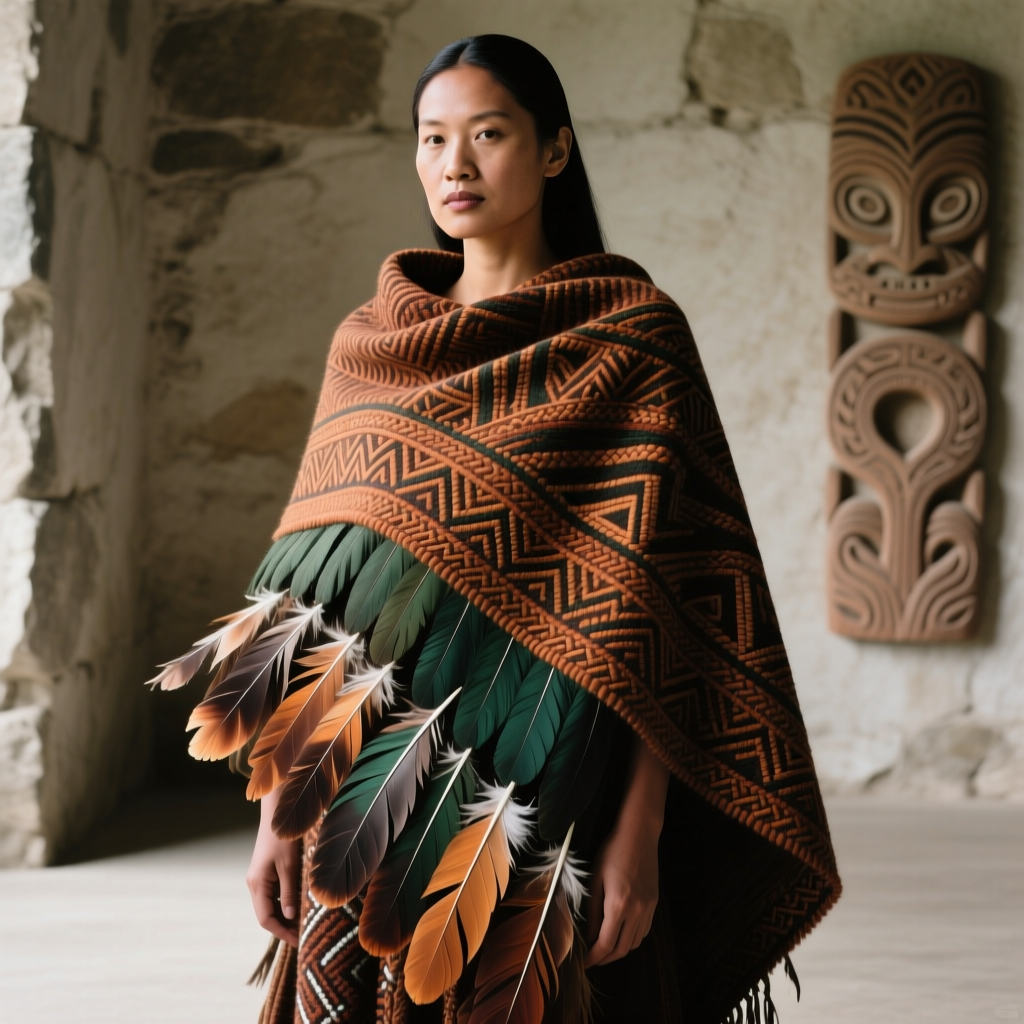
The rustle of native feathers, the intricate geometric borders, and the profound weight of ancestry—these are the defining characteristics of the Māori cloak, a garment that transcends the very definition of clothing. In te ao Māori (the Māori worldview), a cloak is never merely an article of fabric designed for warmth or modesty. It is a taonga (treasure), a living entity imbued with the spiritual essence of its creator, its wearers, and the land from which its materials were harvested. For those studying the evolution of global textiles, understanding the Māori korowai and its feathered counterparts offers a masterclass in the intersection of art, spirituality, and identity. To explore more about the evolution of protective and ceremonial garments, visit our comprehensive guide to traditional outerwear.
Historically, the indigenous people of Aotearoa (New Zealand) developed highly sophisticated weaving techniques entirely independent of the loom-based traditions found in Europe or Asia. Using only their hands, simple wooden tools, and the abundant natural resources of their environment, Māori weavers created garments of breathtaking beauty and immense cultural weight. Today, the art of cloak weaving remains a vital, breathing practice. It is a cornerstone of cultural preservation, a marker of prestige, and a profound expression of mana (spiritual power and authority). This article delves deep into the heritage of Māori feather cloak weaving, exploring the craftsmanship, regional variations, and the enduring legacy of these magnificent garments.
The Spiritual Essence: Mana, Tapu, and the Taonga
To understand the Māori cloak, one must first understand the concept of mana. Mana is a supernatural force, a spiritual prestige, and an authority that resides in people, places, and objects. When a master weaver (tohunga raranga) creates a cloak, she infuses it with her own mana, her lineage (whakapapa), and the spiritual energy of her ancestors (tīpuna). The cloak becomes a vessel for this power. When a leader, elder, or distinguished guest is draped in a feather cloak, the garment amplifies their mana, visually and spiritually communicating their status, heritage, and the weight of the occasion.
The creation of a cloak is deeply intertwined with the concepts of tapu (sacredness) and noa (the ordinary state). The harvesting of materials, the preparation of fibers, and the act of weaving itself are surrounded by strict spiritual protocols. A weaver must often recite karakia (prayers and incantations) before cutting the flax, acknowledging the spirit of the plant and asking for permission to use its fibers. During the weaving process, the weaver and her workspace are considered tapu. She may not eat or step over the threads, as doing so would violate the sacredness of the work and potentially sever the spiritual connection to the ancestors. For a deeper dive into the spiritual practices surrounding global textile creation, explore our archives on heritage weaving techniques.
Furthermore, a taonga cloak is not considered the personal property of an individual in the Western sense; rather, it belongs to the collective whānau (family), hapū (sub-tribe), or iwi (tribe). Cloaks are passed down through generations, accumulating the stories, tears, and triumphs of every person who has worn them. They are brought out for moments of immense significance: weddings, the welcoming of distinguished guests, graduations, and tangi (funerals). At a tangi, a cloak may be draped over the deceased, serving as a spiritual embrace from the ancestors and a physical manifestation of the love and respect held by the living.
The Art of Whatu: Traditional Craftsmanship and Materials
The foundation of almost all traditional Māori weaving is harakeke (New Zealand flax, or Phormium tenax). Despite its common English name, harakeke is not a true flax but a species of lily. The leaves of the harakeke plant are harvested with meticulous care, ensuring the inner shoots—the rito (child) and its parents—are left intact to guarantee the survival of the plant. This practice is a physical manifestation of whakapapa and kaitiakitanga (guardianship of the environment).
Once harvested, the green flesh of the leaf is scraped away using a mussel shell (kuku) to reveal the inner fiber, known as muka. The muka is then washed, beaten with a wooden mallet (patu), and rolled into incredibly strong, silky threads. The preparation of muka is labor-intensive, requiring immense physical strength and patience. The relationship between the weaver & the natural materials is one of deep reciprocity; the weaver cares for the plant, and the plant provides the foundation for the taonga. To learn more about how indigenous cultures process natural fibers, read our guide on natural textiles and dyes.
The weaving technique used to create these cloaks is called whatu (finger twining). Unlike European tapestry or loom weaving, whatu requires no mechanical frame. The weaver sits on the ground, using her own body to maintain the tension of the whenu (warp threads), which are often suspended from a peg or tied to her toes. She uses her thumbs and index fingers to twist the aho (weft threads) around the warp, creating a dense, flexible, and incredibly durable fabric. The physical toll of whatu is significant; weavers often suffer from joint pain and calloused hands, a physical sacrifice made in the service of their art and their people.
When creating a feather cloak (kahu huruhuru), the feathers are integrated directly into the aho during the twining process. The weaver must carefully select, sort, and prepare the feathers, ensuring the quills are supple enough to be woven without breaking. The placement of feathers is not random; it follows intricate patterns that may represent the natural environment, tribal histories, or the specific lineage of the intended wearer. The integration of feathers transforms the woven flax from a protective garment into a breathtaking display of artistry and mana.
Terminology and Typologies: Beyond the Feather Cloak
In contemporary parlance, the term "korowai" is frequently used by the general public to describe any Māori feather cloak. However, within the context of traditional weaving and te reo Māori (the Māori language), terminology is highly specific and denotes the exact style, material, and purpose of the garment. Understanding these distinctions is crucial for anyone studying indigenous garment styles.
- Korowai: Traditionally, a korowai is a cloak adorned with hukahuka (tassels) or tags made from rolled and dyed muka, rather than feathers. The hukahuka are designed to mimic the sound and movement of rain, and the cloak was historically worn as a prestigious rain cape. The black dye used for the tassels was traditionally extracted from paru (iron-rich swamp mud), which reacts with the tannins in the flax to create a deep, colorfast black.
- Kahu Huruhuru: This is the true feather cloak. "Kahu" translates to garment or cloak, and "huruhuru" means feather. These cloaks are entirely covered in bird feathers, which are woven into the aho. The base fabric is often completely hidden by the dense plumage, creating a luxurious, vibrant, and highly prestigious garment.
- Kahu Kiwi: A specific and highly revered type of kahu huruhuru made exclusively from the feathers of the kiwi bird. Because the kiwi is a nocturnal, ground-dwelling bird and a national icon, its feathers are incredibly soft and highly prized. A kahu kiwi is considered one of the most sacred and prestigious garments a person can wear, often reserved for royalty, high-ranking chiefs, or moments of profound national significance.
- Kaitaka: A cloak made of exceptionally fine, soft muka, characterized by its silky sheen and lack of feathers. The prestige of a kaitaka lies in the fineness of the weave and the tāniko (geometric finger-weaving) borders that adorn the edges. Tāniko patterns are complex, mathematical expressions of tribal identity and ancestral stories.
- Pāke / Heka: More utilitarian rain capes made from the coarse, unscraped leaves of the harakeke or pingao (golden sand sedge). These were designed to shed water effectively and were worn by travelers, hunters, and warriors.
Regional Variations and Lineage Markers
Aotearoa is a geographically diverse land, ranging from the subtropical forests of the far north to the alpine regions and fjords of the deep south. This environmental diversity, combined with the distinct histories of various iwi (tribes), has led to fascinating regional variations in cloak weaving. The materials available, the climate, and the specific ancestral narratives of a region all influence the final garment.
In the colder, more rugged southern regions, cloaks were historically woven with a tighter, denser tension to provide maximum insulation against the biting winds and heavy rains. Weavers in these areas might have utilized thicker fibers or incorporated the pelts of native animals, such as the kurī (the now-extinct Polynesian dog), which were highly prized for their warmth and the immense status they conferred upon the wearer. The kahu kurī (dog skin cloak) was the ultimate symbol of chieftainship in early Māori society.
Conversely, in the warmer northern regions, cloaks could afford to be lighter, more decorative, and focused heavily on the visual impact of feathers and intricate tāniko borders. The availability of specific native birds also dictated regional styles. A tribe living near dense native bush might have access to the vibrant red feathers of the kākā (native parrot) or the iridescent green of the kererū (wood pigeon), while a coastal tribe might incorporate the feathers of seabirds or rely more heavily on intricate flax tagging and dyeing techniques. These regional markers serve as a visual language, allowing those knowledgeable in the art to identify the origins and lineage of a cloak at a single glance.
Modern Preservation, Ethics, and the Weaving Renaissance
The colonization of Aotearoa brought profound disruptions to Māori society, including the introduction of European textiles, which led to a decline in the everyday use of traditional cloaks. Furthermore, the devastating impact of introduced mammalian predators on native bird populations necessitated strict conservation laws. Today, native birds such as the kiwi, kākāpō, and kererū are fully protected under the Wildlife Act. It is illegal to hunt them or commercially trade their feathers.
This legal and ethical landscape has forced a remarkable evolution in the art of kahu huruhuru weaving. Modern master weavers practice profound kaitiakitanga (guardianship) by sourcing feathers ethically. Feathers are gathered from birds that have died of natural causes, succumbed to road accidents, or been culled for conservation management purposes. Weavers also utilize molted feathers collected from aviaries and sanctuaries. In some cases, weavers have adapted by using the feathers of introduced species, such as pheasants or peacocks, or by creatively dyeing alternative materials to mimic the colors of native plumage, ensuring the visual language of the cloak survives even as the materials shift.
The true renaissance of Māori weaving lies in the transmission of knowledge. For decades, the intricate art of whatu was at risk of being lost. However, through the tireless efforts of master weavers and the establishment of wānanga (Māori educational institutions) and specialized weaving guilds like Te Roopu Raranga Whatu o Aotearoa, the knowledge has been fiercely protected and passed on to a new generation. Today, young weavers are learning not just the physical techniques of twining and tāniko, but the accompanying karakia, the protocols of tapu, and the deep spiritual responsibilities required to create a taonga. The Māori cloak remains a living, evolving testament to the resilience, creativity, and enduring mana of the indigenous people of Aotearoa.
Frequently Asked Questions
What is the exact difference between a korowai and a kahu huruhuru?
While the term "korowai" is often used colloquially by the public to describe any Māori feather cloak, this is technically incorrect in the context of traditional weaving. A true korowai is a cloak adorned with hukahuka (tassels or tags) made from dyed and rolled flax fiber, designed to mimic rain and provide a fringe. A kahu huruhuru, on the other hand, is a cloak where the primary decorative and functional element is bird feathers (huruhuru) woven directly into the weft threads. Understanding this distinction is a sign of respect for the precise terminology of te reo Māori and the specific heritage of the garments.
How long does it take to weave a traditional Māori feather cloak?
The creation of a kahu huruhuru is an astonishing feat of endurance and dedication. From the initial harvesting and preparation of the harakeke to the extraction of the muka and the final twining of the feathers, the process can take anywhere from several months to over a year of continuous, daily work. A master weaver might spend thousands of hours on a single, finely woven cloak. Because the weaver uses her body to maintain tension and relies entirely on finger twining without the aid of a mechanical loom, the physical and mental stamina required is immense. The time invested is a direct reflection of the aroha (love) and mana the weaver pours into the taonga.
Who is permitted to wear a Māori cloak?
In te ao Māori, cloaks are worn by individuals to denote status, honor, and the significance of an event. Elders, tribal leaders, distinguished guests, and individuals undergoing major life transitions (such as brides, grooms, or university graduates) are frequently draped in cloaks. The decision of who wears a specific taonga is usually made by the whānau (family) or the kaitiaki (guardians) of the cloak, based on the wearer's whakapapa (genealogy) and their connection to the garment's history. It is a profound honor to be wrapped in a cloak, as it signifies that the wearer is being embraced and supported by their ancestors.
How should a taonga cloak be stored and cared for?
Caring for a Māori cloak requires specialized knowledge, as the organic materials (muka and feathers) are susceptible to light, humidity, and pests like moths. Taonga are traditionally stored in kete (woven baskets) or specially carved wooden chests, often layered with natural repellents like kawakawa leaves or modern, museum-grade archival materials. They must be kept in cool, dark, and dry environments to prevent the degradation of the feathers and the rotting of the flax fibers. When handled, the cloak should be supported fully to prevent stress on the ancient twining, and it should only be cleaned or repaired by experts trained in traditional Māori textile conservation.
Can non-Māori wear or own a korowai?
The gifting or lending of a cloak to a non-Māori individual is a profound gesture of respect, alliance, and hospitality from a Māori host. When a dignitary, political leader, or honored guest from another culture is draped in a kahu huruhuru during a pōwhiri (welcome ceremony), it is a recognition of their mana and a symbolic wrapping of protection and honor. However, the mass production, commercialization, or casual wearing of imitation Māori cloaks by those outside the culture is widely considered cultural appropriation and deeply offensive. True taonga are never bought or sold as mere commodities; they are gifted, inherited, and held in trust for future generations.