The Heritage of Malian Bogolanfini: The Art, Alchemy, and Soul of Mud Cloth
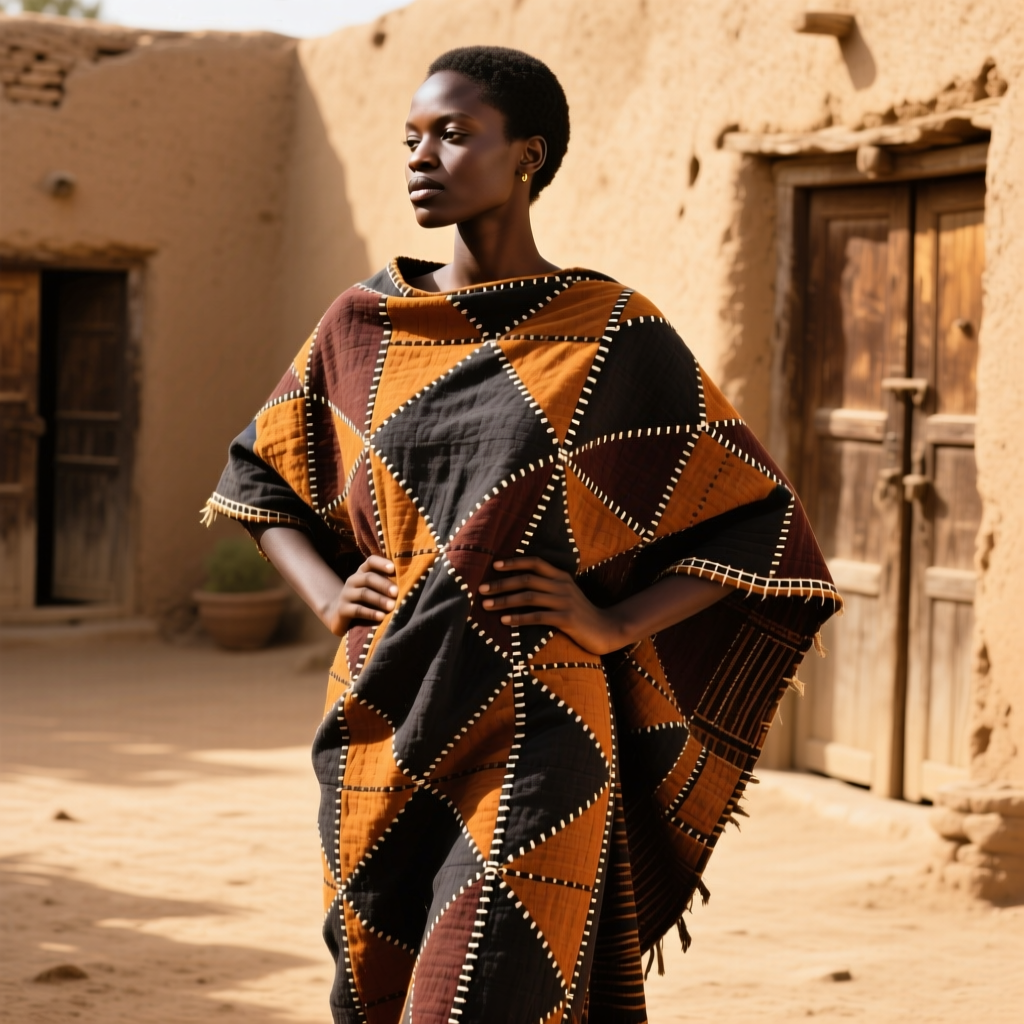
To trace the history of West African textiles is to follow a thread woven through centuries of trade, spirituality, and profound artistic expression. Among the most striking and culturally resonant of these textiles is Bogolanfini, universally recognized as Malian mud cloth. Born from the earth, painted by hand, and steeped in the cosmology of the Bamana people, this fabric is far more than a mere garment. It is a visual language, a protective armor, and a testament to the alchemy of natural dyes. As we explore the depths of global textile heritage, the story of Bogolanfini stands out as a masterclass in sustainable craftsmanship and cultural endurance.
The striking geometric patterns of mud cloth—typically rendered in deep blacks, rich browns, and stark whites—have captivated the global fashion industry for decades. Yet, to view Bogolanfini solely through the lens of contemporary aesthetics is to miss its profound soul. Authentic mud cloth is a living artifact, carrying the spiritual weight of ancestors, the protective blessings of the earth, and the meticulous labor of generations of Bamana women. Understanding this textile requires a journey into the heart of Mali, where the rivers provide the mud, the forests provide the leaves, and the people provide the enduring legacy.
The Alchemy of Earth and Leaf: Craftsmanship and Technique
The creation of authentic Bogolanfini is a labor-intensive, multi-week process that relies on a deep understanding of natural chemistry and botanical properties. Unlike synthetic dyeing methods that force color onto fibers, the mud cloth process is a true chemical marriage between the materials used. The craftsmanship is traditionally divided along gender lines, reflecting the societal structure of the Bamana people.
The journey begins with the men, who are responsible for weaving the foundational fabric. Using traditional double-heddle looms, men weave narrow strips of hand-spun cotton, typically about four to six inches wide. These strips are then meticulously sewn together edge-to-edge to create larger wrapper cloths. The resulting fabric is thick, durable, and possesses a slightly uneven, organic texture that is highly prized in the study of natural fibers and traditional weaving.
Once the cloth is woven, it passes into the hands of the women, who are the undisputed masters of the dyeing process. The first step involves preparing a tannin-rich bath. Women harvest leaves from specific trees and shrubs, most notably the n'gallama and n'pekou trees. These leaves are pounded, soaked, and boiled to extract a vibrant, yellowish-brown liquid rich in tannic acid. The woven cotton is submerged in this bath, allowing the fibers to absorb the tannins, which act as a crucial mordant for the final design.
After the cloth is sun-dried, it takes on a uniform yellow or ochre hue. The true magic, however, occurs with the application of the mud. The mud used is not ordinary soil; it is a highly specific, iron-rich clay harvested from the riverbeds of the Niger River and its tributaries. This clay is placed in jars and left to ferment, sometimes for up to a year. The fermentation process breaks down the organic matter and concentrates the iron oxides, turning the mud into a potent, dark pigment.
Using bamboo sticks, metal spatulas, or even their fingers, the women paint the fermented mud onto the cloth in intricate geometric patterns. When the iron-rich mud interacts with the tannic acid absorbed by the cotton, a permanent chemical reaction occurs, creating a deep, colorfast black or dark brown pigment. The cloth is washed, dried, and the mud application is often repeated multiple times to achieve the desired depth of color. Finally, the unpainted, yellow areas are carefully bleached using a caustic solution made from crushed peanuts, boiled bark, and water, or left to fade in the harsh Sahelian sun, resulting in the brilliant white motifs that contrast against the dark background.
Symbols of the Ancestors: Cultural Significance and Meaning
To the untrained eye, the patterns on a piece of Bogolanfini may appear to be purely decorative geometric abstractions. However, within Bamana culture, these motifs—known as ciw—constitute a complex visual language. The cloth serves as a medium for recording history, conveying moral lessons, and invoking spiritual protection. The symbols are deeply tied to the Bamana cosmology and the concept of nyama, the vital, spiritual energy that permeates all living things and the natural world.
Historically, the most vital use of Bogolanfini was in the creation of the donso fani, the traditional hunter's tunic. Hunting in the deep bush was considered a spiritually dangerous endeavor, as it involved taking life and encountering wild animals, thereby releasing immense amounts of nyama. Hunters wore tunics made of mud cloth because the earth-derived pigments and specific protective symbols were believed to camouflage them from both physical prey and malevolent spirits. The cloth acted as spiritual armor, absorbing and neutralizing dangerous energies. Motifs resembling animal bones, bird tracks, and spider webs were frequently incorporated to invoke the cunning, bravery, and agility required for a successful hunt.
For women, Bogolanfini was intrinsically linked to rites of passage and the transition between life stages. A young girl would receive her first mud cloth wrapper upon reaching puberty, marking her entry into womanhood and her eligibility for marriage. During childbirth, women were wrapped in specific Bogolanfini cloths designed to protect both mother and child from spiritual harm during the vulnerable moment of birth. The patterns on these specific cloths often featured symbols of fertility, maternal protection, and ancestral blessings.
Some of the most recognizable symbols include the iguana, which represents good fortune and guidance, as the reptile was traditionally believed to lead hunters to water. The spindle, a motif honoring women's roles in textile production and domestic life, signifies patience and the weaving of destiny. The 'lion's paw' or warrior's belt motifs denote courage and physical strength. By wearing these symbols, the individual literally wraps themselves in the virtues and protections of their ancestors, making the garment an extension of their spiritual identity.
From the Niger River to the World: Regional Variations and Evolution
As with any ancient craft, the production of mud cloth has evolved, leading to distinct regional and stylistic variations. To truly appreciate the heritage of this textile, one must understand the crucial distinction between Bogolanfini and Bogolan. While the terms are often used interchangeably in Western fashion contexts, they represent two very different approaches to the craft within Mali.
Bogolanfini translates literally to 'mud cloth' but specifically refers to the traditional, highly symbolic, and meticulously hand-painted cloth produced primarily by women in rural areas, particularly in the Beledougou region north of Bamako. This cloth is created using the strict, time-honored methods described above. The patterns are deeply rooted in local dialects and village-specific traditions, and the cloth is made for local use, ceremonial purposes, and community exchange. It is the authentic, spiritual heart of the craft.
In contrast, Bogolan is a broader term that has come to represent the commercialized, urban adaptation of mud cloth that emerged in cities like Bamako in the late twentieth century. Driven by a growing national pride and an international appetite for African textiles, urban artisans—often men—began producing mud cloth for the tourist and export markets. To meet demand, the techniques were adapted. Instead of freehand painting intricate, symbolic motifs, artisans began using stencils to apply patterns rapidly. The traditional tannin baths were sometimes replaced or augmented with synthetic dyes to achieve a wider, more vibrant color palette, including reds, greens, and bright yellows.
While traditionalists argue that urban Bogolan lacks the spiritual depth and chemical permanence of rural Bogolanfini, it is undeniable that this commercial evolution played a vital role in elevating mud cloth to a symbol of Malian national identity. Urban Bogolan allowed the textile to transcend its rural origins, becoming a staple in contemporary African fashion, interior design, and global art markets. This duality—between the sacred, rural Bogolanfini and the accessible, urban Bogolan—highlights the dynamic nature of cultural heritage, showing how ancient crafts adapt to survive in a modernizing world.
Preserving the Thread: Modern Preservation and Global Impact
The global fascination with mud cloth has been a double-edged sword for Malian artisans. On one hand, the international demand has provided a crucial source of income for countless families and elevated West African design onto the world's most prestigious fashion runways. Pioneering Malian designers, such as the late Chris Seydou, were instrumental in the late twentieth century in translating traditional Bogolan into modern silhouettes, proving that indigenous textiles could hold their own in the sphere of high fashion. Today, incorporating heritage textiles is a cornerstone of building sustainable and meaningful wardrobe essentials.
On the other hand, the mass production and frequent cultural appropriation of mud cloth patterns by fast-fashion conglomerates have threatened the livelihoods of traditional artisans. When synthetic fabrics printed with mud cloth patterns flood the global market at a fraction of the cost, it devalues the weeks of grueling physical labor required to produce authentic Bogolanfini. Furthermore, the stripping of the cloth's sacred symbols for mere aesthetic decoration disconnects the textile from its cultural roots, reducing a profound spiritual language to a seasonal trend.
In response to these challenges, a robust movement of preservation and ethical commerce has taken root. Across Mali, and particularly in the rural heartlands, women's cooperatives have been established to protect the traditional methods of Bogolanfini production. These cooperatives not only ensure that the ancient botanical and chemical knowledge is passed down to younger generations but also provide fair-trade avenues to sell their work directly to conscious global consumers and ethical fashion houses.
For the modern consumer, engaging with mud cloth requires a commitment to cultural appreciation over appropriation. This means seeking out authentic, ethically sourced pieces, understanding the history behind the patterns, and supporting the artisans who keep the tradition alive. When styled thoughtfully, whether as a statement jacket, a draped throw, or a piece of framed textile art, authentic Bogolanfini serves as a powerful bridge between the ancient wisdom of the Malian earth and the future of heritage-inspired styling. It stands as a reminder that the most beautiful garments are those that carry a story, a soul, and the undeniable touch of the human hand.
Frequently Asked Questions
What is the difference between Bogolanfini and Bogolan?
While both terms relate to Malian mud cloth, Bogolanfini refers specifically to the traditional, hand-painted, and deeply symbolic cloth made by women in rural areas using strict, natural methods. It carries profound spiritual and cultural meaning. Bogolan is a broader, more commercial term used for urban-produced mud cloth, which often utilizes stencils, faster production methods, and sometimes synthetic dyes to meet the demands of the tourist and international fashion markets.
How should I care for authentic mud cloth garments?
Authentic Bogolanfini is remarkably durable, but it requires gentle care to maintain its striking contrast and structural integrity. Because it is dyed with natural earth pigments and botanical extracts, harsh chemicals and aggressive washing can fade the colors. It is highly recommended to dry clean authentic pieces or hand wash them very gently in cold water with a mild, pH-neutral soap. For a comprehensive breakdown of maintaining natural dyes, consult our complete textile care guide. Always air dry the fabric out of direct, harsh sunlight to prevent the white motifs from yellowing over time.
Are the dyes used in Bogolanfini completely natural?
Yes, authentic, traditionally made Bogolanfini relies entirely on natural, locally sourced materials. The dark pigments are created through a chemical reaction between iron-rich fermented river mud and tannic acid extracted from the leaves of trees like the n'gallama. The bleaching agents used to create the white patterns are also derived from natural sources, such as caustic solutions made from boiled bark and crushed peanuts. However, consumers should be aware that cheaper, mass-produced 'mud cloth' found in fast-fashion retail stores often uses synthetic black dyes and chemical bleaches to mimic the traditional look.
Can mud cloth be integrated into contemporary everyday wardrobes?
Absolutely. The bold, graphic nature of Bogolanfini makes it an incredible statement piece in modern fashion. Because the patterns are inherently geometric and monochromatic, they pair beautifully with minimalist, contemporary silhouettes. A tailored mud cloth blazer, a structured tote bag, or a simple A-line skirt can elevate a basic wardrobe, adding a layer of global heritage and artisanal craftsmanship to everyday wear. Exploring other natural dyeing techniques can also provide inspiration on how to mix and match heritage textiles in a modern closet.
How can consumers ensure they are buying ethically sourced mud cloth?
To ensure you are supporting the true heritage and the artisans of Mali, look for retailers and brands that practice radical transparency regarding their supply chains. Seek out fair-trade organizations, direct-to-artisan cooperatives, or specialized textile galleries that can verify the origin of the cloth. Authentic pieces will often have slight irregularities in the weaving and the hand-painted lines—these 'flaws' are the hallmarks of human craftsmanship and should be celebrated as proof of the cloth's genuine heritage.