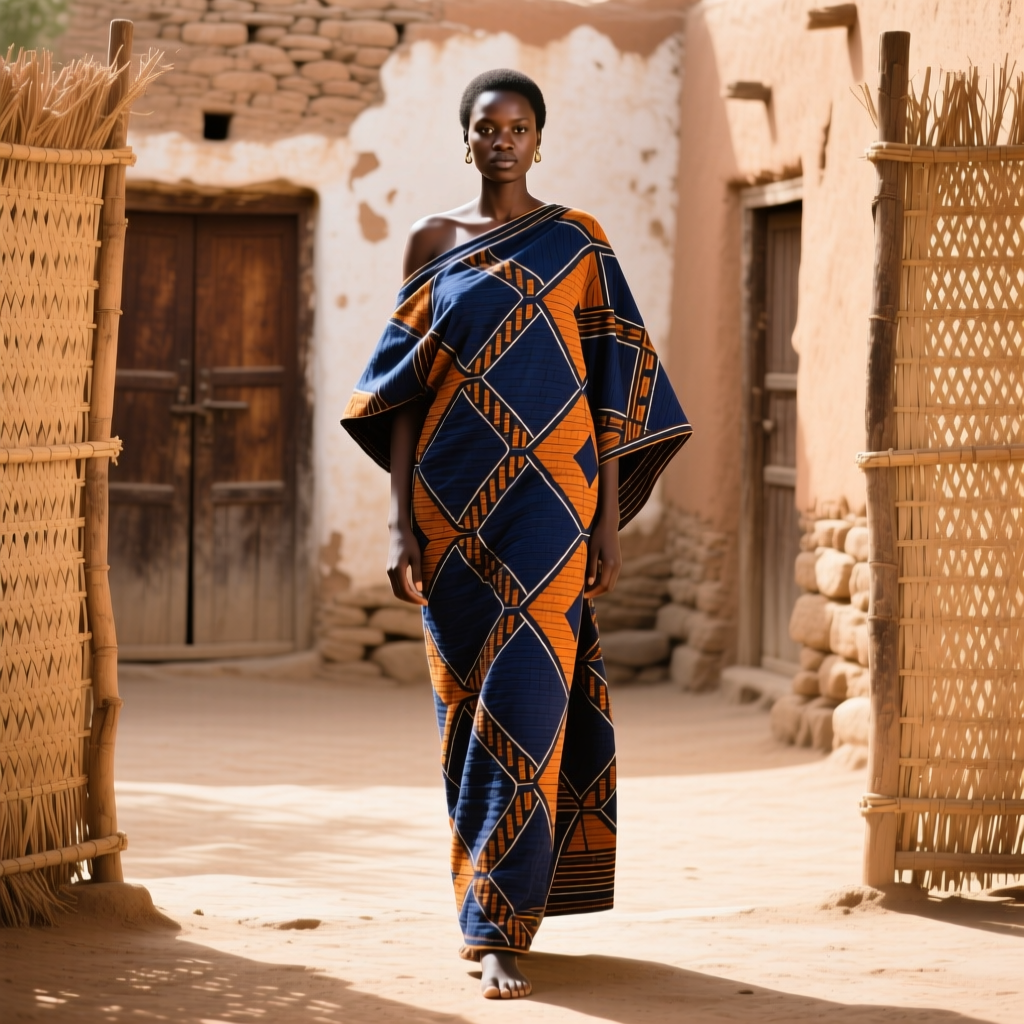
Kuba Raffia Cloth: The Living Heritage of Congo's Textile Masterwork
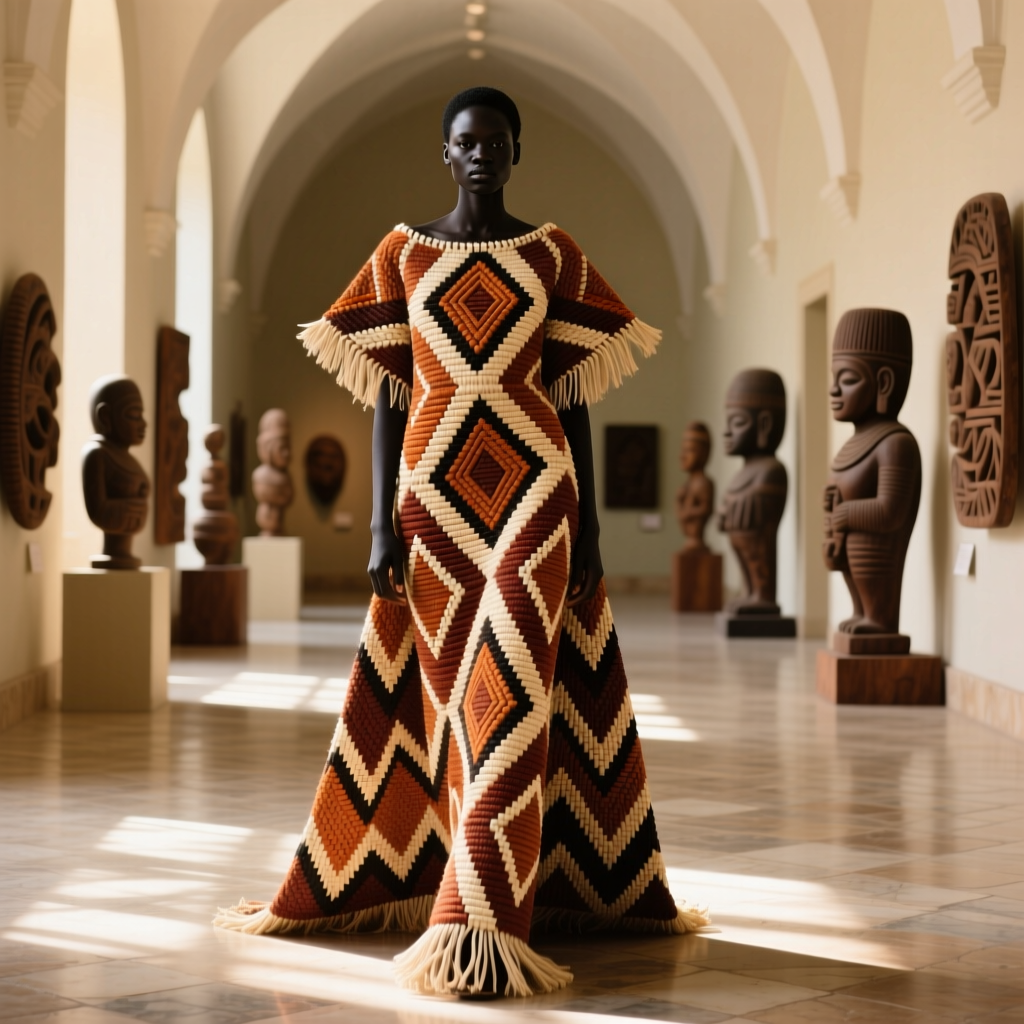
Deep within the heart of the Congo Basin, where the Kasai River winds through dense tropical forests and sprawling savannas, one of Africa's most extraordinary textile traditions has flourished for centuries. Kuba raffia cloth — known locally as shoowa among its most celebrated variations — stands as a testament to the artistic genius, mathematical sophistication, and cultural depth of the Kuba people. Far more than mere fabric, these intricately patterned textiles have served as currency, royal regalia, ceremonial garments, and profound expressions of identity and cosmology. To study Kuba raffia cloth is to open a window into a civilization that elevated the humble fiber of the raffia palm into one of the world's most recognized and revered textile arts.
The Kuba Kingdom, a confederation of numerous ethnic groups united under a central authority in what is now the Democratic Republic of the Congo, developed a court culture of remarkable refinement. Textile production sat at the very center of this cultural flowering, with raffia cloth embodying the values, hierarchies, and spiritual beliefs of an entire society. Today, collectors, museums, designers, and cultural historians around the globe continue to marvel at the complexity and beauty of these textiles — a living heritage that bridges the ancient and the contemporary. For those interested in exploring other culturally significant textiles and their roles in global fashion history, our heritage collection offers a wealth of related stories.
The Historical Origins and Evolution of Kuba Raffia Cloth
The origins of Kuba textile production stretch back several centuries, intertwined with the founding myths and political development of the Kuba Kingdom itself. Oral traditions attribute the kingdom's establishment to the legendary figure Woot, whose descendants — the nyim (kings) — would go on to patronize and refine the textile arts as expressions of royal power and divine authority. Archaeological and historical evidence suggests that raffia weaving was already well established in the region by the time of significant European contact, with production techniques passed down through countless generations of skilled artisans.
The raffia palm (Raphia farinifera and related species) grows abundantly throughout the Congo Basin, providing a readily available raw material that the Kuba people transformed through extraordinary ingenuity. The process begins with the careful harvesting of young palm fronds, from which individual fibers are stripped, dried, and prepared for weaving. Men traditionally handled the weaving process on inclined, single-heddle looms — a technology unique to the region — producing panels of plain-weave raffia fabric that would then serve as the foundation for elaborate surface decoration.
What distinguishes Kuba cloth from other raffia textile traditions across Africa is the extraordinary emphasis on surface design and pattern complexity. While many African cultures produced raffia textiles for utilitarian purposes, the Kuba elevated the medium to a fine art form, developing an extensive vocabulary of geometric motifs, each carrying specific names, meanings, and associations. Historical records from early travelers and missionaries document the central role these textiles played in Kuba society, noting their use in tribute payments, diplomatic exchanges, and the elaborate ceremonies of the royal court. The evolution of patterns over time reflects shifting aesthetic preferences, political alliances, and cultural exchanges with neighboring peoples, creating a rich chronological tapestry that scholars continue to study and decode.
The kingdom's political structure, organized around a sophisticated system of titled offices and hereditary positions, created a competitive environment in which textile display became a crucial marker of status and achievement. Noble families commissioned elaborate cloths to demonstrate their wealth and connections, while the royal court maintained its own workshops producing textiles of unparalleled quality. This system of patronage ensured that textile innovation remained a cultural priority for generations, driving the development of increasingly complex techniques and designs. Explore more about how textile traditions shape cultural identity across different civilizations.
Craftsmanship and Techniques: From Palm Frond to Masterpiece
The creation of a single Kuba raffia cloth involves a remarkable chain of specialized processes, each requiring distinct skills and knowledge accumulated over a lifetime of practice. The division of labor traditionally followed gender lines, with men responsible for weaving the base fabric and both men and women contributing to the decorative arts that transform plain cloth into cultural masterpieces. This collaborative approach to production reflects broader Kuba values around community, shared expertise, and the collective nature of artistic achievement.
Weaving the Base Cloth
The foundation of every Kuba textile is the woven raffia panel, produced on a distinctive inclined loom that positions the warp threads at an angle to the weaver's body. The weaver sits at the lower end of the loom, manipulating the single heddle to create a shed through which the raffia weft is passed. Unlike the continuous thread of cotton or silk weaving, raffia fibers are inherently limited in length — typically no more than a meter or so — requiring the weaver to join new fibers constantly throughout the weaving process. This technical constraint shapes the characteristic texture and appearance of Kuba cloth, giving it a subtly irregular quality that distinguishes it from machine-produced textiles.
The quality of the base cloth varies considerably depending on its intended use. Finer cloths, destined for ceremonial garments or royal commissions, feature tightly beaten wefts that create a smooth, almost velvet-like surface. More utilitarian fabrics may be woven more loosely, with visible gaps between weft rows. The preparation of the raffia fibers themselves — involving careful stripping, soaking, and sometimes splitting into finer strands — directly affects the quality of the finished textile, and skilled fiber preparation is considered an art in its own right.
Decorative Techniques
Once the base cloth is woven, it enters a phase of transformation through one or more decorative techniques. The most celebrated of these is cut-pile embroidery, known in the Kuba language as shoowa. In this painstaking process, the artisan uses a needle to loop dyed raffia fibers through the woven base, creating small loops that are then cut to form a plush, velvet-like surface. The resulting pile stands in contrast to the flat ground fabric, creating patterns of extraordinary visual depth and tactile richness. A single shoowa panel may require weeks or even months of continuous work, depending on its size and complexity.
Beyond cut-pile embroidery, Kuba textile artists employ several other decorative methods. Stem stitching creates linear patterns on the cloth surface using uncut raffia threads. Patchwork and appliqué involve cutting shapes from one cloth and attaching them to another, creating bold geometric compositions. Dyeing techniques using natural pigments — derived from mud, plant extracts, and mineral sources — produce the characteristic earth-toned palette of traditional Kuba textiles: deep browns, warm ochres, rich blacks, and soft ivory whites. Learn more about natural dyeing techniques and their role in heritage textile production.
The Mathematics of Pattern
One of the most remarkable aspects of Kuba textile design is its implicit mathematical sophistication. Ethnomathematicians have identified in Kuba patterns examples of all seventeen possible plane symmetry groups — the complete set of ways in which a two-dimensional pattern can repeat. This achievement, accomplished without formal mathematical notation, speaks to the Kuba artists' deep intuitive understanding of geometry and spatial relationships. The patterns themselves carry names in the Kuba language, forming a verbal taxonomy that allows artisans to communicate designs, teach apprentices, and reference the work of predecessors across generations.
Cultural Significance: Cloth as Currency, Status, and Spirit
In Kuba society, raffia cloth has never been merely a material commodity — it functions as a medium of social communication, a store of value, and a bridge between the physical and spiritual worlds. Understanding the cultural significance of these textiles requires appreciating the multiple, overlapping roles they play in Kuba life, from the most mundane economic transactions to the most sacred ritual contexts.
Cloth as Currency and Wealth
For much of Kuba history, raffia cloth served as a primary form of currency and a standard measure of value. Specific types and sizes of cloth had recognized exchange values, and transactions ranging from bride-price negotiations to the settlement of debts might be conducted in cloth rather than other goods. This monetary function elevated textile production to an activity of direct economic importance, ensuring that skilled weavers and embroiderers held respected positions within their communities. Large accumulations of fine cloth constituted a form of wealth storage, with prestigious families maintaining substantial textile treasuries that could be deployed for political and social purposes.
The use of cloth as currency also shaped its role in the kingdom's tribute system. Subordinate chiefs and villages owed periodic textile tributes to higher authorities, creating a flow of fine cloth toward the royal court that reinforced political hierarchies while distributing the products of provincial artisans across the kingdom. This system ensured that textile styles and techniques circulated widely, preventing regional isolation and fostering a shared aesthetic culture across the diverse ethnic groups within the Kuba confederation.
Royal and Ceremonial Applications
The most spectacular Kuba textiles were reserved for royal and ceremonial use, where they functioned as visible expressions of sacred authority and communal identity. The nyim (king) and members of the royal family wore elaborate raffia skirts and cloaks during public appearances, their garments signaling rank through specific patterns, colors, and decorative techniques. Royal regalia included not only clothing but also textile-covered stools, ceremonial screens, and canopy cloths that transformed architectural spaces into environments of visual splendor.
Funeral ceremonies represented perhaps the most important context for textile display in Kuba culture. The bodies of deceased nobles and notables were wrapped in layers of fine raffia cloth, with the quantity and quality of the wrappings reflecting the social standing of the departed. These burial textiles were believed to accompany the deceased into the afterlife, where they would serve as markers of identity and status in the spiritual realm. The practice of burying fine textiles with their owners means that many historically significant pieces have been lost, making surviving examples in museum collections all the more valuable as records of past artistic achievement. Discover how funerary textile traditions appear in cultures worldwide.
Spiritual and Symbolic Dimensions
Many Kuba textile patterns carry symbolic meanings connected to the natural world, ancestral spirits, and cosmological principles. Certain motifs reference the scales of the pangolin, the spots of the leopard, or the interlocking branches of forest vines — all elements of the natural environment imbued with cultural significance. The act of creating these patterns was itself sometimes understood as a form of spiritual practice, with the artisan channeling ancestral knowledge and creative force through the disciplined application of traditional techniques. The interplay of positive and negative space, symmetry and deliberate asymmetry, order and variation within Kuba designs reflects philosophical concepts about the nature of existence, balance, and the relationship between individual creativity and collective tradition.
Regional Variations and Distinctive Styles Across the Kuba Kingdom
The Kuba Kingdom was never a monolithic entity but rather a confederation of distinct ethnic groups, each maintaining its own cultural practices, dialectal variations, and artistic preferences. This internal diversity is vividly reflected in the regional variations of Kuba textile production, with different areas developing recognizable styles that experienced observers can identify and attribute. Understanding these regional distinctions enriches our appreciation of Kuba textile heritage and reveals the dynamic interplay between shared tradition and local innovation.
The Bushoong and Royal Court Styles
The Bushoong group, from which the Kuba royal dynasty originated, produced textiles closely associated with court culture and aristocratic patronage. Bushoong cloths tend to feature complex, densely packed geometric patterns executed with exceptional technical precision. The cut-pile embroidery of Bushoong artisans is often particularly fine, with short, even pile creating a luxurious velvet surface. Colors in Bushoong textiles traditionally favor rich, dark tones — deep browns and blacks set against natural ivory raffia — reflecting the refined aesthetic preferences of the royal court and its surrounding elite.
The Ngeende, Ngoongo, and Peripheral Groups
Groups located at greater distances from the royal capital often developed distinctive styles that reflected both their cultural autonomy and their interactions with non-Kuba neighbors. The Ngeende people, for example, are known for bold, large-scale geometric compositions that contrast with the finer, more intricate patterns favored at court. Peripheral groups sometimes incorporated trade materials — imported cotton thread, glass beads, or European dyes — into their textile production, creating hybrid styles that document the expanding networks of commerce and cultural exchange in the region.
The Shoowa Tradition
Among the most celebrated regional variations is the shoowa tradition, associated primarily with the Shoowa subgroup of the Kuba. Shoowa panels are distinguished by their large format, ambitious compositional designs, and masterful use of cut-pile technique. These textiles often feature bold, interlocking geometric forms arranged in dynamic, asymmetric compositions that seem to pulse with visual energy. Shoowa cloths have been particularly prized by collectors and museums, and it is largely through the international fame of shoowa panels that Kuba textile art has gained its global reputation. For those interested in how regional textile variations manifest in other traditions, our guide to understanding heritage fabrics explores similar diversity across global textile cultures.
Kasai Velvets and European Reception
When Kuba cut-pile textiles first reached European audiences in the late nineteenth and early twentieth centuries, they were often described as "Kasai velvets" — a term that captured their sumptuous surface quality while assimilating them into a familiar Western textile category. This reception was shaped by the broader European fascination with African art during the modernist period, as artists and intellectuals recognized in Kuba patterns a formal sophistication that resonated with contemporary aesthetic movements. The geometric abstraction, rhythmic repetition, and bold compositional strategies of Kuba textile design influenced figures in the Art Deco movement and beyond, creating cross-cultural dialogues that continue to inform design practice today.
Modern Preservation, Contemporary Practice, and Global Legacy
The survival of Kuba raffia cloth as a living tradition — not merely a historical artifact — depends on the continued transmission of skills, knowledge, and cultural values from one generation to the next. In the contemporary era, this transmission faces both unprecedented challenges and remarkable new opportunities, as globalization, economic change, and cultural activism reshape the context in which traditional arts are practiced and appreciated.
Challenges to Continuity
Several factors threaten the continuity of Kuba textile traditions. The labor-intensive nature of production means that skilled artisans can earn more through other economic activities, reducing the incentive for young people to invest in the long apprenticeship required to master weaving and embroidery techniques. The availability of cheap, factory-produced textiles has reduced the everyday demand for hand-woven raffia cloth, shrinking the market that once sustained full-time specialist producers. Political instability and economic hardship in the Democratic Republic of the Congo have disrupted communities, displaced artisans, and eroded the social structures that traditionally supported textile production.
Climate change and environmental degradation also pose indirect threats, as shifting conditions affect the growth and availability of raffia palms and the natural dye plants used in traditional coloration processes. The loss of biodiversity in the Congo Basin — one of the world's most ecologically significant regions — may eventually compromise the raw material base upon which the entire textile tradition depends.
Museum Collections and Academic Research
Major museums worldwide hold significant collections of Kuba textiles, serving as vital repositories of historical examples and centers for scholarly research. Institutions in Belgium, the United States, the United Kingdom, and elsewhere have invested in the conservation, documentation, and study of Kuba cloths, producing catalogues, exhibitions, and academic publications that deepen our understanding of this tradition. Digital archives and online databases have made these collections increasingly accessible to researchers, educators, and members of the Kuba community itself, creating new possibilities for collaborative scholarship and cultural reconnection.
However, the presence of so many significant Kuba textiles in Western institutions also raises important questions about cultural patrimony, colonial-era collecting practices, and the ethics of museum acquisition. Ongoing dialogues between source communities and holding institutions seek to address these concerns through loans, shared stewardship agreements, repatriation initiatives, and collaborative exhibition programs that center Kuba voices and perspectives.
Contemporary Artisans and Innovation
Despite the challenges, Kuba textile production continues as a living practice in communities throughout the Kasai region. Contemporary artisans draw on inherited knowledge while also responding to new markets, materials, and aesthetic possibilities. Some weavers and embroiderers produce textiles primarily for sale to tourists, collectors, and international galleries, adapting sizes, color palettes, and design elements to suit external demand. Others maintain a stronger orientation toward local ceremonial and social uses, preserving traditional standards and practices even as the contexts for textile display evolve.
A growing movement of cultural entrepreneurs, NGOs, and community organizations works to support Kuba textile artisans through training programs, fair-trade marketing initiatives, and advocacy for intellectual property rights. These efforts recognize that the survival of the tradition depends not only on preserving technical skills but also on ensuring that practitioners can earn sustainable livelihoods from their craft. Fair compensation, access to quality materials, and connections to ethical markets all contribute to creating conditions in which traditional textile arts can thrive rather than merely survive. Learn more about sustainable approaches to heritage textiles and how conscious consumerism supports artisan communities.
Influence on Global Design and Fashion
The visual language of Kuba textiles has exerted a profound influence on global design, fashion, and decorative arts. Interior designers incorporate Kuba cloth as wall hangings, upholstery, and accent pieces, valuing the textiles for their graphic impact and cultural authenticity. Fashion designers have drawn inspiration from Kuba geometric patterns, translating them into prints, knitwear, and woven fabrics for contemporary clothing collections. This cross-pollination raises both opportunities and ethical considerations: while global appreciation creates economic opportunities and raises the profile of Kuba heritage, it also risks cultural appropriation and the dilution of meaning when sacred or status-laden patterns are used without understanding or respect for their original context.
Responsible engagement with Kuba textile heritage requires education, attribution, and genuine partnership with source communities. Designers and brands that collaborate directly with Kuba artisans, credit the tradition appropriately, and ensure that economic benefits flow back to producing communities model a form of cultural exchange that honors the past while building sustainable futures. Our heritage-inspired fashion guide explores how to incorporate culturally significant textiles into contemporary wardrobes with respect and understanding.
Frequently Asked Questions About Kuba Raffia Cloth
What makes Kuba raffia cloth different from other African textiles?
Kuba raffia cloth is distinguished by several unique characteristics. First, the cut-pile embroidery technique (shoowa) creates a velvet-like surface texture found in very few other textile traditions worldwide. Second, the mathematical complexity of Kuba patterns is extraordinary — scholars have identified all seventeen possible plane symmetry groups within Kuba designs, an achievement accomplished through intuitive geometric knowledge rather than formal mathematical training. Third, the cultural functions of Kuba cloth are remarkably diverse, spanning currency, royal regalia, burial garments, and everyday clothing. The combination of technical innovation, aesthetic sophistication, and deep cultural embeddedness makes Kuba raffia cloth one of the most significant textile traditions on the African continent and in the world.
How long does it take to create a traditional Kuba raffia cloth?
The time required varies enormously depending on the size, quality, and decorative complexity of the piece. Weaving a single panel of base cloth on the traditional inclined loom may take several days to a week. The decorative phase — particularly cut-pile embroidery — is far more time-consuming. A medium-sized shoowa panel with moderate pattern complexity might require two to three months of dedicated work, while large, intricately designed ceremonial cloths can take six months or longer to complete. When considering that multiple artisans may contribute different stages of production, and that the preparation of raffia fibers and natural dyes adds additional time, the creation of a single fine Kuba textile represents a substantial investment of human skill and labor.
Are Kuba textiles still being produced today?
Yes, Kuba raffia cloth continues to be produced in communities throughout the Kasai region of the Democratic Republic of the Congo, though production levels and contexts have changed significantly. Contemporary artisans create textiles for local ceremonial use, for sale to collectors and tourists, and for export through fair-trade and gallery channels. While some aspects of production have adapted to modern conditions — synthetic dyes sometimes supplement or replace natural ones, and commercial markets shape design choices — the fundamental techniques of raffia preparation, loom weaving, and cut-pile embroidery remain essentially unchanged. Cultural preservation organizations and community initiatives work actively to support continuing production and ensure the transmission of skills to younger generations.
How can I identify authentic Kuba raffia cloth?
Several indicators help distinguish authentic Kuba textiles from imitations or mass-produced copies. Genuine Kuba cloth is made from natural raffia fiber, which has a distinctive texture and slight irregularity compared to synthetic alternatives. Hand-woven base fabric shows subtle variations in weave density that machine production cannot replicate. Authentic cut-pile embroidery reveals individual fiber loops when examined closely, with slight variations in pile height that reflect handwork. Traditional natural dyes produce characteristic earth-tone colors — rich browns, ochres, blacks, and creams — that differ from the brighter palette of synthetic colorants. Provenance documentation, reputable dealers, and direct purchase from artisan cooperatives all provide additional assurance of authenticity. Building knowledge through museum visits, reference books, and engagement with expert communities also develops the connoisseurship needed to evaluate Kuba textiles confidently.
What is the best way to care for and preserve Kuba raffia cloth?
Proper care ensures that Kuba textiles survive in good condition for future appreciation and study. Store cloths flat or gently rolled (never tightly folded) in a cool, dry environment away from direct sunlight, which can fade natural dyes and weaken raffia fibers. Avoid exposure to moisture, which can promote mold growth and fiber deterioration. When displaying Kuba textiles, use acid-free mounting materials and UV-filtering glass or acrylic to protect against light damage. Gentle dusting with a soft brush is usually sufficient for routine cleaning — avoid water, detergents, or dry cleaning, which can damage the natural fibers and dyes. For significant conservation concerns, consult a textile conservator with experience in natural fiber artifacts. Properly cared for, Kuba raffia cloths can survive for centuries, as demonstrated by the excellent condition of many historical examples in museum collections worldwide.
The story of Kuba raffia cloth is ultimately a story about human creativity at its most profound — the transformation of a humble palm fiber into objects of enduring beauty, meaning, and cultural power. As we continue to study, appreciate, and support this living tradition, we participate in a cross-cultural dialogue that honors the genius of Kuba artisans past and present while ensuring that their remarkable heritage endures for generations to come. Explore more of the world's extraordinary textile traditions through our complete heritage archive and discover the stories woven into the fabrics that shape our shared human experience.