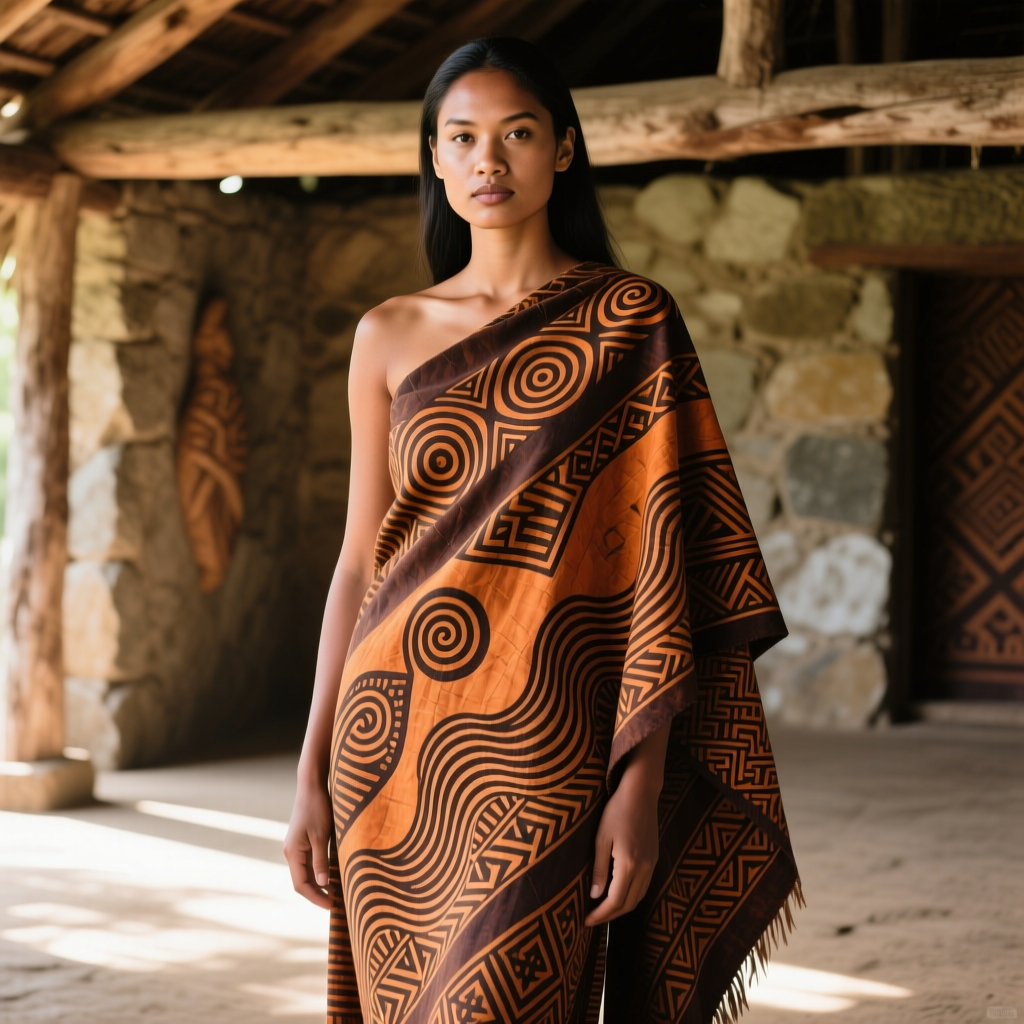
Kashmiri Pashmina Shawl Weaving: A Living Heritage of the Himalayas
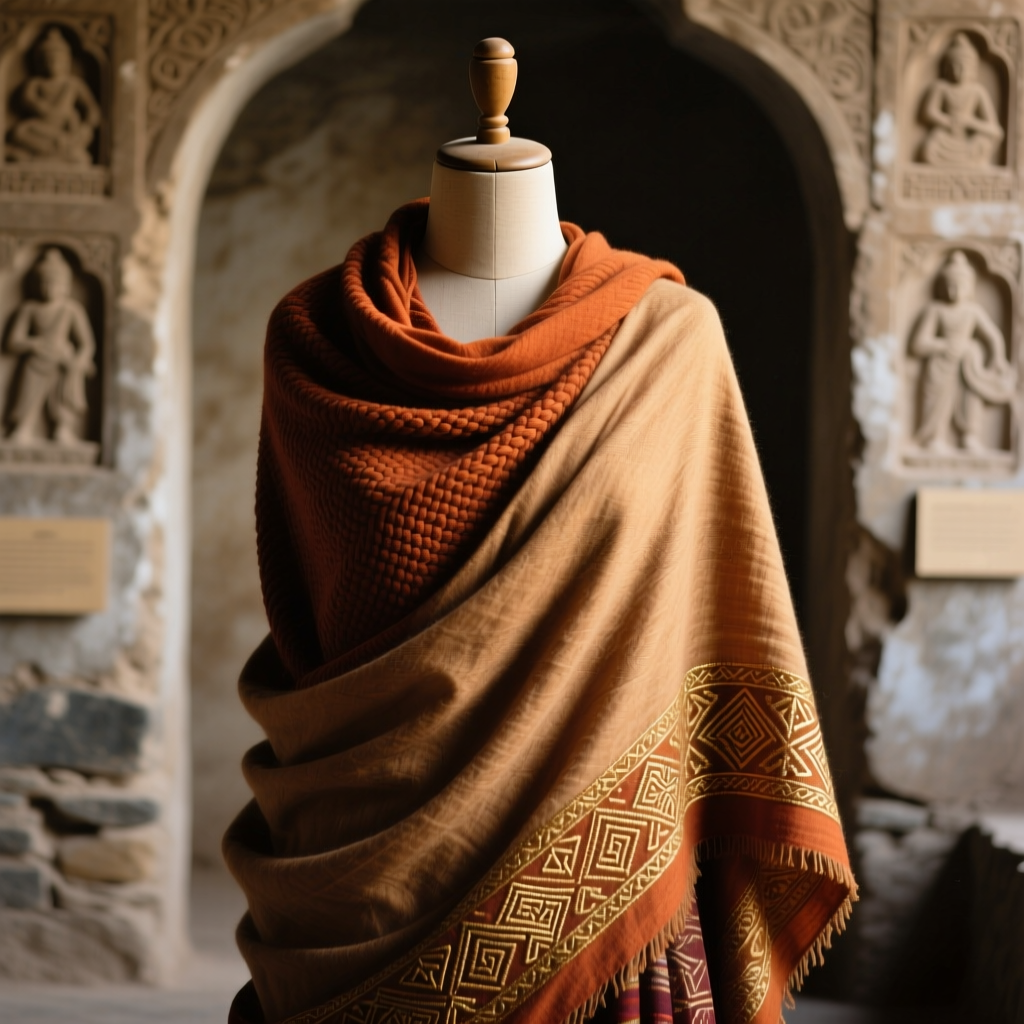
Kashmiri Pashmina Shawl Weaving: A Living Heritage of the Himalayas
In the high-altitude plateaus of Ladakh and the verdant valleys of Kashmir, a textile tradition has endured for over six centuries — one so exquisite that emperors waged wars over it, European royalty coveted it, and artisans have devoted entire lifetimes to mastering it. The Kashmiri Pashmina shawl is not merely a garment; it is a testament to human patience, artistic vision, and the unbreakable bond between a people and their craft. To understand the heritage of Pashmina weaving is to trace a thread that connects the nomadic Changpa herders of the Tibetan Plateau to the master weavers of Srinagar, from the courts of Mughal emperors to the wardrobes of modern connoisseurs who recognize that true luxury is inseparable from history.
The word pashmina derives from the Persian word pashm, meaning "wool" — specifically, the ultra-fine undercoat of the Capra hircus goat, which survives the brutal winters of the Changthang plateau at altitudes exceeding 14,000 feet. Each spring, these goats shed their winter coat, yielding a fibre so fine — typically between 12 and 16 microns in diameter — that it defies comparison with ordinary wool. This raw material, gathered by hand and transported across mountain passes, has been transformed by Kashmiri artisans into textiles of extraordinary beauty and complexity for generations. The story of how this transformation occurs, and what it means culturally, is one of the great narratives in the history of textile arts.
At The Garment Atlas, we believe that understanding the heritage behind what we wear transforms our relationship with clothing entirely. The Kashmiri Pashmina shawl exemplifies this principle more completely than perhaps any other garment tradition in the world.
The Historical Tapestry: Origins and Evolution of Kashmiri Pashmina Weaving
The documented history of Kashmiri shawl weaving stretches back to at least the fifteenth century, though oral traditions suggest an even older lineage. The craft received its first great patronage under Sultan Zain-ul-Abidin, who ruled Kashmir in the fifteenth century and is credited with inviting master weavers from Central Asia and Persia to settle in the valley. These artisans brought with them sophisticated weaving techniques, including the kani method — a form of tapestry weaving that uses small wooden bobbins called kanis instead of a shuttle to interlace coloured weft threads with the warp. This technique, which remains the hallmark of the finest Kashmiri shawls, allowed for the creation of intricate patterns with a precision and colour richness that was unprecedented in textile history.
Under Mughal rule, beginning in the late sixteenth century, the Kashmiri shawl industry entered what many historians consider its golden age. Emperor Akbar, renowned for his patronage of the arts, established royal workshops — known as karkhanas — dedicated exclusively to shawl production. The Mughals introduced new design motifs drawn from Persian miniature painting and Central Asian decorative arts: the boteh (the precursor to the paisley), stylised florals, and elaborate garden scenes that would become synonymous with Kashmiri textile design. Akbar himself is said to have worn Pashmina shawls in pairs, stitched back-to-back, so that the reverse side — often equally beautiful — would never be hidden. This practice, known as doshala, speaks to the extraordinary value placed upon these textiles even then.
The craft reached new heights of technical sophistication during the Afghan and Sikh periods of Kashmiri history, despite — or perhaps because of — the intense economic pressures placed upon weavers. The jamawar shawl, an all-over woven masterpiece that could require two to four years of continuous labour by a team of weavers, represents the apex of this tradition. Some historic jamawars contained so many colours and such intricate patterning that they resembled woven paintings more than textiles. The finest examples, preserved in museums from the Victoria & Albert Museum in London to the National Museum in New Delhi, demonstrate a level of artistry that continues to astonish textile scholars and conservators.
European fascination with Kashmiri shawls began in earnest during the late eighteenth century, when officers of the East India Company and travellers to the subcontinent brought examples back to Britain and France. By the early nineteenth century, the Kashmiri shawl had become the most coveted fashion accessory in Europe, inspiring a wave of imitation production in centres like Paisley, Scotland, and Lyon, France. Empress Joséphine of France reportedly owned hundreds of Kashmiri shawls, and their influence on European fashion and decorative arts was profound. This international demand, while economically beneficial in the short term, also led to the mechanisation and simplification of designs — a tension between authenticity and commercialisation that continues to shape the industry today. For a deeper exploration of how traditional garments have influenced global fashion, our style guides examine the enduring relevance of heritage pieces in contemporary wardrobes.
The Art of Making: Craftsmanship and Techniques Passed Through Generations
The creation of an authentic Kashmiri Pashmina shawl is a process of remarkable complexity, involving a chain of specialised artisans each contributing distinct skills. This division of labour — which has remained largely unchanged for centuries — means that a single shawl may pass through the hands of eight to ten different craftspeople before reaching completion. Understanding this process is essential to appreciating why genuine handwoven Pashmina commands such respect and value in the world of fine textiles.
The journey begins with the raw pashm fibre, collected from Changthangi goats in the spring months. The raw fleece contains a mixture of the fine undercoat and coarser guard hairs, which must be separated — a task traditionally performed by women in Kashmiri households through meticulous hand-combing and sorting. The sorted fibre is then hand-spun on a traditional spinning wheel called a charkha. This spinning process requires extraordinary skill: the spinner must maintain consistent tension and twist to produce yarn of uniform fineness, a task that cannot be replicated by machines without sacrificing quality. A master spinner may produce only a few grams of finished yarn per day, and the quality of the spinning directly determines the quality of the final fabric. The tradition of hand-spinning Pashmina has been recognised as a craft in its own right, one that demands years of practice to master.
Once spun, the yarn is dyed using either traditional vegetable dyes or, in contemporary practice, high-quality synthetic dyes. Historic Kashmiri dyeing employed a remarkable palette derived from natural sources: indigo for blues, saffron and pomegranate rind for yellows and golds, madder root for reds, and iron salts combined with tannins for deep blacks. The dyer, known as a rangur, must possess intimate knowledge of mordanting techniques and dye chemistry to achieve colours that are both vivid and lightfast. The traditional dyeing knowledge of Kashmir represents a body of empirical science accumulated over centuries, and its preservation is a matter of significant cultural importance.
The weaving itself takes two primary forms. The first is the kani weave, the ancient tapestry technique in which patterns are built up thread by thread using small wooden bobbins. A kani weaver works from a coded pattern called a talim — a notation system unique to Kashmiri textile production that translates complex designs into a series of symbolic instructions. Reading and interpreting the talim is a specialised skill, and the talim-writer, or talim-guru, occupies a position of great respect within the weaving community. A single shawl in the kani technique may require the simultaneous management of dozens of coloured bobbins, with the weaver making thousands of individual interlocking decisions per row. The pace of work is extraordinarily slow: a weaver may complete only a few square centimetres of complex kani work in a single day.
The second major technique is sozni embroidery, in which designs are needle-embroidered onto a plain-woven Pashmina base. Sozni work is executed with a single-ply Pashmina thread and a fine needle, and the finest examples feature embroidery so dense and precise that the shawl appears woven rather than stitched. The most elaborate form, called jamawar sozni, covers the entire surface of the shawl with embroidery — a labour that may require one to three years of continuous work. A related technique, papier-mâché embroidery, uses thicker threads and bolder colours to create raised, three-dimensional motifs reminiscent of Kashmir's famous papier-mâché craft. For those interested in how embroidery traditions vary across cultures, our heritage collection explores needlework traditions from around the world.
The final stages of production include washing, stretching, and finishing. The washing process, performed in the cold waters of Kashmir's rivers and streams using a mild soapnut solution, removes impurities and gives the fabric its characteristic soft hand. The shawl is then stretched and pressed to achieve its final dimensions and smooth surface. Each of these finishing steps requires its own specialist knowledge, and the cumulative effect of this multi-stage process is a textile of incomparable quality — lightweight yet extraordinarily warm, soft yet durable, and possessed of a lustre that deepens with age and care. Learn more about how to select and care for fine woven textiles in our garment care guides.
Cultural Significance: Pashmina in Kashmiri Identity and Global Fashion
In Kashmir, the Pashmina shawl is far more than a commercial commodity — it is woven into the very fabric of social and cultural life. For centuries, shawls have served as essential components of dowry gifts, passed from mother to daughter as heirlooms carrying the weight of family history. A finely woven Pashmina has traditionally been presented as a mark of honour to distinguished guests, offered as a diplomatic gift between rulers, and included in the trousseau of Kashmiri brides. The practice of gifting a jamawar shawl at weddings persists in many Kashmiri families, and the shawl given is often one that has itself been in the family for generations — a material link between past and future.
The motifs and patterns woven into Kashmiri shawls carry rich symbolic meaning. The boteh, or paisley motif — a stylised cypress tree bent by wind — is perhaps the most universally recognised symbol of Kashmiri design, representing resilience and the eternal flame of life. The chinar leaf, drawn from the majestic chinar trees that line Kashmir's waterways, symbolises the beauty of the valley itself. Floral motifs such as the gulkash (rose) and badam (almond blossom) evoke the legendary gardens of Kashmir, while geometric patterns reflect the influence of Central Asian and Islamic design traditions. Together, these motifs constitute a visual language that encodes Kashmiri identity, aesthetics, and spiritual values into the very structure of the textile.
The economic significance of Pashmina weaving to Kashmir cannot be overstated. At various points in history, the shawl industry has been the single largest employer in the valley, supporting not only weavers but also spinners, dyers, designers, merchants, and an entire ecosystem of ancillary trades. The industry has weathered conquests, famines, natural disasters, and political upheavals — surviving each time because the knowledge and skill required to produce Pashmina are so deeply embedded in Kashmiri society that they cannot easily be extinguished. The weavers of downtown Srinagar, concentrated in neighbourhoods like Safa Kadal and Rainawari, maintain workshop traditions that have been passed from father to son for dozens of generations, creating an unbroken chain of knowledge that connects the present day to the medieval origins of the craft.
On the global stage, the Kashmiri Pashmina shawl occupies a unique position at the intersection of fashion, art, and cultural heritage. Collectors and museums worldwide seek out historic examples, and contemporary designers regularly draw inspiration from Kashmiri motifs and techniques. The challenge has always been distinguishing authentic handwoven Pashmina from the flood of imitations and inferior products that have proliferated since the nineteenth century. The Geographical Indication (GI) tag granted to Kashmiri Pashmina provides a legal framework for protecting the authenticity of genuine products, though enforcement remains an ongoing struggle. Consumers who educate themselves about the heritage and hallmarks of authentic Pashmina — as explored in our curated style guides — play a vital role in sustaining demand for genuine artisanal production.
Regional Variations: From Kani to Sozni and Beyond
While the term "Kashmiri Pashmina" encompasses a broad tradition, significant regional and technical variations exist within the craft, each with its own history, aesthetic character, and community of practitioners. Understanding these variations is essential for anyone seeking to appreciate the full scope of Kashmiri textile heritage.
The kani shawl, produced primarily in the town of Kanihama and surrounding villages in the Budgam district, represents the most prestigious and technically demanding form of Kashmiri weaving. Kanihama, sometimes called the "shawl village," has been a centre of kani production for centuries, and the weavers there maintain techniques that are considered the gold standard of the craft. Kani shawls are classified by the density and complexity of their patterning: a jamawar features all-over woven design, a palldar concentrates ornament on the end panels (pallavs), and a chand-daar features a central medallion surrounded by corner pieces. Each type requires different levels of skill and labour, and the prices vary accordingly — with a full jamawar kani shawl representing perhaps the most labour-intensive textile product in the world.
The sozni embroidered shawl, centred in Srinagar and its surrounding areas, represents a parallel tradition of equal refinement. Sozni artisans — known as sozankars — work from home or in small workshops, often in family groups, executing designs that range from delicate border work to all-over embroidery that may take years to complete. Within sozni, several sub-styles exist: hashia refers to narrow border embroidery, butha to scattered small motifs, and jaal to all-over net-like patterning. The finest sozni work is executed with such precision that it is nearly impossible to distinguish the front and back of the fabric — a quality that is considered the hallmark of master-level craftsmanship. The needleworkers who achieve this level of skill are among the most respected artisans in Kashmir.
The Amlikar or tilikar tradition represents a less widely known but historically significant variation, in which small, individually woven motifs are joined together to create a composite design. This technique, sometimes described as "patchwork weaving," allows for an extraordinary range of colour and pattern within a single shawl, as each motif can be woven independently and then assembled. While less common in contemporary production, Amlikar shawls are prized by collectors for their technical ingenuity and visual complexity.
Beyond these major categories, several specialised techniques deserve mention. Paper-mâché embroidery (also called paper-mache sozni) uses thicker, brightly coloured threads to create raised, textured designs that mimic the painted surfaces of Kashmiri papier-mâché objects. Tilla work, which employs thin metallic threads of gold or silver to create shimmering embroidered patterns, was historically reserved for royal commissions and ceremonial garments and remains one of the most visually striking Kashmiri textile techniques. Each of these variations reflects a different facet of Kashmiri creative expression, and together they constitute a textile tradition of extraordinary breadth and depth. Explore more about regional textile traditions in our heritage archives, where we document craft practices from across the globe.
Preserving the Thread: Modern Challenges and the Future of Kashmiri Pashmina Heritage
Despite its centuries-long history and global renown, the Kashmiri Pashmina weaving tradition faces significant challenges in the modern era. The most pressing of these is the proliferation of counterfeit products — machine-made shawls, often produced from merino wool or synthetic fibres, that are marketed as "Pashmina" at a fraction of the cost of genuine handwoven examples. This flood of imitations has eroded consumer confidence, depressed prices for authentic products, and made it increasingly difficult for genuine artisans to earn a sustainable livelihood from their craft. The term "pashmina" has been so thoroughly diluted in global fashion marketing that many consumers have no awareness that it refers to a specific fibre and a specific handcraft tradition rooted in a specific place.
The Geographical Indication (GI) certification, granted to Kashmiri Pashmina, was designed to address this problem by legally restricting the use of the term to products that meet specific criteria of origin, material, and production method. Under the GI framework, genuine Kashmiri Pashmina must be hand-spun and hand-woven in the Kashmir region from the fibre of the Changthangi goat. While this legal protection is a significant step, enforcement — particularly in international markets — remains inconsistent, and many consumers remain unaware of the distinction between certified Pashmina and imitations.
A second major challenge is the economic viability of the craft for its practitioners. The extraordinary time and skill required to produce a handwoven Pashmina shawl means that genuine products must command premium prices — yet the market is saturated with cheap alternatives. Many young people from traditional weaving families have been forced to seek other forms of employment, leading to a worrying decline in the number of active master weavers. When a weaver with decades of experience retires without a successor, an irreplaceable body of knowledge is lost. Organisations such as the Craft Development Institute in Srinagar and various non-governmental organisations are working to address this by providing training, fair-trade market access, and financial support to weaving families, but the scale of the challenge is immense.
There are, however, reasons for optimism. A growing global movement toward conscious consumption and artisanal authenticity has created new markets for genuine handcrafted textiles. Consumers who value provenance, sustainability, and cultural heritage are increasingly willing to invest in authentic Pashmina, recognising that the true cost of a handwoven shawl reflects not just material value but the preservation of a living cultural tradition. Digital platforms have enabled Kashmiri artisans and cooperatives to reach international audiences directly, bypassing intermediaries and building relationships with informed buyers who appreciate the story behind the product. For those looking to build a wardrobe rooted in heritage and quality, our comprehensive garment guides offer practical advice on identifying, purchasing, and caring for artisanal textiles.
Efforts to document and digitise traditional patterns and talim notations are also underway, ensuring that even if certain techniques temporarily decline in practice, the knowledge required to revive them is preserved for future generations. Museums, universities, and cultural organisations both within Kashmir and internationally are collaborating on research projects that catalogue historic designs, analyse traditional dyeing methods, and record the oral histories of master weavers. These efforts represent a collective recognition that Kashmiri Pashmina weaving is not merely a commercial industry but a form of intangible cultural heritage — a living repository of human creativity and ingenuity that belongs to all of humanity.
The future of Kashmiri Pashmina will ultimately depend on a partnership between artisans, who must continue to uphold the highest standards of their tradition, and consumers, who must educate themselves about what makes authentic Pashmina worth preserving. Every genuine handwoven shawl purchased at a fair price is an investment in the continuation of a craft that has enriched human culture for over half a millennium. In a world increasingly dominated by mass production and disposability, the Kashmiri Pashmina shawl stands as a quiet but powerful argument for the enduring value of patience, skill, and beauty.
Frequently Asked Questions
What makes a Kashmiri Pashmina shawl different from other wool shawls?
An authentic Kashmiri Pashmina shawl is distinguished by three key factors: the fibre, the method of production, and the place of origin. The fibre must come from the ultra-fine undercoat (12–16 microns) of the Changthangi goat native to the Ladakh region. The yarn must be hand-spun on a traditional charkha, and the shawl must be hand-woven or hand-embroidered by artisans in Kashmir. These criteria combine to produce a textile that is significantly lighter, softer, and warmer than shawls made from ordinary sheep's wool or cashmere produced by mechanised processes. The hand-spinning process, in particular, preserves the natural crimp and loft of the fibre in a way that machine spinning cannot replicate, giving genuine Pashmina its characteristic warmth-to-weight ratio and luxurious drape. Additionally, the traditional motifs and techniques — such as kani weaving and sozni embroidery — are unique to Kashmir and represent centuries of accumulated artistic knowledge.
How can I tell if a Pashmina shawl is authentic?
Several indicators can help identify genuine Kashmiri Pashmina. First, examine the weave closely: handwoven Pashmina will show slight irregularities that are the hallmark of human craftsmanship, whereas machine-made imitations will appear perfectly uniform. Second, genuine Pashmina has a distinctive soft, warm hand-feel and a subtle lustre that synthetic fibres cannot replicate. Third, look for the GI (Geographical Indication) certification label, which indicates that the product has been verified as authentic Kashmiri Pashmina. Fourth, consider the price: a genuine handwoven Pashmina shawl requires weeks to years of skilled labour and will be priced accordingly — if the price seems too low, the product is almost certainly not authentic. Finally, purchasing from reputable sellers who can provide detailed provenance information, including the name of the artisan or workshop, is the most reliable way to ensure authenticity. Our garment buying guides provide additional tips for evaluating textile quality.
How should I care for and store a Kashmiri Pashmina shawl?
Proper care ensures that a Kashmiri Pashmina shawl will last for generations and even improve with age. For cleaning, dry cleaning by a specialist familiar with delicate handwoven textiles is generally recommended, though gentle hand-washing in cold water with a mild, pH-neutral detergent is acceptable for plain-woven shawls without heavy embroidery. Never wring, twist, or machine-wash a Pashmina shawl. After washing, lay the shawl flat on a clean towel to dry, reshaping it gently to its original dimensions. For storage, fold the shawl loosely in acid-free tissue paper or a clean cotton cloth and store it in a cool, dry place away from direct sunlight. Avoid hanging Pashmina shawls for extended periods, as the weight of the fabric can cause stretching. Cedar blocks or lavender sachets can be used to deter moths, which are the primary threat to stored wool textiles. With proper care, a high-quality Pashmina shawl becomes softer and more beautiful over time, developing a patina that reflects its history of use and love.
What is the difference between kani weaving and sozni embroidery?
Kani weaving and sozni embroidery are two distinct techniques used to create patterned Kashmiri Pashmina shawls, each with its own tools, processes, and aesthetic character. Kani weaving is a tapestry technique in which the pattern is created during the weaving process itself, using small wooden bobbins (kanis) to interlace coloured weft threads with the warp. The design is integral to the fabric structure, and the resulting shawl is reversible, with the pattern visible on both sides. Kani weaving follows a coded notation system called talim and is considered the most prestigious and technically demanding form of Kashmiri textile production. Sozni embroidery, by contrast, involves stitching designs onto a plain-woven Pashmina base using a fine needle and single-ply Pashmina thread. The embroidery is applied after the base fabric is complete, and while the finest sozni work can be nearly indistinguishable from woven patterning, it is technically a surface embellishment. Both techniques can produce shawls of extraordinary beauty, and the choice between them is largely a matter of aesthetic preference and budget, as kani-woven shawls typically command higher prices due to the greater time and complexity involved.
Why are authentic Kashmiri Pashmina shawls so expensive?
The price of an authentic Kashmiri Pashmina shawl reflects the extraordinary amount of skilled human labour involved in its creation. The raw material — the fine undercoat of the Changthangi goat — is scarce and must be hand-collected and hand-sorted. The spinning is done entirely by hand, with a skilled spinner producing only a small quantity of yarn per day. Depending on the technique used, the weaving or embroidery of a single shawl may require anywhere from several weeks to several years of continuous, full-time work by one or more master artisans. A full jamawar kani shawl, for example, represents thousands of hours of painstaking labour. When this labour is compensated fairly — as it must be if the craft is to survive — the resulting product necessarily carries a premium price. Additionally, the cost reflects the centuries of accumulated knowledge and skill that each artisan brings to their work. Purchasing a genuine Pashmina shawl is not merely buying a garment; it is investing in the continuation of one of the world's great living craft traditions. For guidance on building a wardrobe of investment-quality heritage pieces, explore our style and wardrobe guides.