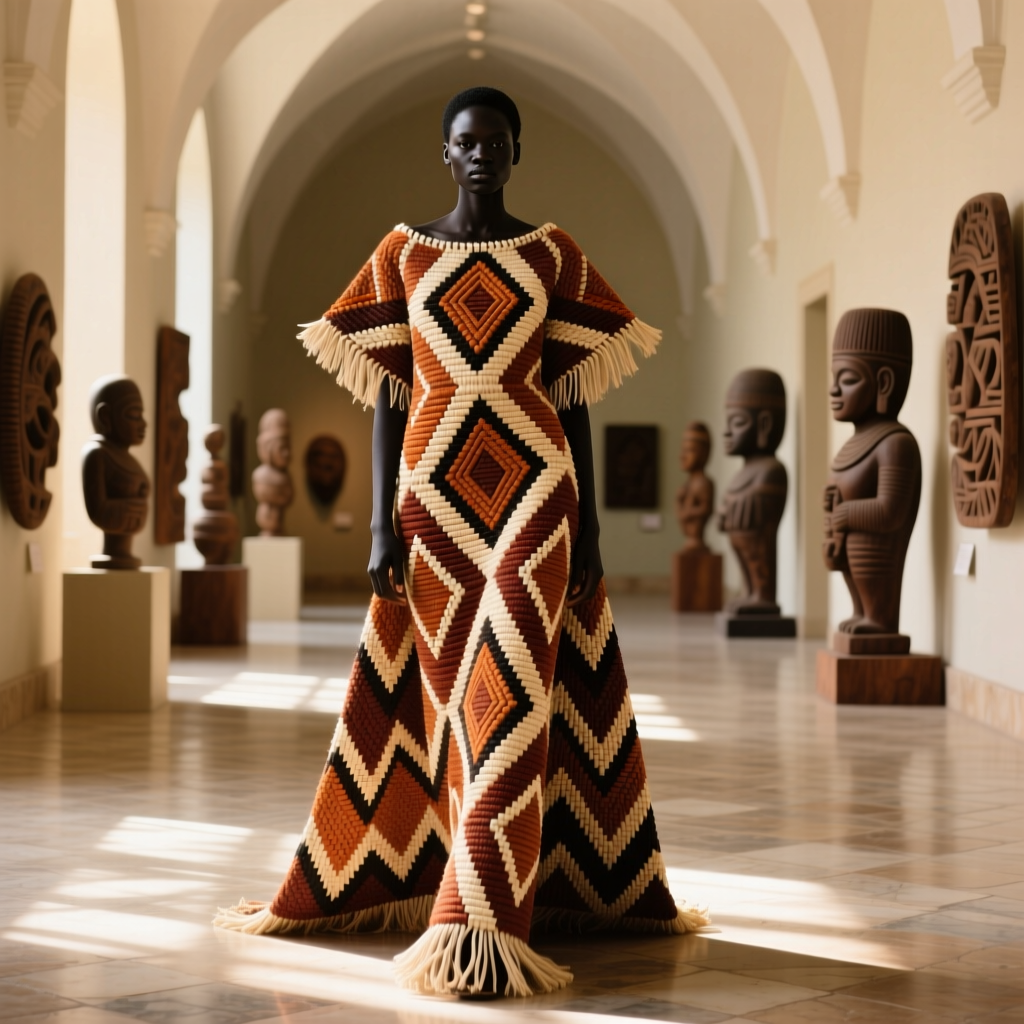
Filipino T'nalak: The Sacred Dreamweaver Abaca Cloth of T'boli Heritage

Filipino T'nalak: The Sacred Dreamweaver Abaca Cloth of T'boli Heritage
In the misty highlands of South Cotabato, on the southern Philippine island of Mindanao, an ancient textile tradition endures. The T'boli people, one of the country's most culturally vibrant indigenous groups, are custodians of a weaving practice so deeply intertwined with the spiritual realm that its practitioners are known not merely as weavers, but as dreamweavers. The cloth they produce — T'nalak — is unlike any other textile in the world. Born from visions received in sleep, rendered in the fibrous strength of abaca, and dyed with the earth's own pigments, T'nalak represents one of humanity's most profound intersections of art, spirituality, and material culture.
To understand T'nalak is to understand the T'boli worldview itself — a cosmology where the boundaries between the waking world and the spirit realm are porous, where ancestral knowledge flows through dreams, and where the act of creation is inseparable from the sacred. This article explores the extraordinary heritage of T'nalak cloth, from its mythological origins and meticulous craftsmanship to its cultural significance and the modern efforts to preserve this irreplaceable tradition for future generations.
For those fascinated by the global tapestry of handwoven textiles, T'nalak stands alongside other remarkable heritage fabrics. Much like the Japanese kasuri tradition or the backstrap loom textiles of Guatemala, T'nalak embodies a community's identity in every thread. Yet its origin story — patterns gifted by a deity through dreams — makes it truly singular in the world of heritage garments.
The Mythological Origins & Spiritual Foundations of T'nalak
The story of T'nalak begins not in a workshop or a marketplace, but in the realm of spirits. According to T'boli oral tradition, the art of weaving T'nalak was bestowed upon the people by Fu Dalu, the spirit of the abaca plant. In the most widely recounted origin narrative, a woman named Bong Libun (sometimes called Boi Logi) received a visit from Fu Dalu in a dream. The spirit revealed intricate geometric patterns — designs of breathtaking complexity and symbolic depth — and instructed her to weave them into cloth using abaca fibers.
This divine gift came with sacred obligations. The dreamweaver, known in the T'boli language as a be lungolon (one who dreams), must observe strict spiritual protocols. These include abstaining from certain foods, maintaining ritual purity, and honoring taboos associated with the weaving process. A dreamweaver who violates these protocols risks losing the ability to receive pattern-dreams, or worse, inviting spiritual harm upon herself and her community.
The spiritual dimensions of T'nalak extend far beyond its origin story. The cloth itself is considered sacred — a physical manifestation of the connection between the T'boli people and their ancestral spirits. It is used in rituals marking life's most significant passages: birth, marriage, healing ceremonies, and death. A T'boli baby may be swaddled in T'nalak for protection; a bride and groom are bound together beneath its folds during wedding ceremonies; and the deceased are wrapped in the cloth to guide their spirits safely into the afterlife.
This sacredness imposes important cultural boundaries. Traditionally, T'nalak was never cut with metal instruments, as doing so was believed to sever the spiritual connection embedded in the cloth. It was not to be stepped upon, used as a blanket for everyday sleeping, or treated with casual disregard. These protocols, while sometimes relaxed in contemporary practice, underscore a fundamental truth: for the T'boli, T'nalak is not merely fabric — it is a living covenant between the human and spirit worlds.
The reverence accorded to T'nalak places it within a global tradition of sacred textiles. Like the khadi cloth of India, which carried spiritual and political significance, or the kente cloth of Ghana, which communicates status and ancestral connection, T'nalak transcends its material form to become a vessel of cultural meaning.
The Meticulous Craftsmanship Behind Every Thread
Creating a single piece of T'nalak is an extraordinary labor that can span weeks or even months, depending on the complexity of the pattern and the size of the cloth. The process demands not only technical mastery but also spiritual readiness, as the dreamweaver must first receive the design through a dream before any physical work can begin.
Harvesting & Preparing Abaca Fibers
The foundation of T'nalak is abaca (Musa textilis), a species of banana native to the Philippines whose fibers are renowned for their exceptional tensile strength — so strong, in fact, that abaca was historically used for ship rigging and rope. T'boli weavers harvest abaca stalks from plants growing in the forests surrounding their communities in Lake Sebu and neighboring municipalities.
The extraction process is painstaking. The outer layers of the abaca trunk are stripped away to reveal the fibrous inner layers. These fibers are then carefully separated, cleaned, and sun-dried. The weaver must select fibers of consistent quality, discarding any that are too coarse, too brittle, or too irregular for the fine work ahead. This initial preparation alone can consume several days.
Once dried, the fibers are hand-knotted end-to-end to create continuous threads of workable length. This knotting requires remarkable dexterity and patience, as each join must be secure yet small enough to pass unnoticed in the finished cloth. The resulting thread is then organized and prepared for the resist-dyeing process that will give T'nalak its distinctive patterns.
The Ikat Resist-Dyeing Technique
T'nalak employs a warp ikat technique — a method in which the warp threads (the longitudinal threads on the loom) are tied and dyed before weaving begins. Sections of the warp that should remain undyed are tightly bound with resist material, traditionally strips of vine or leaf, creating a pattern that will emerge once the threads are placed on the loom and the weft is woven through them.
The dyeing process uses only natural pigments sourced from the T'boli homeland. The primary colors are:
- Black — derived from the leaves of the k'nalum tree (Ebony species) or from iron-rich mud combined with plant tannins
- Red — extracted from the roots of the loko tree or from the bark of the knalum combined with lime
- Natural white/cream — the undyed color of the abaca fiber itself, preserved through resist binding
The threads may be dyed multiple times to achieve the desired depth of color, with each dyeing session followed by careful drying. The precision required in binding the resist sections is extraordinary — even a slight misalignment will result in a blurred or distorted pattern in the finished cloth. The dreamweaver must hold the entire design in her mind (or, more accurately, in her spiritual memory) and execute the bindings with flawless accuracy.
Weaving on the Backstrap Loom
T'nalak is woven on a backstrap loom, one of humanity's most ancient weaving technologies. The loom consists of a warp beam anchored to a fixed point (often a house post), a breast beam held against the weaver's body by a strap around her lower back, and a set of heddle rods that separate and raise alternate warp threads to create the shed through which the weft passes.
The weaver's body becomes an integral part of the loom — she controls the tension of the warp threads through the lean of her torso, adjusting constantly as she works. This intimate physical connection between weaver and textile is a hallmark of backstrap loom traditions worldwide, from the ikat weavers of Indonesia to the textile artisans of the Peruvian highlands.
The weaving of T'nalak is slow, meditative work. A skilled dreamweaver might complete only a few centimeters of cloth in a single day, depending on the intricacy of the pattern. The rhythmic passing of the shuttle, the beating of the weft into place with a wooden sword, and the subtle adjustments of tension create a practice that is as much a form of moving meditation as it is a productive act. The finished cloth typically measures between one and two meters in width and up to several meters in length, representing hundreds of hours of concentrated labor.
Finishing & Burnishing
Once removed from the loom, the T'nalak cloth undergoes a finishing process that enhances its beauty and durability. The fabric is burnished — rubbed vigorously with a smooth stone, shell, or piece of wood — to compress the fibers and bring out a subtle, lustrous sheen. This burnishing not only improves the cloth's appearance but also tightens the weave, making it more resistant to moisture and wear.
The result is a textile of remarkable character: strong yet supple, with a deep, organic palette and patterns that seem to glow from within the fabric rather than sitting on its surface. Each piece is unique — no two T'nalak cloths are identical, even when they share the same named pattern, because each is filtered through the individual dreamweaver's spiritual vision and personal technique.
Named Patterns & Their Cultural Meanings
One of the most remarkable aspects of T'nalak is its system of named patterns, each carrying specific cultural meanings and associations. Scholars and cultural workers have documented over a hundred distinct T'nalak designs, though the true number may be far greater, as many patterns are known only within specific family lineages or communities.
Some of the most widely recognized patterns include:
- Komagel (or K'magal) — A design associated with the spirit of the abaca itself, often featuring interlocking diamond shapes that represent the interconnectedness of all living things
- Sawo — A pattern resembling the scales of a python, symbolizing protection and ancestral guardianship
- Bangi — Inspired by the frog, a creature associated with fertility, rain, and agricultural abundance
- Saob — A design representing the wings of a hawk or eagle, embodying strength, vision, and the ability to transcend earthly limitations
- Kokkok — A pattern evoking the claws of a crab, associated with resilience and adaptability
- Bulo — Representing bamboo shoots, symbolizing growth, flexibility, and the continuity of life
Each pattern is more than a decorative motif — it is a visual language that communicates the T'boli relationship with the natural world, the spirit realm, and the social order. When a dreamweaver receives a new pattern in a dream, she is receiving not just a design but a message, a blessing, or an instruction from the spirits. The act of weaving that pattern into cloth is an act of translation — making the invisible visible, giving form to the formless.
This pattern vocabulary is passed down through generations, with elder dreamweavers teaching younger apprentices not only the technical skills of weaving but also the stories, taboos, and spiritual practices associated with each design. In this way, T'nalak functions as a living archive of T'boli cosmology — a textile encyclopedia of cultural knowledge that is continuously renewed through each new generation of dreamweavers.
The depth of symbolic meaning embedded in T'nalak patterns finds parallels in other heritage textile traditions. The tartans of Scotland, for instance, encode clan identity and territorial belonging, while the adinkra cloth of West Africa communicates philosophical concepts through stamped symbols. T'nalak, however, is distinctive in that its patterns originate not from human invention but from spiritual revelation.
Regional Variations & the T'boli Homeland
The heartland of T'nalak production is the municipality of Lake Sebu in South Cotabato province, a region of extraordinary natural beauty characterized by its three interconnected lakes, cascading waterfalls, and lush tropical forests. The T'boli people have inhabited this landscape for centuries, and their cultural practices are deeply rooted in its specific ecology — the abaca grows in the surrounding forests, the dye plants flourish in the local soil, and the spiritual geography of the land informs the dreams from which patterns emerge.
While Lake Sebu is the epicenter of T'nalak production, variations in technique, pattern preference, and stylistic emphasis can be observed across different T'boli communities. Weavers in more remote mountain barangays may favor older, more complex patterns that have fallen out of use in communities closer to the town center, where market pressures and tourist demand have influenced design choices. Some communities maintain stricter observance of traditional taboos, while others have adopted more flexible approaches to accommodate the realities of contemporary life.
Adjacent indigenous groups in Mindanao, including the B'laan and the Manobo, also practice abaca weaving, though their techniques and patterns differ from those of the T'boli. The B'laan, for example, are known for their elaborate beadwork and brass-casting traditions, which complement their textile arts in distinct ways. These neighboring traditions create a rich regional tapestry of indigenous material culture, with T'nalak occupying a position of particular prominence due to its unique dream-origin mythology and the exceptional refinement of its ikat technique.
The T'boli homeland has faced significant challenges over recent decades. Logging, mining, and agricultural expansion have encroached on ancestral lands, threatening both the natural resources required for T'nalak production and the cultural integrity of T'boli communities. Land disputes and the broader pressures of modernization have created an environment in which the transmission of traditional knowledge is increasingly fragile. The survival of T'nalak is therefore inseparable from the broader struggle for indigenous land rights and cultural autonomy in the Philippines.
For those interested in how geography shapes textile traditions, the relationship between the T'boli and their homeland offers a compelling case study. Just as Harris Tweed is inseparable from the windswept landscapes of the Scottish Outer Hebrides, or Japanese shibori is rooted in the specific conditions of artisan communities in Kyoto and Arimatsu, T'nalak cannot be separated from the lakes, forests, and mountains of South Cotabato.
Modern Preservation, Cultural Revival & Contemporary Significance
The latter half of the twentieth century brought both existential threats and unexpected opportunities to the T'nalak tradition. On one hand, the pressures of modernization, displacement, and economic marginalization endangered the intergenerational transmission of weaving knowledge. On the other, a growing national and international appreciation for indigenous arts created new platforms for T'boli weavers and new incentives for young women to learn the craft.
The Role of Master Weavers
Central to the preservation of T'nalak has been the dedication of master dreamweavers who have committed their lives to teaching and advocacy. Among the most celebrated is Lang Dulay, who was recognized by the Philippine government with the Gawad sa Manlilikha ng Bayan (National Living Treasure Award) — the country's highest honor for traditional artists. Lang Dulay's mastery of over a hundred traditional patterns, her unwavering commitment to natural dyes and traditional techniques, and her tireless efforts to train younger weavers made her a pivotal figure in the survival of the T'nalak tradition. Though she has passed, her legacy endures through the hundreds of weavers she trained and the cultural institutions she helped inspire.
Other master weavers have continued this work, establishing weaving cooperatives, participating in cultural exchange programs, and advocating for the protection of T'boli intellectual property rights. These cooperatives serve multiple functions: they provide economic support for weavers, create structured environments for the transmission of skills, and offer a collective voice in negotiations with government agencies, NGOs, and commercial buyers.
T'nalak in Contemporary Fashion & Design
In recent years, T'nalak has found new audiences through its incorporation into contemporary fashion and interior design. Filipino designers, both within the Philippines and in the global diaspora, have begun featuring T'nalak in modern garments, accessories, and home décor, bringing the cloth to runways, galleries, and design fairs around the world.
This visibility is a double-edged sword. On one hand, it generates income for T'boli communities and raises awareness of their cultural heritage. On the other, it raises important questions about cultural appropriation, fair compensation, and the commodification of sacred objects. When T'nalak is used to make handbags, shoes, or fashion garments without the involvement or consent of T'boli communities, the sacred significance of the cloth risks being erased in favor of mere aesthetic appeal.
Ethical engagement with T'nalak requires a commitment to fair trade principles, direct collaboration with T'boli weaving cooperatives, and respect for the cultural protocols surrounding the cloth. Designers and consumers alike have a responsibility to understand the origins and meanings of the textiles they use and to ensure that the communities who create them benefit equitably from their commercialization. For guidance on approaching heritage textiles responsibly, see our guide on building an ethical heritage textile wardrobe.
Institutional & Government Support
The Philippine government, through the National Commission for Culture and the Arts (NCCA) and other agencies, has implemented various programs to support T'nalak preservation. These include documentation projects, weaving scholarships, and the inclusion of T'boli textile arts in educational curricula. The annual T'nalak Festival in South Cotabato celebrates the cloth and its weavers, drawing visitors from across the country and beyond.
Academic institutions, both in the Philippines and internationally, have contributed to preservation efforts through ethnographic research, materials science studies of natural dyes, and digital documentation of patterns and techniques. Museums have played a role as well, with institutions such as the National Museum of the Philippines and international textile museums featuring T'nalak in their collections and exhibitions, ensuring that the cloth is recognized as a significant contribution to global material culture.
The Next Generation of Dreamweavers
Perhaps the most encouraging development in T'nalak preservation is the emergence of a new generation of T'boli women who are choosing to learn the art of dreamweaving. While the allure of urban employment and modern lifestyles has drawn many young people away from traditional practices, a growing number are recognizing the cultural and economic value of their heritage. Some are combining traditional weaving skills with modern business acumen, using social media and e-commerce platforms to reach buyers directly and tell the story of T'nalak to a global audience.
These young weavers face the challenge of honoring tradition while navigating a rapidly changing world. They must maintain the spiritual integrity of the dreamweaving practice while engaging with markets and institutions that operate on very different terms. Their success in balancing these demands will determine whether T'nalak continues as a living tradition or becomes a museum artifact — a beautiful relic of a world that no longer exists.
The story of T'nalak preservation offers lessons for heritage textile traditions worldwide. Like the efforts to sustain Laotian silk weaving or the revival of Mexican rebozo weaving, the future of T'nalak depends on a delicate ecosystem of master artisans, supportive institutions, ethical markets, and — most importantly — communities that value and practice their traditions as a living, evolving expression of identity.
Frequently Asked Questions
What makes T'nalak different from other woven textiles?
T'nalak is unique in that its patterns are believed to originate from dreams — specifically, from visions bestowed by Fu Dalu, the spirit of the abaca plant. This means that the weaver does not design the pattern through conscious creativity but receives it through spiritual revelation. Additionally, T'nalak is made entirely from natural materials — hand-processed abaca fibers and plant-based dyes — using a warp ikat technique on a backstrap loom. The combination of its dream-origin mythology, all-natural materials, and exceptional craftsmanship distinguishes T'nalak from virtually every other textile tradition in the world.
Can anyone become a T'nalak dreamweaver?
Traditionally, the role of dreamweaver is reserved for T'boli women who have received the spiritual calling — the ability to receive pattern-dreams from Fu Dalu. This calling is understood to run in certain family lineages, and the training process involves not only technical skill but also the observance of spiritual protocols and taboos. While non-T'boli individuals can learn the technical aspects of abaca weaving, the spiritual dimension of dreamweaving is specific to T'boli culture and cosmology. Respect for this cultural boundary is an important aspect of ethical engagement with the tradition.
How long does it take to weave a piece of T'nalak?
The time required varies significantly depending on the size of the cloth, the complexity of the pattern, and the skill level of the weaver. A small piece with a relatively simple pattern might take two to four weeks to complete, while a large cloth with an intricate, multi-colored design can require three to four months or more of daily work. This timeline does not include the initial stages of harvesting and preparing abaca fibers, extracting natural dyes, and setting up the resist-dyeing bindings — all of which add substantial time to the overall production process.
How can I ethically purchase authentic T'nalak cloth?
The most ethical way to purchase T'nalak is directly from T'boli weaving cooperatives in Lake Sebu, South Cotabato, or through verified fair trade organizations that work directly with T'boli communities. When purchasing, look for cloth that is made with natural dyes (not synthetic), hand-processed abaca fibers, and traditional ikat techniques. Be wary of mass-produced imitations that use printed patterns or synthetic fibers to mimic the appearance of genuine T'nalak. Reputable sellers will be able to provide information about the weaver, the pattern name, and the community of origin. For more guidance, explore our guide to identifying authentic heritage textiles.
Why is T'nalak important to Filipino cultural identity?
T'nalak represents one of the most sophisticated and spiritually rich textile traditions in the Philippines and Southeast Asia. It embodies the T'boli people's deep connection to their ancestral land, their cosmological worldview, and their artistic genius. As a symbol of indigenous cultural achievement, T'nalak challenges narratives that marginalize or erase indigenous contributions to national identity. Its recognition as a National Cultural Treasure and the elevation of its master weavers as National Living Treasures reflect a growing appreciation for the role of indigenous knowledge systems in shaping Filipino heritage. For anyone interested in understanding the depth and diversity of Philippine culture, T'nalak is an essential point of engagement.
The enduring legacy of T'nalak reminds us that the most meaningful garments are those woven with intention, rooted in place, and connected to something greater than themselves. Whether displayed as art, worn as a statement of cultural pride, or preserved as a sacred object, T'nalak continues to speak across time — a cloth dreamed into being, thread by thread, by the visionary women of Lake Sebu. To explore more heritage textiles and their stories, visit our complete heritage textile archive or browse our garment guides for styling and care tips inspired by traditional craftsmanship.