What Is Traditional South African Clothing Called? A Comprehensive Guide
South Africa is famously celebrated as the 'Rainbow Nation,' a vibrant tapestry of diverse cultures, languages, and histories. When exploring the rich heritage of this region, a common question arises among textile enthusiasts, travelers, and cultural historians: what is traditional South African clothing called? The truth is, there is no single term that encapsulates the entirety of South African dress. Instead, the answer is a beautiful, complex lexicon of distinct garments, each tied to the specific ethnic groups that call the southern tip of Africa home.
From the intricate beadwork of the Zulu and Ndebele people to the iconic woven blankets of the Basotho, traditional South African attire is as varied as the landscapes of the country itself. These garments are not merely functional items of clothing; they are profound visual languages that communicate age, marital status, social standing, and spiritual beliefs. In this comprehensive guide, we will explore the origins, characteristics, and regional variations of South African dress, answering the question of what these magnificent garments are called and uncovering the deep cultural significance they hold.
The Origins and Evolution of South African Attire
To understand what traditional South African clothing is called today, we must first look at the historical origins of these garments. Before the arrival of European settlers and the introduction of global trade routes, the indigenous peoples of Southern Africa crafted their clothing entirely from the natural environment. Animal hides, specifically from cattle, sheep, and wild game, were the primary materials. The tanning and softening of these skins was a highly skilled craft, resulting in supple leather used for cloaks, loincloths, and protective garments for both men & women.
The evolution of South African attire shifted dramatically with the introduction of trade goods. Glass beads, originally brought by Arab and later European traders, were rapidly adopted by indigenous artisans. These beads replaced natural seeds and shells, allowing for the creation of the complex, colorful geometric patterns that define much of South African traditional wear today. Exploring African beadwork symbolism reveals how these tiny glass spheres became a crucial medium for storytelling and social communication.
Another major turning point in the history & culture of South African dress was the arrival of Christian missionaries in the 19th century. Missionaries introduced woven cotton fabrics and encouraged more 'modest' styles of dress, which led to the creation of hybrid garments. Indigenous populations ingeniously adapted these European silhouettes, incorporating them into their own cultural aesthetics through the addition of traditional beadwork, embroidery, and specific color palettes. This synthesis of indigenous craftsmanship and imported materials birthed many of the iconic traditional garments recognized in contemporary society.
Key Characteristics and Materials
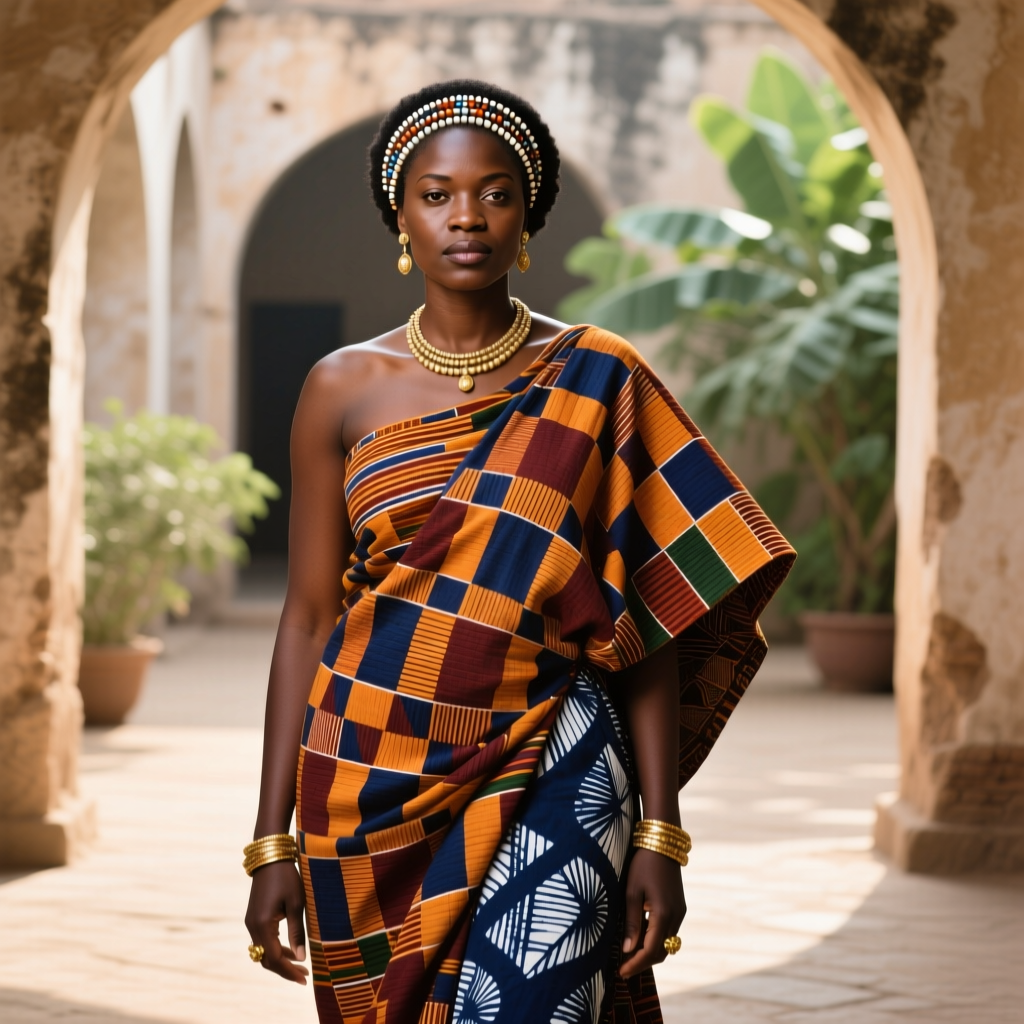
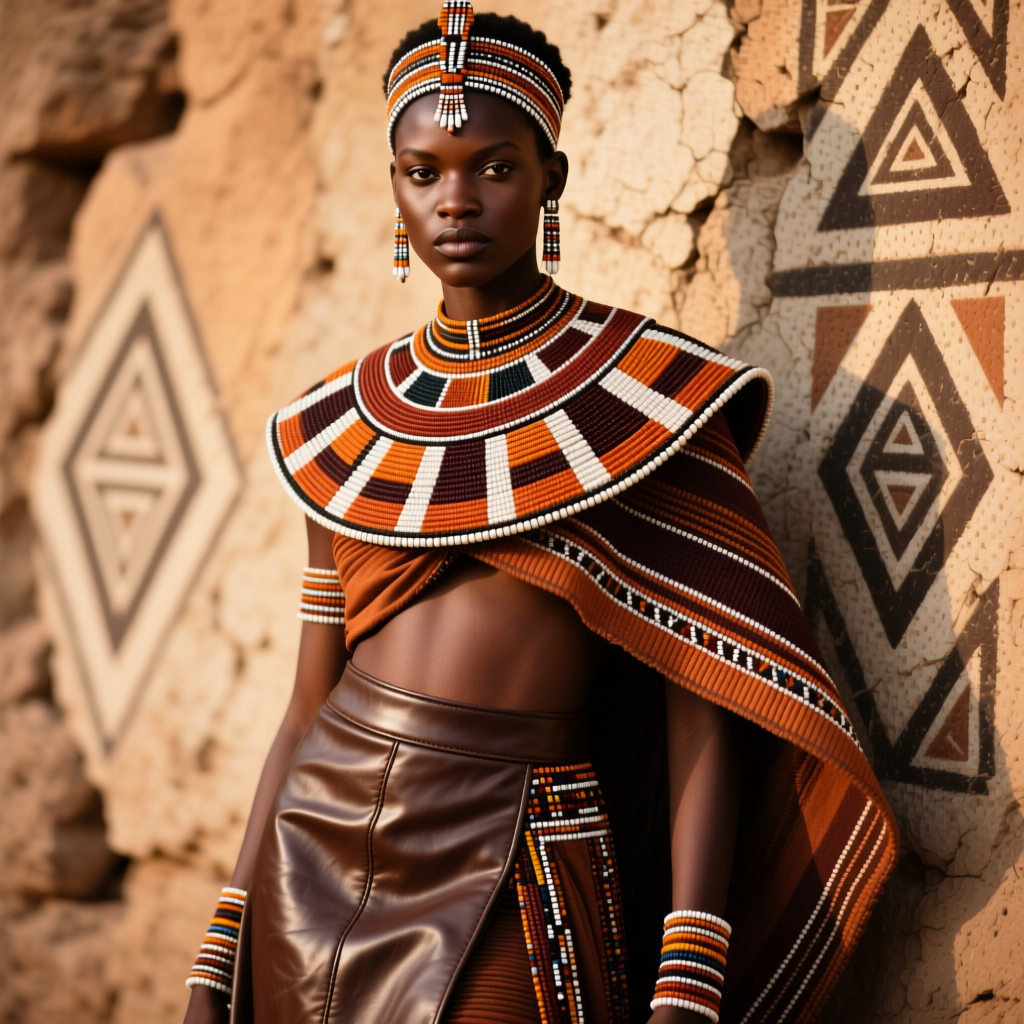
While the specific names of garments vary by ethnic group, several unifying characteristics and materials define traditional South African clothing. The most prominent of these is beadwork. Beadwork is not merely decorative; it is a coded language. The colors, patterns, and shapes of beaded collars, belts, and aprons convey specific messages regarding the wearer's lineage, marital status, and emotional state. For instance, in Zulu culture, the combination of black and white beads might signify marriage, while vibrant pinks and yellows could indicate youth and vitality.
Another defining characteristic is the use of specialized textiles that have been culturally adopted over centuries. A prime example is Shweshwe, a stiff, indigo-dyed cotton fabric featuring intricate geometric patterns. Originally imported from Europe, it was embraced by the Sotho and Xhosa people and is now considered a quintessential South African textile. Our Shweshwe fabric guide details how this material transitioned from a foreign import to a cornerstone of traditional and modern South African fashion.
Animal skins and leather remain highly significant, particularly in ceremonial contexts. Cowhide is often used to create shields, skirts, and ceremonial cloaks. Additionally, natural elements such as reeds, grass, and animal horns are frequently incorporated into accessories and headwear. The integration of brass and copper, particularly in the form of heavy neck and leg rings, is another striking characteristic, most notably seen in the attire of the Ndebele people. These materials collectively create a visual aesthetic that is bold, textured, and deeply rooted in the African landscape.
Regional Variations: What Different Cultures Wear
Because South Africa is home to numerous distinct ethnic groups, the answer to 'what is traditional South African clothing called' depends entirely on the region and the people. Below is a breakdown of the most prominent cultural groups and the specific names of their traditional garments.
Zulu Traditional Attire
The Zulu people are the largest ethnic group in South Africa, and their traditional attire is globally recognized. The most iconic Zulu garment is the isicholo, a distinctive, flared conical hat traditionally worn by married women. Originally woven from grass and covered with the wearer's hair, modern versions are often made from synthetic fibers and adorned with beads. For a deeper dive into head coverings, our guide on traditional African headwraps explores the significance of headgear across the continent.
Other key Zulu garments include the umutsha (a beaded belt or girdle), the ibhayi (a beaded shawl or cape worn over the shoulders), and the isidwaba (a skirt made from cowhide, traditionally worn by married women). Unmarried women and young girls often wear the isigege, a short beaded apron that leaves the back bare, symbolizing youth and availability.
Xhosa Traditional Attire
Xhosa clothing is renowned for its elegant use of black and white piping, intricate embroidery, and striking silhouettes. The foundational garment for Xhosa women is the umbhaco, a long skirt made from a stiff, white cotton fabric adorned with bold black geometric stripes and embroidery. The umbhaco is often paired with a matching top or shawl. To learn more about the meticulous craftsmanship behind these skirts, visit our page on Xhosa umbhaco traditions.
A standout accessory in Xhosa dress is the ingqosha, a thick, beaded collar that rests heavily on the shoulders and chest. Xhosa women also frequently wear the iqhiya, a traditional headwrap, and carry beaded bags or smoking pipes as cultural markers of respect and maturity.
Basotho (Sotho) Traditional Attire
The Basotho people, primarily located in the Free State province and the neighboring kingdom of Lesotho, are famous for their woven blankets. The most revered of these is the seanamarena, a thick, woolen blanket featuring distinctive geometric patterns, corncob motifs, and bold stripes. The seanamarena is worn draped over the shoulders and secured with a pin or brooch, serving as both a practical defense against the harsh mountain cold and a profound symbol of Basotho identity. Discover the rich history of these textiles in our article on Basotho heritage blankets.
Complementing the blanket is the mokorotlo, a conical straw hat with a knotted top. The shape of the mokorotlo is said to be inspired by Mount Qiloane, and it is so culturally significant that it features prominently on the national flag of Lesotho.
Ndebele Traditional Attire
The Ndebele people are world-renowned for their vibrant, geometric mural art, and this same striking aesthetic is mirrored in their traditional clothing. Married Ndebele women wear the isiphephetu, a stiff, rectangular beaded apron, over a softer under-skirt called the iphephetu. The isiphephetu is heavily decorated with intricate beadwork that maps out the family's history and social standing.
Perhaps the most visually arresting element of Ndebele dress is the dzilla, a series of heavy brass or copper rings worn around the neck, arms, and legs. Historically, these rings were permanently affixed and given to a woman by her husband, symbolizing her faithfulness and his wealth. Today, removable versions are often worn for ceremonial occasions.
Tsonga and Venda Traditional Attire
The Tsonga (Shangaan) people are famous for the xibelani, a voluminous, fringed skirt made from strips of brightly colored fabric or yarn. The xibelani is designed specifically for the traditional Tsonga dance of the same name; when the dancer shakes her hips, the skirt flares out dramatically, creating a mesmerizing visual effect.
Venda traditional attire heavily incorporates animal skins, particularly from the leopard or serval, which are reserved for royalty and spiritual leaders. Venda women also wear the thari, a goat-skin cloak, and distinctive beadwork that features unique color combinations, often favoring turquoise, yellow, and green.
Occasions for Wearing Traditional Garments
Traditional South African clothing is not typically worn as everyday casual wear in modern urban centers, but it remains absolutely vital for specific cultural, spiritual, and social occasions. Understanding when these garments are worn provides crucial context to their enduring relevance.
- Lobola Negotiations and Weddings: The process of lobola (bride price) negotiations is a cornerstone of South African marriage customs. During these meetings, and the subsequent traditional wedding ceremonies, families wear their specific ethnic attire to show respect, pride, and unity. Xhosa brides, for example, will wear a specially crafted umbhaco ensemble, while Zulu brides will don the isicholo and beaded capes.
- Coming-of-Age Ceremonies: Rites of passage are deeply embedded in South African cultures. For young Zulu women, the annual Umhlanga (Reed Dance) is a major event where thousands of maidens wear traditional beadwork and short skirts to celebrate purity and pay respects to the monarch. Similarly, Xhosa initiates wear specific white clay and blanket wrappings during their transition into manhood.
- Ancestral and Spiritual Rituals: When communicating with ancestors or participating in traditional healing ceremonies, specific garments are required to show reverence. Animal skins, particularly cowhide, are often worn by traditional healers (sangomas) to connect with the spiritual realm.
- Heritage Day: Celebrated nationwide, Heritage Day encourages all South Africans to celebrate their cultural roots. It is common to see citizens of all backgrounds donning traditional attire, or modern interpretations of African textile history, to honor the diverse fabric of the nation.
The Cultural Significance of South African Dress
The question of what traditional South African clothing is called is ultimately a question about identity. In a country that has endured the deep fractures of colonialism and apartheid, traditional dress serves as a powerful tool for cultural preservation and reclamation. These garments are a defiant, beautiful assertion of indigenous identity.
Beyond broad cultural identity, the clothing acts as a sophisticated social indicator. In many rural communities, one can determine a person's age group, marital status, and even whether they are in mourning simply by observing the colors, materials, and cut of their clothing. For example, a Zulu woman wearing a red and black beaded skirt is communicating a different life stage than one wearing the black leather isidwaba.
Furthermore, the creation of these garments fosters community and economic empowerment. The meticulous art of beadwork, weaving, and leather tanning is often passed down from generation to generation, primarily among women. This transmission of skills ensures that the visual language of the ancestors is not lost to globalization. When a young woman learns to bead an ingqosha or weave a mokorotlo, she is not just making clothing; she is actively participating in the survival of her heritage.
Frequently Asked Questions
What is the most famous traditional South African garment?
While it is difficult to single out just one, the Basotho seanamarena (heritage blanket) and the Zulu isicholo (flared hat) are arguably the most globally recognized traditional South African garments. Both have transcended their cultural origins to become national symbols of South African heritage, frequently featured in international fashion, art, and media.
What is the traditional Zulu hat called?
The traditional Zulu hat is called the isicholo. It is a wide, flared, conical hat traditionally worn by married Zulu women. Historically, it was woven from grass and the woman's own hair, serving as a sign of respect to her husband's family and the ancestors. Today, it is often made from synthetic materials and heavily decorated for weddings and ceremonies.
Why do the Basotho people wear blankets?
The Basotho people wear blankets, specifically the seanamarena, for both practical and deeply symbolic reasons. Practically, the thick wool provides essential warmth in the high-altitude, mountainous regions of the Free State and Lesotho. Symbolically, the blankets represent status, wealth, and life milestones. Specific patterns are worn for weddings, funerals, or to denote the wearer's rank within the community.
What is Shweshwe fabric and where does it come from?
Shweshwe is a stiff, indigo-dyed cotton fabric characterized by intricate, repeating geometric patterns. Although it is now considered a traditional South African textile, its origins are complex. The indigo cloth was originally imported from Europe and Asia, but it was enthusiastically adopted by the Sotho and Xhosa people in the 19th century. They integrated it into their traditional dress, and it is now locally manufactured and deeply embedded in South African cultural identity.
Can non-South Africans wear traditional South African clothing?
Cultural appreciation versus cultural appropriation is an important conversation. Generally, South Africans are incredibly hospitable and proud of their heritage; they often welcome visitors who wear traditional attire to participate in local ceremonies, weddings, or Heritage Day celebrations, provided it is done with respect and understanding. However, it is always best to consult with local hosts or cultural guides to ensure the garments are worn correctly and in the appropriate context, avoiding the misuse of sacred or status-specific items.