Traditional Chinese Clothing Female Name: A Complete Guide to Hanfu, Qipao & More
When people search for the traditional Chinese clothing female name, they often discover that there is no single answer. China's sartorial heritage spans thousands of years, encompassing multiple dynasties, ethnic groups, and regional traditions. The most commonly referenced terms include hanfu (汉服), the ancient dress of the Han people; qipao (旗袍), the iconic fitted gown of the early twentieth century; and changshan (长衫), a long robe worn across various historical periods. Each name carries centuries of meaning, reflecting the social status, philosophical beliefs, and artistic sensibilities of the women who wore these garments.
Understanding the proper names for traditional Chinese women's clothing is more than a matter of vocabulary — it is a gateway into one of the world's richest textile traditions. From the flowing silk robes of the Tang Dynasty to the elegantly tailored qipao of Shanghai's golden era, every garment tells a story of craftsmanship, identity, and cultural pride. In this comprehensive guide, we explore the most important names associated with traditional Chinese female clothing, their historical origins, defining characteristics, and the occasions on which they are worn.
Hanfu (汉服): The Ancient Dress of the Han People
The term hanfu literally translates to "Han clothing," referring to the traditional dress of the Han Chinese ethnic group, which constitutes the majority of China's population. Hanfu is arguably the oldest and most historically significant answer to the question of traditional Chinese clothing female names, with origins tracing back over three thousand years to the earliest dynastic periods.
Origins and Historical Evolution
Hanfu emerged during the Huangdi and Yao-Shun periods of legendary Chinese history and became codified during the Zhou Dynasty (circa 1046–256 BCE). The garment system was deeply influenced by Confucian philosophy, which prescribed specific dress codes as expressions of social order, moral virtue, and ritual propriety. Throughout the Qin, Han, Tang, Song, and Ming dynasties, hanfu evolved in silhouette, fabric, and decoration while maintaining its core structural principles.
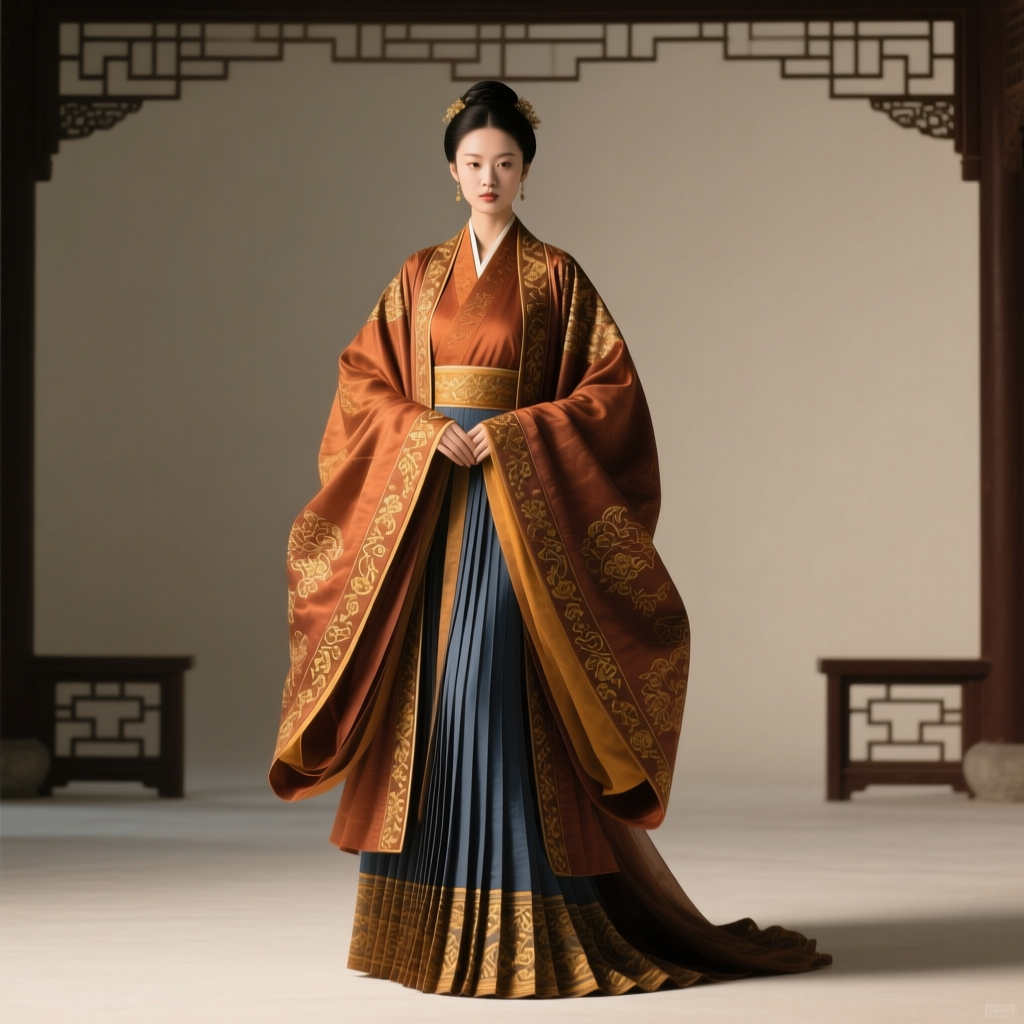
The defining characteristic of hanfu is its jiaoling youren (交领右衽) — a cross-collar that wraps from the left side over the right. This right-over-left closure was considered civilized and proper, while the reverse was associated with barbarians and the deceased. Other hallmark features include wide sleeves, a sash or belt at the waist rather than buttons, and flowing, layered construction that drapes gracefully over the body.
Key Components of Female Hanfu
A complete female hanfu ensemble typically consists of several layered pieces. The ruqun (襦裙) is perhaps the most recognizable female hanfu style, comprising a short upper garment (ru) paired with a long, flowing skirt (qun). The ruqun can be further classified into:
- Qixiong ruqun (齐胸襦裙) — A chest-high skirt tied above the bust, popular during the Tang Dynasty and beloved for its elegant, elongating silhouette.
- Gao-yao ruqun (高腰襦裙) — A high-waisted skirt variation that sits at the natural waistline.
- Aoqun (袄裙) — A lined or padded jacket worn with a skirt, common during the Ming Dynasty and suited for cooler weather.
Another essential garment is the shenyi (深衣), a one-piece robe that connects the upper and lower portions into a single garment. The shenyi was considered a formal and scholarly garment, embodying the Confucian ideal of unity between heaven and earth. For formal court occasions, women of high rank wore the zhiju (直裾), a straight-hem robe with elaborate embroidery and sumptuous fabrics.
Accessories played a vital role in completing the hanfu look. Hair ornaments such as jade pins, gold buyao (步摇) dangling hairpieces, and silk ribbons were essential. A pibo (披帛), or silk shawl draped over the arms, added movement and grace, particularly during the Tang Dynasty when fashion reached extraordinary heights of creativity and luxury. If you are interested in exploring how accessories complement traditional garments, our guide to traditional Chinese accessories offers a deeper look into these exquisite adornments.
Qipao (旗袍): The Iconic Fitted Gown
When most people in the Western world picture traditional Chinese women's clothing, the image that comes to mind is almost certainly the qipao, also widely known by its Cantonese-derived name, the cheongsam (长衫). This form-fitting, high-collared dress with side slits and ornamental frog buttons (called pankou, 盘扣) has become the most internationally recognized symbol of Chinese fashion.
From Manchu Robes to Modern Elegance
The qipao's origins lie in the changpao (长袍), the long robes worn by Manchu women during the Qing Dynasty (1644–1912). These early garments were loose, straight-cut, and modest, designed to conceal the figure rather than accentuate it. The Manchu "Banner" system (qí, 旗) gave the garment its name — qipao literally means "banner robe."
The transformation from the voluminous Manchu robe to the sleek, body-conscious qipao we recognize today occurred primarily in Shanghai during the 1920s and 1930s. Tailors and fashion-forward women began experimenting with Western cutting techniques, introducing darts, set-in sleeves, and a narrowed silhouette that celebrated the natural curves of the body. The result was a garment that bridged Eastern and Western aesthetics — distinctly Chinese in its collar, closures, and decorative motifs, yet modern in its fit and construction.
Defining Characteristics of the Qipao
The classic qipao features several unmistakable design elements:
- Mandarin collar (立领, lìlǐng) — A high, standing collar that frames the face elegantly.
- Pankou closures (盘扣) — Handcrafted fabric knot buttons, often elaborately designed in floral or geometric patterns.
- Side slits (开叉, kāichà) — Slits on one or both sides of the skirt portion, allowing ease of movement and adding a subtle element of allure.
- Asymmetric front opening — The garment typically opens from the center front diagonally toward the right side, secured by pankou along the entire opening.
- Brocade and silk fabrics — Traditional qipao are made from luxurious materials such as silk brocade, satin, and velvet, often featuring embroidered motifs of phoenixes, peonies, plum blossoms, or dragons.
The qipao's versatility is remarkable. It can be made with short or long sleeves, sleeveless for summer, or fully lined for winter wear. Length ranges from above the knee to floor-length for formal occasions. Today, the qipao remains a popular choice for weddings, formal banquets, diplomatic events, and cultural celebrations. For a broader look at how the qipao compares to other cultural formalwear, explore our guide to Asian formal traditions.
Mamianqun (马面裙): The Horse-Face Skirt
One of the most remarkable garments in the traditional Chinese clothing female name lexicon is the mamianqun (马面裙), or "horse-face skirt." Despite its somewhat unusual English translation, the mamianqun is one of the most beautiful and ingeniously constructed skirts in global fashion history, and it has experienced a dramatic revival in contemporary wardrobes.
Construction and Design
The mamianqun is a wrap-style pleated skirt characterized by its unique construction: two overlapping panels of fabric that create a flat, unpleated section (the "horse face") at the front and back, with finely pleated sections on the sides. This design allows for extraordinary freedom of movement while maintaining a structured, dignified appearance. The flat panels were often heavily decorated with embroidery, woven patterns, or appliquéd motifs, making them the visual centerpiece of the garment.
Historically popular during the Ming and Qing dynasties, the mamianqun was worn by women across social classes, from imperial consorts to merchants' wives. The skirt's generous use of fabric — often four to six meters — was a display of wealth and status. Red mamianqun were considered especially auspicious and were standard attire for weddings and New Year celebrations.
Modern Revival
In recent years, the mamianqun has become one of the most popular items in the modern hanfu revival movement. Contemporary designers have paired mamianqun with modern blouses, knitwear, and even Western-style tops, creating a fusion aesthetic that honors tradition while embracing modernity. The skirt's flattering A-line silhouette and dramatic pleating make it a versatile piece that transitions beautifully from casual to formal settings. Our hanfu revival movement guide explores how garments like the mamianqun are being reimagined for today's fashion landscape.
Regional Variations and Ethnic Minority Dress
China's vast geography and diverse population of fifty-six officially recognized ethnic groups mean that the traditional Chinese clothing female name extends far beyond Han-centric garments. Each region and ethnic community has developed distinctive clothing traditions shaped by local climate, available materials, cultural beliefs, and historical influences.
Miao (Hmong) Silver-Adorned Festive Dress
The Miao people of southwestern China are renowned for their extraordinarily elaborate festival clothing. Miao women's formal attire features heavily embroidered jackets and pleated skirts adorned with indigo-dyed batik patterns. The most striking element is the massive silver jewelry — elaborate headdresses, neck rings, bracelets, and chest plates — that can weigh over ten kilograms. Each piece of silver jewelry is handcrafted and carries symbolic meaning related to protection, prosperity, and ancestral connection.
Tibetan Chuba (藏袍)
The chuba is the traditional robe of Tibetan women, designed for the extreme cold of the high plateau. Made from thick wool or sheepskin, the chuba is a long, wrap-style robe secured with a sash and often featuring vivid striped aprons called pangden (邦典) worn by married women. The colorful horizontal stripes of the pangden are not merely decorative — they indicate marital status and regional origin.
Dai and Zhuang Textile Traditions
In the tropical southern provinces of Yunnan and Guangxi, ethnic Dai and Zhuang women wear lighter garments suited to warm climates. Dai women traditionally wear fitted, short jackets paired with long, narrow sarong-style skirts in vivid jewel tones. Zhuang women are celebrated for their zhuang brocade (壮锦), one of China's four famous brocades, which features bold geometric patterns woven on traditional looms. For more on how climate and geography influence traditional dress, visit our textile traditions by region resource.
Uyghur and Central Asian Influences
In China's northwestern Xinjiang region, Uyghur women's traditional clothing reflects Central Asian influences. The atlas (艾德莱斯) silk dress, made from vibrantly ikat-dyed silk in patterns of yellow, red, green, and blue, is the most iconic Uyghur garment. Women pair these flowing dresses with embroidered doppa caps and elaborate braided hairstyles adorned with coins and beads.
Cultural Significance and the Modern Revival
The names we use for traditional Chinese women's clothing are far more than labels — they are vessels of cultural memory, philosophical thought, and collective identity. Throughout Chinese history, clothing has been understood as an external manifestation of internal virtue. The Confucian concept of li (礼), often translated as ritual propriety, placed enormous importance on dressing appropriately for one's social role, the occasion, and the season.
Clothing as Cultural Identity
During periods of foreign rule and cultural upheaval, traditional clothing became a powerful symbol of resistance and cultural preservation. The Qing Dynasty's imposition of Manchu dress codes on Han Chinese men (though not women) created a lasting cultural trauma that still resonates in discussions about Chinese sartorial identity. The modern hanfu revival movement, which began gaining momentum in the early 2000s, represents a grassroots effort by young Chinese people to reconnect with pre-Qing Han cultural heritage through the act of wearing historically informed clothing.
This revival has sparked important conversations about authenticity, appropriation, and the evolution of tradition. Practitioners debate the accuracy of modern reproductions, the appropriateness of mixing dynasty-specific styles, and the relationship between historical accuracy and contemporary aesthetics. These discussions reflect a broader global trend of cultural communities reclaiming and reinterpreting traditional dress for modern contexts. Our cultural heritage clothing page examines these themes across different world traditions.
Occasions for Wearing Traditional Chinese Clothing
Today, traditional Chinese women's clothing is worn on a variety of occasions:
- Weddings — Red qipao or hanfu are standard attire for Chinese brides, with red symbolizing luck, joy, and prosperity. Many brides change outfits multiple times during wedding banquets.
- Lunar New Year — Families often wear new traditional clothing, particularly in red and gold, to welcome the new year with auspicious energy.
- Coming-of-age ceremonies — The jili (笄礼), or hairpinning ceremony, is a traditional rite of passage for young women that involves dressing in formal hanfu.
- Cultural festivals — Events such as the Mid-Autumn Festival, Dragon Boat Festival, and Qixi Festival (Chinese Valentine's Day) are popular occasions for wearing traditional garments.
- Daily wear — A growing number of hanfu enthusiasts wear traditional clothing as everyday attire, blending historical garments with modern accessories and lifestyles.
The Global Influence of Chinese Dress
The qipao, in particular, has had a profound influence on global fashion. Western designers from the early twentieth century onward have drawn inspiration from its clean lines, exotic closures, and figure-flattering silhouette. Hollywood's golden era featured the qipao prominently, and it continues to appear on international runways, red carpets, and in popular media. However, this global popularity has also raised important questions about cultural respect versus superficial exoticism — a tension that underscores the importance of understanding the proper names, histories, and meanings behind these garments.
Frequently Asked Questions
What is the most common traditional Chinese clothing female name?
The two most widely recognized names are hanfu (汉服), which refers to the ancient traditional dress of the Han Chinese people dating back thousands of years, and qipao (旗袍), also known as the cheongsam, which is the fitted gown that became iconic in the early twentieth century. Hanfu is the broader and older category, while the qipao is a specific garment with Manchu origins that evolved into its modern form in Shanghai. Both names are correct answers depending on which historical period and style you are referring to.
What is the difference between hanfu and qipao?
Hanfu and qipao differ fundamentally in construction, history, and cultural context. Hanfu is characterized by its cross-collar wrapping closure, wide sleeves, flowing silhouette, and waist sash — it is a garment system with roots in ancient Chinese civilization spanning multiple dynasties. The qipao, by contrast, is a single-piece fitted dress with a Mandarin collar, frog button closures, and side slits. It originated from Manchu banner robes of the Qing Dynasty and was modernized in 1920s–1930s Shanghai with Western tailoring techniques. Hanfu emphasizes drape and movement, while the qipao celebrates the body's natural contours.
Is it appropriate for non-Chinese people to wear traditional Chinese clothing?
Generally, wearing traditional Chinese clothing as a non-Chinese person is welcomed and appreciated when done with genuine respect, cultural awareness, and appropriate context. Attending a Chinese cultural festival, wedding, or ceremony in traditional attire is typically seen as a sign of respect and cultural engagement. The key is to avoid treating the garments as costumes or caricatures, to learn the proper names and significance of what you are wearing, and to purchase from authentic sources rather than cheap imitations. Many Chinese cultural communities actively encourage cross-cultural appreciation of their sartorial heritage.
What does the color red signify in traditional Chinese women's clothing?
Red is the most auspicious color in Chinese culture, symbolizing good fortune, joy, vitality, and protection against evil spirits. In traditional women's clothing, red is predominantly associated with weddings, Lunar New Year celebrations, and other major life milestones. A bride's red qipao or red hanfu represents blessings for a happy marriage and prosperous future. However, red is not universally appropriate — it is generally avoided at funerals and periods of mourning, where white or black are the customary colors. Understanding color symbolism is essential to wearing traditional Chinese clothing appropriately, a topic we explore further in our color symbolism in cultural dress guide.
Where can I buy authentic traditional Chinese clothing?
Authentic traditional Chinese clothing can be purchased from several sources depending on your needs and budget. For hanfu, specialized online retailers and ateliers offer historically informed reproductions in a range of price points, from affordable cotton everyday sets to hand-embroidered silk formal ensembles. For qipao, custom tailoring is considered the gold standard — many cities with significant Chinese communities have tailors who specialize in bespoke qipao construction. When shopping, look for sellers who use proper terminology, provide information about their garments' historical basis, and use quality natural fabrics such as silk, linen, and cotton. Our guide to buying authentic traditional garments provides detailed tips for navigating this growing market with confidence.
Whether you are drawn to the flowing elegance of hanfu, the sculpted sophistication of the qipao, or the intricate artistry of ethnic minority dress, understanding the proper traditional Chinese clothing female name for each garment deepens your appreciation of a textile heritage that spans millennia. These names — hanfu, qipao, ruqun, mamianqun, chuba, atlas — are more than words. They are threads connecting us to the women who wove, stitched, wore, and preserved these garments across centuries of triumph, transformation, and enduring beauty.