What Is the Traditional Mexican Dress? A Complete Cultural Guide
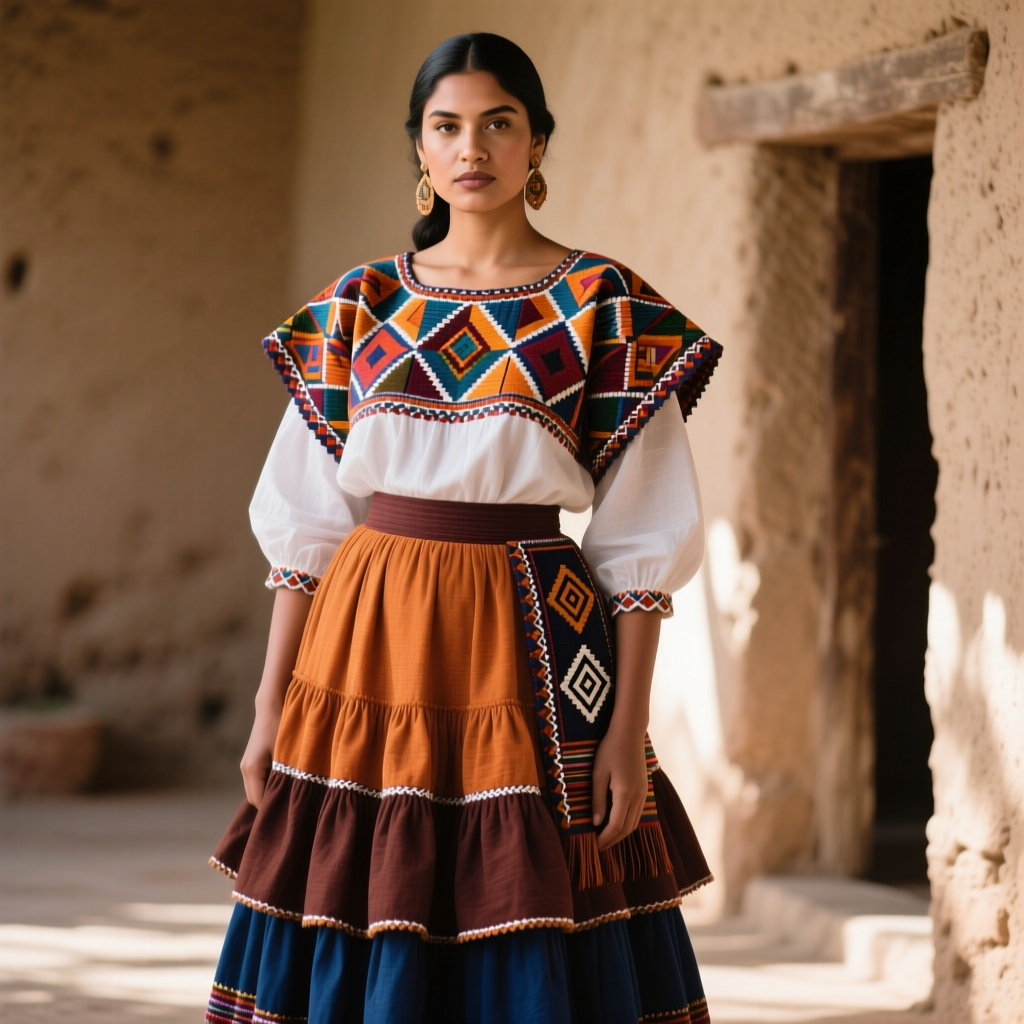
The traditional Mexican dress is far more than a collection of colorful fabrics and intricate embroidery. It is a living tapestry of history, identity, and artistry that stretches back thousands of years, weaving together the threads of pre-Columbian civilizations, colonial influences, and modern cultural pride. From the flowing huipiles of the Yucatán Peninsula to the boldly embroidered blouses of Puebla, every stitch tells a story of resilience, community, and belonging.
Unlike many national costumes around the world that have faded into museum displays or ceremonial afterthoughts, traditional Mexican clothing remains vibrantly alive. Walk through the markets of Oaxaca, attend a festival in Chiapas, or observe a quinceañera in Mexico City, and you will witness garments that carry centuries of meaning on the shoulders of those who wear them today. Understanding the traditional Mexican dress is an invitation to explore one of the most culturally rich wardrobes on the planet.
In this comprehensive guide, we will explore the origins, defining characteristics, regional variations, and enduring cultural significance of Mexico's traditional garments — offering a deeper appreciation for a sartorial heritage that continues to inspire designers, historians, and fashion enthusiasts worldwide. For a broader exploration of global garment traditions, you can also browse our complete collection of cultural garment guides.
The Origins and Historical Roots of the Traditional Mexican Dress
The story of traditional Mexican clothing begins long before the arrival of European colonizers. The indigenous peoples of Mesoamerica — including the Aztecs (Mexica), Maya, Zapotec, Mixtec, and Otomí — developed sophisticated textile traditions that formed the foundation of what we now recognize as the traditional Mexican dress. These civilizations cultivated cotton, harvested fibers from the maguey plant (known as ixtle), and even used rabbit fur and feathers to create garments of remarkable beauty and complexity.
Pre-Columbian Textile Mastery
Before the Spanish conquest, clothing in Mesoamerica was deeply tied to social status, religious belief, and community identity. The huipil — a loose-fitting tunic made from rectangular panels of woven fabric — was already a staple garment for women across numerous indigenous cultures. Men typically wore a maxtlatl (loincloth) and a tilma or ayate (a cloak tied at the shoulder). The nobility distinguished themselves with elaborate featherwork, jade beadwork, and garments dyed with precious pigments such as cochineal red and indigo blue.
Weaving was considered a sacred art, often associated with goddesses and cosmic creation myths. The backstrap loom, a device that anchors one end of the warp to a fixed point and the other to a belt around the weaver's waist, was the primary tool. This ancient technology is still used by artisans across Mexico today, a testament to its elegance and effectiveness.
Colonial Fusion and Transformation
The Spanish conquest in the early sixteenth century introduced new materials, techniques, and silhouettes that profoundly reshaped indigenous dress. European wool, silk, and linen joined native cotton. The pedal loom allowed for wider and longer bolts of fabric. Christian missionaries influenced modesty standards, leading to longer skirts and covered shoulders in many communities.
Rather than simply replacing indigenous traditions, these colonial influences merged with them, creating a richly hybrid aesthetic. The China Poblana outfit — perhaps the most iconic representation of Mexican national dress — emerged from this fusion. Its name, which translates roughly to "Chinese woman from Puebla," reflects the complex global trade routes of the colonial era, including the Manila Galleon trade that connected Asia, the Americas, and Europe. The resulting garment combined indigenous embroidery techniques with European skirt silhouettes and Asian-inspired decorative motifs, embodying the multicultural soul of Mexico itself.
If you are interested in how other cultures navigated the intersection of tradition and colonial influence, our guide to understanding cultural heritage through clothing offers fascinating parallels.
Key Garments That Define the Traditional Mexican Dress
The traditional Mexican dress is not a single, monolithic outfit. It is a diverse collection of garments, each with its own history, construction method, and cultural meaning. Below are the most important and widely recognized pieces that together form the rich wardrobe of Mexican traditional clothing.
The Huipil
The huipil (pronounced wee-peel, from the Nahuatl word huīpīlli) is arguably the most iconic and enduring garment in Mexican traditional dress. It is a tunic-like top constructed from one, two, or three rectangular panels of fabric, joined together with decorative stitching and featuring openings for the head and arms. Huipiles can be short, ending at the waist, or long enough to serve as a full dress.
What makes the huipil extraordinary is its capacity for storytelling. The embroidered or brocaded motifs woven into its fabric are not merely decorative — they encode information about the wearer's community, marital status, social position, and even cosmological beliefs. A huipil from San Juan Cancuc in Chiapas will look entirely different from one crafted in Tehuantepec, Oaxaca, yet both carry the same fundamental structure that has endured for millennia.
The Quechquémitl
The quechquémitl is a distinctive cape-like garment worn primarily by indigenous women in central Mexico, particularly among the Nahua, Otomí, and Totonac peoples. It is constructed from two rectangular pieces of fabric joined in a way that creates a diamond-shaped opening for the head, with the points falling over the shoulders and chest. Often made of wool or cotton and decorated with intricate brocade or embroidery, the quechquémitl serves as both a practical outer layer for the cool highland climate and a marker of cultural identity.
The Rebozo
The rebozo is a long, flat shawl that is among the most versatile garments in Mexican culture. It can be worn over the shoulders for warmth, wrapped around the head as a covering, used to carry a baby or a bundle of goods, or draped elegantly as a fashion accessory. Rebozos are woven from cotton, wool, silk, or synthetic blends, and the finest examples — particularly those from Santa María del Río in San Luis Potosí — feature extraordinarily delicate fringe work (rapacejo) that can take months to complete by hand.
The rebozo transcends social class in a way that few other garments do. It has been worn by indigenous market vendors, by the revolutionary Adelitas who fought in Mexico's early twentieth-century revolution, and by high-society women attending formal events. For a deeper look at how versatile shawls and wraps function across different cultures, explore our garment encyclopedia.
The China Poblana Outfit
The China Poblana ensemble is widely regarded as Mexico's national dress for women. It consists of a white, embroidered blouse with colorful floral or geometric patterns, paired with a full, ankle-length skirt (faldeo) made from layered fabric in the colors of the Mexican flag — green, white, and red — often adorned with sequins, beads, and ribbon. The outfit is typically accessorized with a rebozo, a beaded handbag, and satin shoes.
While its origins are debated, the China Poblana outfit crystallized as a symbol of Mexican national identity during the nineteenth century, particularly after Mexico's independence. Today, it is most commonly worn during patriotic celebrations, folkloric dance performances, and cultural festivals.
The Charro Suit
When discussing the traditional Mexican dress, one cannot overlook the traje de charro — the ornate suit worn by Mexican horsemen and mariachi musicians. Originating from the clothing of the hacienda cowboys of colonial and post-colonial Mexico, the charro suit features fitted trousers with silver button or embroidery detailing along the seams, a short embroidered jacket, a wide bow tie, and the unmistakable wide-brimmed sombrero. It is a garment that embodies the mestizo identity — blending Spanish equestrian traditions with Mexican craftsmanship and flair.
Regional Variations Across Mexico
Mexico is a country of extraordinary geographic and cultural diversity, and its traditional dress reflects this richness. Each region has developed its own distinctive garments, shaped by local climate, available materials, indigenous heritage, and historical experiences.
Oaxaca: The Land of the Huipil
Oaxaca is often considered the heartland of traditional Mexican textile arts. The state is home to numerous indigenous groups — including the Zapotec, Mixtec, Mazatec, and Chatino — each with its own huipil traditions. The huipiles of the Isthmus of Tehuantepec, worn by the Zapotec women known as Tehuanas, are among the most celebrated in all of Mexico. Made from deep purple or crimson velvet and lavishly embroidered with large, vivid flowers, these garments were famously admired by the artist Frida Kahlo, who adopted Tehuana dress as her personal style and political statement.
In the Mixtec communities of the Oaxacan coast, huipiles are woven on backstrap looms from hand-spun cotton and feature geometric brocade patterns in red, blue, and purple. The village of San Juan Colorado is particularly renowned for its coyuche cotton — a naturally brown variety — which produces huipiles with a warm, earthy palette unlike anything else in the country.
Chiapas: Textiles of the Highlands
The highland communities of Chiapas, particularly those of the Tzotzil and Tzeltal Maya, maintain some of the most vibrant and complex textile traditions in the Americas. The huipiles of San Juan Chamula and Zinacantán are woven with dense brocade patterns depicting flowers, animals, and cosmological symbols. The colors are bold — magenta, turquoise, yellow, and green — and the weaving is so fine that the garments can take several months to complete.
In Chiapas, clothing is not merely traditional; it is a living language. Experienced observers can identify a woman's specific village by the patterns on her huipil, making these garments powerful markers of community belonging in a region where indigenous identity is fiercely protected.
Yucatán: The Huipil Terno
In the Yucatán Peninsula, the traditional women's garment is the huipil terno — a three-piece ensemble consisting of a square-necked huipil (jubón), a long, flowing skirt (fuste), and an overskirt or hip sash. The huipil is typically made from white cotton and features cross-stitch embroidery (xokbil-chuy) in floral motifs around the neckline and hem. The embroidery is so closely associated with Yucatecan identity that it appears on everything from table linens to architectural decorations throughout the region.
The tropical climate of the Yucatán has shaped the garment's design: the loose, lightweight cotton construction allows for comfort in the heat, while the white fabric reflects the intense sun. During the jarana dance, a traditional folk dance of the region, the terno swirls and flares in a display that is both graceful and exuberant.
Central Mexico: Puebla and the Quechquémitl
The central highlands, including the states of Puebla, Hidalgo, and Veracruz, are home to a diverse array of traditional garments. In the Sierra Norte de Puebla, Nahua and Totonac women wear quechquémitls woven from wool or cotton in deep reds, purples, and blues, often featuring zigzag borders that represent mountains and serpents.
Puebla is also the birthplace of the China Poblana outfit, and the state's textile traditions reflect the same spirit of cultural blending that produced that iconic garment. The famous Talavera pottery of Puebla, with its blue-and-white glaze, has even influenced local embroidery patterns, demonstrating how different art forms within a culture can inform and enrich one another.
Northern Mexico: Vaquero and Mestizo Traditions
In the arid northern states — including Chihuahua, Sonora, and Coahuila — traditional dress reflects the ranching and vaquero (cowboy) culture that has defined the region for centuries. Here, the charro suit finds its most natural home, alongside practical garments like leather chaps, wide-brimmed hats, and sturdy boots. Women's traditional dress in the north tends to be less ornate than in the south, with simpler cotton dresses and shawls suited to the rugged, ranching lifestyle. The adelita dress — a high-necked, long-sleeved blouse paired with a full, ruffled skirt — evokes the women soldiers of the Mexican Revolution and remains popular at festivals and patriotic events throughout the northern states.
To understand how climate and geography shape traditional garments around the world, our guide on traditional clothing and climate provides illuminating comparisons.
When and Where Traditional Mexican Dress Is Worn
Traditional Mexican dress occupies a unique space in contemporary life. While most Mexicans wear modern, global-style clothing in their daily routines, traditional garments continue to play vital roles in specific contexts — from the deeply sacred to the joyously celebratory.
Indigenous Daily Life
In many indigenous communities across Mexico, particularly in the states of Oaxaca, Chiapas, Guerrero, and Puebla, traditional dress is still worn as everyday clothing. Women weave huipiles for themselves and their families, maintaining techniques passed down through generations. For these communities, wearing traditional dress is not a costume or a performance — it is an expression of identity, belonging, and continuity with ancestors. The garments are made, worn, repaired, and eventually replaced in a cycle that sustains both the clothing tradition and the social fabric of the community.
Religious and Ceremonial Occasions
Traditional garments hold special significance during religious festivals, saints' feast days, weddings, and other ceremonial events. In many communities, specific huipiles are reserved exclusively for religious celebrations — these "festival huipiles" are often the most elaborate and finely crafted garments a woman owns. During the Day of the Dead (Día de los Muertos), traditional dress takes on additional layers of meaning, connecting the living with the deceased through garments that honor both personal and ancestral memory.
National Celebrations and Folkloric Performance
Mexico's national holidays — particularly Independence Day on September 16 and the anniversary of the Revolution on November 20 — are occasions when traditional dress is worn with great pride. Folkloric ballet companies (ballet folklórico) perform in meticulously researched and crafted regional costumes, showcasing the diversity of Mexican dress traditions to audiences both domestic and international. These performances have played an enormously important role in preserving and popularizing traditional garments, ensuring that younger generations remain connected to their sartorial heritage.
Quinceañeras and Life Milestones
The quinceañera — the celebration of a young woman's fifteenth birthday — is one of the most important life milestones in Mexican culture, and it often features traditional dress elements. While the quinceañera gown itself may follow contemporary fashion trends, the event frequently includes traditional accessories, a rebozo ceremony, and folkloric dances performed in regional costumes. Weddings, baptisms, and graduations may also incorporate traditional garments, particularly in communities with strong indigenous roots.
The Cultural Significance and Modern Relevance of Traditional Mexican Dress
Understanding the traditional Mexican dress requires looking beyond its visual beauty to grasp its deeper cultural, political, and social dimensions. These garments are not relics of a bygone era — they are active participants in ongoing conversations about identity, sovereignty, gender, and artistic expression.
Identity and Resistance
For indigenous communities in Mexico, wearing traditional dress is an act of cultural resistance as much as it is an expression of pride. Centuries of colonialism, marginalization, and pressure to assimilate have failed to extinguish these textile traditions. When a Zapotec woman in Oaxaca chooses to wear her community's huipil to a government office or a university classroom, she is making a powerful statement about who she is and where she comes from. This dimension of traditional dress gives it a political weight that transcends fashion.
Artistic Legacy and Craftsmanship
The techniques required to create traditional Mexican garments represent some of the most sophisticated textile arts in the world. Backstrap weaving, supplementary weft brocade, cross-stitch embroidery, drawn-thread work, and intricate beadwork all demand years of training and extraordinary manual dexterity. The artisans who practice these skills are custodians of knowledge systems that encode mathematics, geometry, botany, and cosmology in every pattern they create.
There is a growing movement — led by Mexican designers, activists, and cultural organizations — to ensure that these artisans receive proper recognition and compensation for their work. Issues of cultural appropriation have become particularly salient as international fashion brands have sometimes copied indigenous Mexican designs without attribution or payment. Advocates argue that the traditional Mexican dress belongs to the communities that created and sustained it, and that any commercial use of these designs should be conducted with consent, collaboration, and fair economic benefit.
Influence on Global Fashion
The traditional Mexican dress has exerted a profound influence on global fashion for over a century. Designers such as Frida Kahlo (who used her own wardrobe as a form of artistic and political expression), Ramón Valdiosera, and more contemporary figures have drawn on Mexico's textile heritage to create work that resonates on international stages. The vivid color palettes, bold embroidery, and flowing silhouettes of traditional Mexican garments continue to inspire collections and trends worldwide.
For those interested in how traditional garments influence contemporary fashion across different cultures, our guides section explores many more examples of this dynamic relationship.
Preservation for Future Generations
Efforts to preserve traditional Mexican dress take many forms: community-based weaving cooperatives, museum exhibitions, government-sponsored cultural programs, and grassroots educational initiatives all play a role. Organizations such as the Textile Museum of Oaxaca (Museo Textil de Oaxaca) and the Fondo Nacional para el Fomento de las Artesanías (FONART) work to document, support, and promote traditional textile arts. These efforts are essential to ensuring that the knowledge, skills, and cultural meanings embedded in these garments survive and thrive in the modern world.
Frequently Asked Questions About the Traditional Mexican Dress
What is the most iconic piece of traditional Mexican clothing?
The huipil is widely considered the most iconic and enduring piece of traditional Mexican clothing. This tunic-like garment has been worn by indigenous women across Mesoamerica for thousands of years and continues to be an essential part of daily and ceremonial dress in many communities. The China Poblana outfit is also highly iconic and is often recognized as Mexico's national dress, particularly in the context of patriotic celebrations and folkloric dance.
Is it appropriate for non-Mexicans to wear traditional Mexican dress?
This is a nuanced question that depends heavily on context. Wearing traditional Mexican garments purchased directly from indigenous artisans, at appropriate occasions, and with genuine respect and understanding of their cultural significance is generally viewed positively. However, wearing these garments as costumes, without understanding their meaning, or purchasing mass-produced imitations that undercut the artisans who create the originals can be disrespectful and harmful. The key principles are respect, context, and supporting the communities that are the custodians of these traditions.
How long does it take to make a traditional Mexican huipil?
The time required to create a huipil varies enormously depending on its complexity, the weaving technique used, and the fineness of the materials. A simple everyday huipil might take two to four weeks to complete on a backstrap loom. A ceremonial huipil with elaborate brocade patterns — such as those from the Tzotzil Maya communities of Chiapas — can take three to six months or more of daily work. The most exceptional pieces, featuring incredibly fine weaving and dense symbolic patterns, may represent a full year or more of an artisan's labor.
What do the colors and patterns on traditional Mexican garments signify?
Colors and patterns on traditional Mexican garments carry meanings that vary by community and region. Common symbolic associations include red for life and blood, blue for the sky and water, green for fertility and the earth, yellow for the sun and corn, and black for death and the underworld. Geometric patterns may represent mountains, serpents, diamonds (symbolizing the universe), or stylized flowers and animals. However, it is important to note that these meanings are not universal — each community has its own symbolic vocabulary, and in many cases, the full meaning of certain patterns is known only to the weavers themselves.
Where can I learn more about or purchase authentic traditional Mexican garments?
Authentic traditional Mexican garments can be purchased directly from artisan cooperatives, at regional markets (tianguis), and through organizations that support traditional crafts such as FONART and various fair-trade textile collectives. Museums such as the Textile Museum of Oaxaca, the National Museum of Popular Cultures in Mexico City, and the Franz Mayer Museum offer outstanding educational resources. When purchasing, it is important to seek out sources that ensure fair compensation for artisans and provide accurate information about the cultural origins of the garments. For more resources on understanding and appreciating traditional garments from around the world, visit our about page to learn about The Garment Atlas's mission to document and celebrate global clothing heritage.