The Meaning & Magic of Traditional African Clothing Colors
The African continent is a vast, vibrant tapestry of diverse cultures, languages, and histories. Among its most striking visual legacies is the use of color in traditional clothing. Far from being mere aesthetic choices, the hues woven, dyed, and beaded into African garments serve as a complex visual language. They communicate social status, spiritual beliefs, historical narratives, and profound philosophical concepts. To understand traditional African clothing colors is to read the very fabric of the continent’s soul.
At The Garment Atlas, we believe that every thread tells a story. In this comprehensive cultural guide, we will explore the origins, characteristics, regional variations, and deep spiritual significance of traditional African clothing colors. Whether you are a textile enthusiast, a historian, or simply someone who appreciates the profound beauty of global heritage, this journey into the chromatic world of African garments will transform the way you see color.
The Origins of Color in African Textiles
Long before the introduction of synthetic aniline dyes via global trade routes, African artisans mastered the alchemy of the natural world to produce breathtaking hues. The origins of color in African textiles are deeply rooted in the local environment, relying on botanical, mineral, and animal sources. The process of extracting these colors was often a sacred ritual, guarded by guilds and passed down through generations.
Indigo, one of the most revered dyes in African history, was extracted from the leaves of the Indigofera tinctoria plant. In regions like Yorubaland (modern-day Nigeria), the art of indigo dyeing was elevated to a master craft. Dyers utilized massive clay pots and complex fermentation processes to achieve deep, resonant blues. The mastery of indigo dyeing techniques not only produced stunning textiles but also established powerful economic networks, as indigo-dyed cloth was frequently used as currency and a marker of immense wealth.
Reds and browns were often derived from camwood (Baphia nitida), a tree native to the forests of West and Central Africa. The heartwood was ground into a fine powder and mixed with oils or water to create vibrant red dyes and body paints. Similarly, the rich ochres and earthy browns found in Sahelian textiles were sourced from iron-rich soils and clays.
Perhaps the most unique origin of color is found in the Bogolanfini, or mud cloth, of the Bamana people in Mali. Rather than using traditional plant dyes, artisans use fermented mud rich in iron oxide. The mud reacts chemically with tannic acid derived from the leaves of the n’gallama tree, creating permanent, striking black and brown patterns on the cotton cloth. This synthesis of earth, flora, and human ingenuity represents the foundational philosophy of African textile arts: a harmonious collaboration with nature.
Core Characteristics & Symbolism of Primary Hues
In many African cultures, color is not a passive backdrop but an active participant in the social and spiritual life of the community. Each hue carries specific symbolic weight, often tied to proverbs, deities, and natural phenomena. While meanings can shift across different ethnic groups, several core associations remain remarkably consistent across the continent.
Red: Blood, Sacrifice, and Vitality
Red is arguably the most potent color in the African chromatic palette. It represents the blood of life, the sacrifices made by ancestors, and the raw, untamed energy of the natural world. In many West African traditions, red is associated with political tension, warfare, and the protective spirits that guard the community. It is a color of transition, often worn during rites of passage where an individual is moving from one state of being to another. Yet, it is also a color of profound love and maternal protection, reflecting the dual nature of life and death.
Blue: The Spirit, the Sky, and Harmony
Derived from the precious indigo plant, blue is universally associated with the sky, water, and the spiritual realm. It represents harmony, love, and tranquility. In the context of West African textile traditions, deep indigo blue is often linked to the divine feminine and the protective embrace of the water spirits. Wearing blue is believed to attract peace, ward off malevolent forces, and align the wearer with the cooling, calming energies of the universe.
Yellow & Gold: Wealth, Royalty, and Fertility
Yellow and its metallic counterpart, gold, are the colors of the sun, the yolk of the egg, and the precious metals that historically fueled trans-Saharan trade. These hues symbolize wealth, royalty, fertility, and high social status. In the Ashanti Empire, the exclusive right to wear certain intricate gold and yellow Kente cloth patterns was reserved strictly for the Asantehene (the King) and high-ranking nobility. Gold represents the enduring, incorruptible nature of the soul and the life-giving warmth of the sun that ensures a bountiful harvest.
Green: Earth, Growth, and Healing
Green is the color of the earth, vegetation, and the continuous cycle of renewal. It symbolizes growth, spiritual healing, and prosperity. In agrarian societies, green is deeply tied to the success of the harvest and the fertility of the land. It is often worn during festivals that celebrate the planting or reaping of crops, serving as a visual prayer for abundance and ecological balance.
White: Purity, the Ancestors, and the Spirit World
White, often achieved through the use of kaolin clay, chalk, or undyed cotton, is the color of the spirit world. It represents purity, truth, and the ancestral realm. In many cultures, white is the color of mourning, not out of sorrow, but to honor the transition of the deceased into the realm of the ancestors. It is also heavily used in initiation rituals, where initiates are painted or dressed in white to signify their blank slate and spiritual rebirth.
Black: Maturity, Night, and Spiritual Potency
Black is the color of the night sky, the fertile soil, and profound spiritual maturity. It represents the unknown, the mysteries of the universe, and the accumulated wisdom of the elders. In the context of Adinkra cloth, black is traditionally reserved for mourning and funerals of the elderly, celebrating a life fully lived and a successful transition to ancestorhood. It is a color of deep respect and grounding energy.
Regional Variations in Color Palettes
Africa’s immense geographical and cultural diversity has given rise to distinct regional color palettes, each shaped by local environments, historical trade routes, and unique philosophical frameworks.
West Africa: The Vibrant Geometry of Kente and Adinkra
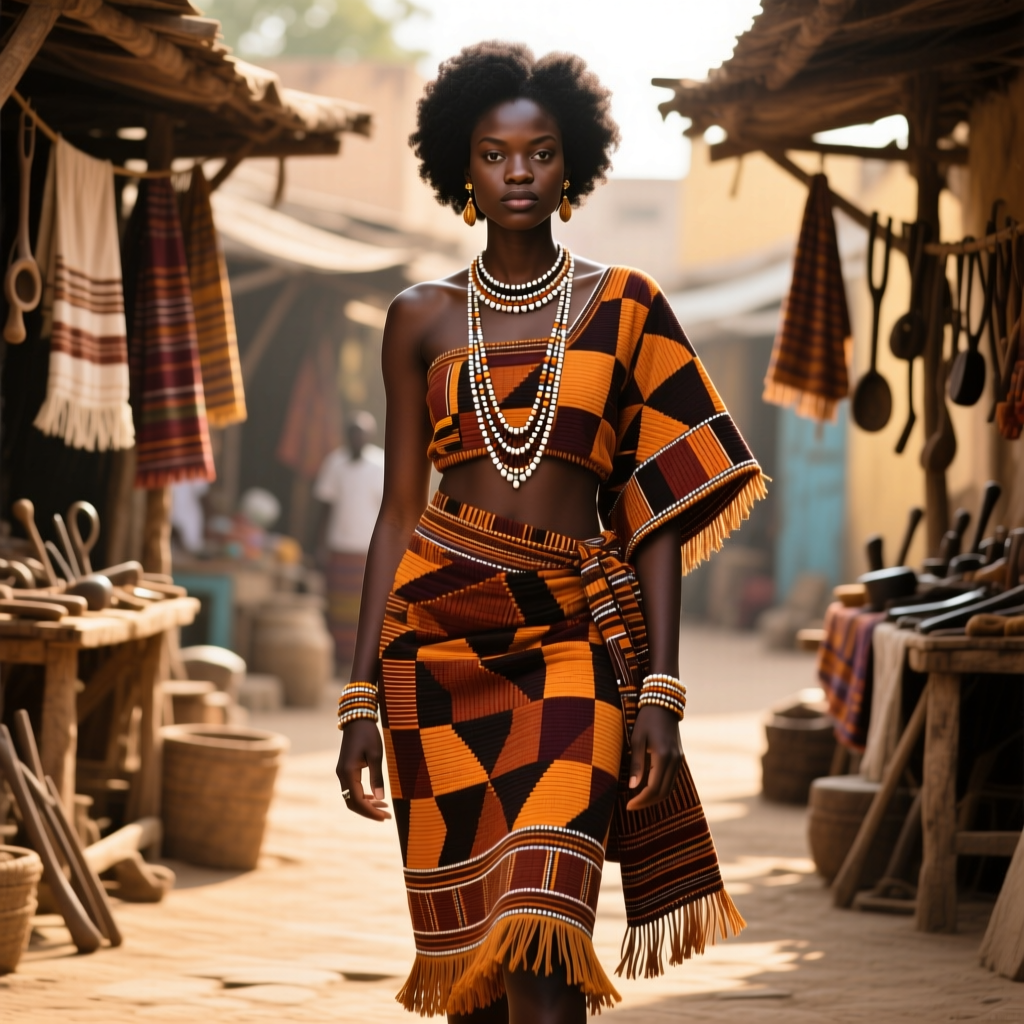
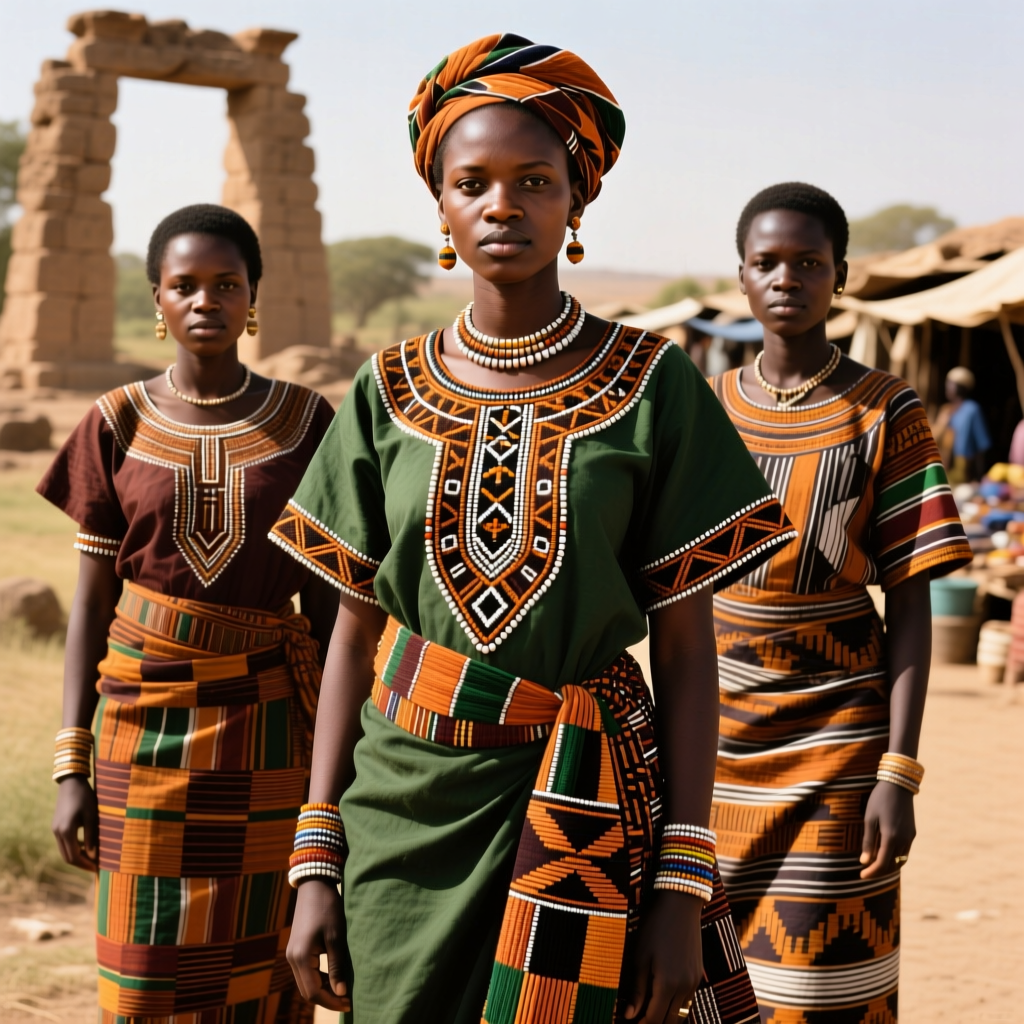
West Africa is world-renowned for its complex, multi-colored textiles. The Akan people of Ghana and Ivory Coast created Kente, a strip-woven cloth where every color and geometric pattern holds a specific proverbial meaning. A Kente cloth dominated by green and yellow might be worn to celebrate a bountiful harvest or a royal coronation, while one featuring deep blues and blacks might be worn for solemn state occasions. Conversely, the Adinkra tradition utilizes stamped symbols on cloth dyed in deep, somber hues like black, russet, and dark indigo, specifically designed for funerary rites and periods of reflection.
East Africa: The Bold Hues of the Shuka and Kanga
In East Africa, the color palette shifts toward bold, striking contrasts. The Maasai people of Kenya and Tanzania are globally recognized for their traditional Shuka, a thick cotton blanket predominantly dyed in vibrant red, blue, and black. The Kanga, a rectangular cotton cloth worn by women along the Swahili Coast, features a kaleidoscope of bright, multi-colored prints. Kangas are not just garments; they are vehicles for communication, featuring bold colors that draw the eye to the Swahili proverbs printed along the hem.
Southern Africa: Beadwork, Blankets, and Resilience
Southern African color traditions are heavily expressed through beadwork and woven blankets. The Ndebele people of South Africa are famous for translating the bright, primary colors of their geometric house murals onto their traditional blankets and aprons. These vivid reds, yellows, greens, and blues represent cultural resilience and identity. Meanwhile, the Xhosa people utilize intricate beadwork traditions where specific color combinations—such as white and red versus black and white—convey precise messages about a person’s age, marital status, and social responsibilities.
The Sahel & North Africa: The Indigo Veils of the Tuareg
In the harsh, sun-baked expanses of the Sahara, the Tuareg people have cultivated a profound relationship with a single, powerful color: indigo. The Tuareg men wear the tagelmust, a long indigo-dyed veil and turban. Because water is incredibly scarce in the desert, the indigo dye is pounded into the cotton rather than washed in. Over time, the dye rubs off onto the skin, giving the men a bluish tint that has earned them the poetic moniker, the “Blue Men of the Sahara.” Here, the depth of the blue is a direct indicator of wealth, status, and beauty.
Colors for Occasions & Rites of Passage
In traditional African societies, one does not simply choose an outfit based on personal preference; the occasion dictates the color. The lifecycle is marked by specific chromatic transitions that guide the individual and the community through moments of profound change.
Birth and Naming Ceremonies
When a child is born, the colors worn by the mother and the infant are chosen to offer spiritual protection and welcome the new soul. White is frequently used to signify the purity of the newborn and their direct connection to the spirit world from which they have just arrived. In some cultures, subtle accents of red are added to ward off the evil eye and protect the vulnerable infant from malevolent spirits.
Coming of Age and Initiation
Initiation rites mark the transition from childhood to adulthood. During periods of seclusion, initiates are often covered in white clay or dressed in undyed garments to symbolize their detachment from their former lives. Upon emerging, they are adorned in vibrant colors—often bright reds, yellows, and intricate beadwork—to announce their new status as fertile, responsible, and protected members of the adult community.
Marriage and Union
Weddings are celebrations of fertility, wealth, and the joining of lineages. Gold, yellow, and green are highly favored for bridal garments, symbolizing the hope for prosperity, a bountiful harvest of children, and a harmonious home. In many West African weddings, the bride and groom will change outfits multiple times, with each color shift representing a different blessing or proverb bestowed upon the union by the elders.
Mourning and Ancestral Veneration
Funerary colors vary dramatically across the continent, reflecting different philosophies regarding death. In many West African cultures, black and deep brown are worn to express grief and the heaviness of loss. However, if the deceased was an elder who lived a long, full life, the funeral may transition into a celebration, with mourners eventually changing into white or vibrant, patterned royal garments to celebrate the individual’s successful elevation to ancestorhood. In parts of Southern and East Africa, red or white may be the prescribed colors of mourning, representing the bloodline that continues or the purity of the departing spirit.
The Cultural & Spiritual Significance of Color
To view traditional African clothing colors merely as decorative elements is to misunderstand their fundamental purpose. In many African cosmologies, color is a conduit to the divine. It is a vibrational frequency that can attract specific energies, appease deities, and communicate with the unseen world.
The dyers and weavers of traditional textiles are often viewed as spiritual intermediaries. The loom is seen as a bridge between the earthly and the spiritual realms, and the act of crossing the warp and weft is akin to the weaving of human destiny. When a weaver selects a specific color of thread, they are not just making an artistic choice; they are embedding a prayer, a proverb, or a historical record into the very structure of the cloth.
Furthermore, color serves as a powerful tool for social cohesion and identity. In a continent with thousands of distinct ethnic groups and languages, the visual language of color transcends linguistic barriers. A specific combination of beads or a particular shade of indigo can instantly identify a person’ clan, their profession, and their social standing, fostering a deep sense of belonging and mutual understanding within the community. The preservation of these color traditions is, therefore, an act of cultural survival, ensuring that the wisdom of the ancestors continues to be worn, seen, and understood by future generations.
Frequently Asked Questions
What is the most common color in traditional African clothing?
While it is difficult to single out one color across an entire continent, indigo blue and earthy reds/browns are among the most historically prevalent and culturally significant colors. This is largely due to the widespread availability of indigo plants and iron-rich earths, which were mastered by early African dyers. White (from natural clays and undyed cotton) and black (from mud and charcoal) are also foundational to the traditional palette.
Why do the Maasai predominantly wear red?
For the Maasai people of East Africa, red is a deeply sacred and practical color. Culturally, it represents bravery, unity, and the blood of the community. Practically, the vibrant red hue of the traditional Shuka is believed to deter wild animals, such as lions, from approaching the herds and the warriors. It also stands out vividly against the natural, earthy tones of the savanna, allowing herdsmen to easily spot one another across vast distances.
How were traditional African dyes made before synthetic colors?
Before the introduction of synthetic dyes, African artisans relied entirely on their natural environment. Blues were fermented from indigo leaves; reds were ground from camwood bark or extracted from specific sorghum varieties; yellows were derived from turmeric, ochre, or the bark of certain trees; and blacks were created using iron-rich mud, charcoal, or the tannin-rich leaves of local shrubs. The creation of these dyes required immense botanical knowledge and chemical mastery.
Does the meaning of colors change between different African tribes?
Yes, absolutely. While there are broad thematic similarities (such as white often being linked to the spirit world), the specific meanings can vary drastically. For example, while red might symbolize mourning and sorrow in one culture, it might represent joy, fertility, and marital bliss in another. This is why it is crucial to understand the specific ethnic and regional context of a garment before interpreting its color symbolism.
Can anyone wear traditional African colors and patterns?
Wearing traditional African colors and patterns is generally welcomed as a celebration of the continent’s rich heritage, provided it is done with respect and understanding. However, it is important to recognize that certain specific patterns, color combinations, and garments (such as royal Kente patterns or specific initiation beadwork) are reserved for royalty, elders, or individuals who have undergone specific rites of passage. When engaging with these textiles, taking the time to learn the cultural significance behind the colors ensures a respectful and meaningful appreciation of the art form.