Traditional Mexican Clothing Names: A Complete Cultural Guide

Traditional Mexican Clothing Names: A Complete Cultural Guide
Mexican traditional clothing is far more than fabric stitched together — it is a living tapestry of identity, resistance, artistry, and community. Each garment carries a name rooted in centuries of indigenous heritage, colonial influence, and regional pride. From the intricate embroidery of a huipil in Oaxaca to the bold silhouette of a charro suit in Jalisco, the names of these garments tell stories that span generations.
Understanding traditional Mexican clothing names is essential for anyone interested in cultural heritage textiles, fashion history, or the vibrant traditions that continue to shape Mexican identity today. Whether you are a collector, a designer seeking authentic inspiration, or simply someone captivated by the beauty of handmade garments, this guide will walk you through the most important names, their origins, and the cultural contexts that give them meaning.
Mexico's clothing traditions emerged from a complex interplay of pre-Columbian civilizations — including the Aztec, Maya, Zapotec, and Mixtec peoples — and the Spanish colonial era that followed. Indigenous weaving techniques, natural dyes, and symbolic patterns merged with European fabrics, tailoring methods, and decorative elements to create something entirely unique. The result is a wardrobe of garments whose names reflect both worlds, and whose beauty continues to inspire artisans and communities across the country.
The Foundations: Pre-Columbian Garments and Their Names
Long before European contact, the peoples of Mesoamerica had developed sophisticated textile traditions using cotton, agave fibers, and other natural materials. The names of these foundational garments have survived centuries, preserved through oral tradition, codices, and the continued practice of indigenous communities.
Huipil
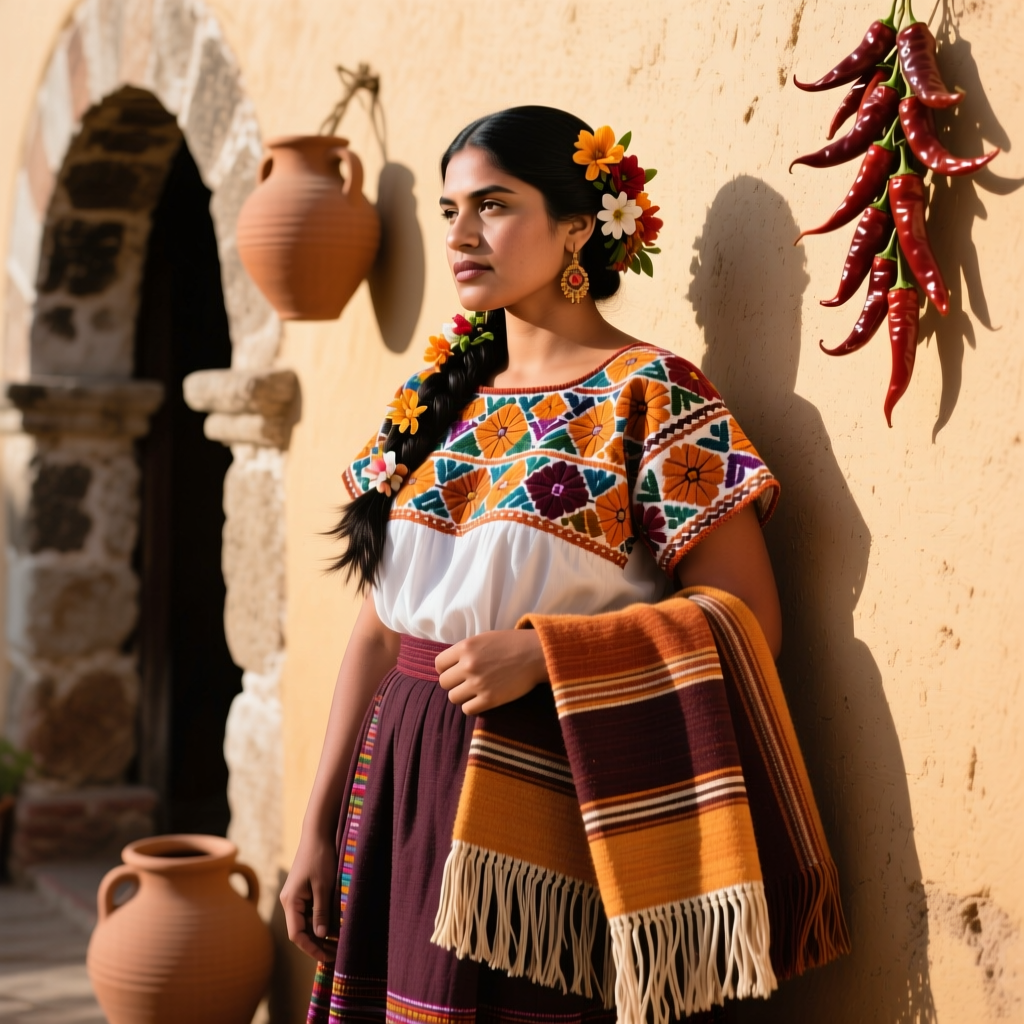
The huipil (pronounced wee-PEEL, from the Nahuatl word huīpīlli) is perhaps the most iconic garment in all of Mexican traditional clothing. It is a loose-fitting tunic, typically made from two or three rectangular panels of fabric joined together with decorative stitching. Huipiles are worn by women across southern and central Mexico, and each community has its own distinctive style, color palette, and embroidery motifs.
In regions like Chiapas, Oaxaca, and the Yucatán Peninsula, the huipil serves as a marker of identity. The patterns woven or embroidered into the fabric can indicate the wearer's village, marital status, and even her role within the community. Some ceremonial huipiles take months to complete by hand on a backstrap loom, making them treasured heirlooms passed down through families. If you are exploring handwoven textiles, the huipil is an essential starting point.
Quechquémitl
The quechquémitl (from Nahuatl quechquēmitl, meaning "neck garment") is a distinctive poncho-like cape worn primarily by women in the central highlands of Mexico, particularly among the Nahua, Otomí, and Totonac peoples. Unlike the simple rectangular huipil, the quechquémitl is constructed from two triangular pieces of fabric that are sewn together to form a diamond shape with an opening for the head.
This garment is often adorned with elaborate brocade weaving or embroidery featuring geometric patterns, animals, and floral motifs. The quechquémitl is especially associated with the Sierra Norte de Puebla region, where it remains an integral part of daily and ceremonial dress. Its construction technique represents one of the most ingenious examples of pre-Columbian textile engineering.
Maxtlatl and Loincloth Traditions
For men in pre-Columbian Mesoamerica, the maxtlatl (from Nahuatl māxtlatl) was the fundamental garment — a loincloth wrapped around the waist and between the legs, secured with a belt or sash. While this garment is no longer worn in everyday life, its influence persists in the wrapping techniques and belt-weaving traditions that survive in contemporary indigenous communities. The maxtlatl was often paired with a tilma or tilmatli, a rectangular cloak tied over one shoulder that could indicate social rank through its fabric quality and decoration.
Colonial and Mestizo Garments: Where Two Worlds Meet
The arrival of Spanish colonizers in the early sixteenth century introduced new fabrics — wool, silk, and linen — along with European tailoring techniques such as fitted sleeves, buttons, and structured bodices. The resulting fusion gave rise to an entirely new category of garments whose names reflect their blended heritage.
Rebozo
The rebozo is a long, flat rectangular shawl that has become one of the most universally recognized symbols of Mexican womanhood. Its origins are debated — some scholars trace it to indigenous carrying cloths, while others point to Spanish mantillas and Asian shawls that arrived via the Manila Galleon trade route. What is certain is that the rebozo evolved into a distinctly Mexican garment, used for warmth, modesty, carrying infants, and even as a tool in traditional midwifery.
The finest rebozos are woven on pedal looms in towns like Santa María del Río in San Luis Potosí and Tenancingo in the State of Mexico. These artisans create pieces with extraordinarily fine rapacejo (fringe) work, where the knotted threads form intricate patterns that can take weeks to complete. The rebozo transcends social class and region, making it one of the most democratic garments in Mexican culture. Learn more about these traditions in our guide to artisan weaving techniques.
China Poblana
The china poblana outfit is one of Mexico's most celebrated ensembles, consisting of a white embroidered blouse, a brightly colored and sequined skirt called a castor (made from beaver felt or similar fabric), and a rebozo. The name translates roughly to "Chinese woman from Puebla," and its origins are wrapped in legend — the most popular tale involves an Asian slave woman named Mirra who was brought to Puebla and whose style of dress inspired local fashion.
Regardless of its contested origins, the china poblana outfit became a national symbol during the nineteenth century, representing the idealized mestiza woman. Today, it is most commonly seen in folkloric dance performances and patriotic celebrations. The sequined skirts, often featuring the colors of the Mexican flag, are among the most visually striking garments in the country's wardrobe.
Charro Suit (Traje de Charro)
The traje de charro is the ornate suit worn by Mexican horsemen, originating from the hacienda culture of the colonial and post-colonial periods. The word charro refers to a skilled horseman or cowboy, and the suit reflects both practical riding needs and a deep sense of pride and showmanship.
A full charro outfit includes fitted trousers with silver button decorations (botonadura) running down the outer seams, a short jacket (chaqueta) often decorated with embroidery or silverwork, a wide-brimmed sombrero, a bow tie or corbata, and polished boots. The suit is closely associated with the state of Jalisco and with mariachi musicians, who adopted the charro style as their performance uniform. The craftsmanship involved in creating an authentic charro suit — from the leatherwork to the silver filigree — represents some of the finest artisan traditions in Mexico.
Sarape and Jorongo
The sarape (also spelled serape) is a rectangular blanket-like shawl or cloak, typically featuring bold stripes and vibrant colors. Originating from the northern regions of Mexico, particularly the state of Coahuila and the city of Saltillo, the sarape was historically worn by men as outerwear during cold weather and long rides on horseback.
The jorongo is a closely related garment — essentially a sarape with a head opening, functioning as a poncho. The distinction between the two terms varies by region, and in some areas, they are used interchangeably. The sarape's bold geometric patterns and vivid color combinations have made it an enduring symbol of Mexican folk art, and antique Saltillo sarapes are highly prized by textile collectors worldwide. Explore more about these regional garments in our Mexican folk textiles collection.
Regional Variations: Clothing Names Across Mexico's Diverse Landscapes
Mexico's vast geography — spanning deserts, mountains, tropical coasts, and highland valleys — has given rise to an extraordinary diversity of regional clothing traditions. Each area has developed its own vocabulary of garment names, construction methods, and decorative styles.
Oaxaca: The Heart of Indigenous Textile Arts
Oaxaca is widely regarded as the epicenter of Mexico's living textile traditions. Here, the huipil reaches its most elaborate expressions. The huipil de gala from the Isthmus of Tehuantepec region is perhaps the most famous — a stunning garment made of deep purple or black velvet, lavishly embroidered with large, vivid floral designs in silk thread. This style was famously embraced by the artist Frida Kahlo, who wore Tehuana dress as a statement of cultural pride and political identity.
In the Mixtec communities of Oaxaca, the huipil de coyotepec features distinctive animal motifs woven directly into the fabric on a backstrap loom. Meanwhile, the Zapotec weavers of Teotitlán del Valle are renowned for their tapetes (rugs) and woven garments using natural dyes including cochineal (a red dye from insects), indigo, and marigold. The vocabulary of Oaxacan textiles is vast, with specific names for weaving techniques, pattern types, and ceremonial garments that vary from village to village.
Yucatán: The Huipil Terno and Maya Heritage
In the Yucatán Peninsula, the traditional women's outfit is called the terno, consisting of three pieces: the huipil (the main tunic), the doublez (a square or rectangular yoke that sits over the shoulders), and the fustán (a long, full skirt worn underneath). The terno is typically white cotton adorned with cross-stitch embroidery in floral patterns, often in bright colors that contrast beautifully against the white fabric.
The terno is worn during the jarana, the traditional dance of the Yucatán, and at celebrations such as vaquerías (cattle festival celebrations). Gold filigree jewelry and a rosario (rosary) necklace complete the ensemble. The Maya linguistic influence is strong in this region, and many textile-related terms derive from Yucatec Maya rather than Nahuatl.
Chiapas: The Brocade Traditions of the Highlands
In the highlands of Chiapas, particularly in the town of San Juan Chamula and the city of San Cristóbal de las Casas, traditional clothing names reflect the deep Tzotzil and Tzeltal Maya heritage of the region. The huipiles of Zinacantán are renowned for their brocade weaving, where patterns are created directly during the weaving process rather than added afterward through embroidery.
Men in Chamula wear distinctive calzón de manta (white cotton trousers) paired with wool chamarras (jackets) that provide warmth in the cool highland climate. The religious syncretism of the region is reflected in the ceremonial garments worn during festivals, where pre-Columbian and Catholic elements merge seamlessly in the clothing and its associated names.
Central Mexico: The Quechquémitl and Beyond
In the states of Puebla, Hidalgo, Veracruz, and the State of Mexico, the quechquémitl remains a vital garment among Nahua, Otomí, and Totonac communities. Each group has its own name variations and decorative vocabulary. In Cuetzalan, Puebla, the Nahua women's quechquémitl features delicate openwork and fringe, while in the Otomí communities of Hidalgo, the same garment type is decorated with bold animal figures in brocade.
The enredo — a wraparound skirt secured with a woven faja (sash or belt) — is another foundational garment in this region. The faja itself is an art form, with specific names for different weaving patterns: labor de pluma (featherwork pattern), labor de grano (grain pattern), and many others that describe the visual effect of the woven design.
Cultural Significance: Why These Names Matter
The names of traditional Mexican garments are not merely labels — they are vessels of cultural memory. Each name encodes information about the garment's origin, function, construction, and the community that created it. When a name is lost, a piece of cultural knowledge disappears with it.
Language and Identity
Many traditional clothing names derive from Nahuatl, the language of the Aztec Empire and one of the most widely spoken indigenous languages in Mexico today. Words like huipil, quechquémitl, and maxtlatl connect contemporary wearers to a linguistic heritage that stretches back thousands of years. In communities where indigenous languages such as Zapotec, Mixtec, Tzotzil, and Maya are still spoken daily, the garment vocabulary is even richer, with terms that have no direct translation in Spanish or English.
The preservation of these names is closely tied to broader efforts to maintain indigenous languages and cultural practices. Organizations and cooperatives across Mexico work to document textile terminology, ensuring that the knowledge held by elder weavers is transmitted to younger generations. For those interested in preserving textile heritage, understanding the linguistic dimension of these garments is a crucial first step.
Ceremonial and Spiritual Dimensions
Many traditional garments have specific ceremonial functions, and their names often reflect this sacred role. A huipil de boda (wedding huipil) is distinct from an everyday huipil in its materials, colors, and motifs. In some communities, particular garments are reserved for specific religious festivals, and wearing them outside of that context would be considered inappropriate or even disrespectful.
The symbolism woven into these garments — and reflected in their names — often relates to cosmological beliefs. Patterns representing the four cardinal directions, the sacred ceiba tree, the plumed serpent, or the cycle of agricultural seasons are common across multiple regions. The garment becomes a wearable map of the community's worldview.
Economic and Social Dimensions
Traditional garment names also carry economic significance. In markets and cooperatives across Mexico, the specific name of a garment communicates its quality, origin, and the labor involved in its creation. A huipil de telar de cintura (backstrap loom huipil) commands a different price and respect than a machine-made imitation. Understanding these names helps consumers make ethical purchasing decisions and supports the artisans who keep these traditions alive.
The rise of cultural appropriation concerns has also made the accurate naming and attribution of these garments more important than ever. When designers, retailers, or collectors use the correct names and acknowledge the communities of origin, they contribute to a more respectful and equitable fashion ecosystem. Our guide to ethical textile collecting explores these considerations in greater depth.
Contemporary Relevance
Today, traditional Mexican clothing names are finding new audiences through social media, cultural tourism, and a growing global appreciation for artisan craftsmanship. Young Mexican designers are incorporating traditional garments and their names into contemporary fashion, creating a dialogue between heritage and modernity. Museums and cultural institutions are investing in exhibitions that educate visitors about the significance of these names and the communities behind them.
The continued use of these names in everyday life — in markets, in homes, in ceremonies — is the strongest form of cultural preservation. Every time a woman in Oaxaca asks for a huipil de gala, or a grandmother in Yucatán teaches her granddaughter to embroider the doublez of a terno, the living tradition is renewed.
Frequently Asked Questions
What is the difference between a huipil and a rebozo?
A huipil is a tunic-like garment worn as the primary upper-body clothing by women, constructed from rectangular panels joined together. A rebozo is a long, flat shawl or wrap that is draped over the shoulders or head and serves multiple purposes, including warmth, modesty, and carrying children or goods. While the huipil is a structured garment that is put on like a top or dress, the rebozo is an accessory that can be styled in countless ways. Both are fundamental to Mexican traditional dress, but they serve entirely different functions in the wardrobe.
Are sarapes and ponchos the same thing?
Not exactly. A sarape (or serape) is a rectangular blanket-like garment without a head opening, typically draped over the shoulders or wrapped around the body. A jorongo is a sarape that has been modified with a head opening, functioning as a poncho. The term "poncho" itself is more commonly associated with South American traditions, particularly from Chile and Argentina. In Mexico, the distinction between sarape and jorongo is important, and the terms are not always interchangeable depending on the region.
What does the embroidery on a huipil represent?
The embroidery and woven patterns on a huipil carry deep symbolic meaning that varies by community. Common motifs include flowers (representing fertility and beauty), animals (often connected to spiritual beliefs or local fauna), geometric patterns (representing the cosmos, cardinal directions, or natural cycles), and stylized human figures. In many indigenous communities, the specific combination of colors and patterns identifies the wearer's village, making the huipil a form of visual communication. The motifs are often passed down through generations, with each weaver adding her own subtle variations while maintaining the community's recognizable style.
Where can I learn more about authentic traditional Mexican garments?
The best way to learn about authentic traditional Mexican garments is to visit the communities where they are made. Towns like Teotitlán del Valle in Oaxaca, San Juan Chamula in Chiapas, and Tenancingo in the State of Mexico welcome respectful visitors and offer opportunities to observe weaving and embroidery firsthand. Museums such as the Museo Nacional de Antropología in Mexico City and the Museo Textil de Oaxaca house exceptional collections with detailed documentation. Additionally, supporting artisan cooperatives and organizations dedicated to traditional textile arts helps sustain these living traditions for future generations.
How can I respectfully purchase traditional Mexican clothing?
Respectful purchasing begins with understanding what you are buying and from whom. Seek out direct relationships with artisans or reputable cooperatives that ensure fair compensation. Learn the correct names for the garments you are purchasing, and ask about the community of origin, the materials used, and the techniques involved. Avoid mass-produced imitations that copy traditional designs without benefiting the communities that created them. Be willing to pay prices that reflect the extraordinary skill and time involved in handmade textiles — a hand-woven huipil may represent weeks or months of labor. When you share your garment with others, always credit the community and artisan by name, and use the proper terminology to describe it.