The Ultimate Guide to Traditional Mexican Clothing Items
Mexico is a country where history is not merely recorded in books; it is woven into the very fabric of its people. Traditional Mexican clothing items represent a vibrant, living tapestry that tells the story of a nation shaped by the convergence of ancient Mesoamerican civilizations and European colonial influences. From the intricate, hand-embroidered tunics of indigenous villages to the elegant, silver-adorned equestrian suits of the highlands, Mexican garments are a profound expression of identity, geography, and cosmology.
For centuries, textiles in Mexico have served as far more than simple protection from the elements. They are markers of social status, indicators of marital availability, and sacred offerings to the gods. Today, the preservation of these garments is a testament to the resilience of indigenous communities and the enduring beauty of Mexican craftsmanship. In this comprehensive guide, we will explore the origins, characteristics, and cultural significance of traditional Mexican clothing items, offering a deep dive into the sartorial heritage that continues to captivate the world. For a broader look at ancient weaving practices, explore our archive on Mesoamerican textiles.
The Origins & Evolution of Mexican Garments
The story of Mexican clothing begins long before the arrival of European explorers. In the pre-Columbian era, indigenous peoples such as the Maya, Zapotec, Mixtec, and Aztec developed highly sophisticated textile traditions. Because the climate in many parts of Mesoamerica was warm, clothing was often minimal but deeply symbolic. Women typically wore a wrap-around skirt (enredo) and a sleeveless tunic, while men wore a loincloth (maxtlatl) and a cape (tilmatli). The fibers used were primarily native cotton and ixtle, a tough thread derived from the agave plant. These fibers were spun using a malacate (drop spindle) and woven on a backstrap loom, a device that allowed the weaver to become physically connected to the tension of the warp threads.
The arrival of the Spanish in the colonial era introduced a seismic shift in Mexican sartorial history. The Europeans brought new materials, including sheep’s wool, silk, and the pedal loom, which allowed for wider and longer bolts of fabric. They also introduced new tailoring techniques, such as cutting and sewing fabric into structured shapes, contrasting with the indigenous tradition of weaving garments to their exact final dimensions without cutting. Furthermore, the Spanish imposed modesty laws that required indigenous populations to cover their bodies more fully, leading to the evolution of garments like the huipil and the rebozo.
Over centuries, a beautiful synthesis occurred. Indigenous artisans adopted European materials and motifs, blending them with their own ancestral symbols and techniques. The result was a uniquely Mexican aesthetic—a mestizo blend of flora & fauna, Catholic iconography, and ancient cosmic geometry. This evolution laid the groundwork for the diverse regional styles that define traditional Mexican clothing today.
Iconic Traditional Mexican Clothing Items
To understand the breadth of Mexican fashion heritage, one must examine the specific garments that have become emblematic of the nation. Each item carries its own history, functionality, and artistic merit.
The Huipil
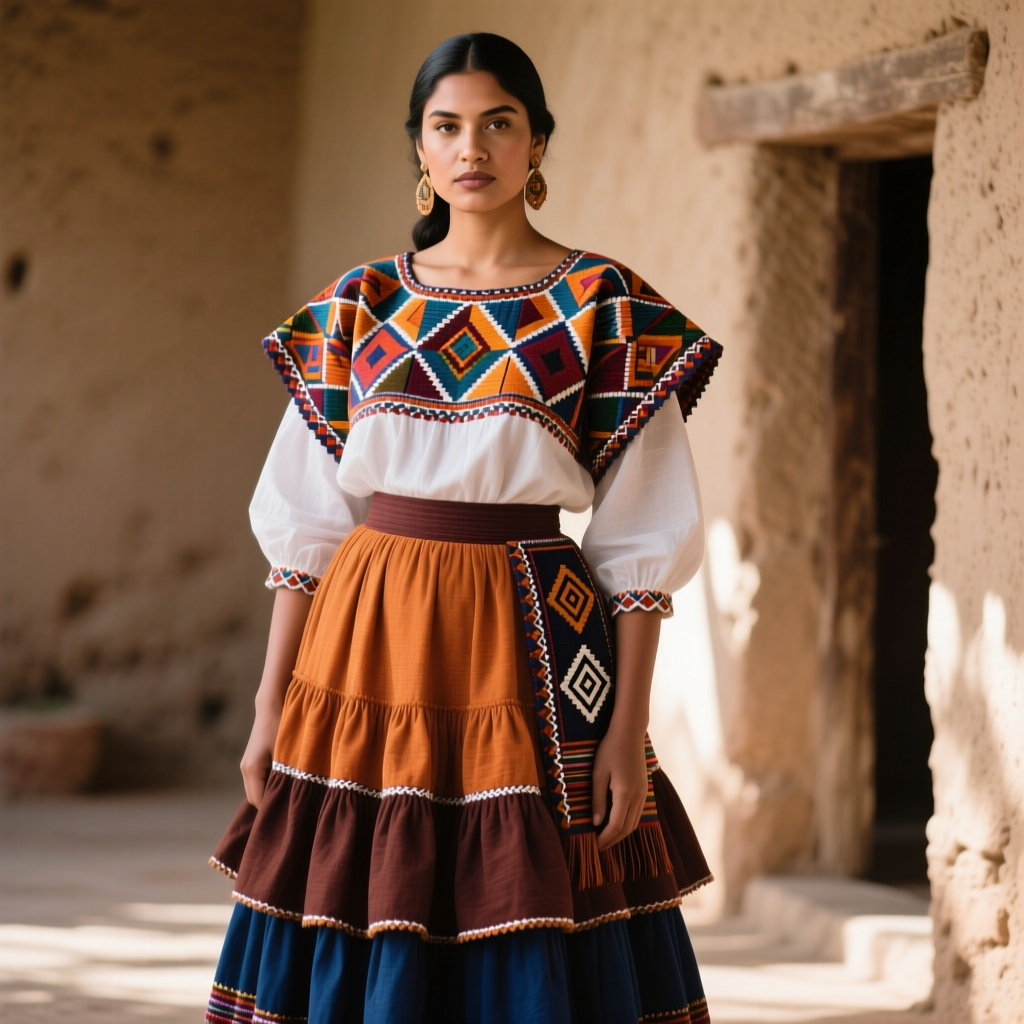
The huipil is perhaps the most iconic and widespread traditional Mexican clothing item for women. Essentially a loose-fitting tunic, the huipil is typically constructed from one, two, or three rectangular panels of hand-woven fabric joined together with intricate embroidery or randa (a type of decorative stitching). The neckline is often a simple slit or a drawstring opening. What makes the huipil extraordinary is its role as a visual language. The motifs woven or embroidered into the fabric—such as diamonds representing the cosmos, toads symbolizing the earth and rain, or double-headed eagles denoting duality—can identify the wearer’s specific village, marital status, and even her role within the community. To learn more about the construction and symbolism of this garment, visit our huipil garment profile.
The Rebozo
The rebozo is a long, flat garment, akin to a shawl or scarf, that is an indispensable part of a Mexican woman’s wardrobe. Historically, the rebozo has been a tool of immense versatility. It is used to provide warmth, to cover the head in church, to carry heavy market goods, and, most famously, to cradle and carry infants. The finest rebozos are made using the reservado (ikat) technique, where the threads are tie-dyed before they are woven, creating complex, blurred geometric patterns. The ends of the rebozo feature a rapacejo, an elaborately hand-knotted fringe that can take an artisan weeks to complete. The rebozo is so deeply embedded in the culture that it is often passed down through generations as a family heirloom. Discover the intricate knotting techniques in our rebozo history guide.
The Quechquémitl
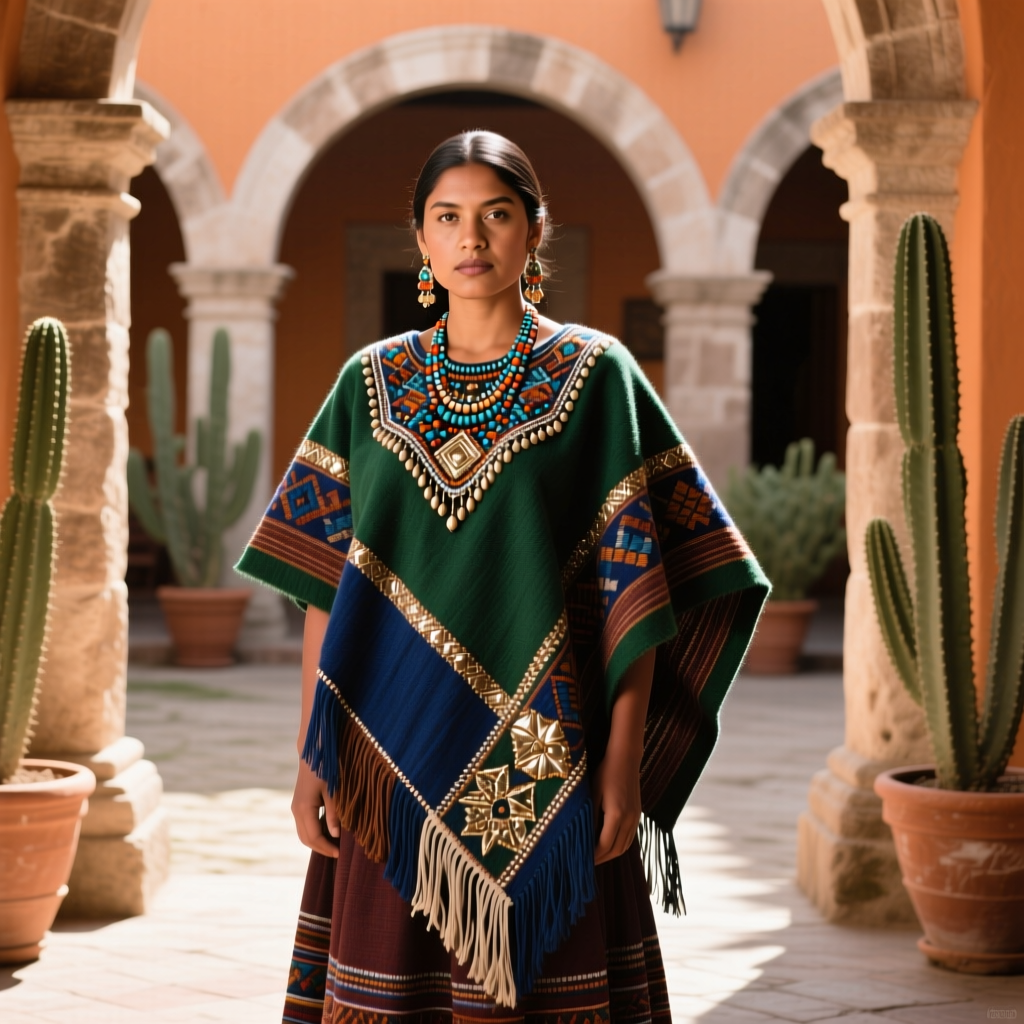
Primarily worn in the cooler, mountainous regions of central Mexico, the quechquémitl is a poncho-like garment that serves as a shoulder cape. Unlike the simple rectangular weave of a standard poncho, the quechquémitl is constructed from two rectangular pieces of fabric woven and joined in a way that creates a diamond or triangular shape when draped over the shoulders. It is heavily decorated with brocade, embroidery, and fringes, often featuring vibrant colors and motifs drawn from local mythology. It is a staple of winter wear for indigenous women in states like Puebla, Veracruz, and San Luis Potosí.
The Guayabera & The Charro Suit
When discussing traditional Mexican clothing items for men, two distinct garments stand out, representing vastly different lifestyles and climates. The guayabera is a lightweight, linen or cotton shirt characterized by its vertical pleats (alforzas), patch pockets, and side slits. Originating in the tropical regions, it is designed to provide elegance while allowing the body to breathe in intense heat. It remains standard formal and semi-formal attire in coastal and southern states.
In stark contrast is the traje de charro, the suit of the Mexican horseman. Originating in the highlands of Jalisco, the charro suit is a masterpiece of tailoring and adornment. It consists of tight-fitting trousers, a short cropped jacket, a wide-brimmed sombrero, and a bow tie. The suit is heavily embellished with silver or gold botonería (buttons) and intricate suede or silk embroidery. Originally worn by wealthy landowners and skilled equestrians, the charro suit is now the official attire of mariachi bands and a symbol of national pride.
Huaraches & The Sombrero
No traditional outfit is complete without its accessories. Huaraches are traditional Mexican sandals made from woven leather straps. Originally designed by indigenous groups for durability and breathability while traversing rugged terrain, huaraches have evolved into various styles, from simple woven flats to elaborate, thick-soled shoes. The sombrero, meanwhile, is the ultimate symbol of Mexican sun protection. While the massive, wide-brimmed sombreros seen in folkloric dances are largely ceremonial, everyday sombreros are crafted from woven palm fronds or felt, designed to shield the face, neck, and shoulders from the intense sun.
Regional Variations Across Mexico
Mexico’s diverse topography and multitude of indigenous groups have given rise to striking regional variations in traditional dress. The clothing worn in the arid north differs vastly from that of the humid south.
Oaxaca: The Textile Capital
Oaxaca is globally renowned for its textile heritage, particularly the weaving traditions of the Zapotec & Mixtec peoples. The region is famous for its use of natural dyes, most notably cochineal, an insect that produces a brilliant, colorfast crimson red, and indigo for deep blues. The Tehuana traje, worn by women in the Isthmus of Tehuantepec, is one of the most recognizable regional outfits. It features a heavily embroidered velvet bodice and a matching skirt, often adorned with intricate floral patterns and a elaborate lace headdress called a resplandor.
Chiapas: Highland Wool & Ancient Maya Roots
In the cool, misty highlands of Chiapas, the Tzotzil and Tzeltal Maya communities create garments suited for the colder climate. Women in towns like San Juan Chamula wear thick, hand-spun wool skirts and heavy, dark shawls pinned at the chest. The embroidery here often features small, tight geometric patterns in bright colors that contrast with the dark wool. The region is also known for its amber jewelry, which is often incorporated into the overall adornment of the wearer.
Yucatán: Tropical Elegance
The Yucatán Peninsula, home to the Maya of the lowlands, requires clothing suited for intense heat and humidity. The traditional terno is a three-piece ensemble consisting of a square-necked bodice (hipil), a fitted waistpiece, and a long, flowing skirt. Unlike the heavy brocades of the highlands, the Yucatecan terno is made of crisp, white cotton and features delicate, cross-stitch embroidery (punto de cruz) in pastel colors, often depicting local flora. The outfit is completed with a fila, a rosary-like gold necklace, and a rebozo of fine cotton.
Jalisco: Ribbons & Ruffles
The traditional dress of Jalisco, often seen in Ballet Folklórico performances, is a product of the colonial hacienda culture. The women’s dress features a wide, sweeping skirt adorned with vibrant, contrasting ribbons and ruffles, designed to create spectacular visual effects during the energetic jarabe tapatío (Mexican hat dance). The men accompany them in the aforementioned charro suits, creating a visual pairing that has become synonymous with Mexican national identity on the global stage.
Occasions & Ceremonial Wear
Traditional Mexican clothing items are not relegated to museums; they are actively worn during significant life events, religious festivals, and cultural celebrations. The choice of garment during these occasions is deeply intentional.
During the Día de los Muertos (Day of the Dead), clothing takes on a spiritual dimension. Women often wear their finest, most brightly colored huipiles and rebozos to welcome the spirits of their ancestors, while some participants dress in elaborate, skeletal interpretations of colonial-era aristocratic clothing, known as La Catrina, blending indigenous reverence for death with European sartorial history.
For a Quinceañera, the celebration of a girl’s fifteenth birthday and her transition into womanhood, the dress is the focal point. While modern quinceañeras often wear European-style ballgowns, many incorporate traditional elements, such as a rebozo draped over the shoulders or a dress featuring indigenous embroidery patterns, honoring their heritage during this vital rite of passage.
In traditional weddings, particularly in indigenous communities, the bride and groom wear ceremonial garments that have been woven specifically for the occasion or passed down through families. These garments often feature specific motifs meant to ensure fertility, prosperity, and a long, harmonious union. The weaving of a bridal huipil can take months, representing a profound investment of time, love, and spiritual energy.
The Cultural Significance & Preservation of Mexican Textiles
Traditional Mexican clothing items are vital repositories of cultural memory. In a rapidly globalizing world, the act of weaving, dyeing, and wearing these garments is an act of cultural resistance and preservation. For many indigenous women, the backstrap loom is a sacred space where the history of their ancestors is encoded into the warp & weft of the fabric.
However, the global popularity of Mexican textiles has also brought challenges. The rise of fast fashion has led to instances of cultural appropriation, where multinational corporations copy indigenous designs without permission, credit, or financial compensation to the originating communities. This exploitation threatens the livelihoods of artisan weavers and strips sacred symbols of their meaning.
To support the continuation of these traditions, it is crucial to engage in ethical consumption. Purchasing garments directly from artisan cooperatives, fair-trade organizations, and verified indigenous makers ensures that the economic benefits return to the communities that originated the designs. For more information on how to navigate this complex landscape, read our ethical fashion guide. By valuing the time, skill, and heritage embedded in traditional Mexican clothing, we can help ensure that these magnificent textile traditions continue to thrive for generations to come.
Frequently Asked Questions
What is the most common traditional Mexican garment?
The huipil is arguably the most common and widespread traditional garment in Mexico. Worn by millions of indigenous women across the country, particularly in southern and central states, it serves as both everyday wear and ceremonial dress. Its design, length, and embroidery vary drastically from one village to the next, making it a highly localized expression of identity.
How are traditional Mexican textiles made?
Authentic traditional textiles are typically made using ancient techniques. The fiber is spun by hand using a drop spindle, and the fabric is woven on either a backstrap loom (for narrower, highly detailed pieces like huipiles and rebozos) or a pedal loom (introduced by the Spanish, used for wider yardage and rugs). Many artisans still use natural dyes derived from plants, minerals, and insects, such as cochineal for red, indigo for blue, and marigold for yellow.
What do the colors and patterns in Mexican clothing represent?
Colors and patterns in Mexican clothing are deeply symbolic and often rooted in pre-Columbian cosmology. For example, the diamond motif frequently represents the four cardinal directions and the cycle of the sun. Red often symbolizes blood, life, and the sun, while black can represent the underworld or death. Specific animals, like the double-headed eagle or the jaguar, denote power, duality, and spiritual protection. The exact meaning of these motifs is usually specific to the weaver’s ethnic group and village.
Is it appropriate for non-Mexicans to wear traditional Mexican clothing?
Wearing traditional Mexican clothing can be a beautiful way to appreciate the culture, provided it is done with respect and understanding. It is generally acceptable to wear items like a rebozo, a guayabera, or huaraches, especially if purchased ethically from Mexican artisans. However, wearing highly specific, sacred, or ceremonial indigenous garments (like a bridal huipil or specific ritualistic masks) without understanding their context can be seen as disrespectful. The key is to prioritize cultural appreciation over caricature, and to always support the original creators rather than buying mass-produced knock-offs.
Where can I buy authentic traditional Mexican clothing?
The best way to buy authentic traditional Mexican clothing is directly from the artisans or through verified fair-trade cooperatives that work directly with indigenous communities. If you are traveling in Mexico, visiting local markets (tianguis) and artisan workshops in states like Oaxaca, Chiapas, and Michoacán is highly recommended. Online, look for organizations that transparently list the names of the weavers, the communities they belong to, and the materials used. Avoid mass-market retailers that sell ‘Mexican-style’ clothing, as these rarely benefit the original creators. Explore more heritage brands and artisan networks in our artisan cooperatives directory.