A Comprehensive Guide to Traditional Japanese Clothing: Male and Female Attire
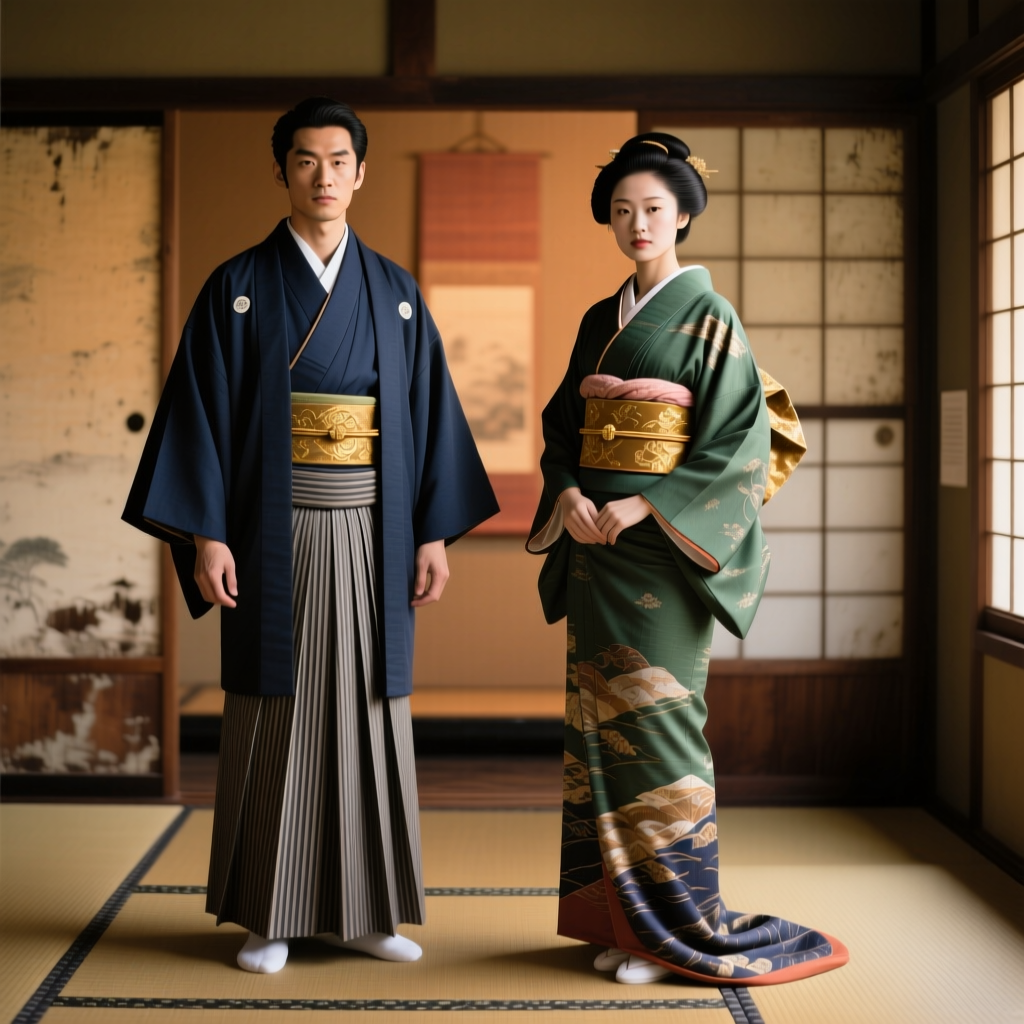
The sartorial heritage of Japan is a masterclass in blending profound symbolism with exquisite craftsmanship. Traditional Japanese clothing is not merely a means of covering the body; it is a canvas that reflects the wearer's age, marital status, social standing, and the changing of the seasons. From the flowing, intricately dyed silk of a woman's furisode to the understated, structured elegance of a man's montsuki hakama, these garments encapsulate centuries of aesthetic philosophy and cultural evolution.
Understanding traditional Japanese clothing requires a deep dive into the intersection of art, history, and social etiquette. Whether observing the vibrant streets of Kyoto during a summer festival or the solemnity of a traditional tea ceremony, the garments worn by men and women tell a vivid story of a culture that reveres harmony, respect, and the transient beauty of nature. This comprehensive guide explores the origins, characteristics, and enduring legacy of traditional Japanese attire for both men and women.
The Origins and Evolution of Japanese Garments
The roots of traditional Japanese clothing trace back to early interactions with the Asian mainland. During the Nara period, Japanese attire was heavily influenced by the clothing of the Chinese Tang dynasty, characterized by separate upper and lower garments and left-over-right closures. However, as Japan began to isolate itself and develop its own distinct cultural identity during the Heian period, a dramatic shift occurred. The aristocracy developed the junihitoe, a highly complex, multi-layered ensemble that emphasized color combinations and the subtle peeking of fabric layers at the cuffs and hems.
The true ancestor of the modern kimono is the kosode, which translates to 'small sleeves.' Originally worn as an undergarment by the nobility and as outerwear by the working classes, the kosode gradually became the primary outer garment for all social classes by the Muromachi period. As the garment evolved, the obi (sash) widened, and the sleeves grew longer and more elaborate, transforming the simple kosode into the highly structured kimono recognized globally.
The Edo period marked a golden age for Japanese textiles and garment design. Strict sumptuary laws dictated what different social classes could wear, leading to a culture of hidden luxury. Commoners, restricted from wearing overtly lavish fabrics or bright colors on the outside, began investing in exquisitely dyed and woven undergarments (jyuban) and intricate linings. This era cemented the foundational rules of kitsuke (the art of dressing) and established the distinct sartorial divides between men and women that persist in formal settings.
Characteristics of Female Traditional Attire
Female traditional Japanese clothing is renowned for its breathtaking artistry, vibrant color palettes, and strict adherence to seasonal motifs. The kimono is a T-shaped, straight-lined robe with attached collars and long, wide sleeves. However, the specific type of kimono a woman wears is dictated by a complex matrix of age, marital status, and the formality of the occasion.
For unmarried women, the furisode is the most formal option. Characterized by its long, swinging sleeves that can reach down to the ankles, the furisode is a canvas for spectacular, all-over patterns. It is traditionally worn during the Coming of Age ceremony and at formal weddings. Conversely, married women wear the tomesode, which features shorter sleeves and patterns restricted to the lower half of the garment. The most formal tomesode is the kurotomesode (black tomesode), adorned with five family crests and reserved for close relatives of the bride and groom.
The houmongi (visiting kimono) is a versatile garment worn by both married and unmarried women for formal gatherings, tea ceremonies, and parties. Its defining feature is a continuous pattern that flows seamlessly across the seams when the garment is laid flat. Beneath the outer kimono, women wear a nagajuban (under-kimono) to protect the delicate silk from perspiration and to provide a crisp, white collar contrast at the neckline.
No female ensemble is complete without the obi, a wide, stiff sash that acts as the focal point of the outfit. The obi is often more expensive than the kimono itself, featuring luxurious brocades and metallic threads. Mastering various obi tying techniques is a vital skill, with elaborate knots like the taiko musubi (drum knot) signifying formality and maturity, while more decorative, floral knots are favored by younger women. To explore the differences in casual summer wear, our guide on the kimono versus yukata provides further insights into lightweight cotton alternatives.
Characteristics of Male Traditional Attire
While female attire is celebrated for its visual exuberance, traditional male Japanese clothing is defined by the aesthetic concept of iki—an understated, refined elegance that values subtlety, texture, and impeccable tailoring over loud patterns. The male silhouette is typically more restrained, aiming for a cylindrical, grounded appearance that conveys dignity and stoicism.
The foundation of formal male attire is the montsuki, a kimono bearing one, three, or five family crests (kamon). The five-crested black montsuki is the absolute pinnacle of male formality, worn exclusively for weddings, highly formal tea ceremonies, and award receptions. Unlike women's kimono, which are tailored to fit the individual by folding excess fabric at the waist, men's kimono are custom-tailored to the exact length of the wearer, falling perfectly to the ankle without any waist folds.
For formal occasions, the kimono is paired with a hakama, a pleated, divided skirt that resembles wide trousers. The hakama historically denoted samurai status and martial prowess, but in contemporary society, it is standard formal wear for grooms, martial arts practitioners, and university graduates. Over the kimono, men often wear a haori, a hip-length jacket that adds a layer of warmth and formality. The haori is secured at the front with a braided silk cord called a haori himo.
Color palettes for men are traditionally subdued, favoring deep navies, charcoal greys, olive greens, and rich browns. However, the true luxury of male attire is often hidden. The inner lining of the haori or the under-kimono may feature bold, hand-painted designs or vibrant silk weaves, allowing the wearer to express personal taste while maintaining a stoic exterior. The appreciation for these subtle textile nuances is a hallmark of the masculine sartorial tradition, deeply connected to historical silk weaving techniques passed down through generations.
Occasions and Dress Codes
The wearing of traditional Japanese clothing is inextricably linked to the calendar, life milestones, and specific cultural rituals. Dress codes are strictly observed, and wearing the wrong garment for an occasion can be seen as a breach of etiquette. Understanding these nuances is essential for anyone looking to appreciate or participate in Japanese cultural events.
Weddings are among the most significant occasions for traditional dress. Brides often wear a shiromuku, a pure white, five-crested kimono symbolizing purity and the willingness to be dyed in the colors of the groom's family. Later in the reception, the bride may change into an uchikake, a heavily padded, brightly colored outer robe worn unbelted over the base kimono. Grooms typically wear a black five-crested montsuki with a striped hakama and a white haori.
Seasonal festivals (matsuri) and summer fireworks displays call for the yukata, a casual, unlined cotton garment worn by both men and women. Unlike formal silk kimono, the yukata is worn directly over basic undergarments and is paired with a simple, narrow obi and wooden clogs. It represents a moment of communal relaxation and seasonal celebration. For a deeper understanding of casual versus formal summer wear, refer to our detailed comparison of the kimono versus yukata.
Other major life events include Shichi-Go-San (Seven-Five-Three), a festival celebrating the growth and well-being of young children, where families dress in miniature, highly formal kimono. The Seijin-shiki (Coming of Age Day) sees twenty-year-old women donning lavish furisode and men wearing either sharp Western suits or formal montsuki hakama, marking their official entry into adulthood and civic responsibility.
Regional Variations and Textile Arts
Japan's diverse geography and climate have given rise to a stunning array of regional textile arts and garment variations. The creation of traditional clothing is a highly localized craft, with specific cities and prefectures guarding centuries-old dyeing and weaving secrets that are recognized as intangible cultural heritage.
In Kyoto, the Nishijin district is world-renowned for Nishijin-ori, a complex brocade weaving technique that produces the heavy, opulent fabrics used for high-end obi and Noh theater costumes. Meanwhile, Kanazawa is famous for Kaga Yuzen, a meticulous resist-dyeing technique that creates hyper-realistic, painterly depictions of nature on silk. These regional specialties highlight the incredible depth of Japanese textile arts and the dedication of the artisans who preserve them.
Moving south to the subtropical islands of Okinawa, the traditional attire shifts dramatically to accommodate the heat and humidity. The Ryusou is the traditional Okinawan garment, characterized by wider sleeves, lighter fabrics like ramie and banana fiber, and a looser fit. Okinawa is also the birthplace of Bingata, a vibrant stencil-dyeing technique utilizing bold reds, yellows, and blues that reflect the island's tropical flora and historical trade relations with Southeast Asia.
In the northernmost island of Hokkaido, the indigenous Ainu people developed entirely distinct clothing traditions. The attus is a traditional robe woven from the inner bark of the elm tree, prized for its durability and water resistance. Ainu garments are heavily decorated with intricate, geometric appliqué and embroidery patterns that serve not only as artistic expression but as spiritual talismans to protect the wearer from malevolent spirits.
The Cultural Significance and Modern Revival
Traditional Japanese clothing carries immense emotional and cultural weight. Kimono are rarely discarded; they are meticulously maintained, unpicked, cleaned, and re-sewn, often passing from mother to daughter as cherished family heirlooms. This practice aligns with the Japanese philosophy of mottainai (a sense of regret concerning waste), ensuring that the labor and artistry embedded in the textiles are honored across generations.
The art of kitsuke (dressing) is a respected discipline in its own right. Because the modern kimono lacks buttons or zippers, relying entirely on precise folding and the tension of the obi, dressing oneself in formal attire requires significant skill. Kitsuke schools operate across the country, teaching not only the physical mechanics of tying an obi but also the posture, grace, and etiquette required when moving in traditional garments.
In contemporary society, there is a vibrant revival of interest in traditional clothing among younger generations. While Western fashion dominates daily life, vintage kimono shops are thriving, and young people are experimenting with mixing traditional garments with modern accessories, such as pairing a vintage haori with denim or wearing lace under-collars. This modern reinterpretation ensures that traditional Japanese clothing remains a living, breathing art form rather than a static museum relic.
Frequently Asked Questions
What is the main difference between a kimono and a yukata?
The primary differences lie in the material, formality, and how they are worn. A kimono is typically made of silk or high-quality synthetic blends, is fully lined, and is worn with multiple undergarments, specialized footwear, and a complex, wide obi. It is reserved for formal or semi-formal occasions. A yukata, on the other hand, is made of lightweight, unlined cotton or hemp. It is worn directly over basic undergarments, secured with a simple, narrow sash, and paired with wooden clogs. The yukata is strictly casual wear, intended for summer festivals, relaxing at hot spring resorts, or lounging at home.
Can men wear colorful traditional Japanese clothing?
While the outer garments for men traditionally favor subdued, dark colors to project dignity and adherence to the aesthetic of iki (understated elegance), men absolutely incorporate color into their ensembles. The vibrancy is often found in the jyuban (under-kimono), the lining of the haori (jacket), and the braided haori himo cords. Additionally, during less formal events or in the context of traditional performing arts like Kabuki, men may wear highly colorful, boldly patterned silk kimono that rival the vibrancy of female attire.
How is traditional Japanese clothing maintained and stored?
Silk kimono require meticulous care to preserve their integrity. After wearing, the garment is unfolded and hung on a specialized wide bamboo hanger to allow moisture and wrinkles to dissipate. Stains are treated by specialist cleaners who use traditional solvents. For long-term storage, kimono are carefully folded along their seam lines and wrapped in acid-free paper or special cloth covers called tatoushi. They are stored in wooden drawers, often alongside natural camphor or desiccants to prevent mold and insect damage, and must be aired out at least twice a year in a dry, shaded environment.
What footwear is worn with traditional Japanese garments?
Footwear is a critical component of the traditional ensemble, elevating the wearer and protecting the hem of the garment from the ground. The most common footwear are zori and geta. Zori are flat, slip-on sandals made of vinyl, leather, or brocade, worn with split-toe socks called tabi. They are the standard for formal kimono wear. Geta are elevated wooden clogs with one or two 'teeth' on the bottom, producing a distinctive clacking sound; they are worn primarily with casual yukata. For a comprehensive look at how these styles compare to other regional footwear, explore our guide to traditional Asian footwear.
Are there specific rules for wearing a kimono?
Yes, the rules of kitsuke are strict and deeply rooted in cultural etiquette. The most fundamental rule is that the left side of the kimono must always be wrapped over the right side. Wrapping right-over-left is strictly reserved for dressing the deceased for burial and is considered highly inauspicious for the living. Additionally, the back of the collar should be pulled down slightly to expose the nape of the neck, which is traditionally considered an elegant and alluring feature. The hem must fall perfectly at the ankle, and the obi must be tied tightly enough to support the posture but comfortably enough to allow for breathing and sitting on tatami mats.