The Complete Guide to Traditional Irish Clothing for Women
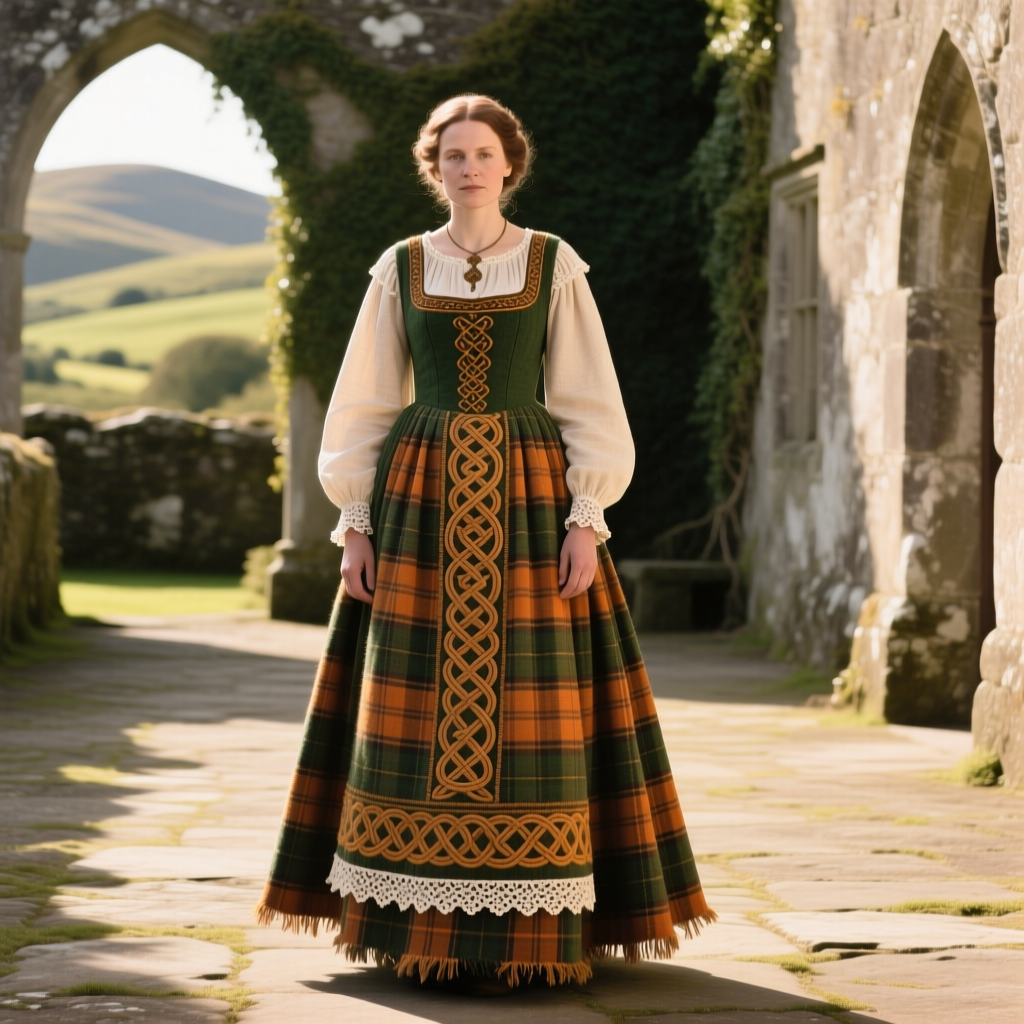
Ireland’s misty landscapes, rugged coastlines, and deep-rooted folklore have long inspired a unique approach to textiles and dress. Traditional Irish clothing for women is not merely a collection of garments; it is a woven tapestry of survival, identity, and artistry. From the ancient, saffron-dyed tunics of the early Celtic period to the intricately cable-knit sweaters of the Aran Islands, the evolution of women’s dress in Ireland reflects a profound connection to the land and a resilient cultural spirit. At The Garment Atlas, we explore how these historical garments were born from necessity, shaped by political upheaval, and ultimately transformed into enduring symbols of Irish heritage.
Unlike the highly codified tartans of neighboring Scotland, traditional Irish dress for women is characterized by its regional diversity, reliance on local materials like wool and flax, and a fascinating history of adaptation. Whether you are a historian, a textile enthusiast, or someone seeking to connect with your Celtic roots, this comprehensive guide will walk you through the origins, defining characteristics, and modern legacy of traditional Irish women's clothing.
The Origins and Evolution of Irish Women's Dress
To understand traditional Irish clothing, one must look back to the early medieval period and the Brehon Laws, the ancient legal system of Gaelic Ireland. During this era, the foundational garments for both men and women were the léine and the brat. The léine was a long, loose-fitting tunic typically made from linen. For women, it often reached the ankles and featured wide, flowing sleeves. The brat was a heavy, fringed woolen cloak worn over the shoulders and fastened at the chest with a brooch or pin. These garments were designed for the damp, unpredictable Irish climate, providing both warmth and mobility.
Color played a significant role in early Irish dress, dictated by both the availability of natural dyes and social status. While the nobility could afford vibrant hues, the common folk relied on the natural colors of undyed wool or utilized local flora. Saffron, derived from the crocus plant or local substitutes like weld, was highly prized and used to dye linen a rich, golden-yellow. Madder root produced deep reds, and woad yielded various shades of blue. The use of these colors was not just aesthetic; it was deeply tied to Celtic symbolism and the natural world.
The trajectory of Irish dress was violently altered during the Tudor conquest of Ireland. In an effort to suppress Gaelic culture and assimilate the Irish population, English authorities enacted sumptuary laws that banned the wearing of native Irish garments, particularly the léine and the brat. The Statutes of Kilkenny and subsequent decrees forced the Irish to adopt English styles. As a result, the ancient Celtic tunics faded from everyday use, replaced by the standard European bodices, petticoats, and gowns of the 16th and 17th centuries.
By the 18th and 19th centuries, the 'traditional' dress of the Irish rural woman had evolved into what historians often term the 'peasant dress.' This consisted of a heavy woolen skirt (often dyed red with madder or local berries), a linen or cotton blouse, a sturdy bodice, and a shawl or cloak. This attire was born of poverty and practicality, yet it laid the groundwork for the regional variations that would come to define Irish textile heritage in the centuries that followed.
Defining Characteristics of Traditional Irish Garments
While the ancient léine may have been outlawed, the spirit of Irish craftsmanship survived through the mastery of local fibers. The defining characteristics of traditional Irish women's clothing are rooted in the materials used, the techniques developed to manipulate them, and the specific garments that emerged from rural necessity.
The Mastery of Irish Linen and Wool
Ireland’s climate is uniquely suited for growing flax and rearing sheep, making linen and wool the undisputed pillars of Irish dress. Irish linen is world-renowned for its durability, breathability, and crisp texture. Historically, women spun flax into yarn and wove it into linen for undergarments, blouses, and summer dresses. Wool, on the other hand, was the ultimate protector against the Atlantic gales. Irish wool was often spun with its natural lanolin intact, creating water-resistant garments that were essential for women working in coastal and agricultural communities.
The Kinsale Cloak
Originating in County Cork, the Kinsale cloak is one of the most distinctive and enduring garments in Irish women's history. This heavy, hooded woolen cloak was designed to withstand the harshest of weather. Typically made from dark blue or black melton wool, the Kinsale cloak featured a distinctive hood that could be pulled up to shield the face from wind and rain. The inside of the hood and the cloak's lining were often crafted from bright, contrasting satin or floral cotton, allowing the wearer to flash a glimpse of color and wealth beneath the somber exterior. It was a garment of immense utility, often passed down from mother to daughter as a prized family heirloom.
The Galway Shawl
In the west of Ireland, the Galway shawl became a staple of women's dress in the 19th and early 20th centuries. Unlike the delicate silk shawls of the European aristocracy, the Galway shawl was a robust, heavy garment woven from wool and cotton. It featured intricate, multi-colored patterns and was finished with a deep, hand-knotted fringe. Worn draped over the shoulders and crossed at the waist, it provided essential warmth and served as a marker of regional identity. The weaving of these shawls was a highly skilled craft, and the surviving examples are treasured pieces of Celtic weaving heritage.
The Aran Sweater
No discussion of traditional Irish clothing is complete without the iconic Aran sweater. Originating from the remote Aran Islands off the coast of County Galway, these sweaters were knitted from unscoured, oil-rich wool (báinín) that retained its natural water-repellent properties. The complex cable patterns—such as the honeycomb, blackberry, and tree of life stitches—were not merely decorative. They were born from a deep understanding of the sea and the land, and over time, they became intertwined with local mythology and family identities. Today, the Aran sweater transcends its humble fishing village origins to stand as a global icon of Irish design.
Regional Variations Across the Emerald Isle
Ireland is a small island, but its rugged topography and historical clan divisions created distinct regional micro-cultures. This diversity is vividly reflected in the traditional clothing worn by women across different provinces.
The Aran Islands and Connemara
In the harsh, windswept environments of the Aran Islands and the Connemara coast, survival dictated fashion. Women here favored heavy, untreated woolens and practical, layered skirts. The iconic red flannel skirt, dyed using local madder or imported cochineal, was a common sight in Connemara. The vibrant red was believed to offer protection against illness and the evil eye, blending practical warmth with ancient superstitions. The knitting traditions here were unparalleled, with women creating the complex Aran sweaters and heavy woolen stockings that protected fishermen and farmers alike.
Donegal and the North
Moving north to County Donegal, the textile tradition shifts heavily toward tweed and intricate weaving. Donegal tweed, characterized by its distinctive flecks of color mimicking the local heather, moss, and granite, was woven in small cottages. Women in the north often wore tailored tweed skirts and heavy woolen shawls. The linen industry also thrived in Ulster, meaning women in this region had greater access to high-quality, finely woven linen for blouses, aprons, and household textiles compared to their western counterparts.
Munster and the South
In the southern province of Munster, the influence of the Kinsale cloak was paramount. Women in Cork and Kerry were known for their dark, heavy cloaks and their skill in lacemaking. The Irish lace industry, which flourished in the 19th century as a famine-relief effort, saw women in the south creating exquisite crochet and needlepoint lace collars and cuffs. These delicate lace accents provided a striking contrast to the heavy woolen skirts and cloaks worn for daily chores, showcasing a duality of rugged resilience and delicate artistry.
Occasions and Everyday Wear
It is crucial to distinguish between the garments worn for everyday survival and those reserved for special occasions. For the vast majority of Irish history, rural women worked the land, tended to livestock, and managed the household. Their daily wear was strictly utilitarian: heavy skirts pinned up to avoid the mud, sturdy leather boots, linen aprons to protect their dresses, and shawls wrapped tightly against the chill.
For Sundays, weddings, and festivals, women would bring out their 'good clothes.' This might include a finely woven linen blouse, a silk or satin-lined cloak, and perhaps a piece of heirloom lace or a gold brooch. In the 19th and early 20th centuries, the influence of the Catholic Church also dictated modesty and decorum, leading to the widespread use of dark colors and high necklines for formal and religious occasions.
The Evolution of the Irish Step Dancing Costume
When many people picture 'traditional' Irish women's clothing today, they envision the elaborate, heavily embroidered solo dresses worn by Irish step dancers. It is important to note that these garments are not ancient. The modern Irish dancing dress is largely a 20th-century invention, heavily influenced by the Gaelic Revival and the formalization of dance competitions by the Gaelic League. Designers incorporated Celtic knots, the Book of Kells motifs, and intricate sequin work to create a costume that projected a romanticized, noble vision of Irish antiquity. While not historically accurate to the daily life of an 18th-century peasant, the step dancing dress has undeniably become a modern cultural tradition in its own right, representing Irish excellence and global diaspora pride.
The Cultural Significance and Modern Revival
Clothing in Ireland has never been just about covering the body; it has been a battlefield for cultural identity. The historical suppression of the léine and the brat was a deliberate attempt to erase Gaelic culture. Consequently, the reclamation of Irish textiles became a powerful act of resistance. During the Gaelic Revival of the late 19th and early 20th centuries, nationalists actively sought to revive native industries, promote the wearing of Irish-made tweeds and linens, and reject English fast fashion. Wearing Irish-made garments became a visible declaration of political and cultural allegiance.
Today, the legacy of traditional Irish women's clothing lives on not in the form of historical reenactment, but through a thriving contemporary fashion industry that honors its roots. Modern Irish designers frequently draw upon the structural elements of the Kinsale cloak, the textural richness of Donegal tweed, and the iconic stitch patterns of the Aran sweater. The global appreciation for slow fashion, sustainability, and artisanal craftsmanship has brought renewed attention to the techniques that Irish women have practiced for centuries.
Whether it is a hand-knit sweater passed down through generations, a vintage Galway shawl framed in a home, or a modern wool coat inspired by the cloaks of Munster, traditional Irish garments continue to tell the story of the women who made them. They are testaments to a culture that weaves beauty, utility, and an unbreakable connection to the land into every single thread. For those looking to explore similar Celtic traditions, our guide to Scottish Highland dress offers a fascinating comparative look at how neighboring cultures developed their own iconic textile identities.
Frequently Asked Questions
What is the most iconic piece of traditional Irish women's clothing?
While the ancient léine holds the most historical weight, the Aran sweater is undoubtedly the most globally recognized icon of Irish clothing. Originating from the Aran Islands, its complex cable-knit patterns and water-resistant wool have made it a timeless staple of both traditional and modern wardrobes worldwide. The Kinsale cloak is a close second, revered for its dramatic silhouette and deep historical roots in the south of Ireland.
Did Irish women historically wear green and saffron?
Yes, but with historical nuances. Saffron (or saffron-colored dyes derived from local plants) was highly prized in early medieval Ireland and was used to dye the linen léine a rich golden-yellow. Green, while associated with Ireland today due to its lush landscape and later political movements, was not the dominant color of ancient daily wear, as green dyes were notoriously difficult to make colorfast before the advent of synthetic dyes. Early Irish women more commonly wore natural wool colors, reds from madder, and blues from woad, reserving bright greens and saffrons for the nobility or special occasions.
What is the difference between traditional Irish and Scottish women's dress?
The primary difference lies in the use of tartan and the kilt. Scottish Highland dress is heavily codified around clan-specific tartans and the structured kilt. In contrast, traditional Irish dress did not utilize clan tartans in the same way. Irish women's dress was defined more by regional textiles (like Donegal tweed or Connemara red flannel) and specific garments like the Kinsale cloak and the Galway shawl. While modern Irish kilts exist (often in solid saffron or green), they are largely a 20th-century nationalist invention rather than an ancient native tradition. You can read more about these distinctions in our Scottish Highland dress guide.
Are the elaborate Irish step dancing dresses historically accurate?
No, the heavily embroidered, sequined solo dresses seen in modern Irish step dancing are not historically accurate representations of everyday traditional Irish clothing. They are a 20th-century creation, developed to reflect a romanticized, Celtic-inspired vision of Irish antiquity for dance competitions. Historically, rural Irish women wore practical, heavy woolen skirts, linen blouses, and shawls designed for agricultural work and harsh weather, not the structured, ornate costumes seen on the competitive stage today.
How can I incorporate traditional Irish garments into a modern wardrobe?
Incorporating Irish heritage into a modern wardrobe is remarkably easy due to the timeless nature of the textiles. An authentic, hand-knit Aran sweater pairs effortlessly with modern denim or tailored trousers. A vintage or newly woven Galway shawl can be used as a dramatic winter wrap or a statement throw. Donegal tweed skirts and jackets offer a sophisticated, textured look that fits perfectly into contemporary 'slow fashion' aesthetics. By investing in high-quality, authentic pieces made from Irish linen or pure wool, you honor the traditional craftsmanship while enjoying garments built to last a lifetime.