Traditional Irish Clothing for Women: A Complete Cultural Guide
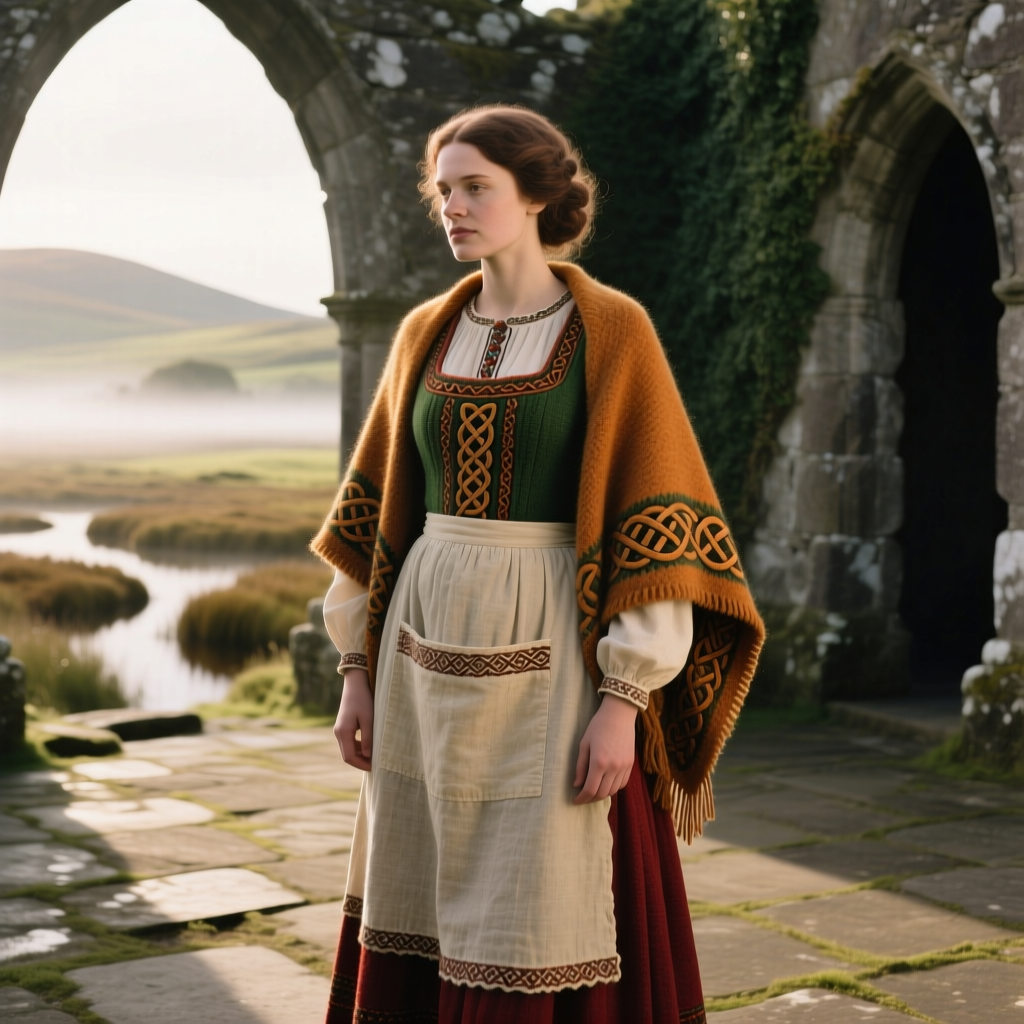
When we think of Irish heritage, images of rolling green hills, ancient stone walls, and the haunting strains of a fiddle often come to mind. Yet one of the most tangible & expressive connections to Ireland's past lies in the garments worn by its people. Traditional Irish clothing for women is a tapestry woven from centuries of history, regional identity, resilience, and artistry. From the flowing léine of early medieval Ireland to the intricately cable-knit Aran sweater recognized around the world, each piece tells a story that transcends mere fashion.
Understanding what Irish women wore across the centuries offers more than a lesson in textiles—it opens a window into the social structures, economic conditions, spiritual beliefs, and creative spirit of a nation. Whether you are tracing your Irish ancestry, researching historical costume design, or simply deepening your appreciation for global sartorial traditions, this comprehensive guide will walk you through every layer of traditional Irish women's clothing. For a broader look at how garments shape cultural identity, explore our complete collection of cultural heritage clothing guides.
Origins & Historical Evolution of Traditional Irish Women's Clothing
The story of traditional Irish clothing for women stretches back well over a millennium, and its evolution is inseparable from Ireland's turbulent history. In early medieval Ireland—roughly from the 5th to the 12th centuries—clothing was shaped by the Gaelic social order, the island's damp climate, and the materials available locally. Wool and linen were the dominant fabrics, produced through labor-intensive processes that involved the entire community. Women were central to this textile economy: they carded, spun, dyed, wove, and sewed the garments that clothed their families.
The Léine: Ireland's Foundational Garment
The most iconic garment of early Ireland was the léine (pronounced "lay-nuh"), a long, loose-fitting tunic worn by both men and women. For women, the léine typically fell to the ankles and featured wide, flowing sleeves that could extend well past the hands. It was usually made from linen—a crop widely cultivated across Ireland—and was often dyed a saffron-yellow hue using natural plant dyes such as weld or saffron. The léine was gathered at the waist with a belt or crios, a woven sash that served both functional and decorative purposes.
Married women and women of higher social standing often wore their léine beneath an outer garment, while younger or unmarried women might wear the léine alone in warmer months. The quality of the linen, the richness of the dye, and the fineness of the embroidery along the neckline and cuffs all communicated the wearer's social rank.
The Brat: The Versatile Cloak
Over the léine, Irish women draped a brat—a large, rectangular or semi-circular cloak made of heavy wool. The brat was perhaps the most versatile piece in a woman's wardrobe. It could be wrapped around the body for warmth, used as a blanket during travel, or arranged to carry an infant. The brat was often dyed in rich colors, and its borders might feature fringe or simple woven patterns. In early Irish law texts known as the Brehon Laws, the color and quality of a person's brat were explicitly tied to their social class, with royalty and nobility permitted to wear more vibrant hues.
Norman & English Influences
The arrival of the Normans in the 12th century and, later, the increasing political domination of England brought significant changes to Irish dress. English sumptuary laws at various points attempted to suppress native Irish clothing—particularly the léine and brat—viewing them as symbols of Gaelic identity and resistance. Despite these pressures, many Irish women, especially in rural and western regions, continued to wear traditional garments well into the early modern period, blending native elements with introduced styles such as fitted bodices and petticoats.
By the 18th and 19th centuries, the everyday dress of most Irish women had shifted toward styles common across Western Europe: long skirts, blouses, shawls, and bonnets. However, the spirit and craft traditions of earlier centuries persisted in the form of hand-knitting, lace-making, and the production of distinctive regional textiles. To understand how similar colonial pressures affected other cultures' dress, our guide on traditional Scottish clothing offers a fascinating parallel.
Key Garments & Their Characteristics
While the broad strokes of Irish women's clothing changed over time, certain garments and accessories have endured as defining elements of traditional Irish dress. Each piece carries specific characteristics that reflect the ingenuity and aesthetic sensibility of the women who made and wore them.
The Kinsale Cloak
One of the most distinctive surviving forms of the traditional Irish cloak is the Kinsale cloak, named after the town of Kinsale in County Cork. This hooded cloak, typically made of heavy black wool with a satin-lined hood, became a signature garment for women in the Cork region from the 17th century onward. Legend attributes its origins to a cloak left behind by Spanish sailors following the Battle of Kinsale, though historians suggest the design evolved organically from earlier Irish and European cloak traditions. The Kinsale cloak was worn for generations as everyday outerwear and became so culturally embedded that it was often passed from mother to daughter as a treasured heirloom.
The Aran Sweater
No discussion of traditional Irish clothing is complete without the Aran sweater. Originating from the Aran Islands off the coast of County Galway, this heavy, cream-colored, hand-knit sweater is one of Ireland's most globally recognized garments. The Aran sweater is distinguished by its complex cable, diamond, honeycomb, and trellis stitch patterns, each of which is popularly said to carry symbolic meaning. The cable stitch, for instance, is often associated with fisherman's ropes and wishes for a good catch, while the diamond stitch is said to represent the small fields of the islands and prayers for wealth and success.
While the precise origins of the Aran sweater remain debated—with some scholars suggesting it developed in the early 20th century rather than in ancient times—there is no question that it draws on deep Irish knitting traditions. The undyed, oil-rich báinín wool used in traditional Aran sweaters retains natural lanolin, making the garment water-resistant and ideally suited to the harsh Atlantic weather. For more on how knitting traditions serve as cultural markers, visit our exploration of traditional knitting patterns and culture.
The Shawl & Shoulder Coverings
Throughout the 18th and 19th centuries, the shawl became an indispensable part of Irish women's attire. Often hand-woven from wool or a wool-silk blend, shawls ranged from simple, utilitarian wraps for farm labor to elaborately fringed and patterned pieces worn for church and special occasions. In many parts of rural Ireland, a woman's best shawl was her most prized possession—a garment that signaled respectability and care. The tradition of shawl-wearing in Ireland shares roots with broader Celtic and European customs, and regional variations in color, weave, and draping style could identify a woman's home county.
Lace & Embroidery
Ireland has a world-renowned tradition of lace-making, and Irish lace was a significant element of women's formal and ceremonial dress, particularly from the 19th century onward. Varieties such as Irish crochet lace, Kenmare lace, Carrickmacross lace, and Youghal lace each developed in specific regions and were often produced by women in cottage industries or convent workshops. Lace collars, cuffs, veils, and entire bodices adorned the clothing of women attending weddings, religious ceremonies, and social gatherings. During the Great Famine and its aftermath, lace-making became a crucial source of income for impoverished women, and the craft was actively promoted by charitable organizations and religious orders.
The Crios & Woven Accessories
The crios is a traditional hand-woven belt, typically made from colorful woolen yarns. Originally used to cinch the léine at the waist, the crios persisted in island communities—particularly the Aran Islands—as a functional and decorative accessory. Woven on simple hand looms or by finger-weaving techniques, each crios featured distinctive color combinations and patterns that could identify the weaver or her community. Women also crafted other woven accessories, including hair ribbons, garters, and small bags, using the same techniques and materials.
Occasions & Ceremonial Dress
Traditional Irish clothing for women took on heightened significance during ceremonies, celebrations, and communal gatherings. What a woman wore—and how she wore it—communicated her role, her family's status, and her connection to community traditions.
Weddings & Marriage Customs
In traditional Irish culture, a bride's attire was laden with symbolism. While the white wedding dress as we know it today became widespread only in the Victorian era, earlier Irish brides often wore their best dress in blue, green, or other favored colors. Blue, in particular, was associated with purity in Gaelic tradition long before white assumed that role. Brides might incorporate hand-made lace veils, embroidered shawls, and family heirloom jewelry into their ensemble. A common custom involved incorporating a "something blue" ribbon or sash woven in the crios style, tying the bridal outfit to ancient textile traditions.
Religious Ceremonies & Holy Days
Ireland's deep Catholic heritage meant that religious occasions—baptisms, confirmations, First Communions, funerals, and feast days—were moments when women presented themselves in their finest traditional garments. Dark-colored Kinsale cloaks, carefully maintained lace collars, and specially kept shawls were reserved for church attendance. In rural parishes, the quality and condition of a woman's ceremonial clothing was closely observed, and maintaining a respectable appearance was considered a reflection of personal and family dignity.
Festivals & Ceilidhs
At social gatherings such as ceilidhs (traditional Gaelic social events featuring music and dance), women wore clothing that allowed freedom of movement while still reflecting regional style. Skirts of sturdy wool, linen blouses, and comfortable shawls were typical. Dancers might wear soft leather shoes known as pampooties—a style originating from the Aran Islands, made from untanned hide and stitched with minimal construction. The connection between clothing and dance is a rich area of cultural study, as explored in our guide to traditional Celtic dance costumes.
Mourning Attire
Mourning customs in Ireland were deeply ritualized, and women's clothing played a central role. In many regions, particularly in the west and along the islands, women wore dark shawls or cloaks during periods of mourning, sometimes for years after a death. The keen (caoineadh), a traditional lament performed by women at wakes and funerals, was often delivered while the keener was wrapped in a dark cloak, adding visual gravity to an already powerful ritual. In some communities, specific mourning garments were preserved and lent to families in need, functioning as communal property bound up with shared grief and solidarity.
Regional Variations Across Ireland
Ireland may be a small island, but its regional textile and clothing traditions are remarkably diverse. Geography, local economies, and degrees of isolation all contributed to distinct sartorial identities.
The Aran Islands & the West Coast
The Aran Islands and the Connemara coast of County Galway are perhaps the most iconic heartland of traditional Irish clothing. The harsh Atlantic climate demanded heavy, protective garments, and the islanders developed the Aran sweater, the crios belt, and the pampootie shoe into highly refined forms. Women on the islands were renowned knitters, and their sweaters—each featuring unique combinations of stitch patterns—became identifiers of family and community. Red flannel petticoats, dyed with local plant materials, were a striking feature of women's dress in this region, worn beneath heavy skirts and visible at the hem.
Cork & the South
In County Cork and the southern counties, the Kinsale cloak dominated women's outerwear for centuries. The city of Cork also became a center for lace-making, particularly through the Ursuline convent, where intricate Irish crochet lace was taught and produced. Women in the south often favored lighter-weight shawls and finer linen garments than their western counterparts, reflecting the milder climate and greater access to trade goods from continental Europe.
Donegal & the Northwest
County Donegal, with its rugged highlands and strong Gaelic traditions, developed its own textile identity. Donegal tweed—a hand-woven fabric characterized by its distinctive flecked pattern created by incorporating small nubs of colored wool into the weave—became a hallmark of the region. Women in Donegal wove tweed for skirts, jackets, and cloaks, and the fabric's durability and beauty made it a prized material. The weaving tradition in Donegal was predominantly a domestic industry, with women working on hand looms in their homes and selling their cloth at local markets.
Ulster & the North
In Ulster, the linen industry profoundly shaped women's clothing and economic life. Belfast and its surrounding counties became the linen capital of the world, and women were employed at every stage of production, from flax harvesting to fine embroidery. The availability of high-quality linen meant that everyday clothing in Ulster often featured finer fabrics than in more remote regions. Women also developed distinctive embroidery styles, including white-work and drawn-thread work, which adorned blouses, table linens, and household textiles.
For a comparison of how regional geography shapes textile traditions elsewhere, our guide to traditional Welsh clothing highlights similar patterns of local adaptation and identity.
Cultural Significance & Modern Revival
Traditional Irish clothing for women has never been merely about utility or aesthetics—it has functioned as a language of identity, resistance, and community cohesion. During periods of English colonial rule, the continued wearing of native garments such as the brat and léine was an act of cultural defiance. The English government's repeated attempts to legislate Irish dress out of existence only underscored how threatening they found these symbols of Gaelic autonomy.
The Gaelic Revival
In the late 19th and early 20th centuries, a cultural movement known as the Gaelic Revival sought to reclaim and celebrate Irish language, music, sport, and dress. Organizations such as the Gaelic League encouraged the wearing of garments perceived as authentically Irish, and a stylized version of the léine—often called a "kilt" in the Irish context—was promoted for both men and women at cultural events. While these revival garments were sometimes based more on romantic imagination than historical accuracy, they played a crucial role in rekindling national pride in Irish textile heritage.
Irish Clothing in the Diaspora
The mass emigration of Irish people—particularly during and after the Great Famine—carried traditional clothing customs across the globe. In the United States, Canada, Australia, and beyond, Irish immigrant women maintained knitting traditions, lace-making circles, and weaving practices that connected them to their homeland. The Aran sweater, in particular, became an international icon in the mid-20th century, embraced by fashion designers, film stars, and everyday people who admired its craftsmanship and story.
Contemporary Revival & Sustainable Fashion
In recent decades, there has been a significant resurgence of interest in traditional Irish clothing and textile crafts. Contemporary Irish designers increasingly draw on historical garments, stitch patterns, and weaving techniques to create modern collections that honor the past while speaking to the present. The global movement toward sustainable, slow fashion has further amplified appreciation for hand-knitted sweaters, hand-woven tweeds, and artisan-made lace—garments that embody the antithesis of mass-produced, disposable clothing.
Organizations and guilds across Ireland continue to teach traditional spinning, weaving, knitting, and lace-making skills to new generations. Museums such as the National Museum of Ireland and the Aran Islands Heritage Centre preserve historical garments and educate visitors about the profound cultural significance of women's textile work. For those interested in how traditional garments are being preserved worldwide, our complete guide library covers cultures from every continent.
Identity & Empowerment
Perhaps most importantly, traditional Irish women's clothing represents the skill, labor, and creativity of the women who made it. In a society where women's public roles were often constrained, textile arts offered a sphere of authority, economic agency, and artistic expression. Every stitch in an Aran sweater, every thread in a piece of Carrickmacross lace, and every color in a hand-woven crios represents the knowledge and vision of a maker whose work sustained her family and enriched her community. Honoring these garments today means honoring the women behind them.
Frequently Asked Questions
What is the most iconic piece of traditional Irish women's clothing?
The Aran sweater is arguably the most internationally recognized piece of traditional Irish clothing. Hand-knitted from undyed wool on the Aran Islands off the coast of Galway, it features intricate cable and stitch patterns that have become synonymous with Irish craftsmanship. However, within Ireland itself, the Kinsale cloak and the léine hold equally deep cultural significance as symbols of Gaelic heritage.
Did Irish women wear kilts?
Kilts are more commonly associated with Scottish Highland dress. However, during the Gaelic Revival of the late 19th and early 20th centuries, a garment sometimes referred to as an Irish kilt—a saffron-colored, pleated skirt or tunic—was promoted as national dress for both men and women at cultural and sporting events. Historically, Irish women wore the léine, which is a long tunic rather than a kilt in the Scottish sense.
What colors were traditionally used in Irish women's clothing?
Early Irish clothing featured a surprisingly vibrant palette derived from natural dyes. Saffron yellow (from weld or crocus), deep red (from madder root), blue (from woad), green, and brown were all common. The Brehon Laws specified which colors different social classes could wear, with more colors and brighter hues reserved for nobility. In later centuries, particularly in island communities, red flannel petticoats and green shawls were popular, while dark colors dominated mourning and formal wear.
How can I incorporate traditional Irish clothing elements into modern dress?
There are many meaningful ways to weave Irish textile heritage into a contemporary wardrobe. An authentic hand-knit Aran sweater pairs naturally with modern casual wear. A Donegal tweed jacket or skirt brings timeless texture and durability. Irish lace collars or cuffs can elevate a simple blouse, and a hand-woven crios belt adds a pop of color and craft to any outfit. Supporting Irish artisans, cooperatives, and heritage brands ensures that these traditions continue to thrive while allowing you to wear garments with genuine cultural provenance.
Where can I learn more about traditional Irish textile crafts?
Ireland offers numerous opportunities to study traditional textile arts. Organizations such as the Irish Lace Guild, the Donegal Tweed weavers' cooperatives, and various regional knitting guilds offer workshops and classes. Museums including the National Museum of Ireland in Dublin, the Aran Islands Heritage Centre, and the Ulster Folk & Transport Museum maintain extensive collections of historical garments. For a broader perspective on how clothing traditions connect cultures globally, explore our cultural heritage clothing collection at The Garment Atlas.