The Vibrant Tapestry of Traditional Clothing in Mexico City: A Cultural Guide
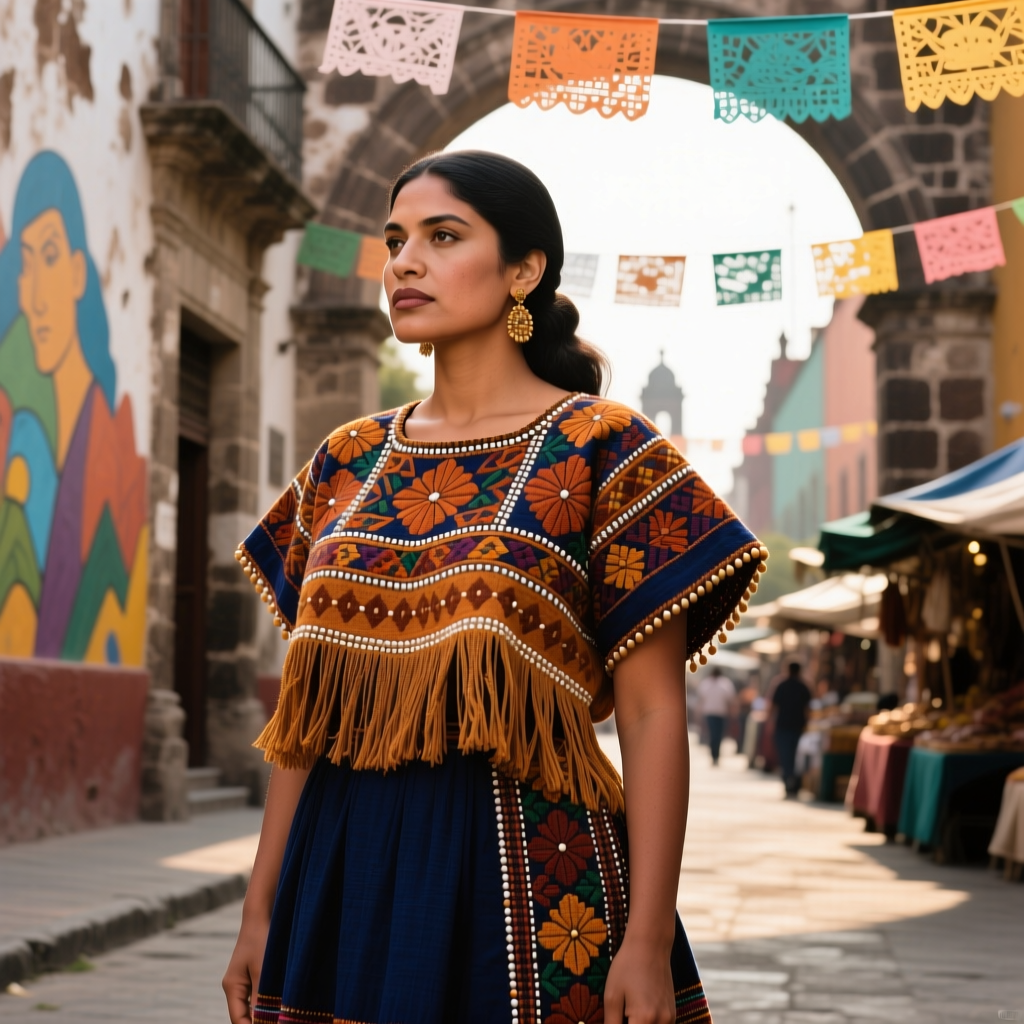
Mexico City is a sprawling, high-altitude metropolis where ancient history and hyper-modern urban life collide in a spectacular display of culture. Amidst the towering skyscrapers, bustling avenues, and sprawling neighborhoods, the traditional clothing of Mexico City serves as a vibrant, living testament to the region's profound heritage. To understand the garments worn in this capital is to understand a complex mosaic of pre-Hispanic roots, colonial influences, and the continuous migration of diverse indigenous communities from across the republic.
Unlike rural villages where a single regional style might dominate, Mexico City acts as a massive cultural crucible. The traditional attire found here is not a monolith; rather, it is a dynamic tapestry woven from the threads of the original Nahua inhabitants of the Valley of Mexico and the myriad indigenous groups who have made the capital their home over the centuries. From the intricate embroidery of a migrant's huipil to the sweeping elegance of the iconic rebozo, the garments of the capital tell stories of survival, adaptation, and immense cultural pride. This comprehensive guide explores the origins, characteristics, and enduring significance of traditional clothing in Mexico City.
The Historical Origins of Capitalino Attire
The story of traditional clothing in Mexico City begins long before the Spanish galleons arrived on the shores of the Gulf of Mexico. The Valley of Mexico was the heartland of the Aztec (Mexica) Empire, a highly stratified society where textiles were not merely garments, but a form of currency, a marker of social status, and a sacred offering to the gods. Commoners wore garments woven from the fibers of the maguey (agave) plant, known as ixtle, which was coarse but incredibly durable. The nobility, however, adorned themselves in exquisitely woven cotton, dyed with vibrant pigments derived from cochineal insects and indigo plants, and embellished with rabbit fur and quetzal feathers.
The foundational garments of this era included the tilmatli (a rectangular cloak tied at the shoulder) for men, and the quechquémitl (a poncho-like shoulder garment) paired with a woven skirt for women. When the Spanish conquest dismantled the Aztec empire, the colonial era brought a radical transformation to the region's textile landscape. European authorities imposed modesty laws that forced indigenous populations to alter their traditional silhouettes, while simultaneously introducing new materials such as wool, silk, and the pedal loom.
This collision of worlds birthed the mestizaje of Mexican textiles. The indigenous backstrap loom was not replaced but rather supplemented by European techniques. Local artisans in the pueblos surrounding the colonial capital began integrating European floral motifs, Christian iconography, and new weaving structures into their ancestral designs. The result was a uniquely capitalino aesthetic—one that honored the cosmology of the Valley of Mexico while adapting to the demands of a new, globalized viceroyalty. Over centuries, these blended techniques became the bedrock of what we now recognize as the traditional clothing of the region.
Defining Characteristics and Iconic Garments
When identifying the traditional clothing intrinsic to Mexico City and its immediate surrounding valleys, several iconic garments and accessories stand out. These pieces are defined by their intricate craftsmanship, symbolic embroidery, and profound versatility.
The Quechquémitl
The quechquémitl is perhaps the most ancient and distinctly indigenous garment associated with the Nahua and Otomi peoples of the Valley of Mexico and the surrounding mountainous regions. Constructed from two rectangular pieces of fabric woven on a backstrap loom and joined to form a diamond or triangular shape when draped over the shoulders, it serves as a protective layer against the high-altitude chill of the capital. The embroidery found on a traditional quechquémitl is a visual language, featuring geometric patterns, local flora & fauna, and mythological creatures that map the wearer's cosmological worldview.
The Rebozo: A Symbol of Mexican Womanhood
No discussion of traditional clothing in Mexico City is complete without the rebozo. While its origins are debated—often cited as a fusion of indigenous carrying cloths, Spanish mantillas, and Asian shawls brought via the Manila Galleons—the rebozo became an indispensable accessory for women in the capital. Woven from cotton, wool, or silk, the rebozo is characterized by its rapacejo (hand-knotted fringe), which can take an artisan weeks to complete. In Mexico City, the rebozo is utilized in countless ways: as a shawl against the evening cold, a baby carrier, a basket for transporting goods through the tianguis (street markets), and an elegant accent for formal occasions.
The China Poblana: Myth and Reality
The China Poblana is widely recognized as a folkloric representation of Mexican national identity, frequently seen during civic parades and traditional dances in the capital's plazas. Historically, the term referred to the working-class mestiza women of the colonial era who served in urban households. Their attire was a vibrant, sequined blouse, a heavily embroidered skirt featuring the colors of the Mexican flag, and a rebozo. While today it is largely viewed as a performance costume rather than everyday wear, its historical roots in the bustling markets and plazas of early Mexico City make it a vital piece of the capital's sartorial history.
Charrería and the Charro Suit
On the masculine side of traditional attire, the Charro suit holds a place of immense prestige. Originating from the horsemen and ranchers of the Jalisco region, the Charro tradition was heavily adopted and formalized in Mexico City, particularly around Plaza Garibaldi and the historic haciendas that once ringed the valley. The suit is a masterclass in tailoring and leatherwork, featuring tight-fitting trousers adorned with silver botanadura (buttons), a short, heavily embroidered jacket, and a wide-brimmed sombrero. It represents the romanticized equestrian heritage of the nation and remains a staple at weddings, national holidays, and charrería (rodeo) competitions within the city.
Occasions and Everyday Wear in the Metropolis
In a city of over twenty million people, traditional clothing is not relegated to museum glass cases; it is a living, breathing part of the urban fabric. However, the context in which these garments are worn varies greatly depending on the neighborhood, the occasion, and the wearer's heritage.
In the pueblos originarios (original towns) that have been swallowed by the city's urban sprawl—such as Milpa Alta, Tláhuac, and Xochimilco—traditional attire is still worn with deep reverence during local patron saint festivals, carnivals, and agricultural ceremonies. During the Day of the Dead, the streets of Xochimilco and the historic center are awash in women wearing intricately embroidered blouses and skirts, their hair braided with vibrant ribbons, as they prepare altars and participate in processions. The trajineras (colorful boats) of Xochimilco's canals are often steered by locals dressed in traditional Nahua-inspired garments, maintaining a visual link to the pre-Hispanic chinampa agricultural system.
For everyday wear, the full traditional ensemble is less common in the corporate districts of Polanco or Santa Fe, but elements of traditional clothing remain ubiquitous. The rebozo is still seen draped over the shoulders of women navigating the crowded aisles of the Mercado de la Merced or the Mercado de Sonora. Indigenous artisans and vendors, particularly women from Mazahua and Otomi communities, wear their traditional woven skirts and embroidered blouses as they sell crafts, fruits, and textiles in the historic center and along the avenues of Roma and Condesa. In these spaces, traditional clothing serves as both a marker of cultural identity and a testament to the resilience of indigenous economies within the modern capitalist metropolis.
Regional Variations and Migrant Influences
To speak of traditional clothing in Mexico City is to speak of the entire nation. As the political, economic, and cultural epicenter of the country, the capital has historically drawn migrants from all thirty-two states. Consequently, the city functions as a living museum of Mexico's diverse indigenous textiles.
Neighborhoods like Narvarte, Roma, and the areas surrounding the Mercado de la Ciudadela are home to thriving Oaxacan communities. Here, one can find the exquisite huipiles of the Zapotec and Mixtec peoples, characterized by their vibrant magenta and purple hues, intricate cross-stitch embroidery, and use of natural dyes. The Triqui people, known for their striking red huipiles woven with complex brocade patterns, also maintain a visible presence in the city's markets and cultural centers.
Similarly, the Purépecha community from Michoacán has established deep roots in the capital, bringing with them their heavy, pleated skirts and intricately woven aprons. The Mazahua women, easily recognizable by their vibrant, multi-layered skirts and heavily beaded sashes, are a familiar sight in the city's plazas. This incredible regional diversity means that a walk through Mexico City's central markets offers a panoramic view of Mexican textile history. The capital does not erase these regional identities; rather, it provides a grand stage where the embroidery techniques of Chiapas, the wool weaving of Puebla, and the silk brocades of Oaxaca coexist and interact.
Cultural Significance and Preservation
The traditional clothing of Mexico City carries profound cultural, social, and political weight. For many indigenous and mestizo residents, wearing traditional garments is an act of resistance against the homogenizing forces of globalization and fast fashion. It is a declaration of presence and pride in a society that has historically marginalized indigenous identities. In recent decades, there has been a powerful movement among young capitalinos to reclaim their heritage, incorporating vintage and artisan-made textiles into contemporary, everyday wardrobes as a way to honor their ancestors and support local artisans.
However, this visibility also brings challenges, most notably the threat of cultural appropriation. International fashion houses and mass-market brands have frequently copied the sacred, community-owned designs of Mexican indigenous groups without permission or compensation. In response, Mexico City has become a hub for textile activism and preservation. Organizations, artisan cooperatives, and government institutions like FONART (National Fund for the Development of Arts and Crafts) work tirelessly to protect intellectual property rights, ensure fair trade practices, and educate the public on the difference between appreciation and appropriation.
When purchasing traditional garments in the capital, conscious consumers are encouraged to buy directly from artisan cooperatives or certified fair-trade markets. This ensures that the economic benefits return to the communities that have safeguarded these weaving traditions for generations, allowing the vibrant tapestry of Mexico City's textile heritage to endure for centuries to come.
Frequently Asked Questions
What is the most iconic traditional garment worn in Mexico City?
While the capital is a melting pot of many regional styles, the rebozo is arguably the most universally recognized and historically significant garment associated with the women of the Valley of Mexico. Additionally, the quechquémitl remains a deeply traditional and iconic piece specific to the Nahua and Otomi peoples native to the high-altitude regions surrounding the city.
Where can I buy authentic traditional clothing in Mexico City?
For authentic, high-quality textiles, the Mercado de la Ciudadela is a premier destination, offering a vast array of garments sourced directly from artisans across the country. Additionally, visiting FONART galleries, the Museo de Arte Popular gift shop, and specialized fair-trade boutiques in neighborhoods like Roma and Coyoacán ensures that you are purchasing ethically sourced, authentic pieces while supporting indigenous artisans.
Is it appropriate for tourists to wear traditional Mexican clothing?
Yes, but with an emphasis on respect and context. Wearing a beautifully embroidered blouse or a rebozo purchased from an artisan is generally seen as a sign of appreciation and support for local craftsmanship. However, tourists should avoid wearing sacred, ceremonial garments or treating traditional attire as a "costume" for parties. The key is to understand the cultural weight of the garments, purchase them ethically, and wear them with dignity.
How has modern fashion influenced traditional capitalino attire?
Contemporary Mexican fashion designers based in the capital are increasingly collaborating with indigenous artisans to create modern silhouettes that incorporate traditional embroidery and weaving techniques. This fusion has led to a renaissance in traditional textiles, making them highly sought after in high-fashion circles. While this brings economic opportunities and global recognition, it also necessitates strict ethical guidelines to ensure that indigenous communities are fairly compensated and credited for their ancestral designs.