What is Traditional Chinese Clothing Called? A Comprehensive Guide
When exploring the rich tapestry of global fashion and historical dress, few sartorial traditions are as complex, deeply symbolic, and visually stunning as the traditional garments of China. If you have ever found yourself admiring a flowing, wide-sleeved robe in a historical drama or an elegantly tailored, high-collared dress at a formal event, you may have asked yourself: what is traditional Chinese clothing called? The answer is not a single word, but rather a fascinating vocabulary of garments that reflect thousands of years of philosophy, dynastic shifts, and regional diversity.
Unlike many Western historical garments that are categorized strictly by century, traditional Chinese dress is deeply intertwined with ethnic identity, philosophical schools like Confucianism and Daoism, and the intricate rituals of daily life. From the ancient, flowing robes of the Han dynasty to the sleek, modernized silhouettes of the twentieth century, the evolution of Chinese attire is a masterclass in textile artistry and cultural endurance. For a deeper dive into the luxurious fabrics that formed the foundation of these garments, explore our guide to Chinese silk weaving.
In this comprehensive guide, we will unravel the threads of history to answer exactly what traditional Chinese clothing is called. We will explore the defining characteristics of the Hanfu, the iconic Qipao (or Cheongsam), the diplomatic Tangzhuang, and the vibrant regional variations that make China’s sartorial heritage one of the most diverse in the world.
The Origins and Evolution of Chinese Garments
The story of traditional Chinese clothing begins in antiquity, deeply rooted in the agricultural and spiritual practices of early Chinese civilization. According to legend, the fundamentals of Chinese attire were established by the Yellow Emperor (Huangdi) and his consort, Leizu, who is credited with the invention of sericulture (silk farming). From these mythological beginnings, clothing quickly evolved from mere protection against the elements into a profound system of social order and cosmic harmony.
During the Zhou dynasty, the concept of li (ritual and propriety) became the cornerstone of society, and clothing was codified to reflect one’s social status, occupation, and moral standing. The upper garments represented the heavens (Yang), while the lower skirts represented the earth (Yin). This philosophical approach to dress meant that every fold, color, and motif carried immense weight. To understand how these early textiles and designs spread across continents, our article on Silk Road textiles provides a fascinating look at ancient global trade.
As dynasties rose and fell, so did the hemlines, collars, and sleeves of the populace. The Han dynasty solidified the foundational silhouettes of indigenous Chinese dress, while the Tang dynasty introduced a cosmopolitan flair, incorporating foreign influences from Central Asia and Persia. The Ming dynasty later saw a return to strict, elaborate indigenous styles, before the Qing dynasty introduced Manchu influences that would forever alter the trajectory of Chinese fashion. Understanding this timeline is crucial, as the term “traditional Chinese clothing” encompasses vastly different garments depending on the era and the ethnic group in question.
Hanfu: The Ancestral Attire of the Han People
When historians and cultural enthusiasts refer to the most ancient and enduring form of indigenous Chinese dress, they are talking about Hanfu (汉服). Literally translating to “clothing of the Han people,” Hanfu encompasses the historical dress of the Han Chinese from antiquity up until the mid-seventeenth century. It is the garment most frequently depicted in ancient poetry, classical paintings, and modern historical epics.
The defining characteristic of traditional Hanfu is the jiaoling youren, or the crossed collar that wraps to the right. In this style, the left side of the garment crosses over the right side, securing at the waist with a sash. This rightward wrap was considered a mark of civilization and respect for the living, whereas a leftward wrap was traditionally reserved for the deceased or considered “barbaric” by ancient standards. Hanfu rarely utilizes buttons; instead, it relies on beautifully woven silk sashes and intricate belts to secure the garments and create a flowing, ethereal silhouette.
Hanfu is not a single uniform, but a vast category of styles. The Ruqun consists of a short upper jacket (ru) paired with a long, flowing skirt (qun), a style historically favored by women. The Shenyi (deep robe) is a one-piece garment that wraps around the body, symbolizing the unity of the heavens and the earth. For men and officials, the Yuanlingpao (round-collar robe) was a staple of courtly and scholarly life. The wide, billowing sleeves of the Hanfu were not merely aesthetic; they were designed to reflect a sense of grace, restraint, and harmony with nature. For practical advice on how these historical silhouettes are worn today, check out our Hanfu style guide.
Despite its ancient origins, Hanfu experienced a massive cultural suppression during the Qing dynasty, when Manchu rulers mandated their own styles of dress under penalty of law. However, the early twenty-first century sparked a massive “Hanfu Movement” among Chinese youth, who began reclaiming this ancestral attire as a symbol of cultural pride, transforming it from a museum relic into a vibrant, living street-fashion phenomenon.
The Qipao and Cheongsam: Elegance of the Modern Era
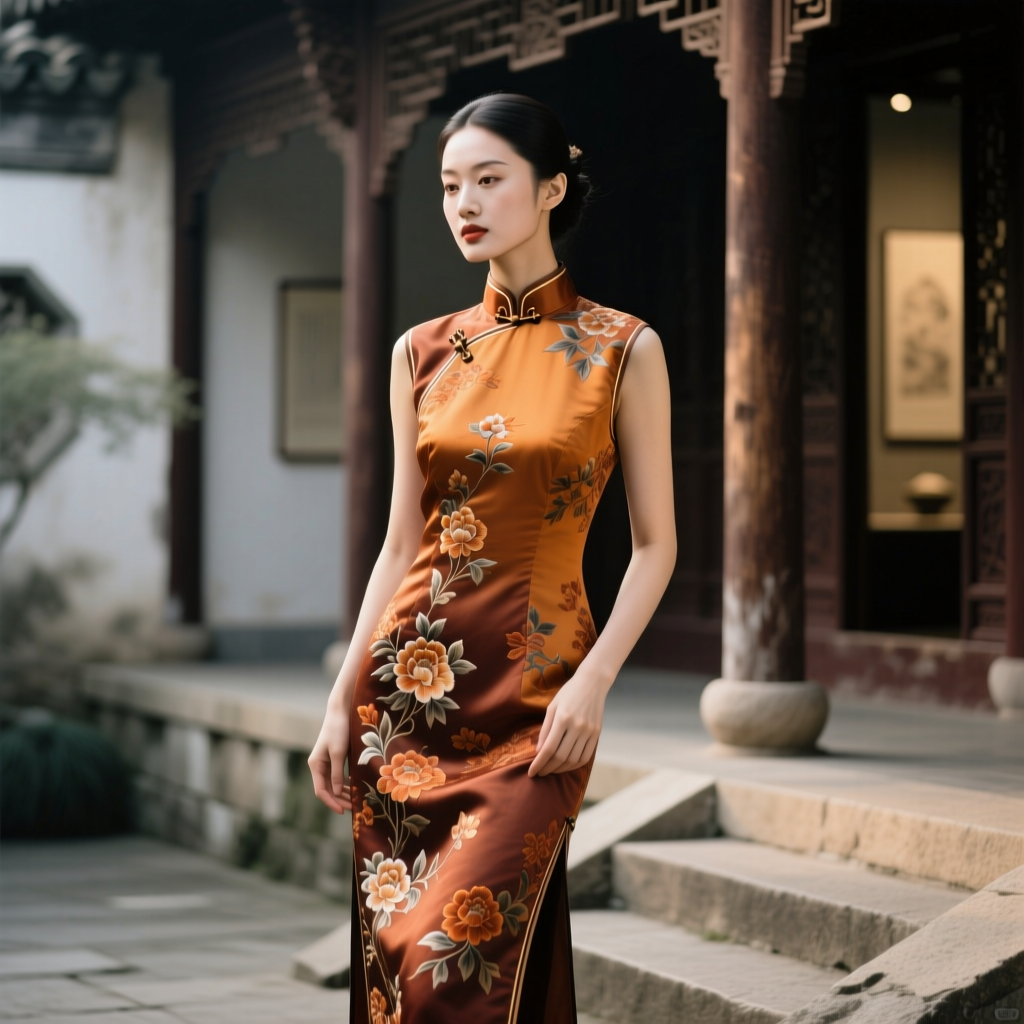
While Hanfu represents the ancient roots of Chinese clothing, the Qipao (旗袍)—also widely known in the West as the Cheongsam—is the garment that most of the modern world immediately recognizes as “traditional Chinese dress.” However, its history is far more modern and complex than its ancient counterparts. The Qipao originated from the long, loose, one-piece robes worn by Manchu women during the Qing dynasty. The word “Qipao” translates to “banner robe,” referring to the Eight Banners system of the Manchu military and social structure.
The transformation of the Qipao from a modest, voluminous robe into the sleek, form-fitting silhouette we recognize today occurred in the bustling, cosmopolitan hub of Shanghai during the early twentieth century. Influenced by Western tailoring and the changing roles of women in society, Shanghai’s fashionistas and tailors began to dart, taper, and tailor the garment to accentuate the natural curves of the body. The result was a stunning fusion of Eastern modesty and Western silhouette.
Key characteristics of the modern Qipao include the high, stiff Mandarin collar, the asymmetrical front opening, and the intricate pankou (frog buttons) that serve both a functional and decorative purpose. The dress typically features side slits that extend up the thigh, allowing for ease of movement while offering a subtle glimpse of the leg. Crafted from luxurious brocades, silks, and velvets, the Qipao is often adorned with auspicious embroidery, such as peonies for wealth, plum blossoms for resilience, and cranes for longevity. Today, the Qipao remains the premier choice for formal events, diplomatic functions, and high-society weddings.
Tangzhuang and Regional Variations Across the Provinces
Beyond the Hanfu and the Qipao, the term “traditional Chinese clothing” must also encompass the Tangzhuang and the breathtaking diversity of China’s ethnic minority garments. The Tangzhuang, often referred to in the West as the “Tang Suit,” is a relatively modern invention that draws heavy inspiration from the Manchu horse-riding jackets of the Qing dynasty. Despite its name, it has no direct connection to the ancient Tang dynasty. The Tangzhuang is characterized by its short, boxy cut, standing collar, and prominent frog closures. It gained massive international recognition when world leaders wore matching silk Tangzhuang jackets at a major international economic summit in Shanghai, cementing its status as a symbol of modern Chinese diplomacy and festive wear, particularly during the Lunar New Year.
However, China is a vast nation home to 56 officially recognized ethnic groups, and the regional variations of traditional clothing are nothing short of spectacular. In the mountainous southwestern provinces, the Miao (Hmong) people are renowned for their incredibly intricate pleated skirts, indigo-dyed batiks, and staggering amounts of hand-forged silver jewelry. Their garments serve as wearable history books, with embroidery patterns that record myths, migrations, and ancestral lineage, as they historically lacked a written language.
Further west, on the high-altitude Tibetan plateau, the traditional Chuba is designed for extreme climates. This long, thick, sheepskin-lined robe is worn with one or both sleeves tied off at the waist to regulate body temperature as the weather shifts rapidly. In the northwestern region of Xinjiang, the Uyghur people wear vibrant, atlas silk dresses and the iconic doppa, a square, intricately embroidered skullcap. These regional garments highlight that “Chinese clothing” is not a monolith, but a vibrant mosaic of distinct cultural identities. To see how neighboring cultures adapted and diverged from these ancient styles, read our comparison of the Japanese kimono vs Chinese Hanfu.
Occasions, Etiquette, and the Art of Dressing
Understanding what traditional Chinese clothing is called also requires knowing when and how it is worn. In traditional society, changing one’s garments was a ritualistic act tied to the seasons, life milestones, and spiritual ceremonies. Today, while Western business attire is the norm for daily life in Chinese metropolises, traditional garments are proudly resurrected for specific, meaningful occasions.
Weddings: Traditional Chinese weddings are a feast of sartorial symbolism. Brides often wear a heavily embroidered red Qipao or a traditional Hanfu ensemble featuring the Longfeng gua (dragon and phoenix jacket). Red is the paramount color of joy, luck, and prosperity, while the dragon and phoenix represent the harmonious balance of masculine and feminine energies (Yin and Yang).
Festivals and Holidays: During the Lunar New Year, the Mid-Autumn Festival, and the Dragon Boat Festival, it is common to see children and adults alike adorned in Tangzhuang or modernized Hanfu. The clothing is meant to invite good fortune and honor the ancestors. During the Qingming Festival (Tomb-Sweeping Day), more subdued, respectful colors are chosen to honor departed family members.
Coming-of-Age Ceremonies: Historically, the Guan Li (for young men) and Ji Li (for young women) were vital rites of passage where youths were gifted their first adult Hanfu and hairpins, signaling their readiness to take on societal responsibilities. Today, universities and cultural societies frequently host revivals of these beautiful ceremonies.
Cultural Significance and the Modern Revival
The cultural significance of traditional Chinese clothing extends far beyond mere aesthetics; it is a physical manifestation of Chinese philosophy. The cutting of the fabric in traditional Hanfu relies on flat, geometric patterns that respect the integrity of the woven cloth, reflecting a Daoist harmony with nature. The roundness of the sleeves represents the heavens, while the squareness of the collar represents the earth. The act of wrapping the garment to the right is a daily physical practice of Confucian order and respect.
In contemporary society, the revival of traditional clothing—particularly the Hanfu movement—is a powerful expression of cultural confidence. Young people are not merely wearing costumes; they are actively researching historical texts, reviving ancient weaving techniques, and integrating ancestral aesthetics into modern streetwear, tea ceremonies, and photography. This renaissance has sparked a global interest in Eastern sartorial arts, leading to a deeper appreciation of the craftsmanship, symbolism, and profound history woven into every thread.
Frequently Asked Questions
What is the most common traditional Chinese clothing called?
There is no single “most common” garment, as it depends on the historical context and the occasion. However, in terms of global recognition and modern formal wear, the Qipao (or Cheongsam) is the most widely recognized traditional Chinese dress. In terms of historical depth, cultural revival, and ancient heritage, the Hanfu is the most significant and foundational garment of the Han Chinese majority. For festive, casual, and diplomatic events, the Tangzhuang (Tang Suit) is highly prevalent.
What is the difference between Hanfu and Qipao?
The primary differences lie in their historical origins, silhouettes, and construction. Hanfu is the ancient, indigenous clothing of the Han people, characterized by wide sleeves, crossed collars wrapping to the right, and the use of sashes instead of buttons. It generally features a loose, flowing silhouette that obscures the body’s natural contours. The Qipao, conversely, originated from Manchu banner robes and was modernized in the twentieth century to feature a high Mandarin collar, frog buttons (pankou), side slits, and a tailored, form-fitting silhouette that accentuates the wearer’s figure.
Is it appropriate for non-Chinese people to wear these garments?
Generally, yes. Chinese culture places a high value on hospitality and sharing its heritage with the world. Wearing a Qipao to a formal event, or donning a Tangzhuang during a Lunar New Year celebration, is usually viewed as a sign of respect and appreciation for Chinese culture, provided it is done with dignity and an understanding of the garment’s context. It is important, however, to avoid treating sacred or highly specific ceremonial garments (like traditional bridal mourning attire or specific religious vestments) as casual costumes. When in doubt, approach the attire with the same respect you would afford a Western tuxedo or a formal evening gown.
What do the colors and motifs on Chinese garments mean?
Colors and motifs in traditional Chinese clothing are deeply symbolic and rooted in cosmology and folklore. Red is the color of luck, joy, and vitality, essential for weddings and festivals. Yellow/Gold was historically reserved for the Emperor, representing the center of the universe and supreme power. White is traditionally associated with mourning and the afterlife, while Black and Dark Blue often denote scholarly dignity or everyday modesty. Motifs are equally meaningful: the Dragon represents imperial power and masculine energy (Yang), the Phoenix represents grace and feminine energy (Yin), the Peony signifies wealth and honor, and the Lotus symbolizes purity rising from the mud. Every embroidered stitch is a wish for prosperity, longevity, or harmony.