What is Traditional African Clothing Called? A Comprehensive Guide
When searching for what traditional African clothing is called, one quickly discovers that there is no single answer. The African continent is a vast, diverse tapestry of 54 countries and thousands of distinct ethnic groups, each with its own unique sartorial heritage. Asking for the name of traditional African attire is much like asking for the name of traditional European or Asian clothing; the answer depends entirely on the region, the culture, the occasion, and the specific garment in question.
From the flowing, intricately embroidered robes of West Africa to the vibrant, proverb-adorned wraps of the Swahili Coast, African clothing is a profound expression of identity, history, and artistry. This comprehensive guide from The Garment Atlas will explore the rich lexicon of African traditional wear, breaking down the origins, characteristics, regional variations, and deep cultural significance of the continent's most iconic garments.
The Origins and Evolution of African Garments
The history of African clothing is deeply intertwined with the continent's diverse climates, trade routes, and agricultural practices. Long before the introduction of imported textiles, indigenous populations developed sophisticated methods for creating fabrics from locally sourced materials. In regions like Uganda and the Congo, bark cloth was one of the earliest forms of textile, created by stripping the inner bark of the Mutuba tree, soaking it, and beating it with wooden mallets until it achieved a soft, supple texture.
As agricultural practices evolved, cotton became a foundational material for African textiles. The cultivation of cotton and the invention of the narrow-strip loom revolutionized garment-making, particularly in West Africa. Archaeological evidence and historical accounts suggest that weaving centers in places like Kano (in modern-day Nigeria) and the Niger Inland Delta (in modern-day Mali) were thriving hubs of textile production centuries ago.
Trade routes also played a pivotal role in the evolution of African clothing. The trans-Saharan trade routes introduced silk, wool, and new weaving techniques from North Africa and the Middle East. Later, maritime trade along the West and East African coasts brought European wax prints, Indian cottons, and Indonesian batik techniques, which were enthusiastically adopted and adapted by local artisans to create distinctly African styles. Therefore, what we consider "traditional" African clothing today is often a beautiful, historical amalgamation of indigenous innovation and global exchange.
Defining Characteristics of Traditional African Attire
While the specific names and cuts of garments vary wildly across the continent, several unifying characteristics define traditional African attire. These elements are not merely aesthetic choices; they are deeply functional and symbolic.
Climate-Appropriate Silhouettes: Much of the African continent experiences warm, tropical, or arid climates. Consequently, traditional garments often feature loose, flowing silhouettes that allow for air circulation and ease of movement. Wide sleeves, draped wrappers, and voluminous robes are common, providing both comfort and protection from the sun.
Vibrant Dyes and Patterns: African textiles are globally celebrated for their bold use of color and intricate patterns. Natural dyes have historically been sourced from the environment: indigo leaves for deep blues, camwood for rich reds, and various barks and roots for yellows and browns. The patterns are rarely random; they often feature geometric shapes, stylized flora and fauna, and abstract representations of historical events or proverbs.
Embellishments and Beadwork: Many traditional garments are elevated through meticulous embellishments. Hand-embroidery, cowrie shells, and intricate glass beadwork are frequently used to denote social status, wealth, and marital status. Among the Maasai of East Africa and the Zulu of Southern Africa, beadwork is a complex visual language that communicates specific messages about the wearer's age, social standing, and romantic availability.
Regional Variations: What is Traditional African Clothing Called Across the Continent?
To truly answer the question of what traditional African clothing is called, we must journey through the continent's distinct geographic and cultural regions. Below is a guide to the most prominent garments and their local names.
West African Garments
West Africa is renowned for its majestic, flowing robes and world-famous woven textiles. The garments here often signify royalty, wealth, and scholarly status.
- Agbada: A flowing, wide-sleeved robe worn by men throughout West Africa, particularly among the Yoruba, Hausa, and Fulani peoples. It consists of a trousers, a long-sleeved shirt, and a wide, open-worked gown that is often heavily embroidered around the neck and chest. You can explore more formal menswear in our guide to the Boubou, a similar, deeply traditional flowing gown worn by both men and women across the Sahel.
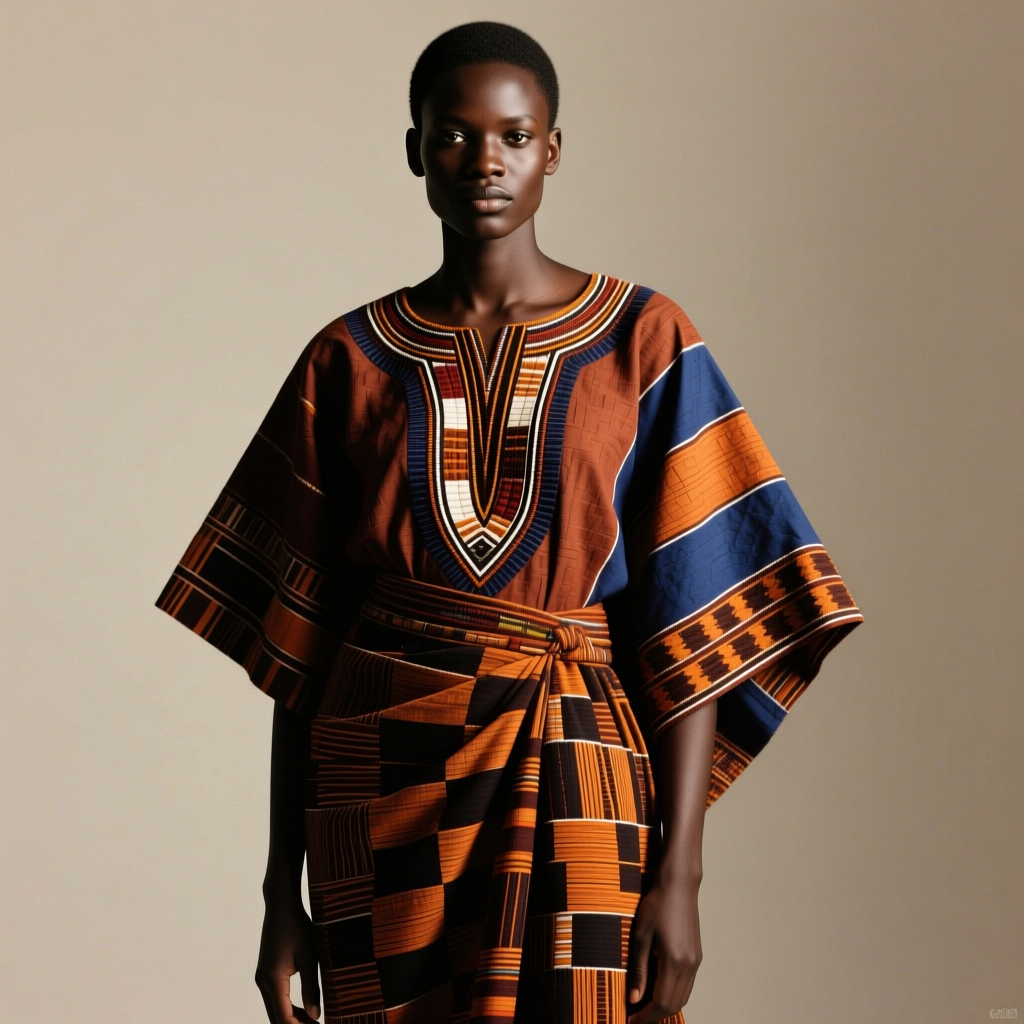
- Dashiki: A colorful, loose-fitting pullover tunic, usually featuring a V-neckline and intricate embroidery. While it gained global recognition during the civil rights movements of the diaspora, its roots lie in West African work shirts and tunics. Read our deep dive into the history of the Dashiki to understand its cultural journey.
- Kente: Perhaps the most famous African textile globally, Kente is a brilliantly colored, strip-woven cloth originating from the Ashanti and Ewe peoples of Ghana. Traditionally woven from silk and cotton, Kente patterns are reserved for royalty and special occasions. Discover the complex meanings behind the weave in our Kente cloth history guide.
- Bogolanfini (Mudcloth): A handmade Malian cotton fabric traditionally dyed using fermented mud. The striking geometric patterns are created through a meticulous resist-dyeing process. Learn about the creation of this unique fabric in our Mudcloth materials guide.
East African Garments
East African clothing reflects a blend of indigenous pastoralist traditions, Swahili coastal trade, and Arabic influences.
- Kanga and Kitenge: The Kanga is a rectangular piece of printed cotton fabric, typically featuring a border and a central motif, often accompanied by a Swahili proverb. It is worn wrapped around the body or head. The Kitenge (or Chitenge) is a heavier, wax-printed fabric used for tailored dresses and skirts. Explore the poetic nature of these wraps in our East African Kanga guide.
- Shuka: Traditionally worn by the Maasai people of Kenya and Tanzania, the Shuka is a thick, woven cotton blanket, most famously featuring bold red and blue plaid patterns. It is draped over the body and serves as protection against the harsh savanna elements.
- Kanzu: A white or cream-colored, ankle-length robe worn by men in the African Great Lakes region. It has strong Arabic origins and is considered the national dress of Uganda and Tanzania, often worn with a suit jacket over it for formal occasions.
North African Garments
North African attire is heavily influenced by Islamic traditions, Berber (Amazigh) heritage, and the Mediterranean climate.
- Djellaba: A long, loose-fitting outer robe with full sleeves and a distinctive, oversized pointed hood (the qob). Worn by both men and women across the Maghreb, the hood serves to protect the wearer from the sun and desert sand. Read more about this versatile garment in our Djellaba guide.
- Kaftan (Caftan): A long, elegant, and often highly embellished robe. In Morocco, the Takchita (a two-piece kaftan) is the standard formal wear for women at weddings and grand celebrations, featuring luxurious fabrics like silk, brocade, and velvet, adorned with metallic embroidery.
- Haik: A traditional, large rectangular piece of cloth, usually white or cream, wrapped around the body and head, historically worn by women in the Maghreb as a modest outer garment.
Southern African Garments
Southern African traditional wear showcases a mastery of beadwork, animal hides, and later, imported cottons that were indigenized through unique dyeing and printing techniques.
- Shweshwe: A printed dyed cotton fabric widely used for traditional Southern African clothing. Originally imported from Europe, it was indigenized by the Sotho and Xhosa peoples. It is characterized by intricate geometric patterns and is traditionally dyed in deep indigo. Discover the fascinating history of Shweshwe and its enduring legacy.
- Basotho Blanket (Seanamarena): Worn by the Sotho people of Lesotho and South Africa, these thick, woven wool blankets feature striking geometric patterns and corncob motifs. They are worn draped over the shoulders like a cloak and signify status, age, and life milestones.
- Umbhaco: A traditional Xhosa garment, typically a long skirt made from white cotton fabric adorned with black braiding and intricate beadwork, worn during coming-of-age ceremonies and weddings.
Occasions and Ceremonial Wear
In many African cultures, the garment you wear is dictated not just by the weather, but by the occasion. Traditional clothing is an essential component of rites of passage, spiritual ceremonies, and communal celebrations.
Weddings and Dowry Ceremonies: Traditional weddings are vibrant affairs where specific garments are mandated by custom. In Ghana, a traditional wedding requires the bride and groom to wear matching Kente or printed wax fabrics, symbolizing their union. In Southern Africa, Xhosa brides wear specific beaded aprons and blankets that signify their transition into married life.
Coming-of-Age Rituals: Transitioning from childhood to adulthood is marked by specific attire. Among the Maasai, young warriors (Morans) wear specific red Shukas and elaborate beadwork crafted by their mothers. In West Africa, young women undergoing initiation rites may wear specific wrapper skirts and waist beads that denote their new status in the community.
Festivals and Royalty: During cultural festivals, such as the Durbar festivals in Northern Nigeria or the Odwira festival in Ghana, traditional rulers and chiefs don their most magnificent, historically significant garments. These outfits, often featuring heavy gold jewelry, coral beads, and antique hand-woven textiles, serve as a living museum of the community's heritage.
The Cultural Significance and Symbolism of African Textiles
To wear traditional African clothing is to wear a language. The textiles of the continent are rarely just decorative; they are deeply embedded with African textile symbolism, serving as a medium for communication, historical record-keeping, and spiritual protection.
Color Theory and Meaning: Colors carry profound significance. In Ashanti Kente cloth, gold represents royalty, wealth, and spiritual purity; green signifies vegetation, planting, and spiritual growth; black denotes maturation and intensified spiritual energy. Wearing a specific color combination can communicate the wearer's mood, political allegiance, or social standing without a single word being spoken.
Proverbs in Cloth: The East African Kanga is famous for its jina (the proverb printed on the fabric). Women use these proverbs to communicate messages to their husbands, mothers-in-law, or rivals. A Kanga bearing a proverb about patience might be worn to subtly advise a family member, turning the garment into a tool for social diplomacy.
Spiritual Protection: Many garments are believed to hold spiritual power. The Bambara people of Mali believe that the fermented mud used in Bogolanfini (Mudcloth) absorbs the harmful energies of the wearer. Hunters wear specific mudcloth patterns to camouflage themselves and protect against the spirits of the forest. Similarly, the cowrie shells sewn onto ceremonial tunics across the continent are ancient symbols of fertility, wealth, and divine protection.
Frequently Asked Questions
What is the most popular traditional African clothing?
Because Africa is so diverse, popularity varies by region. However, globally and continent-wide, the Dashiki, Kente cloth, and African wax prints (Ankara) are among the most recognized and widely worn. In West Africa, the Boubou and Agbada are the standard for formal and ceremonial wear, while in East Africa, the Kanga and Kitenge are everyday staples.
What is the colorful African wrap dress called?
A colorful wrap dress or skirt is known by several names depending on the region and the fabric used. In West Africa, a wrapped skirt is often called a Pagne or Wrapper (Iro in Yoruba). In East Africa, the wrapped fabric is called a Kanga or Kitenge. In Southern Africa, a wrapped cotton garment might be made from Shweshwe fabric.
Is it appropriate for non-Africans to wear traditional African clothing?
Generally, African cultures are highly hospitable and appreciate it when outsiders respectfully embrace their traditions. Wearing traditional garments like a Dashiki or a Kente stole at a cultural event, wedding, or festival is usually welcomed as a sign of respect and appreciation. However, it is crucial to avoid wearing sacred or strictly ceremonial garments (like specific royal Kente patterns or initiation beads) if you do not understand their cultural weight. Always purchase from authentic African artisans and vendors to support the communities that create these textiles.
What is the traditional African tunic called?
The most globally recognized traditional African tunic is the Dashiki, characterized by its loose fit, V-neck, and embroidered panels. In North and East Africa, a similar long tunic or robe is called a Kanzu or Kaftan. In West Africa, a simpler, everyday tunic might be referred to as a Sensor or simply a traditional work shirt.
How do you care for traditional African fabrics?
Care instructions depend heavily on the material. Kente and other hand-woven silk or cotton textiles should ideally be dry-cleaned to preserve the integrity of the threads and dyes. Mudcloth should be washed gently by hand in cold water with a mild, pH-neutral soap, as harsh detergents can strip the natural mud dyes. Wax prints and Kitenge can usually be machine washed on a gentle cycle with cold water, but they should be air-dried away from direct sunlight to prevent the vibrant colors from fading.