Lederhosen Shirt Men's Sizing & Buying Guide for 2026

Decoding the Trachtenhemd: Beyond the Basic Checkered Shirt
When assembling a traditional Bavarian or Alpine outfit, the leather breeches naturally command attention. However, any seasoned member of a Trachtenverein (traditional costume club) will tell you that the true foundation of the ensemble is the Trachtenhemd. For men navigating the market in 2026, finding the right lederhosen shirt men's fit requires moving past cheap, mass-produced costume shop replicas and understanding the nuanced tailoring of Alpine menswear.
Whether you are preparing for your first Oktoberfest in Munich, attending an Alpine wedding, or participating in a cultural heritage festival, the shirt you choose dictates the formality and authenticity of your entire outfit. This comprehensive buying and sizing guide will equip you with the cultural knowledge, textile expertise, and measurement frameworks necessary to invest in a garment that honors European folk traditions.
Fabric Composition: Linen vs. Cotton vs. Flannel
The material of your shirt immediately signals the formality of the occasion and the time of year. Historically, rural farmers and hunters in the 18th and 19th centuries wore garments dictated by local agriculture and climate. Today, those traditions are codified into distinct categories.
The Authenticity Matrix: Material Breakdown
- Leinenhemd (Linen Shirt): The undisputed gold standard for formal events, weddings (Hochzeitstracht), and church attendance. Authentic linen is woven from flax, offering exceptional breathability and a distinctive, slightly textured slub. According to the Bayerisches Nationalmuseum, unbleached or cream linen was the historical norm for rural Alpine workers, while stark white linen was reserved for Sundays and high holidays.
- Karohemd (Checkered Cotton Shirt): The iconic plaid shirt, typically in blue/white, red/white, or green/white colorways. Made from 100% cotton, the Karohemd is appropriate for casual events, beer garden visits, and Oktoberfest. Avoid polyester blends, which trap heat and lack the matte finish of true cotton.
- Flanellhemd (Flannel Shirt): Brushed cotton flannel is worn exclusively during the colder months (late autumn through early spring). Wearing a heavy flannel shirt to a July outdoor festival is a major sartorial misstep in Alpine culture.
Collar Styles, Embroidery, and Horn Button Protocols
The details of a Trachtenhemd are where artisan craftsmanship separates heritage garments from fast fashion. When evaluating a lederhosen shirt men's collection, inspect the following elements closely.
Hirschhornknöpfe (Stag Horn Buttons)
Authentic shirts are fastened with genuine stag horn buttons. Real horn features unique striations, a matte finish, and slight color variations ranging from pale amber to dark brown. If the buttons are perfectly uniform, overly glossy, or cold to the touch, they are likely plastic or resin imitations. High-end manufacturers source horn sustainably from Alpine deer populations.
Collar Variations
The standard Trachtenhemd features a classic spread or point collar. However, vintage-inspired and highly formal shirts may feature a Stehkragen (band collar) or a club collar with rounded edges. Ensure the collar band is stiff enough to support the weight of the fabric without collapsing when the top button is undone.
Front Bib Embroidery (Zierstich)
Many premium linen shirts feature subtle, tonal embroidery around the front button placket and cuffs. This Zierstich (decorative stitch) often utilizes Alpine motifs like edelweiss, oak leaves, or geometric cross-stitching. The embroidery should be done with high-tensile cotton thread, not synthetic rayon, to maintain a historical aesthetic.
The Sizing Matrix: How to Measure for a Trachtenhemd
German and Austrian shirt sizing can confuse international buyers. Unlike US or UK sizing, which often relies on Small/Medium/Large or chest measurements, traditional European dress shirts are sized by Kragenweite (collar circumference) in centimeters. Furthermore, a proper Trachtenhemd must be tucked into the Lederhosen and sit cleanly against the waistband without excessive blousing.
Comprehensive Sizing Chart
| German Size (Kragenweite) | US/UK Neck Size | Chest (Brustumfang) | Recommended Fit Profile |
|---|---|---|---|
| 37/38 | 14.5 - 15 in | 90-94 cm (35-37 in) | Slim (Tailliert) |
| 39/40 | 15.5 in | 98-102 cm (38-40 in) | Slim / Regular |
| 41/42 | 16 - 16.5 in | 106-110 cm (41-43 in) | Regular (Normal) |
| 43/44 | 17 - 17.5 in | 114-118 cm (45-46 in) | Comfort (Bequem) |
| 45/46 | 18 - 18.5 in | 122-126 cm (48-50 in) | Comfort / Broad |
Fit Profiles: Tailliert vs. Normal
When browsing a lederhosen shirt men's catalog, you will encounter two primary fit profiles:
- Tailliert (Slim/Tapered): Cut closer to the body with darting at the lower back. This is the preferred fit for modern Modetracht (fashion tracht) and ensures the shirt does not bunch up uncomfortably beneath the tight waistband of the Lederhosen.
- Normal (Regular): A straighter cut with more room in the midsection. Ideal for older gentlemen, those with broader midsections, or men wearing historical Vereinstracht (club uniforms) which traditionally favor a more conservative, relaxed silhouette.
Regional Variations: Miesbacher vs. Oberallgäu Styles
Europe's folk dress is not a monolith; it is a tapestry of hyper-local micro-cultures. The Trachteninformationszentrum in Benediktbeuern extensively documents how a shirt's design shifts depending on the valley or district it originates from.
'The authenticity of a Tracht is rooted in its geographic specificity. A shirt worn in the Miesbach district features distinct regional markers that would look out of place in the Allgäu.' — Trachteninformationszentrum Benediktbeuern Archives
For example, the Miesbacher Tracht often pairs highly decorated, embroidered linen shirts with specific horn-button placements, while the Werdenfelser Tracht might favor simpler, unadorned linen with a focus on the quality of the weave and the cut of the collar. If you are joining a specific local Trachtenverein, you must adhere strictly to their regional shirt guidelines. If you are a civilian attending a festival, a classic white linen or blue-check cotton shirt remains universally acceptable across Bavaria, Tyrol, and Salzburg.
Price Tiers and Where to Buy Authentic Pieces
Investing in a genuine Trachtenhemd ensures longevity, comfort, and cultural respect. Here is what you should expect to pay in the current market:
- Entry-Level (€45 - €75 / $50 - $85): Mass-produced cotton Karohemd (checkered shirts). Usually made in overseas factories. Acceptable for a one-off Oktoberfest visit, but expect the collar to fray and the colors to fade after a few washes.
- Mid-Tier Authentic (€90 - €160 / $100 - $180): High-quality European-made linen and heavy cotton shirts from heritage brands like Stockerpoint, Meindl, or Ludwig & Therese. Features genuine horn buttons, reinforced gussets, and proper felled seams.
- Artisan & Bespoke (€200 - €350+ / $220 - $400+): Hand-loomed linen, custom monogramming, and hand-stitched Smokarbeit (shirring/embroidery). Commissioned from local tailors in Munich or rural Alpine villages for weddings and lifelong wear.
Construction Details to Inspect Before Buying
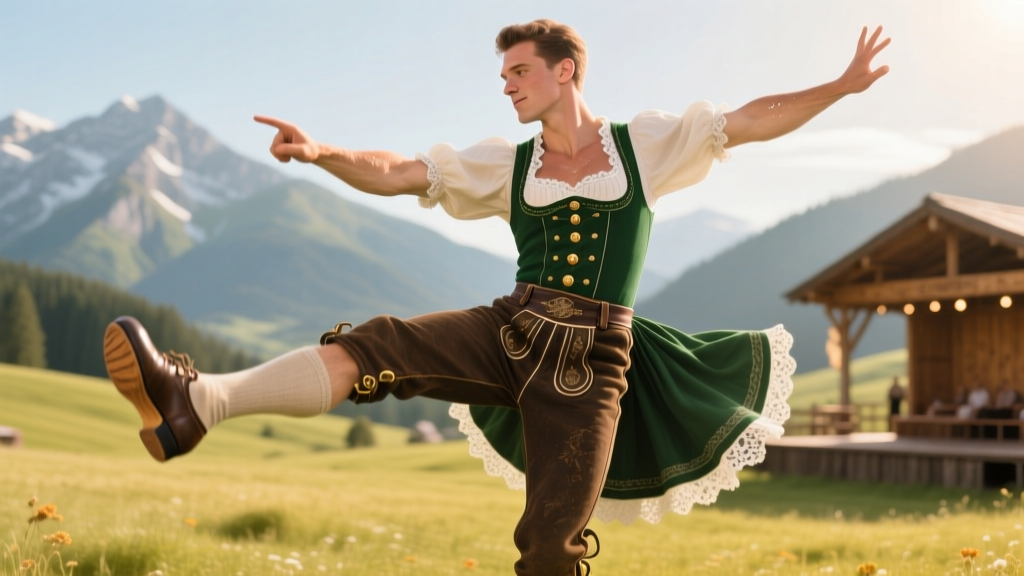
To ensure you are purchasing a garment of true European folk dress quality, turn the shirt inside out and examine the seams. Authentic shirts utilize French seams or flat-felled seams, which enclose the raw edges of the fabric to prevent fraying and provide a clean finish against the skin. Check the back yoke; a high-quality shirt will feature a split yoke or deep box pleat to allow for shoulder mobility, crucial when raising a heavy stein or dancing the Schuhplattler.
Care Instructions for Longevity
Proper maintenance of your Trachtenhemd is essential. Linen shirts should be washed on a gentle cycle with mild detergent and never placed in a high-heat dryer, which breaks the flax fibers. Iron the shirt while it is still slightly damp using a high-heat steam setting to achieve the crisp, formal finish required for traditional Alpine events. Cotton checkered shirts are more forgiving but should still be air-dried to preserve the vibrancy of the natural dyes.
By prioritizing natural fabrics, authentic horn hardware, and precise European collar sizing, you will secure a Trachtenhemd that not only completes your Lederhosen but pays deep respect to centuries of Alpine sartorial heritage.