Lederhosen Dirndl Regional Variants: An Alpine Guide
The Living Map of Alpine Tracht: Beyond Oktoberfest
When discussing traditional European folk dress, few garments possess the global recognition of the Bavarian lederhosen and dirndl. However, reducing these garments to mere festival costumes strips them of their profound regional diversity and historical weight. In the Alpine regions of Germany and Austria, traditional clothing is known as Tracht (or Gwand in local dialects). When researching authentic lederhosen dirndln—the local Bavarian dialect plural for the women's dresses—enthusiasts quickly discover that these garments are not a monolith. The true beauty of the Alpine tracht tradition lies in its hyper-local variants, governed by centuries of guild regulations, geographic isolation, and deep cultural pride. This guide explores the intricate regional differences in cut, material, and construction across the Alps.
Lederhosen Variants: From Miesbach to the Salzkammergut
The term Lederhosen translates to 'leather breeches,' but the construction varies wildly depending on the valley of origin. Authentic pairs are crafted from Sämischleder—a supple, oil-tanned or brain-tanned deer, chamois, or goatskin that develops a rich, dark patina over decades of wear. Mass-produced versions use chrome-tanned cowhide, which lacks the breathability and historical accuracy required by traditional Trachtenvereine (costume preservation societies).
Bavarian Kurze Lederhosen (Miesbacher Style)
The Miesbacher Tracht is perhaps the most codified in Bavaria. The Kurze Lederhosen (short breeches) end above the knee and are heavily embroidered with raised, light-green or yellow silk thread. The front drop-flap, or Latz, is a defining feature, often bordered by intricate floral motifs like the alpine rose, edelweiss, or oak leaf. According to archives at the Bayerisches Nationalmuseum, the Miesbacher style solidified in the late 19th century, driven by the romanticization of rural life by the Bavarian aristocracy and the establishment of early preservation societies.
Tyrolean Bundhosen and Alpine Pragmatism
Moving west into the Austrian Tyrol, the climate and terrain demanded different garments. While short lederhosen are worn in summer, the Bundhosen (knee-length breeches that tie or button tightly below the knee) are historically prevalent for hunting, forestry, and winter work. Tyrolean leatherwork, preserved and studied by institutions like the Tiroler Volkskunstmuseum, often features darker, more subdued embroidery. Artisans frequently utilize brown or black thread, and the Hosenträger (suspenders) feature a narrower, more utilitarian crosspiece compared to the wide, heavily decorated Bavarian Steg.
The Ausseer Lederhosen: A Study in Minimalism
In the Salzkammergut region of Austria, the Ausseer Lederhosen stands in stark contrast to the heavily embroidered Bavarian styles. Often made from smooth, un-embroidered chamois leather, the elegance of the Ausseer style relies entirely on the precision of the cut and the buttery quality of the hide. The suspenders are frequently detachable, and the overall silhouette is sleeker, designed to be worn under the iconic Ausseer Steireranzug (a structured alpine jacket) for formal events and church processions.
Dirndl Silhouettes: A Comparative Regional Analysis
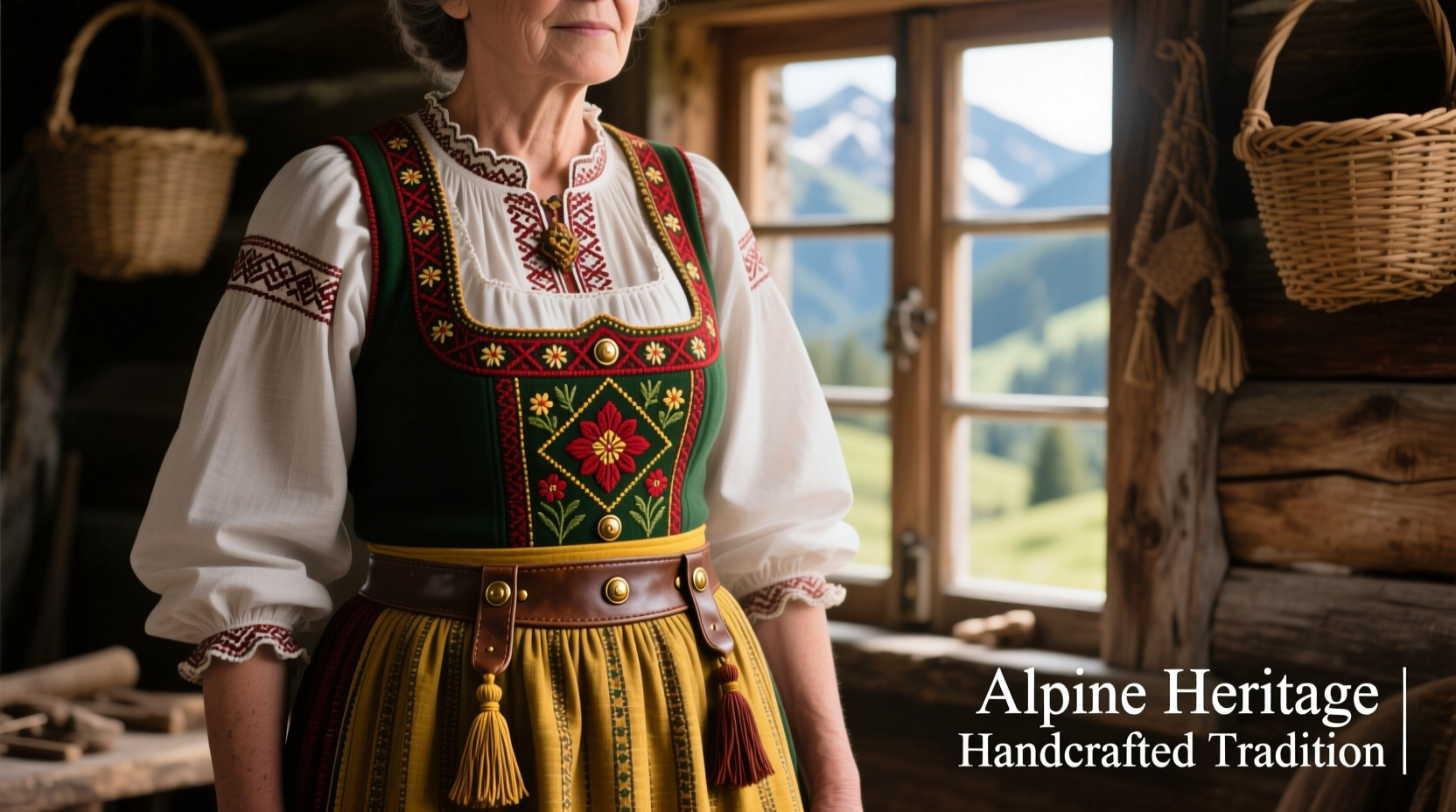
The dirndl is not a single dress, but a four-part ensemble consisting of the Leibl (bodice), Kittel (skirt), Schürze (apron), and Bluse (blouse). The regional variants are distinguished primarily by the bodice construction, collar style, and textile choices.
The Miesbacher Dirndl: Structured and Ornate
The classic Bavarian dirndl features a heavily structured bodice, often reinforced with internal canvas or light boning, designed to provide a distinct, uplifting silhouette. The neckline is typically square or round, adorned with a Schalkragen—a delicate, hand-pleated lace or silk collar that drapes elegantly over the shoulders. The skirt is usually made of fine wool, heavy silk, or brocade, gathered tightly at the waist to create substantial volume. Fastening is traditionally done with silver or brass hooks and eyes, or a decorative Stecknadel (brooch) pinning the front flap.
The Salzkammergut & Ausseer Dirndl: Hand-Printed Heritage
The Ausseer Dirndl is a masterpiece of textile art. Instead of heavy silks, the skirt and apron are traditionally made from Blauel—linen or cotton that has been hand-block-printed with indigo or dark blue motifs, a technique dating back centuries. The bodice is often softer, lacking the rigid boning of the Bavarian styles, and features a high, modest neckline or a subtle V-neck. The color palette is deeply symbolic: a pink bodice paired with a blue skirt and a green apron is a classic Ausseer combination, reflecting the colors of the alpine meadows and lakes of the Salzkammergut.
Footwear and Accessories: Completing the Gwand
No authentic ensemble is complete without the correct footwear. For men, the traditional shoe is the Haferlschuh, a robust leather shoe with a distinctive side-lacing system and a thick, nailed sole, originally designed for navigating steep, rocky alpine terrain. They are worn with Loferl—a two-piece calf warmer consisting of a wool sock and a separate knitted calf band. For women, the Trachtenschuh is a low-heeled, pump-style leather shoe, often featuring a decorative metal buckle or subtle embroidery, paired with delicate cotton or silk stockings. Plastic horn buttons, synthetic leather, or overly shortened skirts are viewed as deeply disrespectful to the heritage of the garments.
Material, Construction, and Investment Guide
Understanding the difference between mass-produced Trachtenmode (fashion tracht) and authentic Tracht is vital for collectors and cultural enthusiasts. Below is a comparative breakdown of regional investment pieces, reflecting prices for bespoke or high-end artisan pieces crafted by certified Trachtenschneider (traditional tailors).
| Region | Garment Focus | Signature Feature | Primary Material | Authentic Price Range (EUR) |
|---|---|---|---|---|
| Miesbach (Bavaria) | Kurze Lederhosen | Raised green silk oak-leaf embroidery on Latz | Oil-tanned Deer (Sämischleder) | €600 - €1,200 |
| Tyrol (Austria) | Bundhosen | Knee-length cut, subdued brown threadwork | Chamois or Goatskin | €450 - €900 |
| Aussee (Austria) | Ausseer Lederhosen | Minimalist, unembroidered, sleek cut | Smooth Chamois | €500 - €850 |
| Miesbach (Bavaria) | Miesbacher Dirndl | Structured bodice, pleated Schalkragen | Silk/Wool Skirt, Cotton Blouse | €350 - €800 |
| Salzkammergut (Austria) | Ausseer Dirndl | Hand-block-printed Blauel textiles | Linen/Cotton, soft bodice | €400 - €950 |
Wearing Etiquette and Cultural Protocols
Wearing a lederhosen and dirndl ensemble requires adherence to unwritten cultural protocols, particularly regarding the dirndl apron bow (Schleife). The placement of the bow is a traditional marital status indicator: tied on the wearer's left indicates she is single; tied on the right signifies she is married or in a committed relationship; tied in the front center traditionally denotes a virgin (though today it is mostly worn by young girls); and tied in the back indicates widowhood or that the wearer is working as a waitress.
Furthermore, authentic Tracht is considered formal or semi-formal attire in Alpine regions. It is entirely appropriate for weddings, church services, and cultural festivals like the Schützenfest (marksmen's festival) or Almabtrieb (alpine cattle drive), provided the garments are modest and historically accurate. Wearing authentic tracht is an act of cultural preservation, honoring the artisans and communities that have kept these traditions alive through centuries of social change.
References and Archival Sources
To study the evolution of these garments, one must look to the preservation efforts of regional museums. The codification of the Miesbacher and Werdenfelser tracht was heavily documented by the Bayerisches Nationalmuseum in Munich, which houses one of the largest collections of 19th-century rural textiles in Europe. Similarly, the Tiroler Volkskunstmuseum in Innsbruck provides indispensable insight into the utilitarian roots of Tyrolean leatherwork, proving that the Alpine tracht tradition is not a monolith, but a vibrant, living tapestry of regional identity.