Germany's Traditional Clothing: Beginner's Guide
When travelers and cultural enthusiasts ask, what is the traditional clothing in Germany, the immediate mental image is often a dirndl and lederhosen worn at a bustling Munich beer tent. However, reducing German folk dress to mere Oktoberfest costumes ignores centuries of rich textile history, regional diversity, and meticulous artisan craftsmanship. To truly understand German traditional clothing, one must look beyond the tourist shops and explore the living heritage of Tracht.
Beyond the Festival: Defining Tracht vs. Trachtenmode
To answer the question of what constitutes traditional German clothing, we must first distinguish between two critical terms:
- Tracht: This refers to historically accurate, region-specific traditional dress. Rooted in the 18th and 19th centuries, authentic Tracht is governed by local customs, often handmade, and worn for cultural events, church services, and folk dances. It is a marker of regional identity and social standing.
- Trachtenmode: This translates to 'Tracht fashion.' It is the commercialized, mass-produced adaptation of folk dress. While Trachtenmode is perfectly acceptable for Oktoberfest or casual wear, it lacks the historical strictness, specific regional markers, and artisanal construction of true Tracht.
According to the Trachten-Informationszentrum (Tracht Information Center) of Upper Bavaria, true Tracht is not a static museum relic but a living tradition that evolves slowly, respecting historical silhouettes while accommodating modern textiles.
The Dirndl: Anatomy of a German Dress
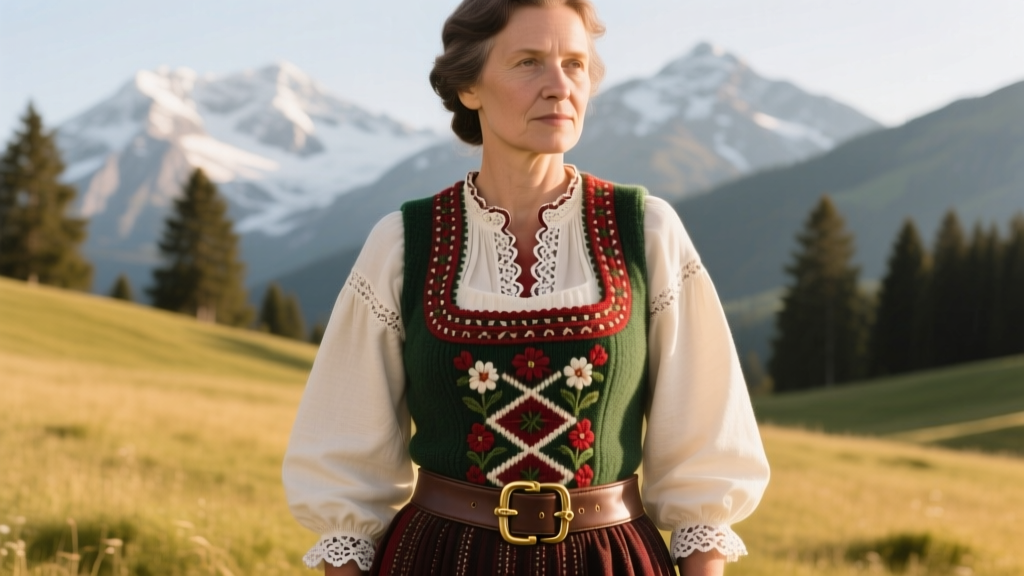
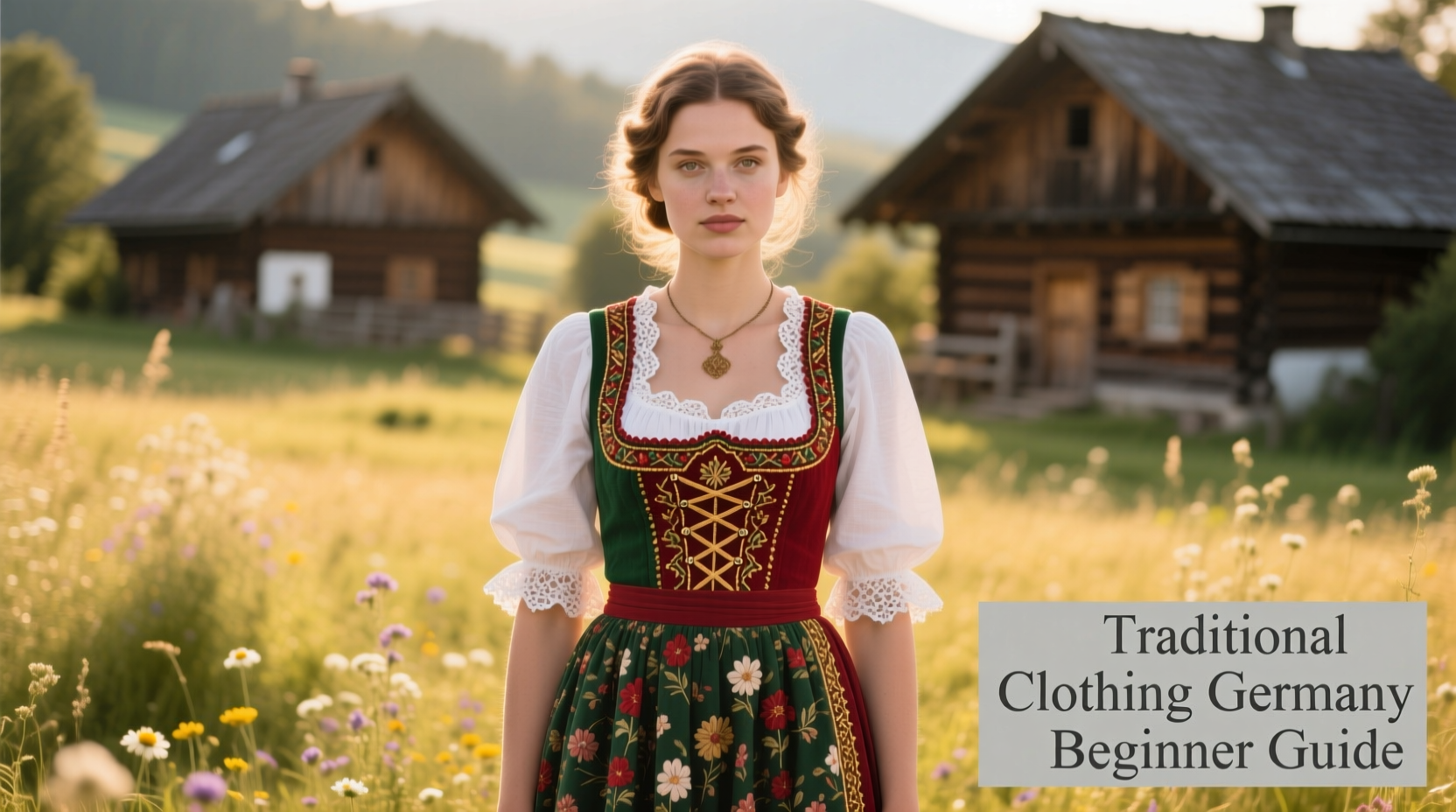
The dirndl is the most recognized element of women's traditional clothing in Germany, specifically originating from the Alpine regions of Bavaria, Austria, and South Tyrol. A genuine dirndl is not a single piece of fabric, but a carefully constructed ensemble consisting of four distinct elements:
- Das Mieder (Bodice): The core of the dirndl. In authentic Tracht, the Mieder is heavily structured, often featuring a front or back lacing, and is made from rich brocades, velvet, or high-quality linen. It is designed to provide support and create a distinct silhouette.
- Die Bluse (Blouse): Worn under the bodice, traditionally made of white cotton or linen. The neckline can vary from modest and high-collared to wide and square, depending on the specific region and the formality of the occasion.
- Der Rock (Skirt): Attached to the bodice in modern dirndls, but historically a separate piece. The length is a major indicator of authenticity; traditional Tracht skirts fall to the ankle or mid-calf, whereas modern Trachtenmode often features knee-length or shorter skirts.
- Die Schürze (Apron): Tied at the front, the apron is essential. In historical contexts, the fabric of the apron indicated the wearer's marital status and wealth.
Lederhosen and Men’s Alpine Tracht
For men, the quintessential traditional clothing in Germany is the Lederhosen (leather breeches). However, authentic Lederhosen are a far cry from the stiff, shiny costumes sold in party stores. True Bavarian Lederhosen are crafted from Hirschleder (smoked deer leather) or Sämischleder (suede-like tanned leather).
The construction of authentic Lederhosen involves a drop-front flap known as a Latz, which is fastened with horn buttons. The leather is traditionally treated with a process called Sämischgerbung (oil tanning), making it incredibly soft, breathable, and durable. Over time, the leather develops a unique patina, which is highly prized among Tracht enthusiasts. The ensemble is completed with:
- Haferlschuhe: Traditional Bavarian shoes featuring a distinctive side-lacing system and a robust, nailed sole, originally designed for navigating rugged Alpine terrain.
- Trachtenhut: A felt or loden wool hat, often adorned with a Gamsbart (a brush made from the hair of a chamois goat) or an eagle feather. The size and quality of the Gamsbart historically indicated the wearer's hunting prowess and wealth.
Quick Guide to German Regional Tracht
Germany is not a monolith, and its traditional clothing reflects deep regional divides. The Bayerisches Nationalmuseum houses extensive collections demonstrating how geography dictated garment design.
| Region | Garment Name / Style | Key Features & Materials |
|---|---|---|
| Upper Bavaria (Miesbach) | Miesbacher Tracht | Considered the 'gold standard' of Alpine Tracht. Features dark wool skirts, silk aprons, and intricately embroidered velvet bodices for women. Men wear grey or black Hirschleder Lederhosen. |
| Black Forest (Schwarzwald) | Bollenhut Tracht | Famous for the Bollenhut, a wide-brimmed straw hat topped with large red (unmarried) or black (married) wool pom-poms. Worn primarily in the villages of Gutach, Kirnbach, and Hornberg. |
| Friesland (Northern Coast) | Föhr / Amrum Tracht | Stark contrast to Alpine dress. Features dark, heavy wool skirts, silver filigree jewelry (often shaped like local flora or religious symbols), and colorful silk headpieces to protect against harsh North Sea winds. |
| Hesse (Hessen) | Schwälmer Tracht | Known for its vibrant, heavily embroidered bodices and short, puffy skirts worn with multiple layers of petticoats. Red accents dominate for unmarried women, shifting to green or black for older women. |
The Rules of Engagement: Wearing Etiquette
Understanding what the traditional clothing in Germany is also requires understanding how to wear it respectfully. Cultural protocols are still actively observed in rural and traditionalist communities.
The Dirndl Bow (Schleife)
The placement of the apron bow is a widely recognized code of communication, originating in the 20th century but now deeply embedded in Tracht culture:
- Tied on the Left: The wearer is single and open to courtship.
- Tied on the Right: The wearer is married, engaged, or in a committed relationship.
- Tied in the Center: Traditionally indicates a young, unmarried woman or a virgin (though this is less commonly enforced today).
- Tied at the Back: Indicates the wearer is widowed, or practically, that she is a waitress working the beer tents.
Hat Etiquette for Men
In traditional Bavarian culture, a man's Trachtenhut is treated with immense respect. When entering a church, a private home, or a formal dining room, the hat must be removed. However, in beer tents, outdoor festivals, and casual taverns, it remains firmly on the head. Tipping the hat is a standard greeting to elders and women.
A Beginner’s Guide to Buying Authentic German Folk Dress
If you wish to invest in genuine Tracht or high-quality Trachtenmode, you must be prepared for the financial commitment of artisanal clothing. The Germanisches Nationalmuseum in Nuremberg frequently highlights the historical textile trades, reminding us that true folk dress was a major financial investment for rural families.
Price Ranges and What to Expect
- Mass-Market Costumes (€30 - €80): Made from polyester, featuring plastic zippers and printed 'embroidery.' These are strictly for novelty Halloween parties and hold no cultural weight.
- Entry-Level Trachtenmode (€150 - €300): Good quality cotton or linen blends, metal zippers, and machine embroidery. Brands like Krüger or Stockerpoint offer excellent entry points for festival-goers who want to look respectful without breaking the bank.
- High-End Trachtenmode (€400 - €800): Features genuine silk aprons, horn buttons, and hand-finished details. Brands such as Angermaier or Lodenfrey bridge the gap between modern fashion and historical accuracy.
- Authentic, Custom Tracht (€1,000 - €3,000+): Commissioned from a local Trachtenschneiderei (Tracht tailor). Includes hand-embroidered Mieders, custom-fitted Hirschleder Lederhosen, and bespoke silk accessories. This is an heirloom investment meant to last a lifetime.
Materials to Look For
When shopping, always check the fabric composition. Authentic garments will utilize natural fibers: 100% cotton or linen for blouses, pure virgin wool (Schurwolle) for skirts and loden coats, and genuine horn, bone, or mother-of-pearl for buttons. Avoid anything labeled '100% Polyester' if you wish to honor the tradition.
Preserving the Thread
German traditional clothing is a testament to the country's regional diversity and historical resilience. By understanding the difference between a mass-market costume and a handcrafted Miesbacher Tracht, you elevate your appreciation from mere aesthetics to profound cultural respect. Whether you are attending a Schützenfest (marksmen's festival), visiting an Alpine village, or simply studying European textile history, recognizing the true meaning behind these garments ensures that the legacy of German Tracht continues to thrive in the modern era.