The Traditional Bavarian Outfit for Men: A Cultural Deep Dive
The Evolution from Alpine Workwear to Cultural Identity
When researching a traditional Bavarian outfit for men, one must first distinguish between Trachtenmode (fashion inspired by folk dress) and Tracht (the authentic, historically rooted garment). The modern perception of men's Bavarian clothing is heavily skewed by Oktoberfest tourism, which often reduces a rich cultural heritage to mass-produced polyester costumes. However, the authentic Männertracht is a living tradition, deeply tied to the geography, history, and social structures of the Alpine and pre-Alpine regions of Bavaria.
Originally, the Lederhose (literally 'leather trousers') was the pragmatic workwear of 18th-century peasants, hunters, and woodsmen. The harsh Alpine environment required durable, weather-resistant clothing. During the Enlightenment, urban elites viewed leather trousers as a symbol of backwardness, even attempting to ban them. The cultural renaissance of the Bavarian outfit for men occurred in the mid-19th century, spearheaded by the Romantic movement and King Maximilian II, who championed folk dress to foster a unified Bavarian national identity. Today, as documented by the Bayerisches Nationalmuseum, the preservation of these garments is maintained not as static museum pieces, but as vibrant, evolving markers of regional pride.
Anatomy of the Authentic Men's Bavarian Outfit
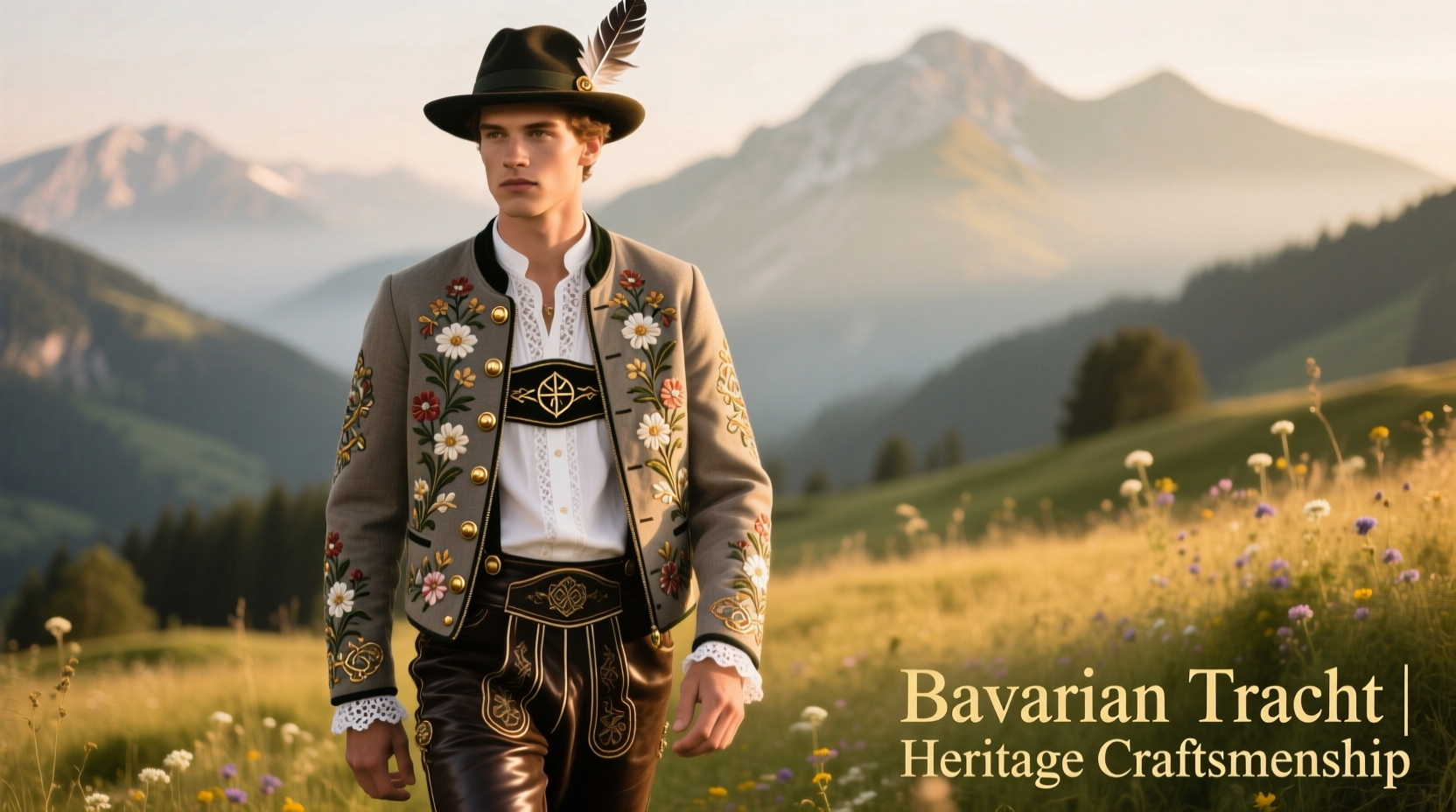
A complete, traditional Bavarian ensemble is a masterclass in functional design and artisanal craftsmanship. Every element serves a historical purpose, from the tanning of the leather to the carving of the horn buttons.
Lederhosen: The Foundation of Männertracht
The centerpiece of the outfit is the Lederhose. Authentic pairs are never made from cowhide or pigskin, which are stiff and impermeable. True artisanal lederhosen are crafted from Hirschleder (red deer), Rehleder (roe deer), or Ziegenleder (goat). The leather undergoes Sämischgerbung, a traditional brain- and oil-tanning process that makes the leather supple, breathable, and remarkably washable. According to the archives at the Deutsches Ledermuseum, this tanning method has been used in Central Europe for centuries to create leather that ages beautifully, developing a unique patina (Speck) over years of wear.
The hallmark of a bespoke lederhosen is the Sattlernaht (saddle stitch). This raised, hand-stitched seam is incredibly durable and allows for intricate floral and hunting motifs (Stickerei) to be embroidered directly into the leather using silk or linen thread. Styles range from the Kurze (short, ending above the knee) to the Kniebundhose (knee-breeches tied with a leather band).
The Charivari and Hirschfänger: Symbols of the Hunt
Worn across the front flap (Latz) of the lederhosen is the Charivari, a heavy silver chain adorned with coins, animal teeth, and talons. Historically, it served as a hunter's trophy chain and a talisman for good luck. Today, it is a significant status symbol and family heirloom. Paired with this is the Hirschfänger, a traditional stag-horn handled hunting knife, carried in a specialized leather pouch (Messerer) on the right hip. The knife is a reminder of the garment's origins among Alpine huntsmen and foresters.
Shirts, Vests, and Headwear
- Pfoad (Shirt): A collarless or stand-collar shirt made of coarse linen or fine cotton. While white is standard for formal events, checkered patterns (Karo) in blue, green, or red are common for everyday wear.
- Gilet (Waistcoat): Worn over the shirt, the vest is often made of wool, linen, or silk brocade. It features a deep V-neck to showcase the shirt and is traditionally tied at the back with a leather or fabric strap.
- Trachtenhut (Hat): A wide-brimmed wool felt hat. Its most prized adornment is the Gamsbart, a brush-like tuft made from the hair of the Alpine chamois, or a single eagle feather (Adlerfeder), historically reserved for master hunters.
- Haferlschuhe (Alpine Shoes): Sturdy leather shoes characterized by their distinctive side-lacing system, originally designed to prevent the laces from being torn by dense underbrush during mountain hunts.
Regional Variations Across the Alpine Foothills
There is no single 'Bavarian' outfit. The Bayerischer Trachtenverband recognizes dozens of distinct regional variations, each governed by local Trachtenvereine (Tracht associations) that strictly preserve local sartorial codes. Wearing the wrong regional variation to a local Kirchweih (church dedication festival) is considered a faux pas.
| Region | Distinctive Features | Primary Colors & Materials |
|---|---|---|
| Miesbacher Tracht | Considered the 'classic' Bavarian look. Features heavy wool vests, elaborate silver hat chains, and specific floral embroidery patterns on the lederhosen. | Dark green, charcoal gray, silver accents. |
| Werdenfelser Tracht | Native to the Garmisch-Partenkirchen region. Distinguished by unique vest cuts, specific knotting techniques for the silk neck scarf (Halstuch), and blue-gray tones. | Steel blue, slate gray, white linen. |
| Berchtesgadener Tracht | Lighter construction suited for the rugged eastern Alps. Features distinct regional flora embroidered on the suspenders (Hosenträger) and lighter felt hats. | Light gray, pastel embroidery, brown leather. |
| Isarwinkler Tracht | Originating south of Munich. Known for its highly decorative, colorful silk vests and specific hat cord (Hutschnur) braiding techniques. | Vibrant reds, greens, and gold brocade. |
Sourcing Authentic Tracht: Artisans, Materials, and Pricing
Investing in a genuine men's Bavarian outfit requires understanding the tiers of craftsmanship. The price of authentic Tracht reflects the hundreds of hours of manual labor required for tanning, stitching, and embroidery.
- Tourist Grade (€120 - €250): Typically made from pigskin or split cowhide. The embroidery is machine-stamped, and the leather is chrome-tanned, making it stiff and prone to cracking. These are costumes (Kostüme), not Tracht.
- Mid-Tier Artisan (€450 - €800): Crafted from goat or basic deer leather. The embroidery is machine-assisted but hand-finished. The hardware is solid brass or horn. Excellent for regular festival attendance.
- Bespoke Maßschneiderei (€1,200 - €3,000+): Commissioned from a master Säckler (leatherworker). Made from premium Hirschleder using Sämischgerbung. Every stitch, including the Sattlernaht, is done by hand. The embroidery is custom-designed, often incorporating the wearer's family initials or local flora. This is a lifetime garment, meant to be passed down through generations.
Cultural Protocols: Wearing Tracht with Dignity
To wear a traditional Bavarian outfit is to participate in a living cultural dialogue. The most critical rule of Tracht etiquette is understanding that it is not a costume. It is formal and semi-formal regional attire, worn with the same respect one would afford a tailored suit or a military dress uniform.
When attending events like the Maibaumaufstellen (Maypole raising), Schützenfeste (marksmen's festivals), or traditional Bavarian weddings, the outfit must be complete and well-maintained. Wearing lederhosen with modern sneakers, a baseball cap, or an untucked, unbuttoned shirt is deeply offensive to traditionalists. The Halstuch (silk scarf) must be tied in the regionally correct knot, and the Haferlschuhe should be worn with thick, ribbed wool socks (Trachtenstutzen), pulled up to the calf, never folded down.
Furthermore, the acquisition of vintage Tracht is highly respected in Bavarian culture. Because authentic leather ages and molds to the wearer's body, inheriting or purchasing a well-maintained vintage pair of lederhosen from a local Trachtenmarkt (Tracht market) is often preferred over buying new, as it carries the history and 'soul' of the Alpine tradition. By understanding the profound craftsmanship and regional nuances of the men's Bavarian outfit, wearers transition from mere consumers of a trend to respectful stewards of European folk heritage.