Cinco De Mayo Clothing: European Roots & Modern Style
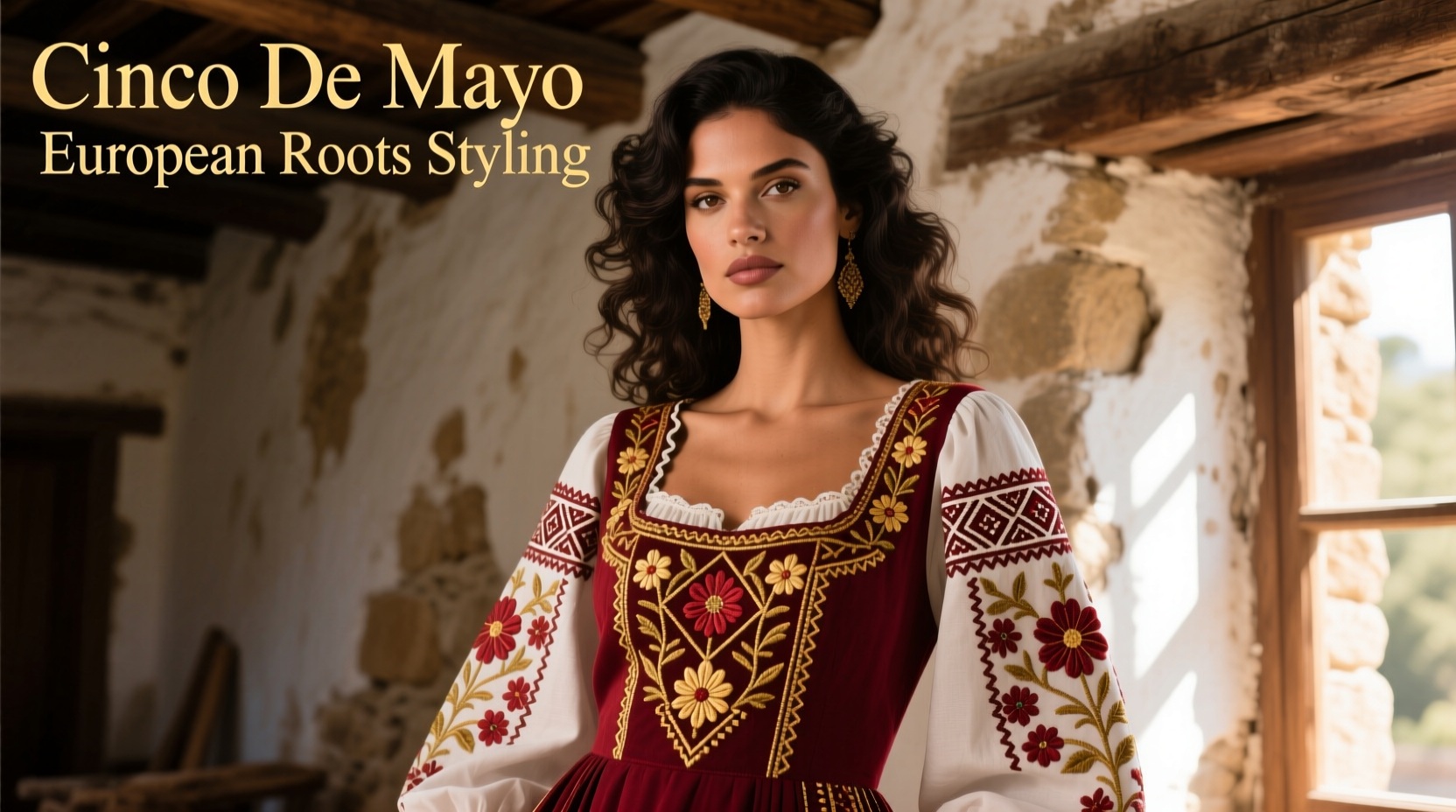
While often celebrated globally with generic tropes, cinco de mayo traditional clothing is deeply rooted in a complex history of transatlantic exchange, indigenous resilience, and European imperialism. Commemorating the 1862 Battle of Puebla—where the Mexican army defeated the forces of the French Second Empire—the holiday's associated garments are a masterclass in syncretism. For cultural garment historians and enthusiasts of European folk dress, the traditional attire of Puebla and the broader Jalisco region offers a fascinating lens into how Spanish Andalusian equestrian wear and French colonial fashion were adapted, subverted, and indigenized by Mexican artisans.
The 1862 Battle of Puebla: Where French and Spanish Threads Collide
To understand the textiles of Cinco de Mayo, one must examine the European powers that sought to control Mexico. The China Poblana, the iconic female dress of Puebla, and the Traje de Charro, the ornate menswear suit, are not purely indigenous garments. They are the result of centuries of Spanish colonial rule, interrupted by the brief but culturally impactful French intervention of the 1860s. According to archives from the Instituto Nacional de Antropología e Historia (INAH), the urban elite of Puebla during the French siege were heavily influenced by Parisian silhouettes, which eventually filtered down to alter the cut and structure of regional folk dresses, merging European bodices with indigenous and mestizo embroidery techniques.
Deconstructing the China Poblana: Spanish Silhouettes and Indigenous Craft
The China Poblana is the quintessential garment associated with Puebla and Cinco de Mayo festivities. Its construction is a direct dialogue between European materials and New World craftsmanship.
The Blusa and Encaje de Bolillo
The blouse (blusa) features intricate white-on-white embroidery and lace. The lacework, known as encaje de bolillo (bobbin lace), is a direct descendant of Spanish and Flemish lace-making traditions brought to the Americas in the 16th century. Artisans in Puebla adapted these European techniques, utilizing local cotton threads to create geometric and floral motifs that mirror the lace mantillas of Andalusia, yet are executed with a distinctly Mexican tension and density.
The Castor Skirt and the Manila Galleon Trade
The skirt, historically made from castor (a fine, felted wool or cotton-blend fabric originally imported via European trade routes), is heavily decorated with seguita (sequins) and glass beads. The motifs often feature the Mexican eagle, but the technique of beadwork and the use of silk threads trace back to the Manila Galleon trade, which connected Asia, the Americas, and Spain. The structured waistband and the use of European silk ribbons for tying the skirt reflect the Spanish colonial mandate for modesty and structured silhouettes, contrasting sharply with the fluid, un-tailored garments of pre-Columbian Mesoamerica.
The Charro Suit: Andalusian Equestrian Roots in Mexican Menswear
The Traje de Charro, famously worn by Mariachi bands during Cinco de Mayo celebrations, is frequently mistaken for a purely native Mexican invention. In reality, it is a direct evolution of the Spanish traje corto and the equestrian wear of the Salamanca and Andalusian regions of Spain.
Spanish hacienda owners brought their tailored riding suits to the New World. These suits featured short jackets (chaquetilla), tight-fitting trousers with silver buttons (botones) down the seams, and wide-brimmed hats to protect against the Iberian sun. Mexican mestizo and indigenous vaqueros adopted and adapted this European equestrian gear. They replaced Spanish silver filigree with piteado (intricate embroidery using agave fibers) and expanded the embroidery (grecas) to cover the entire suit, transforming a symbol of Spanish colonial authority into a badge of Mexican national pride and horsemanship.
Modern vs. Traditional Styling: A Comparative Guide
As global interest in cultural dress grows, distinguishing between respectful modern styling and reductive fast-fashion costumes is vital. Below is a framework for navigating Cinco de Mayo attire in contemporary settings.
| Garment Element | Traditional / Historical Construction | Modern Respectful Styling | Fast-Fashion Caricature (Avoid) |
|---|---|---|---|
| China Poblana Skirt | Heavy castor or silk fabric, hand-sewn sequins, lined with cotton, featuring the national crest or regional flora. | Worn with a tailored, modest blouse and a high-quality silk rebozo draped over the shoulders for formal cultural events. | Flimsy polyester satin, machine-printed 'taco' or 'sombrero' graphics, dangerously short hemlines. |
| Charro Jacket (Chaquetilla) | Wool or suede base, genuine silver or piteado embroidery, tailored to sit above the waist for horseback riding. | Paired with dark, tailored trousers and a silk bow tie (moño). Worn as formal wear at galas or musical performances. | Plastic 'metallic' trim, polyester vests, ill-fitting costume jackets sold in party supply stores. |
| The Sombrero | Felted wool or woven palm leaf, wide brim for sun protection, intricate leather or silver tooling on the crown. | Reserved for outdoor equestrian events, traditional dance (baile folklórico), or displayed as textile art. | Oversized, cheap straw hats with 'Mexico' printed on the front; wearing them indoors or in casual bar settings. |
| Footwear | Leather botines (ankle boots) for Charros; silk or leather slippers for the China Poblana. | High-quality leather boots or elegant flats that respect the historical silhouette and provide comfort for dancing. | Plastic sandals or cheap costume shoes that lack structural integrity and historical accuracy. |
Sourcing Authentic Garments: Artisan Cooperatives and Price Guides
Investing in authentic Cinco de Mayo traditional clothing supports living heritage and master artisans. According to the Museo de Arte Popular (MAP) in Mexico City, the preservation of these syncretic textile techniques relies on direct patronage of regional cooperatives.
- Authentic China Poblana Skirt: A hand-sequined, fully lined skirt crafted by artisans in Puebla or Zacatecas typically ranges from $450 to $1,200 USD. The price reflects the hundreds of hours required to apply glass beads and sequins by hand.
- Hand-Woven Rebozo: A traditional silk or cotton rebozo, woven on a backstrap or European pedal loom and finished with hand-knotted rapacejo (fringe), costs between $150 and $500 USD depending on the thread count and natural dyes used.
- Traje de Charro (Full Suit): A bespoke, historically accurate Charro suit made by a master sastre (tailor) in Jalisco or Mexico City, featuring genuine silver botonadura (buttons) and wool fabric, starts at $2,500 USD and can exceed $8,000 USD for competition-grade gala suits.
- Piteado Belt: A leather belt embroidered with agave fiber, an essential Charro accessory, ranges from $120 to $350 USD.
Consumers should seek out retailers certified by FONART (Fondo Nacional para el Fomento de las Artesanías) or purchase directly from recognized artisan guilds in Puebla and Jalisco to ensure fair compensation and historical accuracy.
Wearing Etiquette and Cultural Respect
When styling European-influenced Mexican garments for modern celebrations, context is paramount. The Victoria and Albert Museum's textile archives frequently highlight how colonial garments were tools of both oppression and eventual cultural reclamation. Wearing a Charro suit or a China Poblana dress is not merely 'dressing up'; it is donning a uniform of national survival and regional pride.
For those outside of the Mexican diaspora wishing to appreciate these garments, the most respectful approach is to support the artisans financially by purchasing authentic home textiles (like embroidered linens or woven tapestries) or by attending Baile Folklórico performances where the garments are worn by trained cultural practitioners. If invited to a formal Cinco de Mayo cultural gala where traditional dress is encouraged, opt for a high-quality, region-specific rebozo or a finely embroidered blouse paired with modern, neutral tailoring. This approach honors the Spanish and indigenous techniques without crossing the line into cultural appropriation or caricature.
Ultimately, understanding the European roots of Cinco de Mayo traditional clothing enriches our appreciation for the garments. The Spanish lace, the Andalusian silver, and the French silhouettes were not merely copied; they were conquered by the needle, transformed by indigenous and mestizo hands into enduring symbols of Mexican sovereignty.