The Dirndl Long Sleeve Blouse: Historical Origins & Alpine Evolution
From Peasant Workwear to Alpine Icon: The Blouse's Genesis
When the modern world envisions the traditional Bavarian and Austrian dirndl, the image often defaults to a sleeveless bodice paired with a short-sleeved, ruffled blouse. However, the dirndl long sleeve blouse (known in German as the Dirndlbluse mit langen Ärmeln) holds a far more authentic and historically significant place in Alpine sartorial heritage. To understand this garment is to understand the daily lives, climatic challenges, and social codes of the women who inhabited the Alps from the 18th century onward.
Originally, the dirndl was not a singular dress but an ensemble born from the utilitarian workwear of Alpine maidservants (Dirnen) and peasant women. The blouse itself evolved from the Hemd (chemise), a foundational undergarment worn directly against the skin. According to archives at the Salzburger Freilichtmuseum, the transition of the Hemd from a hidden undergarment to a visible, decorative component of the Tracht (folk dress) occurred gradually throughout the 19th century. As the bodice (Mieder or Leibl) became more structured and lower-cut, the sleeves and neckline of the chemise were intentionally designed to be seen, eventually giving rise to the standalone Dirndlbluse.
Anatomy of the Traditional Dirndl Long Sleeve Blouse
The authentic long sleeve dirndl blouse is a masterclass in functional tailoring. Unlike modern fast-fashion interpretations that rely on synthetic blends and elasticated cuffs, the historical garment was constructed with specific regional codes and natural fibers.
Fabric and Composition
Traditionally, the blouse was woven from Baumwollbatist (cotton batiste) or fine linen. These materials were chosen for their breathability during summer months and their ability to be heavily starched, providing a crisp, immaculate appearance that signaled a woman's diligence and domestic skill. For winter months and festive occasions, heavier cotton weaves or even silk-blend batistes were utilized to provide insulation beneath woolen bodices.
Sleeve Construction and Cuffs
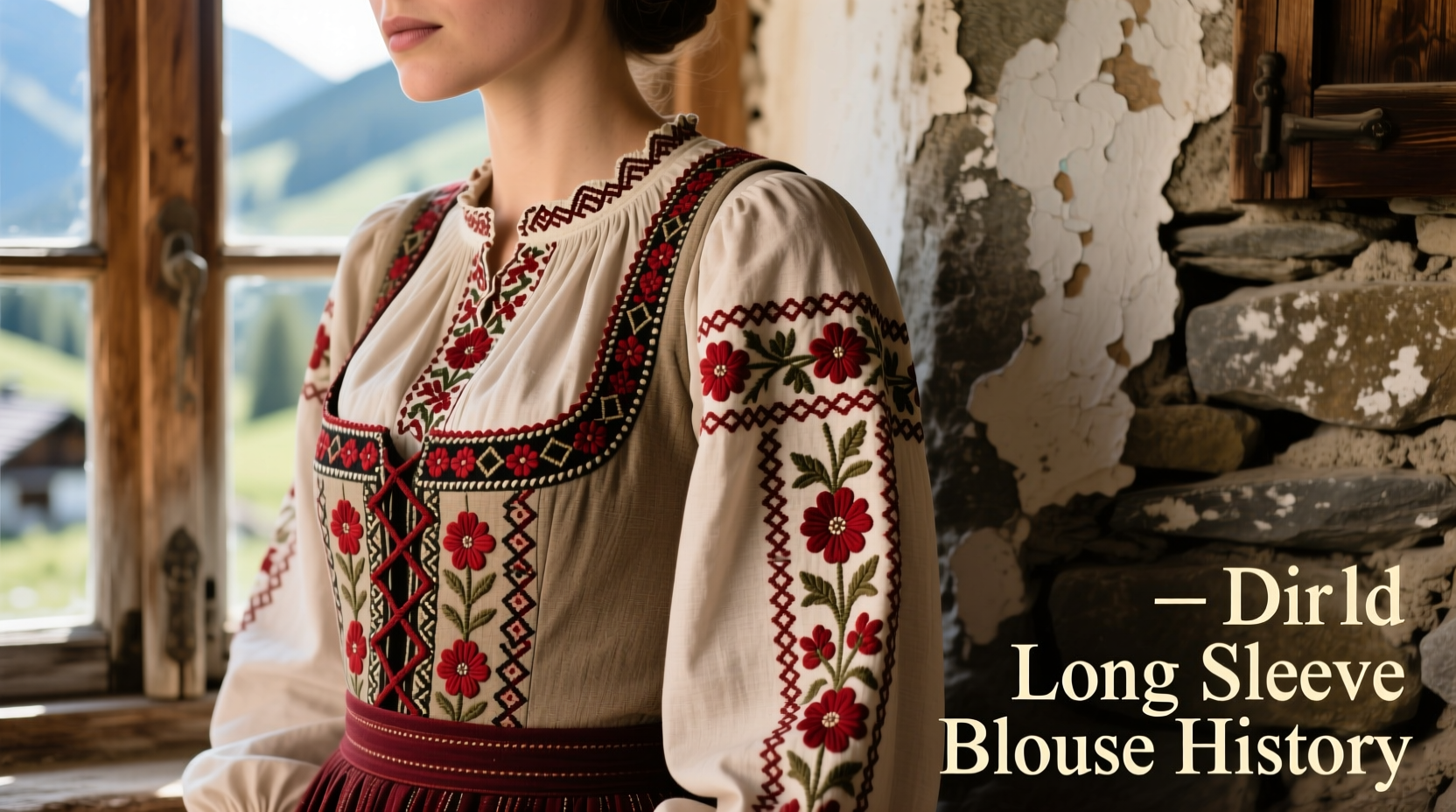
The defining feature of the dirndl long sleeve blouse is its sleeve architecture. The sleeve is typically set into the armhole with a slight gather (Angereihter Ärmel) to allow for a full range of motion during agricultural labor. Crucially, the sleeve tapers down to a fitted cuff at the wrist, fastened with a single mother-of-pearl or horn button. This tight cuff was a vital functional element: it prevented dirt, chaff, and brambles from entering the sleeve while women worked in the fields or tended to livestock.
The Neckline: Framing the Alpine Aesthetic
While the long sleeves offer modesty and protection, the neckline provides the garment's decorative focal point. The most historically prevalent cut for a long-sleeved winter or church blouse is the Karreeausschnitt (square neckline) or the Herzausschnitt (sweetheart neckline). These cuts were designed to perfectly frame the collarbones and accommodate the elaborate silver or horn chains (Kropfketten) worn around the neck in regions like Upper Bavaria and Tyrol.
Comparative Analysis: Sleeve Lengths in Alpine Tracht
To fully appreciate the long sleeve variant, one must understand its place within the broader ecosystem of Alpine dress. The choice of sleeve length was rarely arbitrary; it was dictated by season, occasion, and regional parish laws.
| Sleeve Variant | Historical Function | Primary Season / Occasion | Regional Prominence |
|---|---|---|---|
| Short Sleeve (Kurzer Ärmel) | Summer field work, indoor domestic chores, informal gatherings. | High Summer, Informal | Widespread across Bavaria and Salzburg. |
| Three-Quarter Sleeve | Transitional weather, market days, semi-formal events. | Spring / Autumn | Common in the Salzkammergut region. |
| Long Sleeve (Langer Ärmel) | Winter labor, formal church attendance (Kirchentracht), mourning. | Winter, Formal, Religious | Ausseerland, Tyrol, Upper Bavaria. |
The Functional Shift: Climate, Modesty, and Kirchentracht
The dominance of the dirndl long sleeve blouse in the 19th and early 20th centuries was heavily influenced by the harsh Alpine climate and the strict modesty codes enforced by the Catholic Church. In rural parishes across Tyrol and Bavaria, bare arms were considered highly inappropriate for Sunday mass or religious processions. The Kirchentracht (church attire) strictly mandated long sleeves, often paired with a dark, conservative bodice and a silk apron.
Furthermore, the long sleeve served as a vital protective layer against the biting winds of the high-altitude valleys. The Tiroler Volkskunstmuseum notes that in deeper winter, women would often layer a fine woolen long-sleeved undershirt beneath the cotton batiste blouse, creating a micro-climate of insulation that allowed them to attend outdoor winter markets and church services without succumbing to the cold.
'The evolution of the Dirndlbluse from a hidden linen chemise to a highly visible, codified element of regional identity is one of the most fascinating aspects of Alpine textile history. The long sleeve, in particular, speaks to the intersection of religious modesty and agrarian necessity.'
— Curatorial Archives, Bayerisches Nationalmuseum, Munich.
Sourcing and Crafting: A Guide for the Modern Enthusiast
For those looking to acquire an authentic dirndl long sleeve blouse today, navigating the market requires a discerning eye. The proliferation of 'Oktoberfest' costumes has flooded the market with synthetic, ill-fitting garments that disrespect the heritage of the Tracht. When sourcing a true heritage piece, consider the following frameworks:
1. Material Verification
Reject any blouse containing polyester or elastane. Authentic artisan blouses are crafted from 100% cotton batiste, fine linen, or high-grade modal. The fabric should feel cool to the touch and possess a slight natural stiffness that responds well to starching.
2. Construction Details
Examine the seams. High-quality blouses from heritage manufacturers (such as those based in the Ausseerland or Miesbach) feature French seams or meticulously finished overlocked edges. The buttonholes should be hand-stitched or tightly machine-bound, and the buttons must be natural materials like mother-of-pearl, horn, or carved wood—never plastic.
3. Price Expectations
Authenticity commands a fair wage for skilled labor. Expect the following price ranges for a genuine dirndl long sleeve blouse:
- Mass-Market / Entry Heritage: €45 – €80 (Often manufactured outside the DACH region but using correct cotton patterns).
- Artisan / Mid-Range: €90 – €160 (Tailored in Bavaria or Austria, featuring premium batiste and natural buttons).
- Bespoke / Master Tailor: €200 – €350+ (Custom-fitted, hand-embroidered cuffs, museum-grade reproduction techniques).
Preserving the Heritage: Wearing Etiquette and Care
Owning a traditional dirndl long sleeve blouse comes with the responsibility of proper maintenance. The crisp, pristine white of the Baumwollbatist is a hallmark of Alpine pride. Historically, the whitening of the blouses was achieved by laying them on wet alpine meadows under the bright mountain sun—a process known as Rasenbleiche.
Today, care should involve gentle hand-washing or using a delicate cycle with a specialized white-textile detergent. Avoid chlorine bleach, which degrades natural cotton fibers over time. The most crucial step, however, is the finishing. The collar, cuffs, and front placket should be lightly starched and pressed with a steam iron to achieve the sharp, structured silhouette that defines the authentic Tracht aesthetic. By understanding and respecting the historical origins of the dirndl long sleeve blouse, wearers do more than don a beautiful garment; they participate in the living, breathing continuation of Alpine cultural history.