Preserving European Traditional Dress: Expert Care Guide

The Fragility of Heritage: Why European Traditional Dress Requires Specialized Care
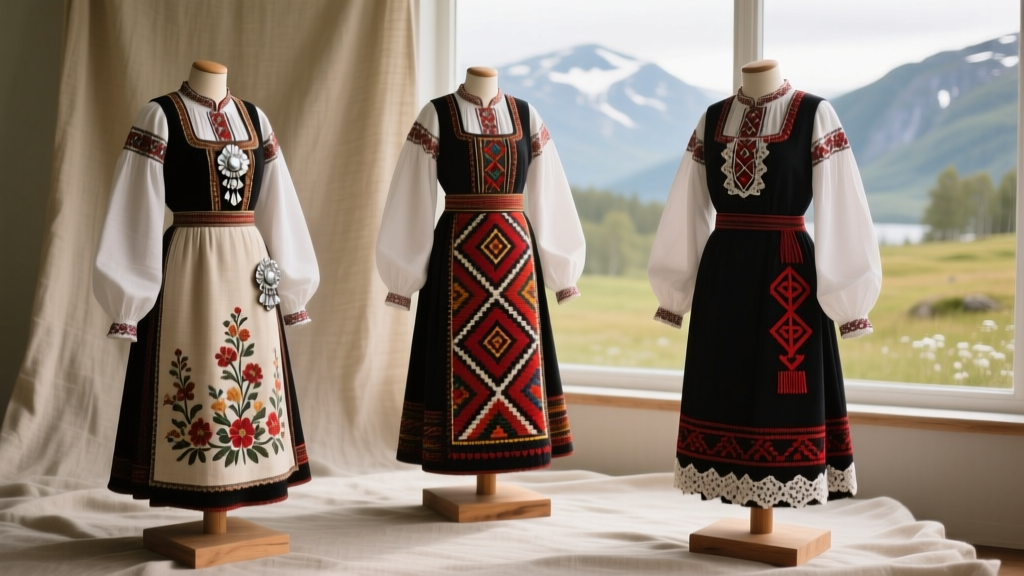
Owning a piece of authentic european traditional dress is an investment in living history. Whether it is a meticulously hand-embroidered Norwegian bunad, a pair of bespoke Bavarian Lederhosen, or a hand-woven Scottish tartan kilt, these garments are constructed using heritage techniques and natural materials that demand specialized conservation. Unlike modern fast-fashion textiles, folk costumes utilize untreated wools, vegetable-tanned leathers, and pure silk threads that are highly susceptible to environmental degradation, pest damage, and improper cleaning methods.
According to the Victoria and Albert Museum's textile conservation guidelines, the primary rule of heritage garment preservation is 'do no harm.' Well-intentioned but incorrect cleaning methods—such as machine washing a wool bodice or applying commercial silicone-based leather conditioners to deer hide—can cause irreversible structural damage. This comprehensive guide details the exact protocols required to clean, store, and preserve Europe's most iconic regional garments for future generations.
Understanding Material Composition in Folk Costumes
Before applying any preservation technique, one must understand the native materials used in regional dress. Traditional European garments rarely utilize synthetic blends. Instead, they rely on:
- Vadmel and Worsted Wools: Dense, lanolin-rich or heavily milled wools used in Nordic and Celtic garments that are prone to felting if exposed to heat and agitation.
- Hirschleder and Gamsleder: Oil-tanned or brain-tanned deer and chamois leathers used in Alpine Tracht that require breathability and specific moisture balance.
- Raw Silk and Linen: Used for aprons (Schürze) and under-blouses, which are highly sensitive to alkaline detergents and water spotting.
- Sterling Silver and Horn: Hardware elements like Norwegian solje brooches or Bavarian horn buttons that tarnish or crack under fluctuating humidity.
Garment-Specific Preservation Protocols
The Norwegian Bunad: Wool, Silk, and Solje Silver
The Norwegian bunad is perhaps the most heavily regulated and expensive folk dress in Europe, with some regional variants (like the Hardanger or Telemark bunads) costing upwards of €4,000 to €6,000. The skirts are often made of heavy, hand-woven vadmel wool and feature intricate embroidery using silk or wool thread.
Cleaning: Never dry clean a bunad unless absolutely necessary, as the harsh chemical solvents (like perchloroethylene) strip the natural lanolin from the wool, leaving it brittle. Spot clean minor stains with distilled water and a pH-neutral wool wash. The Norsk Folkemuseum (Norwegian Museum of Cultural History) advises that bunads should be aired out in a damp, misty environment (like a bathroom after a shower) to naturally release wrinkles and odors without heat.
Silver Care: The elaborate silver jewelry (solje) must be removed before storage. Silver reacts with sulfur in the air and wool to form black silver sulfide. Store solje in airtight anti-tarnish cloth bags with activated charcoal strips, avoiding direct contact with rubber or acidic paper.
Bavarian and Austrian Tracht: Lederhosen and Dirndl Blouses
Authentic Alpine Lederhosen are crafted from Hirschleder (deer leather) or Gamsleder (chamois). Unlike modern chrome-tanned leathers, traditional Tracht leather is oil-tanned or brain-tanned, giving it a matte, suede-like finish and incredible durability.
Leather Maintenance: Never use standard shoe polish, mink oil, or silicone sprays on Hirschleder. These products clog the leather's pores, darken the hide unevenly, and ruin the traditional matte aesthetic. If the leather becomes stiff, it should be gently massaged by hand to reactivate the natural oils. For severe soiling, wipe with a barely damp cloth and allow to dry at room temperature, away from direct sunlight or radiators.
Dirndl Care: The Mieder (bodice) often contains stiffening interlinings and delicate horn or bone buttons. Dry clean the bodice to preserve its structure. The silk apron (Schürze) should be hand-washed in cold water with a silk-specific detergent. Never wring silk; roll it in a clean cotton towel to absorb moisture and iron on the lowest setting while slightly damp.
Scottish Highland Dress: Worsted Wool Tartans and Hardware
The Scottish kilt (fèileadh beag) is an engineering marvel of worsted wool, featuring up to 8 yards of fabric tightly pleated and stitched. The National Museums Scotland notes that the sharpness of the kilt's pleats is central to its cultural silhouette and structural integrity.
Storage and Folding: Never hang a kilt on a standard wire or wooden hanger, as the sheer weight (often over 2kg) will distort the waistband and stretch the wool. Furthermore, folding a kilt sharply along the pleats will cause permanent crease damage to the wool fibers. Kilts must be rolled. Lay the kilt flat, fold the aprons inward, and roll it tightly from the fringe end toward the waistband. Store the rolled kilt in an unbleached cotton bag.
Hardware: Kilt pins, sporran chains, and silver belt buckles should be detached before storage to prevent the metal from snagging the wool or leaving green oxidation stains on the fabric.
Archival Storage Solutions for Folk Textiles
Proper storage is the most critical factor in the longevity of european traditional dress. Garments should never be stored in plastic dry-cleaning bags, which trap moisture and emit volatile organic compounds (VOCs) that degrade natural fibers. Instead, utilize the following archival matrix:
| Material / Garment | Native Term | Primary Risk | Preservation Strategy |
|---|---|---|---|
| Heavy Wool Skirts | Vadmel / Bunad | Shoulder distortion, moth damage | Padded folding in archival boxes; unbuffered acid-free tissue paper in pleats. |
| Deer Leather Breeches | Hirschleder | Drying, mold, silicone contamination | Store flat in breathable cotton; maintain 45-55% Relative Humidity (RH). |
| Worsted Wool Kilts | Fèileadh beag | Pleat crushing, fiber stretching | Roll tightly from fringe to waist; store horizontally in a cedar-lined chest. |
| Silk Aprons & Sashes | Schürze / Tartan Sash | Water spotting, light fading | Store flat in dark environments; limit light exposure to under 50 lux. |
| Silver Jewelry | Solje / Kilt Pins | Sulfur tarnishing, scratching | Wrap in Pacific Silvercloth; store in airtight containers separate from wool. |
Pest Management: Protecting Heritage Wools
The webbing clothes moth (Tineola bisselliella) and the carpet beetle (Anthrenus verbasci) are the greatest biological threats to European folk dress. These pests are attracted to the keratin in wool, as well as the residual sweat, food stains, and body oils left on garments after wear.
Safe Cleaning Agents vs. Destructive Chemicals
Before storing any wool garment for the season, it must be immaculately clean. Pests are attracted to organic residues. However, avoid commercial mothballs containing naphthalene or paradichlorobenzene. These chemicals are highly toxic, leave a pervasive odor that is nearly impossible to remove from dense wools, and can actually melt certain synthetic embroidery threads or plastic buttons.
The Freezing Protocol: If you suspect a garment has been exposed to moths, textile conservators utilize a freezing protocol to eradicate eggs and larvae. Seal the garment in a plastic bag with a moisture-absorbing silica gel packet. Place it in a deep freezer at -20°C (-4°F) for a minimum of 72 hours. Thaw slowly at room temperature, then vacuum gently through a fiberglass screen to remove any dead insects.
'Conservation of folk dress is not about making a garment look brand new; it is about stabilizing its current state and honoring the hands that wove, tanned, and stitched it. Every intervention must be reversible.' — Principle of Modern Textile Conservation
When to Seek Professional Textile Conservators
While routine airing, rolling, and archival boxing can be done at home, certain situations require the intervention of a certified textile conservator. You should seek professional help if:
- Embroidery Bleeding: If moisture causes traditional dyed threads (especially reds and blacks) to bleed into the base fabric.
- Leather Desiccation: If antique Lederhosen exhibit 'red rot' or severe cracking along the stress points of the knees and waistband.
- Structural Failure: If the heavy linen interlining of a Renaissance-era bodice or a Victorian dirndl begins to shatter or turn to dust (a sign of acidic degradation).
By respecting the material origins and employing these meticulous preservation techniques, collectors and cultural practitioners can ensure that their european traditional dress remains a vibrant, wearable testament to regional heritage for centuries to come.