Chinese National Costumes: Culture & European Echoes

The Complexity of 'National' Dress in a Multi-Ethnic Empire
When discussing Chinese national costumes, one must first dismantle the Western concept of a singular, monolithic national dress. China’s sartorial history is a vast tapestry woven from the Han majority, the Manchu rulers of the Qing Dynasty, and the 55 recognized ethnic minorities. Furthermore, the global trajectory of these garments is inextricably linked to European folk and court dress through centuries of Silk Road trade. As a cornerstone of global textile history, understanding Chinese garments requires examining their indigenous cosmic symbolism alongside their profound influence on European tailoring, particularly during the 17th and 18th-century Chinoiserie movement.
Hanfu: Cosmic Geometry and the Right Lapel
Before the Qing Dynasty's imposition of Manchu dress in 1644, the Han Chinese wore Hanfu, a system of dress deeply rooted in Confucian philosophy and cosmic geometry. The defining characteristic of traditional Hanfu is jiaoling youren—the cross-collar that wraps left over right. In traditional Chinese cosmology, the left represents the yang (life and the living), while the right represents the yin (death and the spirit world). Wrapping the left lapel over the right was a strict cultural mandate for the living; reversing it was reserved strictly for the deceased.
Construction and the Shenyi Silhouette
The shenyi (deep garment), popular during the Han and Ming dynasties, is a masterclass in flat-pattern cutting. Unlike European tailoring, which historically relied on darts and curved seams to contour the body, traditional Chinese garments were cut from rectangular pieces of woven silk or ramie. This zero-waste approach honored the integrity of the woven cloth. The sleeves of formal Hanfu were often cut in a gentle curve to represent the vault of heaven, while the square neckline symbolized the earth. According to The Metropolitan Museum of Art's Heilbrunn Timeline of Art History, these structural choices were not merely aesthetic but served as a moral compass, physically constraining the wearer to move with deliberate, dignified grace.
The Qipao: From Imperial Banner Robes to Modernist Icon
The qipao (or cheongsam) is globally recognized as a quintessential Chinese national costume, yet its origins are deeply political. It evolved from the qizhuang, the voluminous, straight-cut banner robes worn by Manchu women during the Qing Dynasty. The modern, form-fitting qipao did not emerge until the 1920s in Shanghai, representing a radical synthesis of Chinese modesty and Western structural tailoring.
The Structural Shift of the 1920s
Shanghai tailors introduced Western darts, set-in sleeves, and side-slits to the traditional one-piece robe. This allowed the garment to follow the natural contours of the female form, a stark departure from the flat-cutting traditions of the past. High-collared and fastened with intricate, hand-knotted pankou (frog buttons), the qipao became a symbol of the 'New Woman' in Republican China. Today, bespoke qipaos crafted from heavy silk brocade or velvet remain essential for formal occasions, with artisan-crafted pieces in Shanghai's French Concession commanding prices between $400 and $1,500 USD, depending on the complexity of the hand-embroidered motifs.
Minority Masterpieces: Miao Silverwork and Indigo Resist-Dyeing
To truly grasp the breadth of Chinese national costumes, one must look to the southwestern provinces of Guizhou and Yunnan. The Miao (Hmong) people possess one of the most visually staggering sartorial traditions in the world, characterized by heavy silver jewelry and masterful indigo dyeing.
The Weight of Ancestral Silver
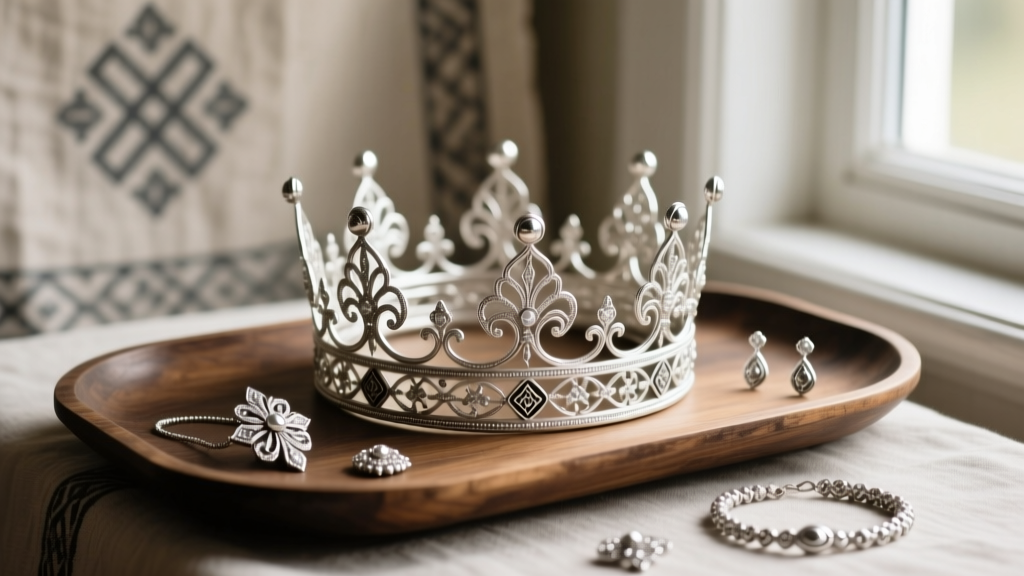
A traditional Miao festival headdress can weigh upwards of 10 kilograms, featuring towering silver horns that mimic the water buffalo, an animal sacred to their agrarian society. The silver is not merely decorative; it functions as portable wealth and a spiritual shield against malevolent spirits. The accompanying pleated skirts, often requiring up to 20 meters of hand-woven hemp or cotton, are dyed using a complex indigo resist-dyeing technique (batik) utilizing beeswax. The deep, shimmering blue-black hue is achieved through dozens of successive dips in organic indigo vats, followed by polishing with egg whites or river stones to create a metallic sheen.
The European Echo: Chinoiserie and the Silk Road Exchange
While categorized under global folk dress, the impact of Chinese national costumes on European sartorial traditions is a vital area of study. During the 17th and 18th centuries, the importation of Chinese silk robes via the Dutch and British East India Companies sparked the Chinoiserie craze across Europe. European aristocrats and wealthy merchants began wearing the 'banyan' or 'morning gown'—a European dressing gown directly inspired by the loose, T-shaped structure of Chinese and Japanese robes.
Lyon Weavers and Motif Adaptation
Silk weavers in Lyon, France, and Spitalfields, London, began meticulously copying Chinese textile motifs. The Chinese peony (symbolizing wealth), the dragon (imperial power), and the phoenix were adapted into European brocades. As documented by the Victoria and Albert Museum's archive on Chinoiserie, European textile artisans frequently misunderstood the original cultural context of these motifs, blending Chinese pagodas with European flora to create a fantastical, hybridized aesthetic that heavily influenced European court dress and, eventually, regional folk embroidery in areas with high textile production.
Comparative Analysis: Garments, Materials, and Market Values
For collectors, museum curators, and cultural enthusiasts, understanding the material composition and market value of these garments is essential for ethical acquisition and preservation.
| Garment Type | Cultural Origin | Primary Materials | Artisan Price Range (USD) | Key European Museum Holdings |
|---|---|---|---|---|
| Ming-Style Hanfu (Shenyi) | Han Chinese | Mulberry Silk, Ramie | $250 - $800 | V&A Museum, London |
| Qing Court Dragon Robe (Jifu) | Manchu | Silk Satin, Gold Couching | $15,000 - $100,000+ (Antique) | British Museum, London |
| Bespoke Qipao | Republican/Modern | Silk Brocade, Velvet | $400 - $1,500 | MET, New York |
| Miao Festival Ensemble | Miao (Guizhou) | Indigo Hemp, Sterling Silver | $2,000 - $8,000+ | Musée du Quai Branly, Paris |
Ethical Sourcing and Contemporary Revival
The 21st century has witnessed a massive Hanfu movement among Chinese youth, who wear historically accurate garments in daily life as a reclamation of pre-Qing cultural identity. However, the market is flooded with mass-produced, synthetic alternatives. For those seeking authentic pieces, it is crucial to support specialized artisan cooperatives.
A Framework for Authentic Acquisition
- Hanfu: Seek out makers who utilize traditional kedi (silk tapestry) weaving and natural plant dyes. Authentic Ming-style garments require specialized looms and can take months to complete.
- Miao Silverwork: Purchase directly from artisan guilds in Xijiang or Kaili in Guizhou province. Ensure the silver is hallmarked and that the purchase supports the local continuation of the craft, rather than mass-produced factory alloys.
- Antique Textiles: When sourcing Qing dynasty robes or early 20th-century qipaos, consult the British Museum's Asian textile collections or certified auction houses to verify the provenance and ensure the garments were not illicitly looted during periods of historical instability.
Conclusion: A Living Sartorial Heritage
Chinese national costumes are not static relics confined to museum vitrines; they are living, breathing expressions of identity, philosophy, and resistance. From the cosmic geometry of the Hanfu cross-collar to the modernist synthesis of the Shanghai qipao, and the heavy silver crowns of the Miao highlands, these garments offer a profound lens into the soul of Chinese civilization. Furthermore, their historical journey along the Silk Road serves as a powerful reminder that European and Asian folk and court traditions have always been in a state of dynamic, beautiful conversation.