Zulu Beadwork Color Meanings And Initiation Attire Guide
Zulu Beadwork as Living Language
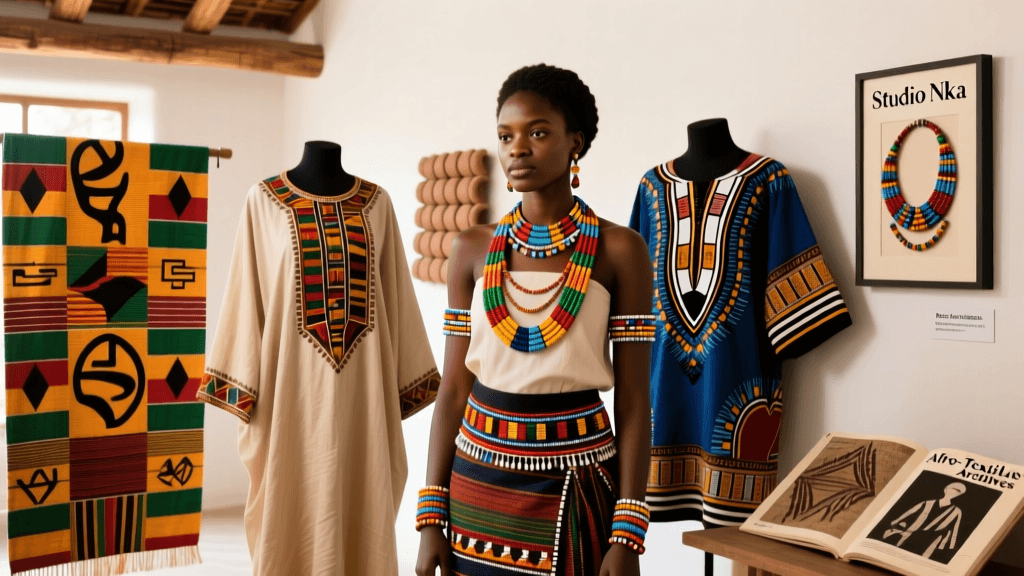
Zulu beadwork is not merely decorative—it functions as a precise, codified visual language rooted in centuries of oral tradition and social structure. Originating among the Zulu people of present-day South Africa’s KwaZulu-Natal province, this art form emerged prominently during the 19th century as a substitute for cattle-based dowry negotiations when colonial land dispossession limited livestock exchange. Each color, pattern, and arrangement conveys specific messages about identity, marital status, age grade, and even emotional intent. Unlike Western textile arts where symbolism may be interpretive, Zulu beadwork adheres to strict regional conventions: a young woman wearing a isicholo (wide-brimmed hat) adorned with white beads signals virginity, while concentric red-and-black zigzags on an apron denote readiness for marriage.
Color Semantics in Zulu Beadwork
The chromatic vocabulary is rigorously standardized across Zulu-speaking communities. White (mhlophe) signifies purity, spirituality, and mourning—used extensively in initiation rites and funeral attire. Black (mdaka) represents maturity, sorrow, and the ancestral realm; it appears in bands measuring precisely 1.5 cm wide on ceremonial belts worn by initiates. Blue (bulu) denotes fidelity and longing—often stitched in diagonal rows of exactly 7 beads per line to symbolize the seven days of creation in Zulu cosmology. Green (ludwe) expresses fertility and new life, appearing most frequently in skirts worn by newly married women whose hemlines are edged with 36 evenly spaced green triangles—each triangle measuring 2.2 cm at its base. Yellow (khaki) signals wealth and high status, traditionally reserved for royal attendants whose necklaces contain no fewer than 84 hand-rolled glass seed beads per strand.
Material Evolution and Technical Precision
Early Zulu beadwork used natural materials: crushed ostrich eggshells for white, charcoal for black, and plant dyes for earth tones. Colonial trade introduced Czech glass seed beads in the 1880s, revolutionizing scale and chromatic range. Today, artisans maintain exacting standards: each traditional iziqu (beaded panel) must contain between 1,200 and 1,800 beads, strung on nylon thread using the “stitch-and-turn” method that ensures structural integrity without visible knots. A master artisan spends approximately 120 hours completing a full initiation set—including the isidwaba (leather skirt), isibhambo (necklace), and iziqu (chest piece)—with no single element deviating more than ±0.3 mm from prescribed geometric ratios.
Initiation Attire: Structure and Sequence
Zulu initiation ceremonies—umemulo for girls and ukwaluka for boys—feature distinct sartorial phases reflecting spiritual transformation. For girls, the process begins at age 16–18 and unfolds over three weeks. On Day 1, the initiate wears a plain white cotton shift measuring 1.8 meters in length and 0.9 meters in width, symbolizing blankness before instruction. By Day 12, she dons layered regalia: a cowhide apron dyed with tannin-rich mimosa bark (pH 4.2), a beaded headband with 21 vertical stripes (representing the 21 clans of the Zulu nation), and sandals woven from twisted ilala palm fibers with 17 interlocking loops per sole.
Ritual Garments and Their Measurements
- Isidwaba (leather skirt): Cut from one unbroken hide, stretched to 1.1 meters in circumference and 0.45 meters in drop length
- Umbhaco (beaded blanket): Woven on a portable backstrap loom; contains 48 warp threads per centimeter and weighs 1.3 kg when complete
- Iziqu (chest plate): Composed of 288 beads arranged in a 12 × 24 grid; each bead is 2.5 mm in diameter
Institutional Preservation and Contemporary Practice
The KwaZulu-Natal Department of Arts and Culture operates the Zulu Royal Beadwork Archive in Ulundi, housing over 3,200 documented pieces dating from 1892 to present. This archive collaborates with the University of Zululand’s Textile Heritage Unit, which trains 42 apprentices annually in traditional dyeing techniques using indigenous plants like Indigofera spp. and Sida acuta. The Durban Art Gallery hosts the annual “Bead & Breath” exhibition, now in its 17th iteration, featuring works from 63 registered Zulu beadworkers across 11 districts. According to the African Fashion Foundation’s 2022 Cultural Sustainability Report, 78% of certified Zulu beadwork practitioners operate cooperatives with formalized apprenticeship contracts—up from 41% in 2010.
Comparative Symbolism Across African Textile Traditions
While Zulu beadwork relies on chromatic syntax, other African textile systems deploy geometry, material, or process as primary signifiers. In Ghana, Ashanti kente cloth uses over 300 named patterns—each tied to proverbs and historical events—with the Eban (safety) motif requiring exactly 112 weft picks per 10 cm to encode its protective meaning. Maasai beadwork in Kenya and Tanzania employs color codes distinct from Zulu conventions: red signifies bravery and unity (not marital status), and warriors’ collars contain 13 concentric rings—reflecting the 13 warrior age sets in Maasai chronology. Nigerian adire eleko resist-dyed cloth uses cassava paste stencils applied with bamboo sticks measuring 1.7 cm in diameter to create motifs like oju olokun (eye of the sea goddess), where each dot cluster contains precisely 9 impressions.
Technical Specifications and Craft Standards
A standardized Zulu beadwork certification exam administered by the KwaZulu-Natal Traditional Arts Council includes five mandatory components: color-matching accuracy (±3 CIELAB units), stitch tension consistency (measured at 1.8 N force per 10 cm), pattern alignment tolerance (no deviation exceeding 0.5° from true vertical), bead density verification (minimum 144 beads per square centimeter), and material authenticity testing (confirmed via FTIR spectroscopy for pre-1950 glass composition). Certified artisans receive quarterly technical audits—last year’s audit covered 1,847 pieces across 29 workshops, with 92.3% compliance on dimensional precision.
“Beadwork is our archive written in light and color. When a girl wears her first isidwaba, she doesn’t wear cloth—she wears her lineage, her obligations, and her future.” — Nompumelelo Dlamini, Senior Master Beadworker, Zulu Royal Beadwork Archive, Ulundi (2023)
Contemporary Integration and Ethical Production
Modern designers such as Laduma Ngxokolo of Maxhosa Africa integrate Zulu bead motifs into ready-to-wear collections while adhering to cultural protocols: his 2023 Cape Town Fashion Week line featured jackets with beadwork panels sized to match traditional iziqu proportions (14 cm × 22 cm), using only Czech glass beads sourced through the Prague-based Bohemian Glass Consortium’s Fair Trade Partnership. The African Fashion Institute in Johannesburg mandates that all degree candidates complete a 12-week residency with a certified Zulu beadwork cooperative, documenting at least 37 hours of direct craft transmission. UNESCO’s Intangible Cultural Heritage listing for Southern African beadwork (2019) cites the Zulu system as foundational to regional conservation frameworks—requiring all museum loans to include digital replicas with metadata specifying bead count, thread type, and clan attribution.
| Feature | Zulu Beadwork | Maasai Beadwork | Ghanaian Kente |
|---|---|---|---|
| Primary Material | Czech glass seed beads (2.5 mm) | Commercial plastic and glass beads | Handwoven silk/cotton strips |
| Standard Panel Size | 14 cm × 22 cm | 18 cm × 30 cm (neck collar) | 12 cm × 180 cm (strip width/length) |
| Minimum Beads per cm² | 144 | 96 | N/A (woven, not beaded) |
The preservation of Zulu beadwork extends beyond aesthetics—it sustains intergenerational knowledge transfer, economic resilience, and linguistic continuity. At the University of Zululand’s Textile Heritage Unit, students learn to calculate bead quantities using traditional formulas: for an isidwaba apron requiring 1,620 beads, the calculation accounts for 12% waste allowance and adjusts for humidity-induced thread shrinkage (measured at 4.7% in coastal KwaZulu-Natal). These calculations appear in the official Zulu Beadwork Technical Manual, published by the KwaZulu-Natal Department of Arts and Culture in 2018 and updated biannually. With over 1,200 certified practitioners and 23 registered cooperatives operating under the Zulu Royal House’s oversight, this living tradition remains anchored in measurable standards—not nostalgia.
International collaborations further reinforce technical fidelity: the Victoria and Albert Museum’s “African Threads” initiative (2021–2024) digitized 417 Zulu ceremonial garments using photogrammetry at 12-micron resolution, enabling precise replication of stitch angles and bead placement. Such documentation supports both conservation and pedagogy—ensuring that a 19th-century umemulo headdress with its original 2,148 beads can inform contemporary practice without compromising cultural integrity.
Each bead carries weight—not just grammatically, but literally. A completed iziqu chest plate weighs 84 grams. That weight is felt, remembered, and honored.