Mindful Kitsuke: Zen Meditation & Kimono Dressing 2026
The Intersection of Zen Spirituality and Japanese Garments
In 2026, the global wellness and mindfulness movement has evolved far beyond simple breathing exercises and passive spa retreats. Today, practitioners and cultural travelers alike are seeking deeply rooted, active forms of meditation that integrate seamlessly into daily life. In Japan, one of the most profound yet underexplored avenues for this is the intersection of Zen Buddhism and traditional dress. The act of wearing traditional Japanese clothing is not merely a matter of fashion or historical preservation; it is a deeply spiritual exercise in presence, posture, and intention.
Zen Buddhism places a heavy emphasis on mindfulness in everyday actions, a concept known as samu (work practice). Whether sweeping the temple courtyard, preparing matcha, or getting dressed, every action is an opportunity for zazen (seated meditation) in motion. According to foundational teachings on Zen Buddhism, the division between 'spiritual practice' and 'mundane tasks' is an illusion. When we approach the ritual of dressing with total awareness, the garments themselves become tools for grounding the mind and aligning the body.
Kitsuke as a Moving Meditation
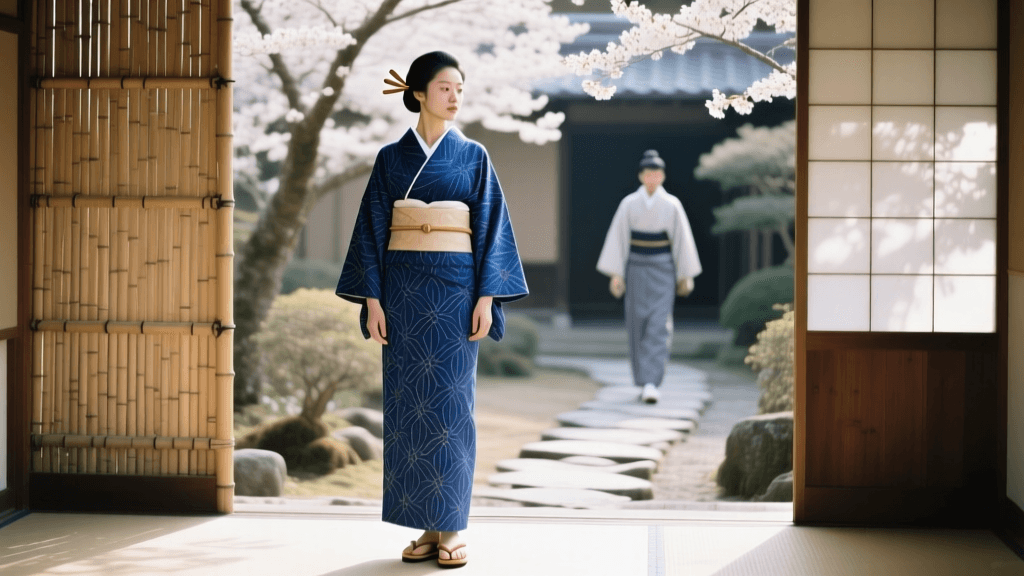
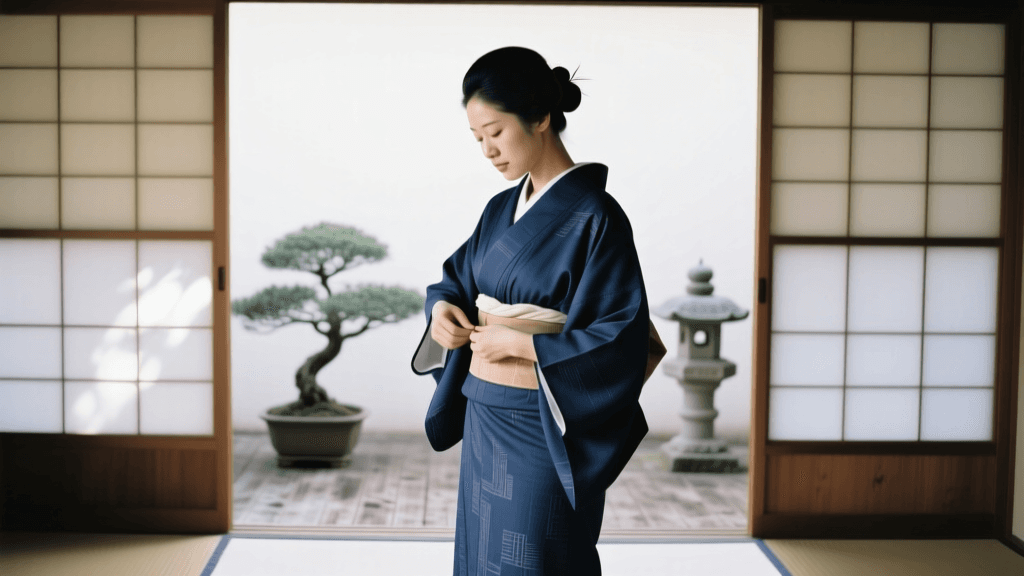
Kitsuke is the Japanese art of wearing the kimono. Unlike Western clothing, which is often tailored to the exact contours of the body and fastened with rigid buttons or zippers, the kimono is a flat, two-dimensional garment that must be sculpted onto the three-dimensional human form. This requires a series of deliberate folds, wraps, and ties. You cannot rush the process of kitsuke. If your mind is scattered, the collar will sit unevenly, the back seam will twist, and the obi (sash) will fail to hold its structural integrity.
For modern practitioners in 2026, kitsuke offers a powerful antidote to the hyper-digital, fast-paced nature of contemporary life. The physical restriction of the garment naturally enforces an upright posture, opening the chest and aligning the spine—ideal conditions for deep, diaphragmatic breathing. Furthermore, the concept of ma (negative space) is central to both Zen aesthetics and kimono styling. The space between the body and the fabric, the drape of the silk, and the precise placement of the collar all require a mindful awareness of the space you occupy in the world.
Best Garments for Zen Meditation in 2026
While the formal silk kimono is a masterpiece of mindful dressing, it is not always practical for extended periods of seated meditation. Fortunately, the Japanese textile tradition offers a spectrum of garments specifically suited for spiritual practice. In 2026, Kyoto's leading artisanal ateliers have introduced new collections that blend centuries-old weaving techniques with modern, sustainable, temperature-regulating natural fibers, ensuring comfort during long meditation retreats.
| Garment Type | Best Season | 2026 Material Innovations | Avg. Price (USD) | Mindfulness Benefit |
|---|---|---|---|---|
| Samue | Spring / Autumn | Organic Hemp-Cotton Blends | $140 - $280 | Designed for temple work; allows full mobility while maintaining a dignified, structured silhouette. |
| Yukata | Summer | Breathable Bashofu (Banana Fiber) | $90 - $180 | Lightweight and unlined; the tying of the simple cotton obi serves as a gentle introductory meditation. |
| Tsumugi Kimono | Winter | Recycled Silk Pongee (Tsumugi) | $450 - $850 | Rustic, textured silk that provides grounded sensory feedback and warmth during freezing morning Zazen. |
| Jinbei | High Summer | Waffle-weave Organic Linen | $60 - $120 | Two-piece lounge wear; excellent for informal evening meditation and mindful winding down. |
The Step-by-Step Mindful Dressing Ritual
To transform the act of getting dressed into a Zen practice, one must slow down and synchronize movement with breath. Below is a guided ritual for donning a Samue or Yukata with meditative intent, a practice highly recommended by temple guides for those engaging in traditional Japanese clothing experiences.
1. Misogi (Purification and Centering)
Before touching your garment, wash your hands and face with cool water. Stand barefoot on a natural surface (wood or tatami). Close your eyes and take three deep breaths, inhaling for a count of four, holding for four, and exhaling for six. Acknowledge the transition from the chaos of the outside world to the sanctuary of your practice space.
2. Aligning the Seishin (The Center Seam)
Pick up your garment by the collar. Locate the seishin, the center seam that runs down the back of the kimono or samue jacket. In Zen philosophy, this seam represents the straight, unwavering mind. As you drape the garment over your shoulders, use your fingertips to trace the seam down your spine. Visualize your own spine aligning perfectly with this thread, grounding you to the earth while lifting the crown of your head toward the sky.
3. Wrapping the Eri (The Collar)
Always wrap the left side of the garment over the right (the reverse is strictly reserved for dressing the deceased). As you bring the left collar across your chest, do so with a smooth, continuous motion. The collar should sit snugly against the base of the neck, with a slight, elegant drape at the front. This physical 'closing in' signifies the gathering of your scattered thoughts into a single point of focus.
4. Tying the Koshihimo (The Waist Tie)
Take your waist tie and wrap it around your hara (the lower abdomen, considered the spiritual and physical center of gravity in Japanese martial and meditative arts). As you pull the tie taut, exhale sharply. The tie should be firm enough to support your lower back and remind you to breathe deeply into your belly, but not so tight that it restricts your diaphragm. The knot is tied at the front or side, representing the binding of your commitment to the present moment.
Sensory Awareness and the Fabric of the Present
A crucial element of mindful dressing is engaging the senses. The historical evolution of the kimono has resulted in textiles that are masterpieces of sensory design. When practicing mindful kitsuke, pay attention to the auditory and tactile feedback of the garments. Listen to the soft, rhythmic swish of silk or the crisp rustle of hemp as you move. Feel the temperature of the fabric against your skin—is it cool and calming like summer linen, or warm and protective like winter tsumugi?
In 2026, the integration of eco-conscious dyeing methods, such as traditional aizome (indigo dyeing), adds an olfactory dimension to the practice. The faint, earthy scent of natural indigo and fermented dye vats has been shown to have mild aromatherapeutic effects, lowering the heart rate and preparing the nervous system for deep meditation. Many modern Zen retreats in Kyoto and Kamakura now specifically provide indigo-dyed Samue for their guests, recognizing the holistic benefits of these natural textiles.
Integrating Mindful Dress into Daily Life
You do not need to be a Zen monk or reside in a Japanese temple to benefit from the meditation of kitsuke. By dedicating just ten minutes each morning to dress with absolute intention—whether you are putting on a traditional Samue for your home meditation practice, or simply applying the principles of alignment, breath, and sensory awareness to your modern wardrobe—you cultivate a resilient, centered mind. In a world that constantly demands our attention and rushes us toward the next task, the mindful wrapping of a garment remains a profound, quiet rebellion: a declaration that the present moment, and the body that inhabits it, is entirely enough.