Mastering Chinese Drawloom Weaving: Yunjin Brocade in 2026
The Resurgence of the Hua Lou (Drawloom) in 2026
In the rapidly evolving landscape of global sustainable fashion, the year 2026 has marked a definitive turning point for ancient textile arts. As the world pivots away from fast fashion, designers and artisans are looking backward to move forward, specifically toward the traditional Chinese drawloom, known as the hua lou. This monumental wooden apparatus, which requires two weavers to operate simultaneously, is the birthplace of some of the most complex and breathtaking textiles in human history. Today, the revival of these ancient weaving techniques is not merely an act of historical preservation; it is a driving force behind the luxury Xin Zhongshi (New Chinese Style) movement and high-end sustainable couture.
The Silk Road was originally paved with the threads produced by these very looms. While modern electronic jacquard looms can mimic the visual output of ancient brocades, they cannot replicate the structural integrity, the dynamic light refraction, or the cultural soul of hand-loomed silk. In 2026, mastering the Chinese drawloom is considered the pinnacle of textile craftsmanship, merging ancient binary coding systems with contemporary eco-conscious design.
Anatomy of the Traditional Chinese Drawloom
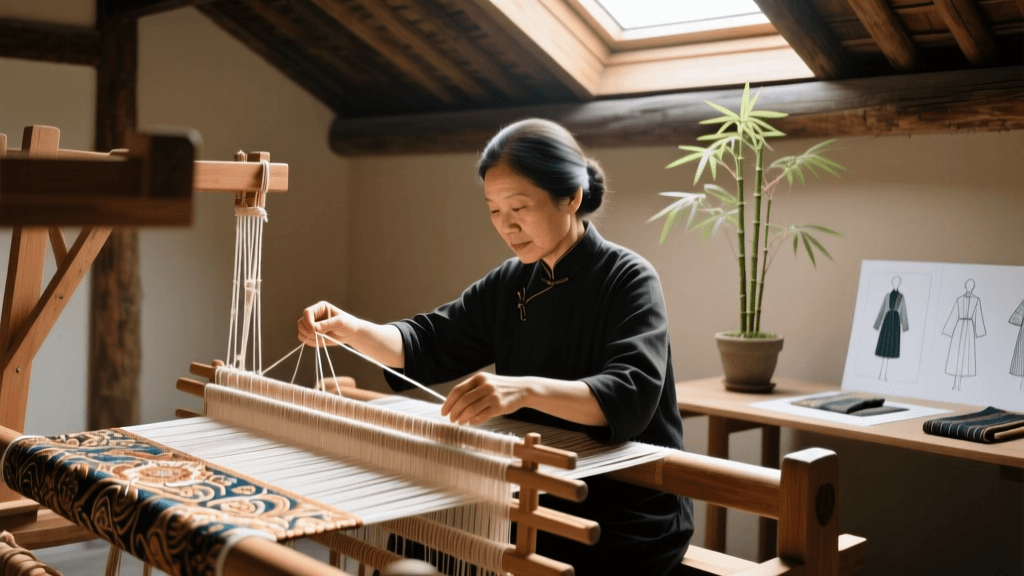
To understand the value of drawloom textiles, one must understand the sheer mechanical brilliance of the hua lou. Standing over four meters tall and occupying a footprint of roughly five by four meters, the loom is a marvel of ancient engineering. It operates on a two-person system:
- The Upper Weaver (Zhuo Hua): Seated at the top of the loom, this artisan is responsible for the 'programming' of the fabric. They pull specific bundles of warp threads according to a complex, pre-tied cord system known as jie ben.
- The Lower Weaver (Zhi Hua): Seated at the base, this weaver manages the shuttle, beats the weft threads into place with a heavy wooden reed, and coordinates their rhythm with the upper weaver through a series of vocal cues and physical taps.
The jie ben system is particularly fascinating to modern technologists. Long before the invention of the Jacquard loom in Europe or the advent of modern computing, Chinese weavers used a system of knotted cords to store complex pattern data. Each knot represented a binary 'lift' or 'no-lift' command for the warp threads. In 2026, textile historians and computer scientists continue to study these cord systems as early examples of physical data storage and algorithmic design.
Yunjin Brocade: The 'Cloud Silk' of Nanjing
Among the various brocades produced on the drawloom, Nanjing Yunjin (Cloud Brocade) remains the most revered. Recognized for its vibrant colors, intricate patterns, and the incorporation of precious metals, Yunjin is so named because its patterns resemble the colorful clouds of a sunset. According to the UNESCO Intangible Cultural Heritage registry, the technique requires an immense level of skill, utilizing materials that go far beyond standard silk.
In 2026, authentic Yunjin weaving frequently incorporates spun gold threads, silver foil, and even iridescent peacock feather filaments. The integration of these non-traditional fibers requires the lower weaver to adjust their beating pressure dynamically, ensuring the metallic threads lay flat without snapping the delicate silk warp. Because of this extreme complexity, a master weaving team can produce only five to six centimeters of authentic Yunjin brocade per day. This deliberate, painstaking slowness is precisely what makes it the ultimate antithesis to modern mass production, highly prized by luxury houses and bespoke Xin Zhongshi ateliers.
2026 Market Analysis: Brocade Weaving Economics
As demand for heritage textiles surges in 2026, the market has stratified based on the origin, complexity, and material cost of the brocade. Below is a comparative analysis of the three major Chinese brocade traditions currently dominating the luxury textile market.
| Brocade Type | Origin | 2026 Avg. Cost (RMB/meter) | Weave Speed (cm/day) | Primary 2026 Application |
|---|---|---|---|---|
| Yunjin (Cloud) | Nanjing | ¥4,500 - ¥6,000 | 5 - 6 cm | Haute Couture, Ceremonial Robes |
| Song (Elegant) | Suzhou | ¥2,800 - ¥3,500 | 10 - 12 cm | Bridal Wear, High-End Interiors |
| Shu (Sichuan) | Chengdu | ¥1,200 - ¥1,800 | 15 - 20 cm | Accessories, Modern Outerwear |
Note: Pricing reflects authentic, hand-loomed textiles produced by certified heritage artisans, not digital jacquard reproductions.
Setting Up a Traditional Loom Studio in 2026
For textile collectors, design schools, and independent studios looking to acquire and operate a traditional wooden drawloom today, the logistical requirements are significant. The loom itself is typically constructed from aged camphor or elm wood, chosen for its resistance to warping and insect damage. Sourcing a reclaimed, antique hua lou in 2026 can cost upwards of ¥150,000 RMB, while newly commissioned looms built by master woodworkers in Fujian province take approximately 14 months to complete.
However, the physical loom is only half the equation. Silk is a highly reactive protein fiber, and the tension of the warp threads on a drawloom is immense. To prevent the silk from snapping or losing its structural memory, modern studios must employ strict climate control. In 2026, heritage studios utilize smart environmental sensors to maintain a constant humidity level between 55% and 65%, and a temperature of 20°C to 22°C. Advanced ultrasonic humidifiers are integrated directly into the studio's HVAC system to ensure the microclimate around the loom remains perfectly stable, regardless of the season outside.
Modernizing the Ancient: AI and the Jie Ben System
While the physical act of weaving remains entirely manual, the preparatory phase has seen a technological renaissance in 2026. Historically, drafting a new pattern for the jie ben (cord memory system) required a master pattern-maker to manually calculate and tie thousands of knots, a process that could take months and was highly prone to human error.
Today, contemporary weaving studios utilize specialized AI-assisted textile drafting software. Designers input their vector patterns, and the software simulates the exact warp-lifting sequence, generating a 3D digital twin of the proposed fabric. The software then outputs a precise, step-by-step knotting guide for the jie ben system. This hybrid approach has reduced pattern-drafting errors by over 40% and allowed a new generation of digital-native designers to collaborate with heritage weavers, pushing the boundaries of traditional motifs into abstract, modern geometries without losing the structural authenticity of the drawloom weave.
The Xin Zhongshi Movement and Drawloom Textiles
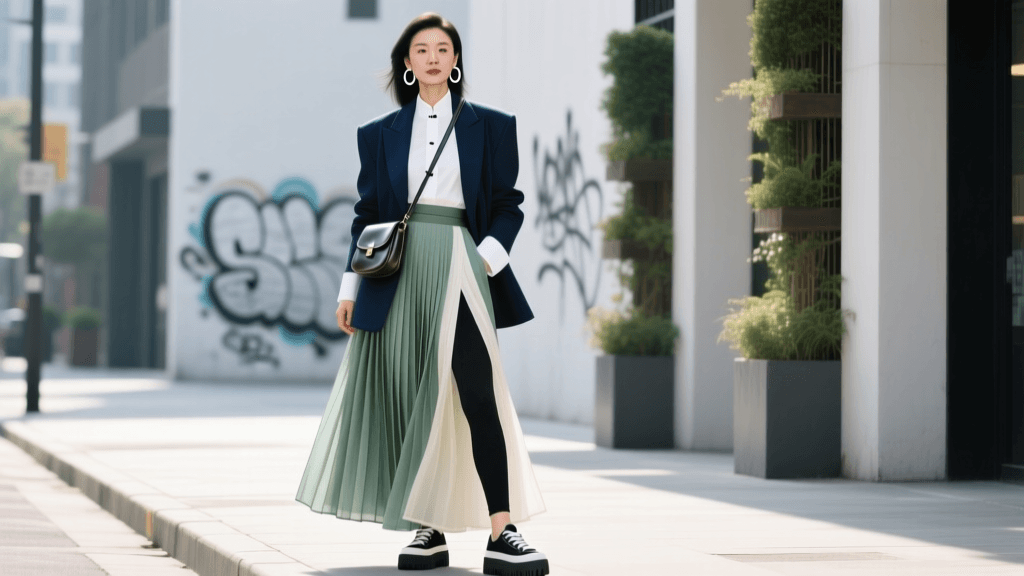
The ultimate destination for these luxurious textiles in 2026 is the Xin Zhongshi (New Chinese Style) fashion movement. Unlike the rigid, historically accurate Hanfu revivalism of the early 2020s, Xin Zhongshi focuses on integrating traditional elements into highly functional, modern wardrobes. Drawloom brocades are no longer reserved exclusively for museum replicas or stage costumes.
Leading designers are utilizing Shu and Song brocades to craft structured blazers, wide-leg Songku trousers, and modernized Mamianqun (horse-face skirts) that feature hidden pleats and adjustable waistbands. The heavy, sculptural drape of drawloom-woven silk provides a natural structure to garments, eliminating the need for synthetic interfacing or plastic boning. This aligns perfectly with the 2026 consumer demand for biodegradable, zero-plastic luxury fashion. As noted by The Metropolitan Museum of Art's Heilbrunn Timeline of Art History, Chinese silk has always been a medium of profound cultural exchange and innovation. Today's drawloom revival continues this legacy, proving that the most sustainable and forward-thinking fashion solutions are often rooted deeply in the ancient past.
Conclusion: Weaving the Future
The survival and thriving of the Chinese drawloom in 2026 is a testament to the enduring value of human craftsmanship in an increasingly automated world. By marrying the ancient binary logic of the jie ben system with modern sustainable design principles, today's weavers are not just preserving a museum artifact; they are actively shaping the future of luxury textiles. For designers, historians, and fashion enthusiasts, understanding the mechanics, economics, and cultural weight of Yunjin, Shu, and Song brocades is essential to appreciating the true vanguard of the modern Asian fashion renaissance.