Yoruba Aso Oke Weaving Loom Tension And Yarn Prep Guide
Foundations of Aso Oke Weaving: Loom Setup and Cultural Context
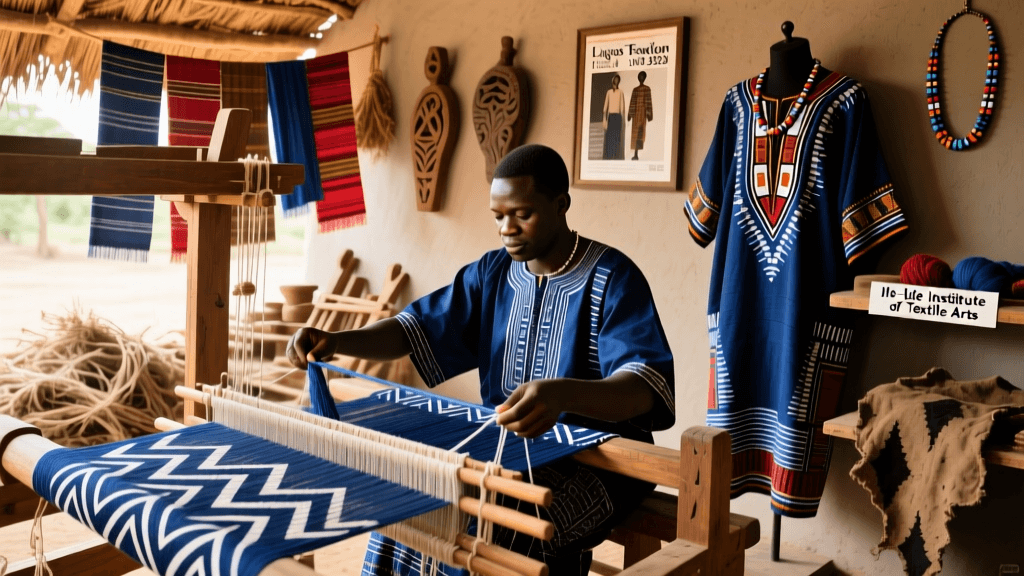
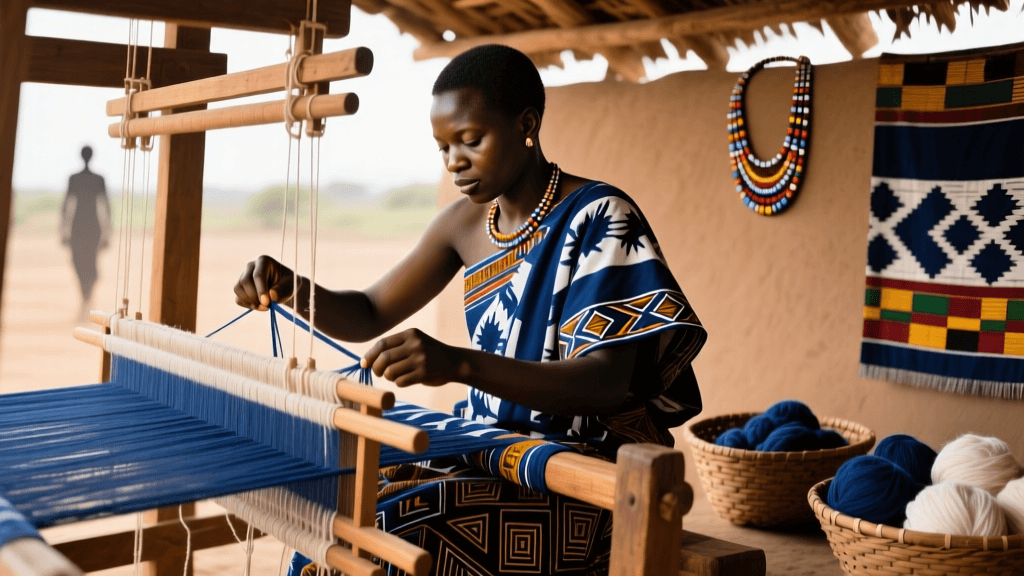
Aso Oke—the prestige textile of the Yoruba people of southwestern Nigeria—is more than cloth; it is a language woven in gold, silver, and indigo. Originating in the 19th century in towns like Iseyin, Oyo State, Aso Oke production remains anchored in handwoven narrow-strip looms known as *Oko Ewe*. These vertical, single-heddle looms are traditionally constructed from iroko wood and measure precisely 1.8 meters in height with a warp beam diameter of 12 centimeters. Unlike the broader kente cloths of Ghana—woven on horizontal looms in Asante and Ewe communities—Aso Oke’s vertical orientation enables tighter tension control critical for its signature stiff, structured drape. The textile’s ceremonial weight and shimmer derive not only from metallic yarns but from meticulous pre-weaving preparation, beginning long before the shuttle moves.
Yarn Preparation: From Raw Fiber to Symbolic Thread
Authentic Aso Oke begins with hand-spun cotton or silk, though modern variants increasingly incorporate rayon and polyester blends. Traditional yarn spinning occurs on a *Owu* spindle, producing thread with a twist count averaging 45–50 turns per 10 centimeters—significantly higher than commercial yarns (typically 20–30 tpc), ensuring durability against repeated ceremonial wear. Before dyeing, raw yarn undergoes *Eru*—a cleansing soak in fermented cassava water for 72 hours—to remove pectins and enhance dye absorption. Indigo-dyed threads used in *Etu* (dark blue) Aso Oke require at least five dip-and-oxidize cycles over three days to achieve depth, while *Sanyan* (tan) variants rely on natural bark extracts from the *Funtumia elastica* tree, harvested only during the dry season (November–March) to ensure optimal tannin concentration.
Key Yarn Specifications
- Cotton yarn thickness: 22–24 tex (grams per 1,000 meters)
- Metallic yarn core: 0.3 mm diameter aluminum or copper wire wrapped with 0.08 mm silk filament
- Warp yarn length per strip: 4.2 meters (standard for one 15 cm-wide strip)
- Dye fixation time for alum-mordanted reds: 45 minutes at 85°C
- Minimum drying duration post-dyeing: 48 hours in shaded, low-humidity conditions
Loom Tension Mechanics: Precision as Ritual Practice
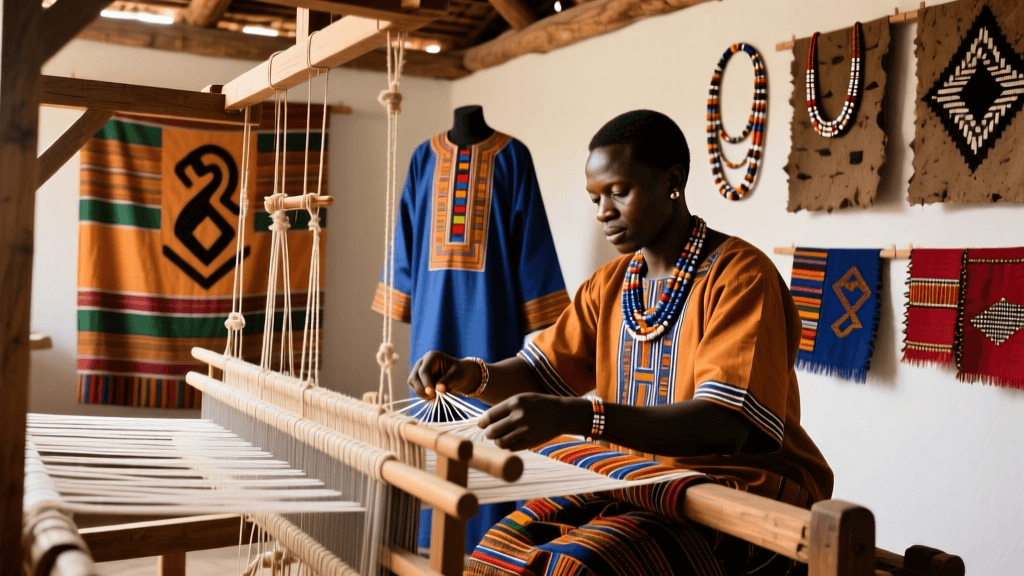
Tension management defines Aso Oke’s structural integrity. The warp threads—typically 1,280–1,440 per meter—are stretched between two beams: the *Oko* (back beam) and *Apere* (front beam). Artisans use calibrated wooden pegs driven into pre-drilled holes spaced exactly 8.5 cm apart along the beam edges to anchor tension cords. Each cord bears 1.8–2.2 kilograms of force—measured annually using spring-loaded tension gauges calibrated at the National Museum, Lagos. Over-tension causes breakage; under-tension yields loose, uneven selvedges that compromise the garment’s ceremonial dignity. This precision echoes the philosophical principle of *Iwa Pele*—balanced character—embedded in Yoruba cosmology.
Comparative Loom Specifications Across West African Traditions
| Textile | Ethnic Group / Region | Loom Type | Warp Density (threads/m) | Strip Width (cm) |
|---|---|---|---|---|
| Aso Oke | Yoruba, Nigeria | Vertical single-heddle | 1,280–1,440 | 12–15 |
| Kente | Asante & Ewe, Ghana | Horizontal double-heddle | 960–1,120 | 10–12 |
| Adire Eleko | Yoruba, Nigeria | Starch-resist dyed cloth (no loom) | N/A | N/A |
Symbology Woven into Structure
Every Aso Oke pattern encodes meaning through geometry, color, and density. The *Etu* variant’s dense indigo warp signifies humility and spiritual depth; its weft floats form subtle chevrons echoing *Ogun*, deity of iron and labor. *Opa Apon*—the rarest type—uses pure silver-wrapped silk with a 100% metallic weft, reserved historically for Oba coronations. Its 32-pick-per-inch density creates a near-metallic rigidity, reflecting sovereignty and unyielding authority. In contrast, *Wura* (gold) Aso Oke employs copper-wrapped yarns oxidized to produce warm amber tones—a deliberate choice referencing *Oshun*, goddess of rivers and fertility. According to research conducted by the Centre for Black Arts and Humanities at Obafemi Awolowo University (2021), over 67 distinct motifs have been documented, each tied to proverbs such as “*Oriki ti o se fun omo*” (“The praise name given to a child”) encoded in stripe sequences.
Color Symbolism Reference
- Indigo (Etu): Wisdom, introspection, ancestral connection
- Gold (Wura): Royalty, prosperity, divine illumination
- White (Funfun): Purity, spirituality, new beginnings
- Red (Pupa): Vitality, sacrifice, political power
- Green (Awo Ojú): Growth, healing, environmental harmony
Institutional Stewardship and Contemporary Practice
The preservation of Aso Oke weaving relies on formal and informal knowledge transmission. The Iseyin Handloom Weavers’ Cooperative—established in 1974 and operating from its original workshop on Oke Agbo Road—trains over 80 apprentices annually using standardized tension-testing protocols developed with UNESCO’s Intangible Cultural Heritage Unit (2019). Similarly, the Yoruba Textile Archive at the University of Ibadan houses 142 documented loom configurations, including precise torque measurements for warp beam rotation (0.75 N·m maximum). At Lagos Fashion Week, designers like Deola Sagoe and Lisa Folawiyo integrate Aso Oke with architectural silhouettes, yet mandate that all runway pieces meet minimum handwoven content thresholds: 85% warp and weft must be produced on traditional looms, verified via fiber microscopy at the Nigerian Institute of Textile Technology in Enugu.
Notably, the National Commission for Museums and Monuments (NCMM) launched the Aso Oke Revitalization Project in 2020, distributing 42 calibrated tension kits to master weavers across Oyo, Osun, and Lagos states. Each kit includes digital load sensors accurate to ±0.05 kg and instructional tablets preloaded with video demonstrations filmed at the Palazzo delle Esposizioni in Rome during the 2022 exhibition “Woven Legacies: Textiles of West Africa.”
Despite mechanization pressures, the craft resists standardization. As master weaver Alhaji Adekunle Adebayo stated during a 2023 workshop at the Centre for Black Arts and Humanities: “A loom does not speak unless the hands remember the ancestors’ rhythm. Tension is not measured—it is felt in the wrist, heard in the creak of the beam, seen in the warp’s quiet hum.” This embodied knowledge remains inseparable from the textile’s cultural weight.
The vertical loom’s upright stance mirrors the Yoruba ideal of *Iwa Rere*—upright moral character. Every calibrated peg, every oxidized thread, every measured pick reinforces continuity—not as repetition, but as responsive dialogue between past discipline and present innovation. Institutions like the Yoruba Heritage Centre in Abeokuta continue documenting regional variations: Iseyin weavers favor tighter tension for stiffer ceremonial wraps, while those in Ilorin emphasize softer drape for daily wear, adjusting warp spacing to 1.2 mm versus 0.9 mm respectively.
Preservation efforts extend beyond technique. The NCMM’s 2022 ethnographic survey recorded 31 distinct dialect terms for tension-related actions across Yoruba subgroups—terms like *Ko ara* (“to tighten the body of the loom”) and *Gba eje* (“to draw the warp blood”—i.e., pull until resistance is evenly distributed). These linguistic markers confirm that tension is not mechanical but physiological, relational, and sacred.
At its core, Aso Oke weaving sustains a covenant: between artisan and tool, material and meaning, individual and community. When a young apprentice in Iseyin first achieves consistent 2.0 kg tension across all 1,360 warp threads, they do not merely complete a technical milestone—they affirm lineage, responsibility, and the enduring grammar of Yoruba visual thought.
“The loom is not a machine. It is a living archive—its beams hold memory, its cords carry breath, its tension holds time.” — Dr. Funmilayo Olayemi, Director, Yoruba Textile Archive, University of Ibadan (2020)
Such understanding transcends utility. It positions Aso Oke not as artifact, but as active participant in Yoruba epistemology—where measurement serves meaning, and every gram of tension carries history.