Yang Guifei's Iconic Tang Dynasty Hanfu Style Guide
The Legend of Yang Yuhuan and High Tang Fashion
Yang Yuhuan, universally revered by her imperial title Yang Guifei (Precious Consort Yang), remains one of the most captivating figures in Chinese history. As the beloved consort of Emperor Xuanzong during the High Tang Dynasty (618–907 CE), her influence extended far beyond the palace walls, dictating the aesthetic standards of an entire empire. Unlike the slender, willowy ideals of previous dynasties, Yang Guifei championed a vision of opulent, voluptuous beauty. Her iconic wardrobe reflected the cosmopolitan wealth of the Silk Road, featuring vibrant silks, daring silhouettes, and intricate layering that continues to captivate modern Hanfu enthusiasts.
According to the World History Encyclopedia, the Tang Dynasty was a golden age of art, culture, and global trade. This prosperity allowed for unprecedented experimentation in textiles and fashion. Today, recreating Yang Guifei’s legendary look requires an understanding of historical garment structures, precise measurements, and the luxurious fabrics that defined the era. This guide provides actionable insights for sourcing, sizing, and styling the ultimate High Tang silhouette.
Deconstructing the Iconic Tang Dynasty Silhouette
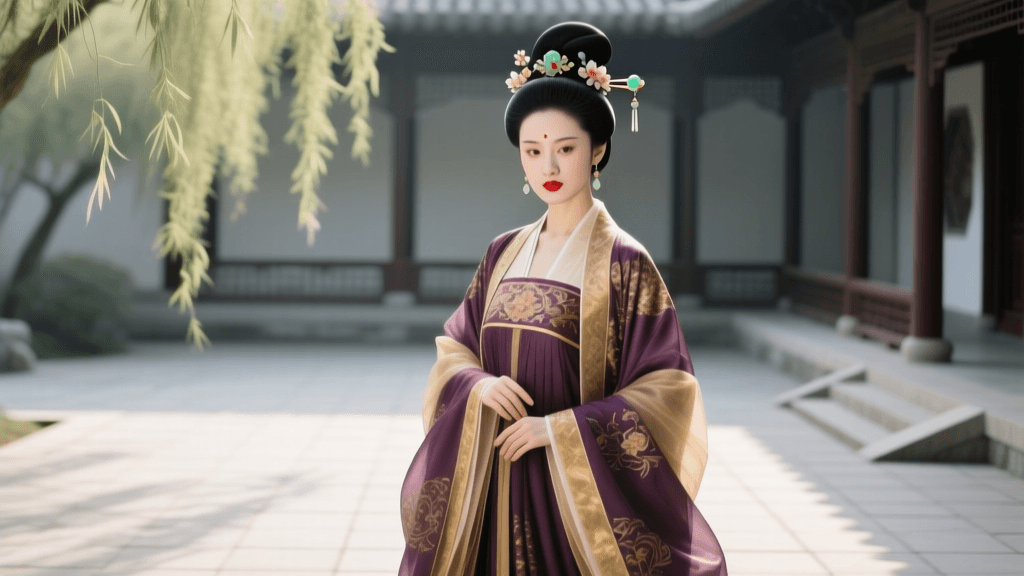
The quintessential ‘Yang Guifei’ look is built upon the Qixiong Shanqun (chest-high skirt) ensemble, often layered with elaborate outerwear and accessories. To achieve historical accuracy and modern comfort, one must understand the distinct layers of this iconic outfit.
The Hezi and Qixiong Shanqun
The foundation of the outfit is the Hezi, a strapless tube top traditionally made of cotton or linen, which provides modesty and a friction base for the skirt. Over this sits the Qixiong Shanqun, a high-waisted skirt tied above the bust. Historically, these skirts were pleated or gathered, utilizing vast amounts of fabric to create a sweeping, floor-length drape that elongated the figure while accommodating the fuller silhouettes prized in the High Tang court.
The Daxiushan and Banbi
For formal court appearances, Yang Guifei would layer a Daxiushan (large-sleeve shirt) over her skirt. Made from sheer, lightweight silk gauze or heavily embroidered brocade, the Daxiushan features dramatically wide sleeves that trail elegantly. For less formal or more active occasions, a Banbi (half-sleeve vest) was worn. The Banbi often featured Central Asian-inspired round collars and vibrant, contrasting colors, highlighting the Tang Dynasty’s fascination with foreign cultures.
The Pibo (Silk Shawl)
No Tang Dynasty noblewoman was complete without her Pibo. As noted by The Metropolitan Museum of Art, the cultivation and weaving of silk in China reached extraordinary heights during this period, allowing for the creation of the Pibo—a long, flowing silk scarf draped over the shoulders and arms. The Pibo added a dynamic, ethereal quality to the wearer’s movement, catching the breeze and framing the face in a halo of painted or woven motifs.
Actionable Sizing and Measurement Guide
One of the most common challenges modern Hanfu wearers face with the Qixiong Shanqun is the skirt slipping down. To recreate Yang Guifei’s look without constant wardrobe malfunctions, precise measurements and modern styling hacks are essential.
- Skirt Length: For a historically accurate floor-sweeping look, measure from your underarm (where the skirt will sit) to the floor, then add 5 cm to allow the hem to pool slightly. For most women, this requires a skirt length between 125 cm and 135 cm.
- Skirt Width: The skirt panel must be at least 1.5 to 2 times your bust circumference to allow for deep, elegant pleating. A standard width of 180 cm to 240 cm is ideal.
- The Anti-Slip Hack: Traditional silk is notoriously slippery. Modern enthusiasts should sew a 3 cm strip of silicone anti-slip tape along the inner top edge of the skirt waistband. Alternatively, wear a textured cotton Hezi underneath and tie the skirt’s inner strings tightly around the ribcage before securing the decorative outer bow.
- Sleeve Length: For a Daxiushan, the sleeves should extend past the fingertips by at least 20 cm to achieve the dramatic ‘water sleeve’ effect seen in Tang Dynasty scroll paintings.
Fabric Tiers and Cost Breakdown
The Tang court was renowned for its mastery of complex weaves, including Kesi (silk tapestry) and heavy brocades. The Victoria and Albert Museum (V&A) highlights that Chinese textiles from this era were highly prized trade goods, characterized by rich dyes and metallic threads. When sourcing your Hanfu, consider the following tiers based on your budget and desired authenticity.
| Tier | Fabric Composition | Aesthetic & Drape | Estimated Cost (USD) |
|---|---|---|---|
| Budget | Polyester Chiffon & Georgette | Lightweight, sheer, but prone to static. Good for summer or cosplay. | $45 - $80 |
| Mid-Tier | Cotton-Linen Blends & Tencel | Breathable, excellent drape, historically plausible for under-layers. | $100 - $180 |
| Luxury | 16-19 Momme Mulberry Silk Gauze | Authentic sheer drape, luminous sheen, ideal for Daxiushan and Pibo. | $250 - $450 |
| Heritage | Silk Brocade & Real Gold Thread | Heavy, structured, opulent. Perfect for the main Qixiong skirt. | $500 - $1,200+ |
Etiquette, Draping, and Movement
Wearing the garments is only half the battle; moving in them completes the illusion. The Tang Dynasty court had strict, albeit graceful, protocols for movement.
‘The elegance of a Tang noblewoman was measured not just by the richness of her silk, but by the unhurried, gliding rhythm of her steps and the floating trajectory of her Pibo.’
How to Drape the Pibo: Drape the center of the Pibo behind your neck, bringing both ends to the front. Cross them over your chest, then loop them over your forearms. When walking, keep your elbows slightly bent and your hands clasped gently in front of your waist. This tension keeps the Pibo suspended elegantly on your arms without it sliding off.
The Tang Walk: Because the Qixiong Shanqun restricts the stride, practice taking shorter, heel-to-toe steps. Keep your posture upright, shoulders back, and allow the heavy hem of the skirt to glide over the floor rather than kicking it forward.
Makeup and Accessories: Completing the Look
Yang Guifei’s influence on cosmetics was legendary. To fully embody the High Tang aesthetic, incorporate these historical makeup elements:
- Huadian (Forehead Decoration): Apply a floral or geometric applique (or paint one using red and gold cosmetic pigment) directly between the eyebrows. This was a hallmark of Tang court ladies.
- Mianye (Dimple Marks): Paint small red crescents or dots at the corners of the mouth to simulate dimples, a highly sought-after beauty trait during Yang Guifei’s time.
- Eyebrows: The ‘moth-wing’ or ‘willow-leaf’ eyebrow shapes were popular. Use a dark brown or charcoal pencil to draw thick, softly arched brows, slightly wider than modern trends dictate.
- Hair: The High Tang favored voluminous, elaborate updos. Use a hair donut and wire extensions to build a tall, sweeping bun, securing it with gold or jade Zan (hairpins) and dangling Buyao (step-shake) ornaments that sway with your movement.
Conclusion
Recreating the iconic outfits of Yang Guifei is more than a sartorial endeavor; it is an immersive journey into the zenith of China’s cultural and artistic history. By understanding the structural nuances of the Qixiong Shanqun, investing in quality silks, and mastering the graceful etiquette of the High Tang court, modern wearers can channel the timeless opulence of China’s most famous Precious Consort. Whether attending a cultural festival or a formal Hanfu gathering, the spirit of the Tang Dynasty lives on in every sweeping sleeve and vibrant silk drape.