2026 Kimono Auction Guide: Secondhand Value & Appraisal
The 2026 Landscape of Vintage Kimono Auctions
The global appetite for traditional Japanese clothing has surged as we move through 2026, driven by a powerful intersection of sustainable fashion, circular economy principles, and a deep appreciation for artisanal craftsmanship. For collectors, fashion historians, and enthusiasts, the secondhand kimono market offers an unparalleled opportunity to acquire museum-quality textiles at a fraction of their original bespoke cost. However, navigating this market requires a nuanced understanding of fabric types, historical eras, condition grading, and the mechanics of Japanese online auctions.
As highlighted by the Victoria and Albert Museum, the kimono is not merely a garment but a canvas of Japanese cultural history, reflecting shifts in aesthetics, technology, and social structure. In 2026, acquiring these pieces through secondhand auctions is both an investment in wearable art and a practice in cultural preservation. This comprehensive guide will equip you with the knowledge to appraise value, decode auction terminology, and bid confidently on platforms like Yahoo! Auctions Japan.
Top Platforms for Kimono Auctions in 2026
The digital marketplace for vintage Japanese garments is dominated by a few key players, each offering distinct advantages for international and domestic buyers.
Yahoo! Auctions Japan (Yahuoku)
Yahoo! Auctions Japan remains the undisputed behemoth of the secondhand kimono market. In 2026, thousands of listings go live daily, ranging from bargain-priced everyday komon to rare, museum-grade Yuki Tsumugi. Because the platform is restricted to Japanese residents, international buyers must utilize proxy bidding services such as Buyee, Neokyo, or ZenMarket. These services have streamlined their interfaces in 2026, offering real-time translation, automated sniping tools, and consolidated shipping options.
Specialized Online Auction Houses
Beyond Yahoo, specialized auction houses in Kyoto and Tokyo have expanded their digital footprints. Houses like Kimono Yamato and various local recycle shops (the Japanese term for secondhand vintage stores) now host weekly online auctions. These platforms often provide more rigorous condition reports and professional photography, though the starting bids and buyer premiums tend to be higher than on peer-to-peer sites.
Global Curated Platforms
For buyers who prefer not to navigate proxy services, global platforms like Etsy and specialized Instagram sellers offer curated selections. While the prices are marked up to reflect the curation and international shipping, these sellers often provide detailed measurements, styling advice, and historical context.
The Art of Kimono Value Appraisal
Appraising a vintage kimono requires a keen eye for material, technique, and condition. The value of a garment can fluctuate wildly based on these factors.
Fabric and Material Analysis
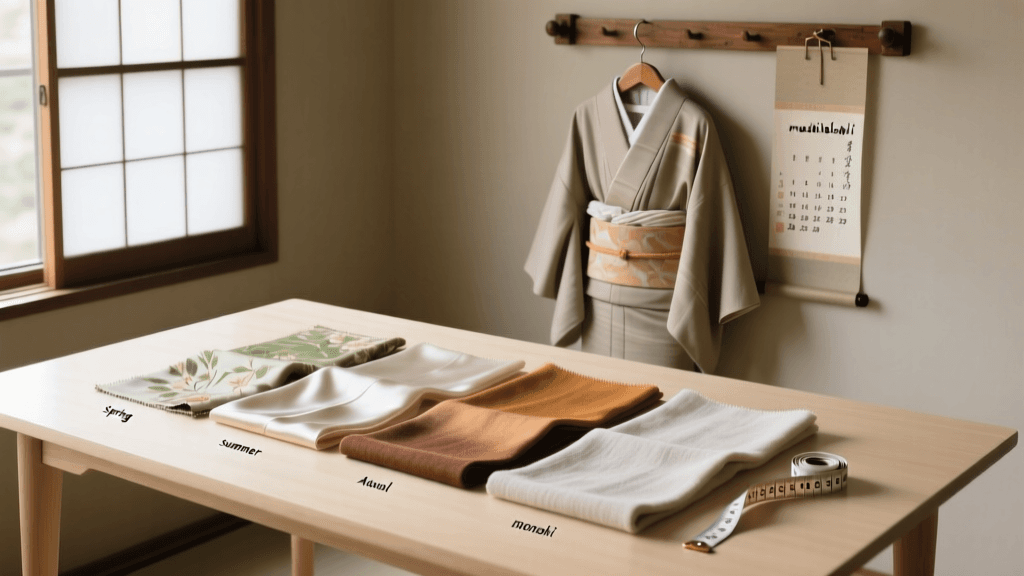
The foundation of any appraisal is the fabric. Silk remains the most coveted material, but the type of silk weave dictates the baseline value.
- Chirimen (Crepe): Known for its textured surface and excellent drape, chirimen is highly prized for dyeing techniques like yuzen and shibori.
- Rinzu (Damask): Featuring woven patterns that create a subtle, glossy sheen, rinzu is often used for formal garments and wedding attire.
- Tsumugi (Pongee): Woven from spun silk threads, tsumugi has a matte finish and a rustic, slubbed texture. According to the Ministry of Economy, Trade and Industry (METI), designated Traditional Craft Products like Oshima Tsumugi and Yuki Tsumugi require hundreds of hours of manual labor, making them the blue-chip investments of the kimono world.
Condition and Flaw Identification
Vintage silk is inherently fragile. When reviewing auction photos, buyers must scrutinize the garment for specific flaws that drastically impact value:
- Shimi (Stains): Age spots or watermarks. Small, hidden stains are acceptable, but prominent stains on the front panels or maemigoro severely reduce value.
- Hika (Fading): Often caused by improper storage or light exposure. Check the shoulders and the back seam for uneven color fading.
- Suso (Hem Dirt): The lower hem often accumulates dirt from dragging on tatami mats or streets. While hem dirt can sometimes be cleaned by specialized artisans, it is a point of negotiation.
- Holes and Snags: Pinholes along the fold lines are common in older garments due to the stress on the silk fibers over decades.
Provenance and Maker Marks
The presence of a sassho (maker's stamp) or rakkan (artisan's seal) can exponentially increase a kimono's value. These marks are typically found on the inner lining near the back seam or on the bolt end (tanmono). Pieces created by Living National Treasures (Ningen Kokuho) or renowned dyeing ateliers like Chiso or Itchiku Kubota command premium prices at auction.
Decoding Japanese Auction Terminology
To bid successfully, you must understand the specific vocabulary used by Japanese sellers to describe condition. Misinterpreting these terms is the most common pitfall for international buyers.
- Shinpin / Mishinpin: New or unused. Often indicates a kimono that was purchased but never worn, or a vintage bolt of fabric (tanmono) that has never been tailored.
- Yuryo: Excellent condition. May have microscopic flaws invisible to the naked eye.
- Junk / Junkuhin: As-is or damaged. These pieces are sold without returns accepted. They are ideal for upcyclers, textile artists, or those looking to harvest high-quality silk for haori linings or accessories.
- Shitsuke-ito: Basting threads. If a listing mentions the shitsuke-ito is still attached, it is a strong indicator that the garment was professionally cleaned and stored, and likely never worn.
Measuring and Sizing for the Global Buyer
Unlike Western clothing, kimonos are not sized by standard S/M/L metrics. They are tailored to the individual's body proportions and the method of wrapping. When appraising a listing, you must compare the garment's flat measurements to your own body.
- Yuki (Sleeve Length): Measured from the center back seam, across the shoulder, and down to the wrist. This is the most critical measurement for a proper fit.
- Mihaba (Body Width): The width of the front and back panels. The total circumference should be at least 10-15 cm wider than your hips to allow for proper overlapping (okumi).
- Take (Length): Measured from the base of the neck to the hem. A vintage kimono can be lengthened if there is extra fabric tucked at the waist (hashi), but shortening a hem is more complex.
2026 Pricing Trends and Market Data
The table below outlines the estimated auction values for various kimono types in the 2026 market. Prices are approximate and can vary based on condition, provenance, and seasonal demand (e.g., furisode prices spike in late autumn ahead of the January Coming of Age Day).
| Garment Type | Description | Average Auction Price (USD) | Investment Potential |
|---|---|---|---|
| Komon | Everyday wear with repeating patterns | $30 - $150 | Low (High supply) |
| Houmongi | Formal visiting wear with continuous motifs | $150 - $800 | Medium |
| Furisode | Long-sleeved formal wear for unmarried women | $300 - $2,500+ | High (Seasonal demand) |
| Oshima Tsumugi | Mud-dyed, woven pongee silk from Amami Oshima | $800 - $5,000+ | Very High |
| Yuki Tsumugi | Hand-spun, hand-woven National Treasure textile | $2,000 - $15,000+ | Exceptional (Blue-chip) |
| Uchikake | Heavily padded, unbelted wedding overcoat | $200 - $1,200 | Medium (Display art) |
The Obi Market: A Hidden Goldmine
While kimonos often take center stage, the obi (sash) market in 2026 offers incredible value for collectors. Vintage obi are frequently repurposed into table runners, wall art, and upholstery. However, pristine, unwoven maru obi (double-sided, fully patterned) and intricate fukuro obi woven with real gold and silver threads (kinran and ginran) are highly sought after. When appraising an obi, check the condition of the metallic threads; tarnished silver threads (ginran turning black) are a common issue in pre-1980s pieces and should be factored into your maximum bid.
Bidding Strategies and Avoiding Pitfalls
Success in the 2026 kimono auction market requires tactical bidding and a disciplined approach to budgeting.
Proxy Bidding and Sniping
Never engage in manual bidding wars early in an auction, as this artificially inflates the final price. Use your proxy service's automated sniping tool to place your maximum bid in the final 30 seconds of the listing. This prevents emotional bidding from competitors and secures the garment at the lowest possible increment.
Reading Between the Lines
Japanese sellers are notoriously polite and may understate flaws to avoid conflict. If a listing features only a few distant, full-body photos and lacks close-ups of the seams, hem, and lining, proceed with extreme caution. The Metropolitan Museum of Art notes that the construction and inner linings of historical garments often reveal as much about their era and authenticity as the outer decoration. Always message the seller (via your proxy) to request specific photos of the sassho, the armpit seams, and the lower hem before committing to a high-value bid.
Conclusion
The 2026 secondhand kimono market is a vibrant, accessible arena for those willing to invest time in education and appraisal. By understanding the nuances of silk weaves, mastering the terminology of condition grading, and utilizing strategic bidding tactics on platforms like Yahoo! Auctions Japan, you can build a remarkable collection of Japanese textile art. Whether you are seeking a wearable houmongi for modern formal events or a rare Yuki Tsumugi for investment, the auction block holds endless treasures waiting to be unearthed.