Xin Zhongshi Style Guide 2026: Build Your Capsule Wardrobe
The Evolution of Xin Zhongshi in 2026
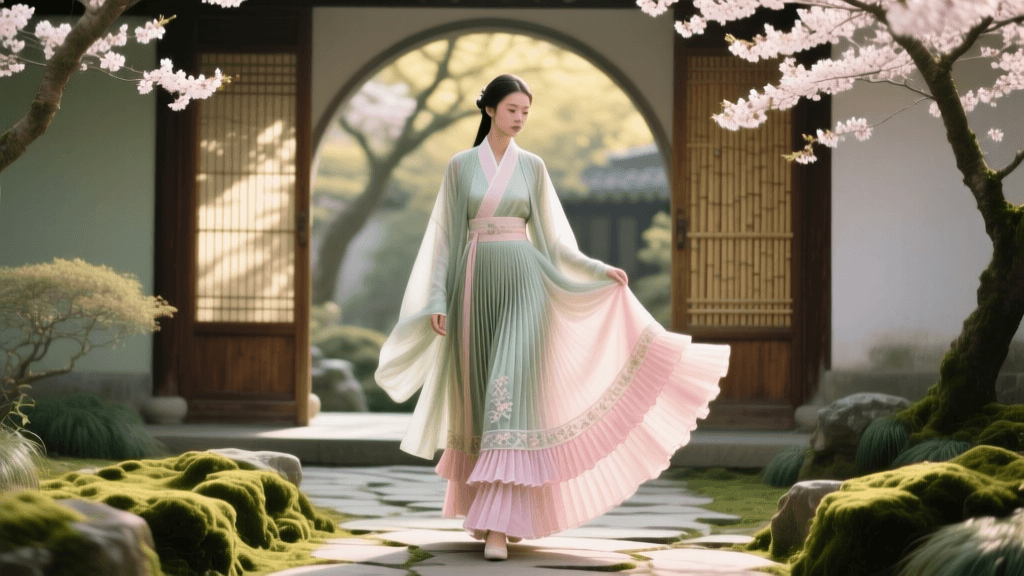
The Xin Zhongshi (新中式), or 'New Chinese Style', has undergone a radical transformation by 2026. What began as a niche subculture blending traditional Hanfu elements with streetwear has matured into a sophisticated, globally recognized fashion movement. Today, Xin Zhongshi is no longer about wearing literal historical costumes; it is an exercise in structural homage, sustainable material innovation, and minimalist elegance. The modern wearer seeks garments that honor the rich lineage of Chinese clothing while functioning seamlessly in contemporary urban environments, from high-stakes boardrooms to avant-garde art galleries.
In 2026, the hallmark of authentic Xin Zhongshi is subtlety. Overt, loud dragon motifs and heavy, restrictive corsetry have been replaced by hidden plackets, modified standing collars, and ergonomic draping. Designers are leveraging 3D weaving technology and eco-friendly dyeing processes to make heritage fabrics lighter, more breathable, and vastly more durable. Building a Xin Zhongshi capsule wardrobe this year requires a keen eye for fabric integrity, silhouette balancing, and an understanding of how ancient craftsmanship intersects with modern tailoring.
Core Fabrics Defining the 2026 Aesthetic
Xiangyunsha (Gambiered Canton Gauze)
Known as 'soft gold', Xiangyunsha is a silk fabric dyed using the juice of the gambier plant and coated with iron-rich mud from the Pearl River Delta. In 2026, sustainable innovations in the mud-dyeing process have reduced water usage by 40%, while new finishing techniques have yielded a lighter, 14-momme weight variant perfect for year-round layering. The fabric's signature crackled, leathery texture and natural water resistance make it the ultimate luxury material for modernized trench coats and structured blazers. Its unique acoustic rustle and cooling properties remain unmatched in the luxury textile market.
Modernized Song Brocade (Songjin)
Historically reserved for imperial garments and mounting scrolls, Song Brocade is celebrated for its intricate, flat-patterned weaves. The 2026 iteration of Songjin utilizes blended yarns—interweaving raw silk with recycled cupro and micro-modal. This results in a fabric that retains the luminous, multi-dimensional sheen of traditional brocade but offers the stretch and wrinkle-resistance required for daily office wear. As noted in the historical archives of the Metropolitan Museum of Art's Heilbrunn Timeline of Art History, silk weaving has always been a canvas for technological advancement, and today's jacquard looms are pushing these ancient patterns into the realm of high-performance fashion.
The 2026 Xin Zhongshi Capsule Wardrobe Checklist
To build a versatile wardrobe that transitions across seasons and occasions, focus on these four foundational pieces. Each item bridges the gap between historical reverence and 2026 practicality.
| Garment | Material Recommendation | Key Design Features | Styling Application |
|---|---|---|---|
| Modernized Mamianqun | Wool-cupro blend (Winter) / Tencel (Summer) | 3.5-inch pleat depth, hidden side zipper, flat front panel | Office wear, formal dinners, gallery openings |
| Pankou-Knot Blazer | Matte crepe wool with silk lining | Structured shoulders, asymmetrical lapel, 3 functional frog buttons | Business meetings, smart-casual layering |
| Xiangyunsha Trench | 18-momme Gambiered Canton Gauze | Water-resistant finish, belt with jade-aglet tie, dropped shoulder | Transitional weather, travel, evening outerwear |
| Mandarin Collar Shirt | Heavyweight silk twill or organic cotton | Hidden front placket, curved hem, elongated cuff with slit | Everyday base layer, minimalist weekend wear |
Styling Rules: Balancing Heritage and Modernity
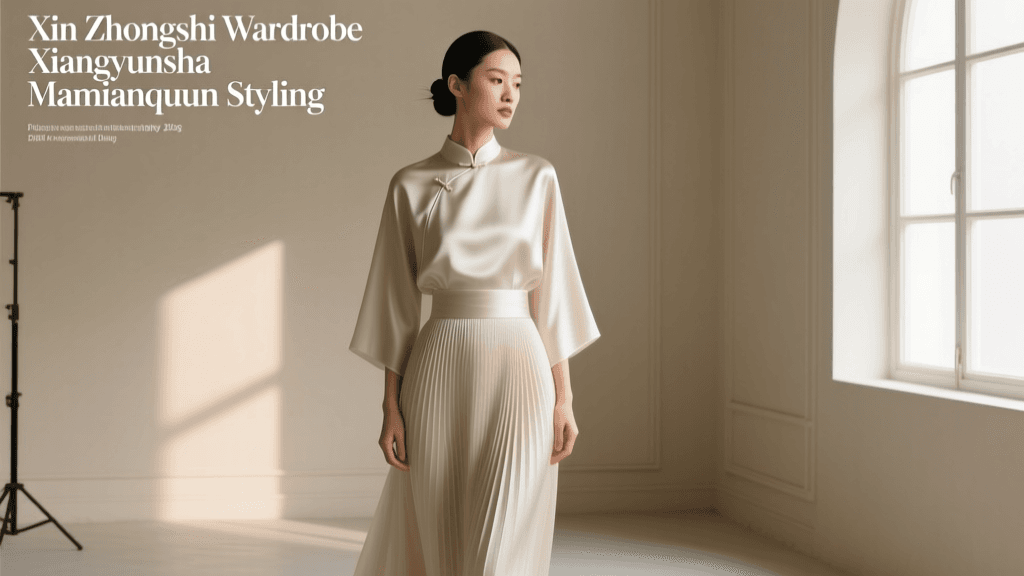
The most common mistake newcomers make when adopting the New Chinese Style is over-accessorizing or wearing head-to-toe traditional garments, which can veer into costume territory. In 2026, the golden rule is the 80/20 Silhouette Contrast. If you are wearing a highly traditional, voluminous piece like the Mamianqun (the iconic horse-face pleated skirt), the remaining 80% of your outfit should consist of sharp, modern, Western-tailored basics.
For example, pair a heavyweight, cinnabar-red Mamianqun with a fitted, charcoal-grey cashmere turtleneck and a sleek, oversized leather moto jacket. The contrast between the flowing, structured pleats of the skirt and the rigid, modern lines of the leather jacket creates a dynamic visual tension that defines the Xin Zhongshi aesthetic. Conversely, if you are wearing a traditional Xiangyunsha top with intricate pankou (frog) knots, anchor it with wide-leg, tailored wool trousers and minimalist leather loafers.
The 2026 Color Palette
This year's color stories draw heavily from traditional Chinese ceramics and ink wash paintings, moving away from saturated, primary reds and golds. The most coveted hues include:
- Celadon (Qingci): A pale, greyish-green that acts as a sophisticated neutral, pairing beautifully with camel and navy.
- Ink Wash (Shuimo): Gradient charcoal and slate tones that mimic the bleed of calligraphy ink on rice paper.
- Moonlight White (Yuebai): Not a stark optical white, but a warm, pearlescent off-white with a hint of cool blue.
- Cinnabar (Zhusha): A deep, oxidized red-brown used sparingly as an accent color in linings, piping, or accessories.
Footwear and Accessories for the Modern Era
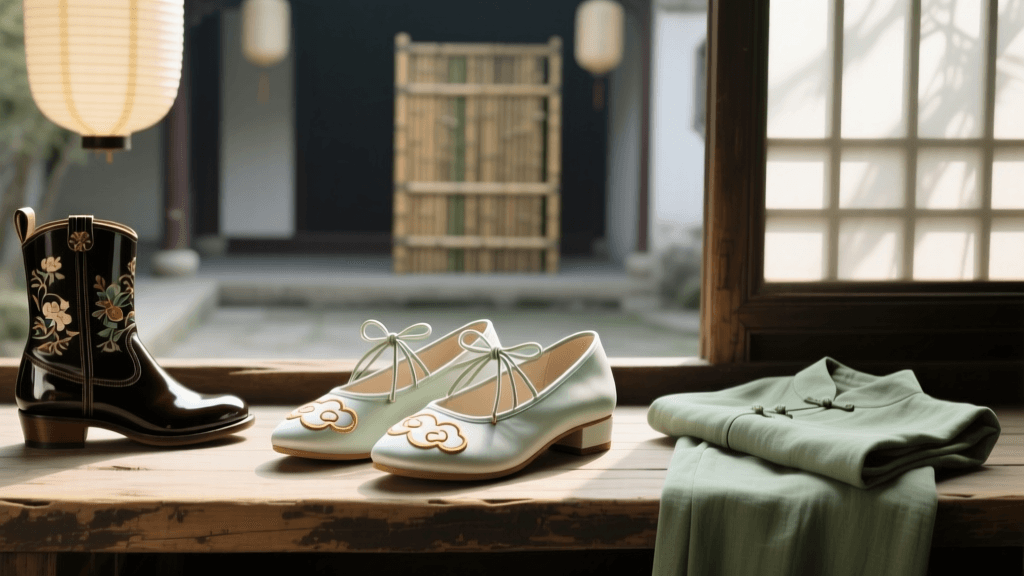
Footwear in the Xin Zhongshi movement has evolved past the traditional cloth shoes of the past. In 2026, the focus is on architectural, chunky silhouettes that ground the flowing lines of traditional garments. Split-toe leather boots, chunky-soled loafers with subtle cloud-motif hardware, and minimalist square-toe mules are the standard. Avoid overly delicate heels, which disrupt the grounded, utilitarian ethos of the modern style.
When it comes to jewelry, the 'less is more' philosophy reigns supreme. Instead of heavy, ornate gold pieces, opt for minimalist interpretations of heritage symbols. Think thin, brushed-silver cuffs engraved with subtle bamboo motifs, or a single, high-grade Hetian jade pendant suspended on a nearly invisible silk thread. Hair accessories have also been modernized; the traditional buyao (dangling hairpin) has been reimagined as sleek, matte-metal hair clips that secure modern updos without the theatrical movement of historical replicas.
Caring for Your Xin Zhongshi Garments
Investing in Xin Zhongshi means investing in specialized textiles that require meticulous care. The longevity of your capsule wardrobe depends on adhering to strict maintenance protocols.
Xiangyunsha Maintenance
Despite its durability, Xiangyunsha should never be machine washed or subjected to harsh chemical dry cleaning, which can strip the iron-rich mud coating that gives the fabric its unique texture and water resistance. Instead, hand wash the garment in cool water using a pH-neutral silk detergent. Gently press out the water without wringing, and dry flat in the shade. The crackled texture actually softens and becomes more lustrous with age and proper wear, developing a patina similar to fine leather.
Mamianqun Storage
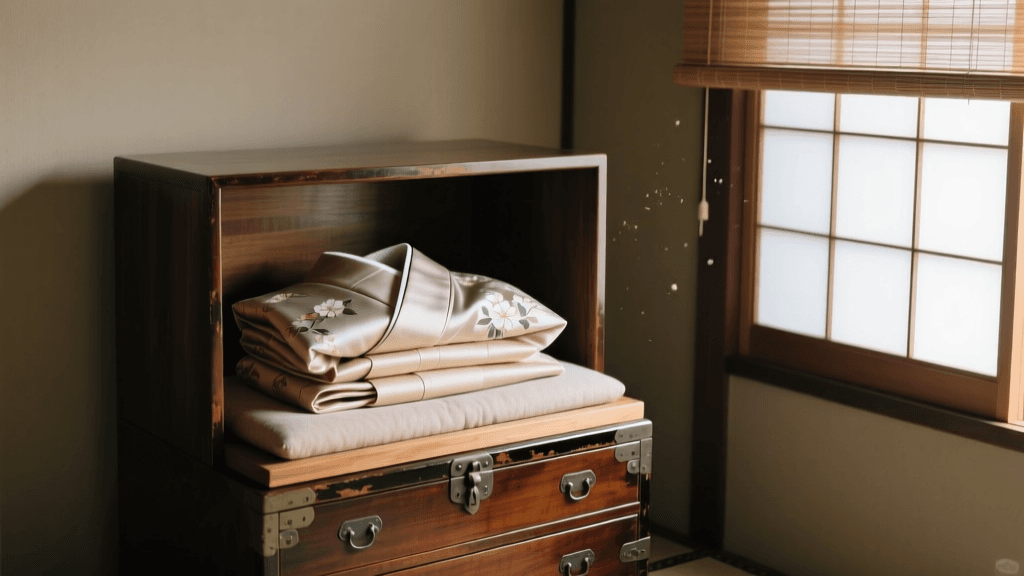
The sharp, knife-edge pleats of the Mamianqun are its defining feature. To maintain the 3.5-inch pleat depth, never hang the skirt by the waistband for long-term storage, as the weight of the fabric will stretch the pleats. Instead, fold the skirt along its original pleat lines, place acid-free tissue paper between the folds to prevent friction, and store it flat in a breathable cotton garment bag. If the pleats begin to soften after a season of heavy wear, use a low-heat steamer and a wooden clapper to reset the folds, a technique borrowed from traditional Japanese and Chinese garment care.
Conclusion: Embracing the Future of Heritage
The Xin Zhongshi movement in 2026 is a testament to the living, breathing nature of cultural heritage. It proves that tradition is not a static artifact to be preserved behind glass, but a dynamic vocabulary that can be rewritten to suit the modern human experience. By carefully selecting sustainable heritage fabrics, mastering the art of silhouette contrast, and committing to proper garment care, you can build a capsule wardrobe that is deeply rooted in Asian traditions while remaining entirely relevant to the global fashion landscape of today and tomorrow.